
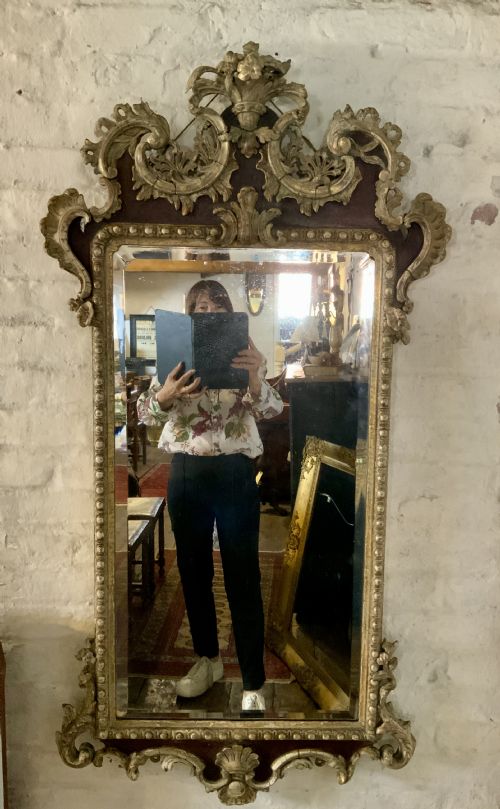
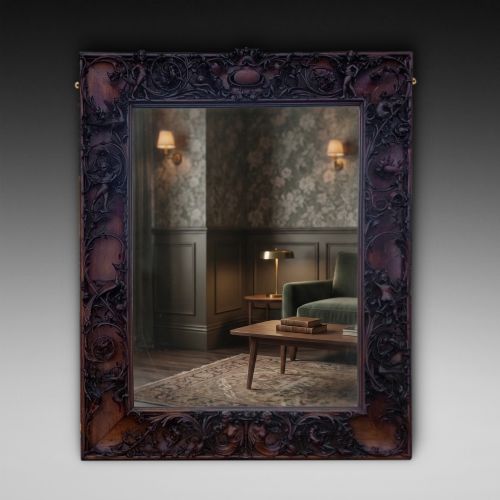
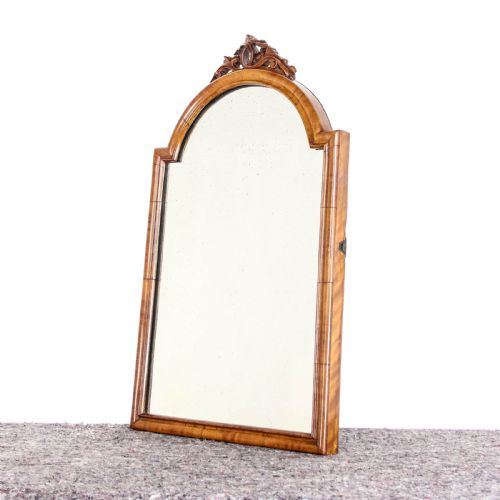
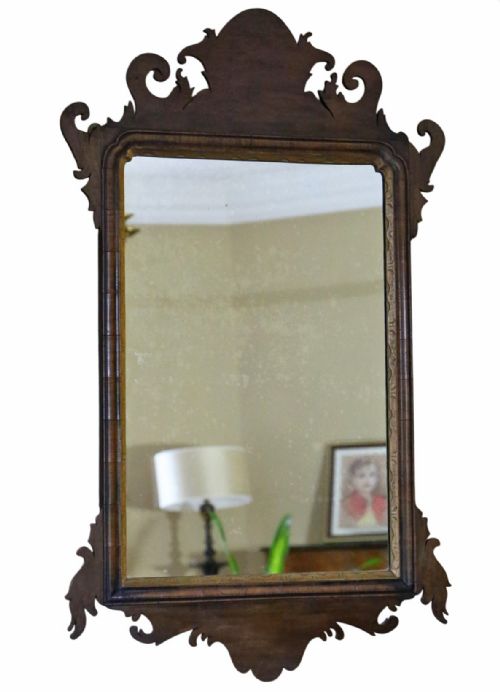


Walnut Framed Hanging Mirror
A walnut framed hanging mirror brings warmth and depth to a room, offering rich timber grain and polished glass that catch the light.
Walnut Framed Hanging Mirror
A walnut framed hanging mirror is a wall-mounted glass panel set within a timber surround, designed to hang in hallways, living rooms and chambers. Buyers searching for a walnut framed hanging mirror seek both a functional reflective surface and a decorative wall piece that displays rich timber tones.
The pieces seen here span centuries of design, moving from early examples through Georgian and Victorian iterations up to revival pieces made in the twentieth century. You will encounter straightforward wall mirrors alongside ornate variants featuring giltwood accents, fret cuts and carved details.
Originating from periods including the seventeenth, eighteenth and nineteenth centuries, these mirrors showcase the enduring appeal of walnut timber in interior decoration. Simple rectangular formats sit alongside architectural styles influenced by earlier Georgian and Queen Anne aesthetics.
How they were made
Cabinetmakers constructed these frames using solid walnut and decorative veneers applied to secondary timbers, frequently incorporating burr walnut for dramatic grain patterns. Glass was set into the timber rebate, sometimes accompanied by parcel gilt details or carved wood ornamentation.
Fret cut silhouettes were shaped using hand saws, while marquetry and inlay techniques adorned specific continental and revival pieces with contrasting woods. Oyster veneer construction utilised circular cross-sections of branches arranged across the surface to create distinctive repeating patterns.
Some Victorian wall mirrors watched over Victorian hallways with carved cherubs and crowns keeping a watchful eye on arriving guests.
What varies in quality
Quality in a walnut framed hanging mirror rests upon the selection of the timber and the finesse of the joinery in the frame. Superior examples display carefully matched veneer grains and crisp, hand-cut fretwork rather than heavy or blunt mouldings.
The condition and age of the mirror glass itself contribute significantly to the character of the piece, alongside the preservation of original gilding and backboards. Refined carving, delicate parcel gilt highlights and well-executed stylistic revivals separate the finest items from standard production.
The Walnut Framed Hanging Mirror Glossary
- Burr walnut
- A prized timber harvested from tree growths that produces intricate, swirling grain patterns. It is typically sliced into thin veneers for decorative furniture fronts and mirror frames.
- Fret cut
- A technique where timber is pierced and shaped into decorative openwork patterns using a fine saw. This method creates the distinctive silhouette seen on many eighteenth-century and revival wall mirrors.
- Parcel gilt
- A decorative method where specific carved areas or details are highlighted with thin gold leaf. It creates a subtle contrast against the dark brown tones of the surrounding walnut timber.
- Oyster veneer
- Slices cut transversely from small branches to produce circular or oval motifs with concentric growth rings. These pieces are fitted tightly together to cover the surface of the frame.
- Giltwood
- Timber carved and coated with gold leaf or metallic paint to achieve a brilliant reflective finish. It frequently appears alongside walnut in mirrors influenced by Georgian and rococo styles.
Walnut Framed Hanging Mirror: Frequently Asked Questions
Where should I place a hanging wall mirror?
A hanging mirror works effectively in entrance halls to bounce light into darker spaces or above a fireplace mantelpiece in a reception room. Positioning it opposite a window will maximise the spread of natural daylight across the interior.
Consider the surrounding furniture scale to ensure the frame proportions complement the wall space without overwhelming the room.
How do I care for antique walnut frames?
Dust the timber gently with a soft, dry cloth to prevent dirt accumulation in the carved crevices and grain. Avoid placing the mirror in direct sunlight or near heat sources that could dry out the wood and veneer.
Apply a specialist microcrystalline wax sparingly if the timber appears dry, buffing it gently to maintain the natural lustre of the walnut surface.
Are revival mirrors considered antiques?
Revival pieces made during the early twentieth century replicate earlier Georgian and Queen Anne styles using traditional woodworking methods. While not dating from the original seventeenth or eighteenth centuries, these older revival items possess their own age and craftsmanship.
Examining the construction methods, backboards and fixings helps determine whether a mirror dates from the primary period or a later revival era.