
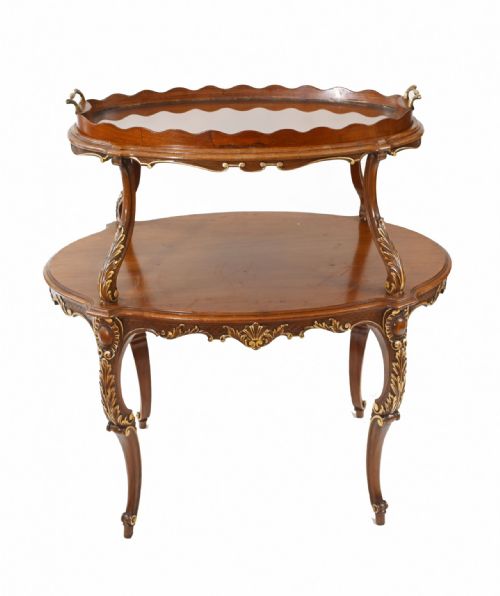


Walnut Etagere Table
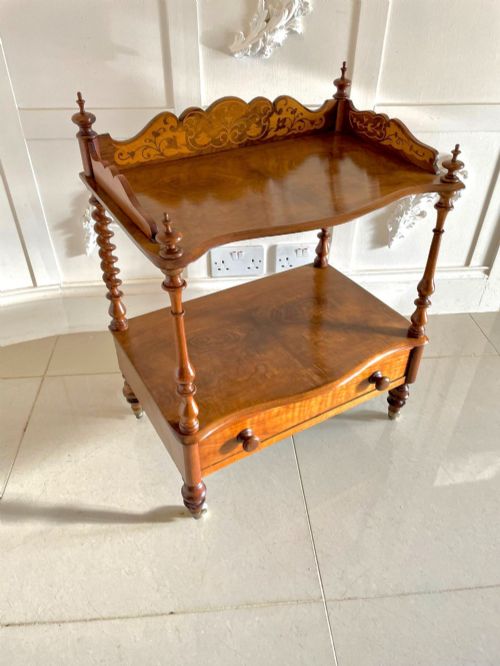
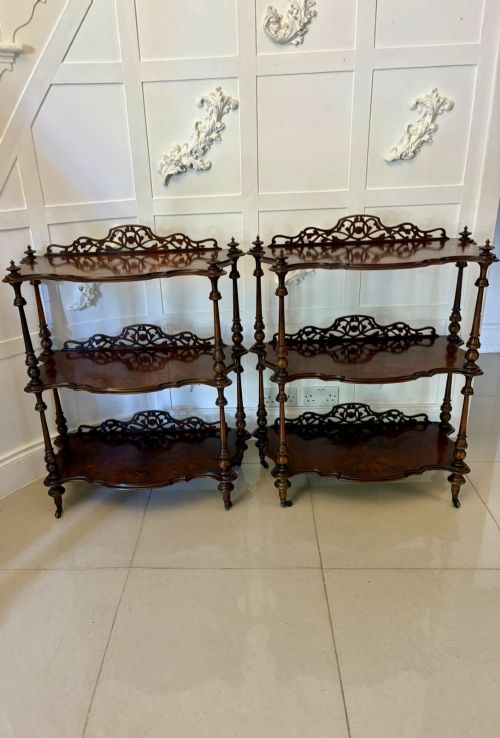
These tiered walnut etagere table designs combine display space and mobility, offering collectors multitiered surfaces crafted in rich burr woods.
Walnut Etagere Table
A walnut etagere table functions as an open tiered stand or multitiered side table designed for display and light service, appearing frequently in Victorian and Edwardian domestic interiors. The pieces on this page span the mid-nineteenth century to the early twentieth century, incorporating French continental influences alongside British cabinetmaking traditions.
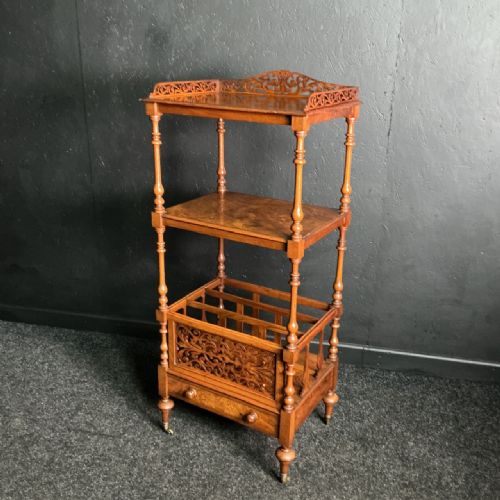
Makers and workshops produced these forms as freestanding whatnots, narrow console tables, and multi-tiered etageres with brass galleries or delicate turned supports. Burr walnut and figured walnut provide the primary visual character across both English iterations and pieces made in the French manner.
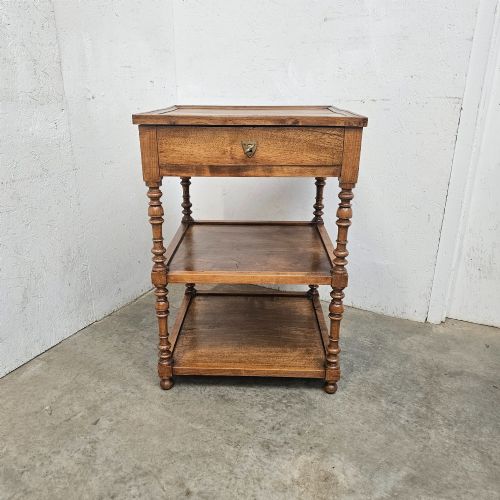
Buyers encountering this selection will find tiered surfaces ranging from simple two-tier occasional tables to grander three-height display stands decorated with marquetry inlay. The scale varies from diminutive bedside pieces to exhibition-quality freestanding items with substantial architectural presence.
Materials and construction methods
Cabinetmakers utilised walnut and burr walnut veneers applied over solid secondary timbers, often accentuating the grain pattern on top tiers and cabinet doors. Marquetry inlay featuring floral motifs or geometric banding frequently decorates the primary display surfaces.
Metal mounts in ormolu, gilt metal, and brass appear throughout the construction, securing tiered platforms and edging shelves with protective galleries. Turned wooden legs, cabriole supports, and brass castors provide structural stability while maintaining the delicate silhouettes characteristic of the form.
Historic listings occasionally swap letters entirely, offering wonderful variations like the wotnot alongside the standard etagere.
Factors of distinction
The clarity and selection of the burr walnut veneer dictate the visual impact of a piece, distinguishing standard production from exhibition-quality works. Superior examples display symmetrical grain matching and intricate, tightly executed marquetry without lifting or significant shrinkage.
The weight and finish of the brass or ormolu mounts indicate the original workshop standard, where heavier cast details and secure joints separate finer pieces from simpler utility tables. Proportions also influence desirability, as diminutive or grandly proportioned etageres reflect greater design ambition than standard domestic formats.
Gillows·Holland & Sons·Whytock & Reid·Donald Ross
The Walnut Etagere Table Glossary
- Etagere
- A piece of furniture consisting of a set of open shelves for displaying small objects or ornaments. It usually stands free in a room.
- Whatnot
- A Victorian tiered shelving unit used for ornaments and books. It shares many characteristics with the etagere.
- Marquetry
- Decorative veneer work where pieces of wood, shell, or metal are fitted into a glued matrix to form geometric or floral designs. It requires high precision by the cabinetmaker.
- Ormolu
- Gilt bronze ornamentation applied to furniture mounts and details. It provides a bright metallic contrast to dark walnut timbers.
- Burr Walnut
- Wood cut from a tree growth or burl, yielding swirling, highly figured grain patterns. It commands attention on primary table surfaces.
Walnut Etagere Table: Frequently Asked Questions
What is a walnut etagere table used for?
These tiered tables served as ornamental stands for displaying ceramics, small clocks, and collectibles in nineteenth-century drawing rooms.
Today they function effectively as lamp tables or corner display units in domestic interiors.
How do I identify a Victorian walnut etagere?
Victorian examples typically feature dark walnut or burr walnut veneers, turned supports, and occasionally brass galleries around the shelves.
They frequently align with English cabinetmaking styles or borrow decorative motifs from French furniture makers.
What is the difference between an etagere and a whatnot?
The terms are often used interchangeably by makers and dealers to describe tiered shelving furniture.
Etageres more commonly lean toward French design influences with ormolu mounts, whereas whatnot is a traditional British term.
Are these tables sturdy enough for daily use?
Most tiered tables are built with multiple upright supports and joined shelves that provide adequate stability for everyday items.
However, their delicate turned legs and tiered tiers mean they suit display and light placement better than heavy service.
How should I care for burr walnut veneer?
Burr walnut benefits from stable room environments away from direct sunlight and excessive heat sources.
Regular dusting with a soft dry cloth preserves the polished surface without damaging the historic finish.