



French Tiered Nightstand
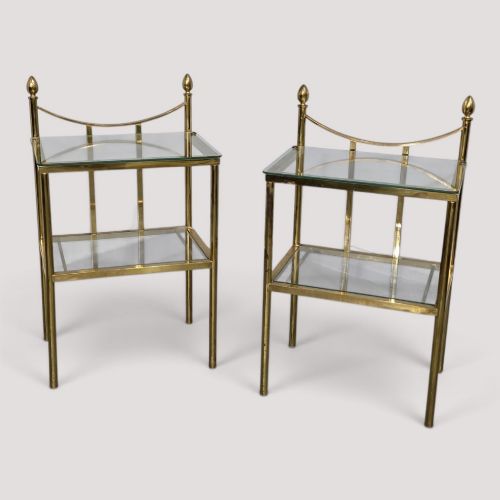
These french tiered nightstand pieces bring practical multi-level surface space and classic continental elegance to a bedroom.
French Tiered Nightstand
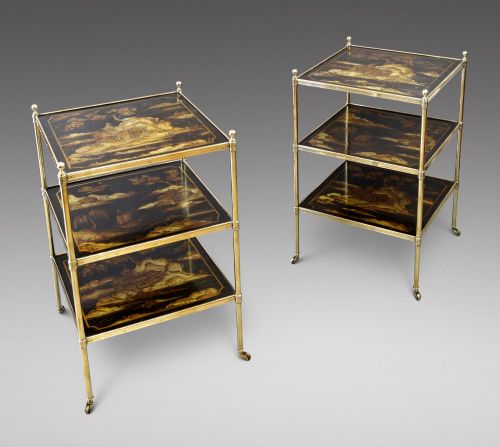
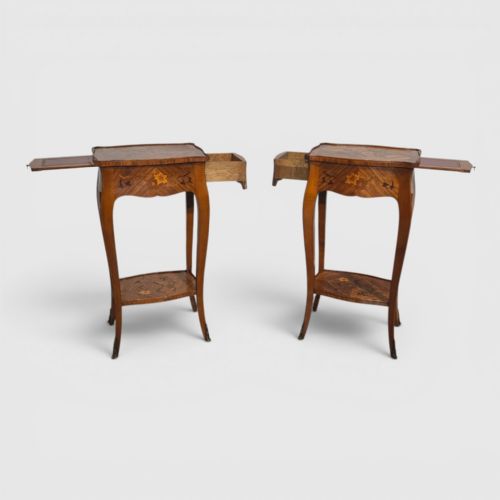
A french tiered nightstand combines multiple levels of display or storage surfaces, appearing frequently as bedside tables, occasional tables, and etageres across this selection. These pieces trace their origins through various periods including the nineteenth century, nineteen-twenties, and Regency eras.
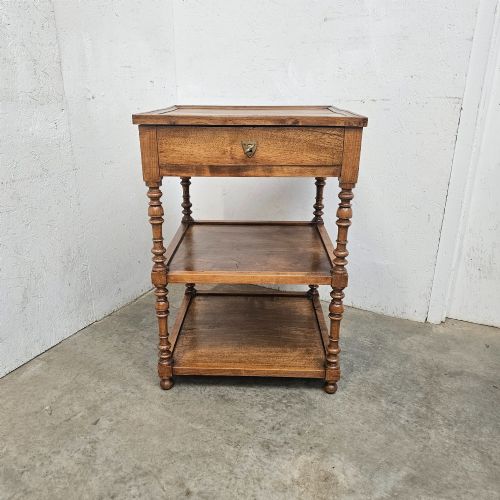
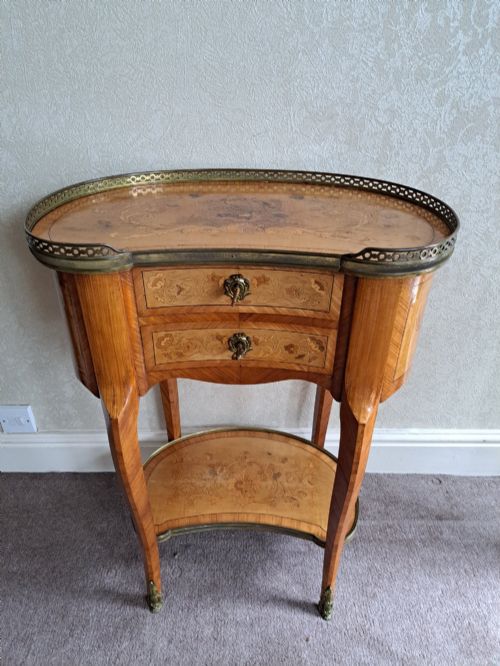
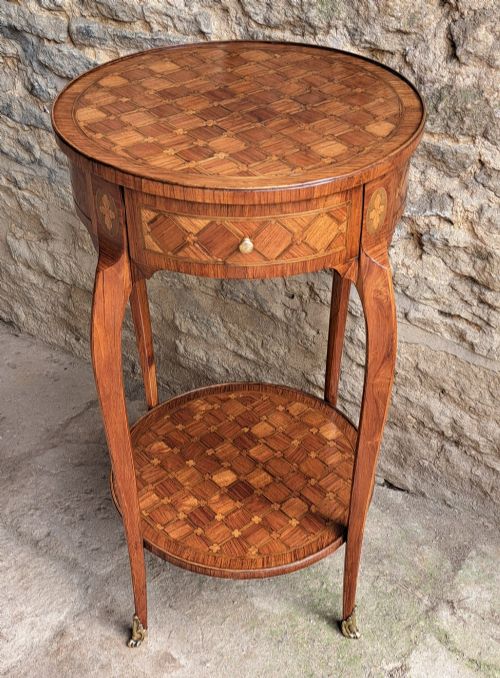
The silhouettes span rectangular, circular, kidney-shaped, and tall end table formats, often featuring two or three tiers designed for compact bedside placement. Walnut, mahogany, and fruitwood form the structural foundation of these multi-level surfaces.
Makers and designers channel historical aesthetics such as Louis XV style, Napoleon III, and Hollywood Regency. Buyers encounter both simple turned-leg models and highly decorative inlaid versions.
Materials and Construction
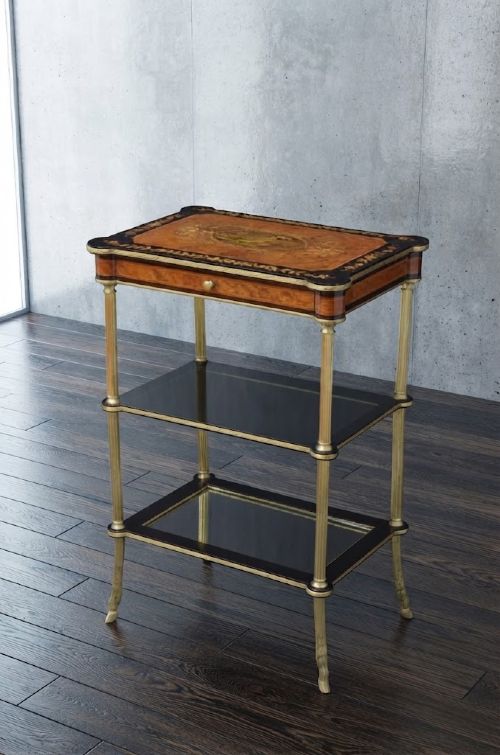
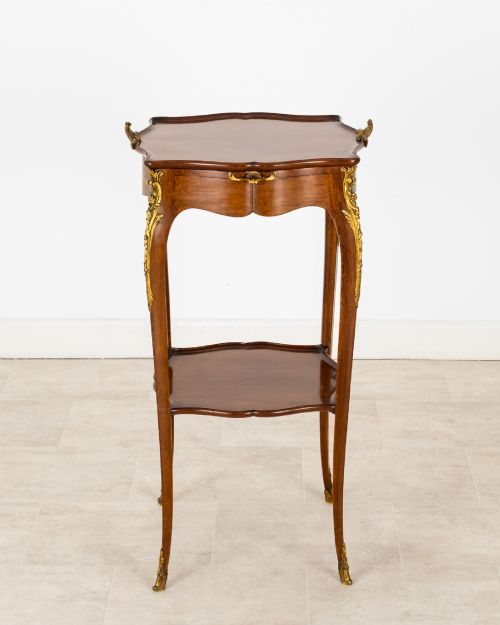
Cabinet makers utilise rich timber veneers including kingwood, rosewood, and walnut applied over solid structural carcases, frequently accented with marquetry and parquetry patterns. Ormolu mounts, gilt metal, and brass fixtures provide structural reinforcement and decorative contrast along edges and legs.
Insets of white or coloured marble and mirrored glass frequently form the top surfaces of these tiered tables. Canework, painted finishes, and ebonised wood details appear alongside traditional turned legs.
Some nineteenth-century bedside companions double as vide-poches, literally translating as empty-pockets for depositing small daily items.
Evaluating Quality
Quality rests in the precision of the marquetry inlay and the crispness of the cast ormolu mounts affixed to the timber frame. Superior examples demonstrate tight veneer matching and seamless integration of multiple tiers.
The choice of top material, such as heavy fitted marble or bevelled mirror glass, elevates the piece beyond standard timber surfaces. Finer items exhibit refined turning on the legs and balanced proportions across all levels.
François Linke
The French Tiered Nightstand Glossary
- Etagere
- An open piece of furniture with multiple shelves or tiers for displaying small objects. This form provides accessible surface space at varying heights.
- Ormolu
- Gilt bronze ornamentation applied to the mounts and feet of fine furniture. This technique adds metallic highlights to wood surfaces.
- Marquetry
- Decorative veneer patterns formed by fitted pieces of different coloured wood. Artisans create pictorial or geometric designs across tabletops.
- Parquetry
- Geometric mosaic woodwork used for repeating patterns on table surfaces. This technique showcases contrasting timber grains.
- P poudreuse
- A French dressing table or work table containing compartments. These multi-purpose pieces often feature folding tops and internal sections.
French Tiered Nightstand: Frequently Asked Questions
What is a french tiered nightstand used for?
These pieces serve primarily beside a bed to hold lighting, reading materials, and personal items across multiple levels. The extra tiers provide designated space for small objects without cluttering the main surface.
They also function as occasional tables in sitting rooms or hallways where vertical display space is preferred over a single wide surface.
How do I identify Louis XV style furniture?
Louis XV style pieces display characteristic curved lines, cabriole legs, and asymmetrical floral or rococo ornamentation. Ormolu mounts often accentuate the scrolling contours of the woodwork.
The aesthetic emphasises lightness and grace, moving away from rigid symmetry in favour of flowing natural forms.
Are marble tops original to these tables?
Many nineteenth-century French tables feature fitted marble slabs designed to provide a durable, heat-resistant surface for bedside use. These insets sit securely within wooden framing integrated into the top tier.
Original marble varies in colour and veining depending on the specific period and stylistic preference of the workshop.
How do I care for marquetry surfaces?
Marquetry surfaces require protection from direct sunlight and excessive moisture to prevent veneer lifting or fading. Regular dusting with a soft, dry cloth preserves the polished timber finish.
Application of appropriate paste wax helps nourish the wood and maintain the contrast between different veneer species.