

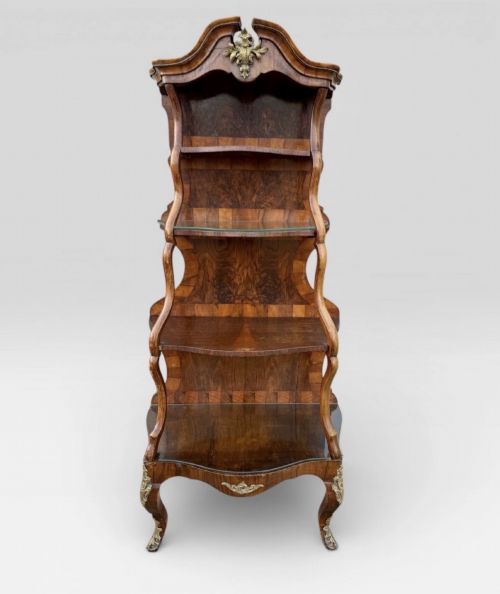
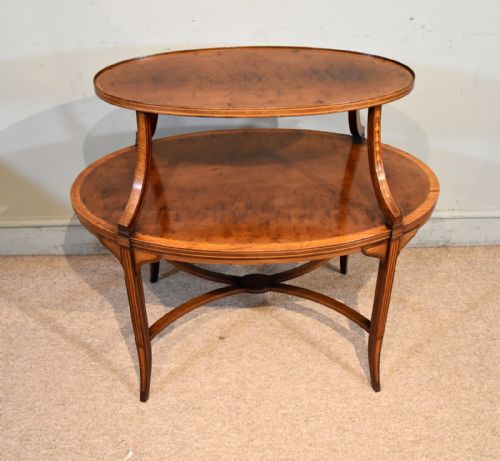


19th Century French Etagere
A 19th century french etagere provides tiered open display surfaces that bring distinct continental elegance and utility to an interior.
19th Century French Etagere
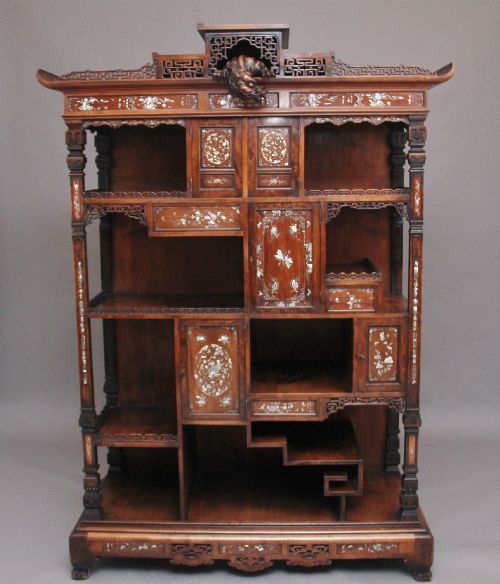
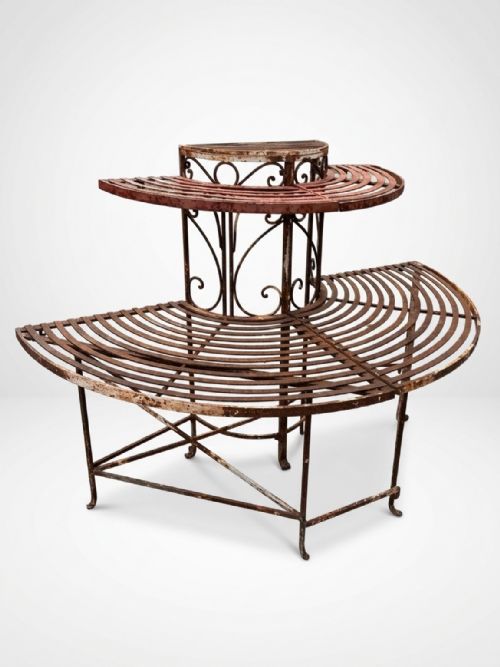
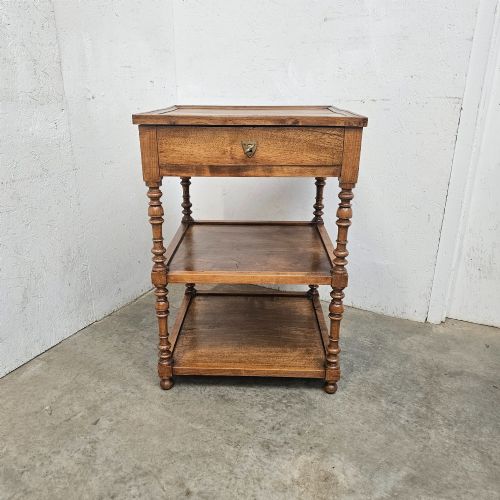
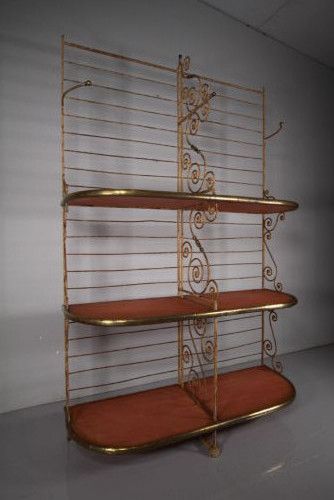
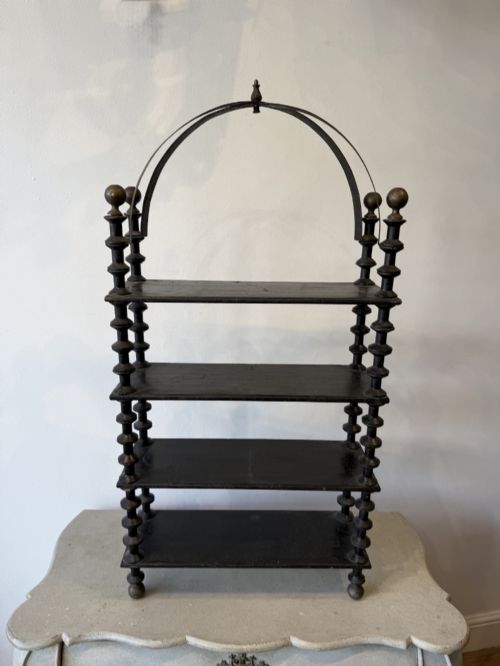
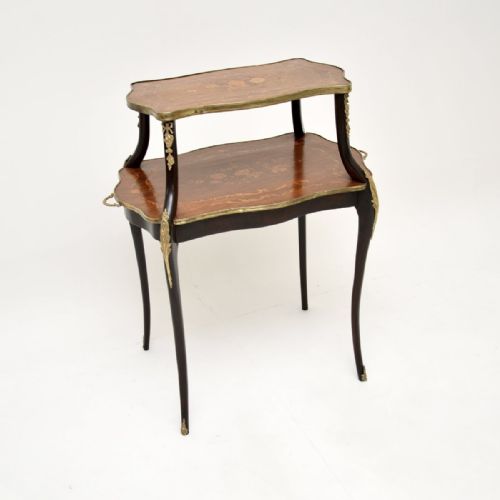
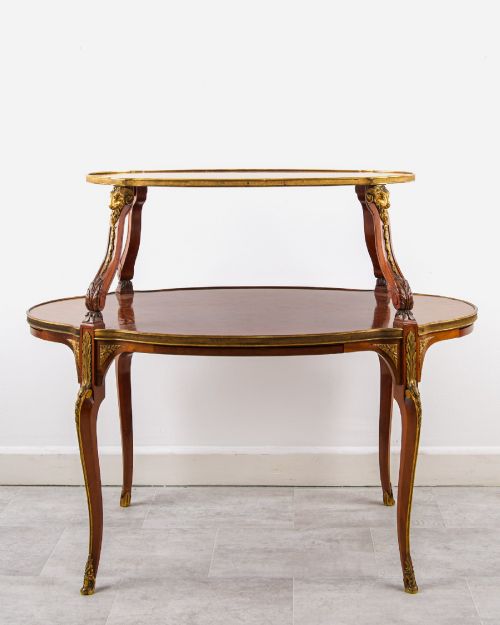
A 19th century french etagere is an open multi-tiered shelving unit or small display table designed for ornaments and small objects. These pieces appear in forms ranging from wall-hanging shelves and side tables to multi-tiered centre tables and music cabinets. Walnut, mahogany, and exotic veneered timbers form the structural basis of most examples seen here.
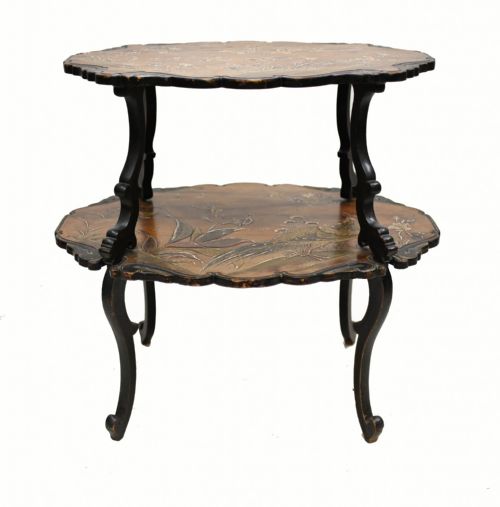
The aesthetic vocabulary spans classical revival styles, including Rococo Revival, Louis XV, and Napoleon III, alongside distinct Japonisme interpretations. Workshops often incorporated brass mounts, ormolu, and glass trays to elevate the visual lightness of the tiered construction. Both floor-standing etagere tables and hanging wall versions satisfy the collector looking for display space with period character.
How They Were Made
Cabinetmakers constructed these frames using dense hardwoods like walnut, mahogany, and cherry, frequently applying decorative veneers such as kingwood, rosewood, amboyna, and satinwood. Marquetry and parquetry inlays formed intricate floral or geometric patterns across tabletops and shelves. Ebonised wood offered a contrasting dark finish popular in late period pieces.
Cast ormolu and brass mounts framed corners, legs, and galleries, providing structural reinforcement and decorative accents. Turned legs, bobbin turnings, and delicate brass-mounted galleries defined the upright supports and tier edges. Glass trays and panels occasionally served as inset surfaces for display tiers.
Listings feature walnut, mahogany, and kingwood timbers, alongside brass mounts, marquetry inlay, and glass tray details.
What Varies in Quality
The refinement of the marquetry inlay and the choice of exotic timber dictate the upper tier of the range. Master workshops utilised finely figured veneers and precise floral or parquetry marquetry, whereas simpler pieces relied on plain walnut or mahogany. The precision of the timber matching and the crispness of the inlaid details distinguish standard production from exceptional examples.
Metalwork quality separates standard items from finer works. Cast ormolu mounts with deep chasing and careful finishing indicate superior craftsmanship compared to plain brass pressings. The structural stability of multi-tiered uprights and the seamless integration of bronze or brass mounts reflect the maker's original investment of time and skill.
Gabriel Viardot·Edwards and Roberts·Gabriel-Frederic Viardot·Donald Ross
The 19th Century French Etagere Glossary
- Etagere
- A piece of furniture consisting of a set of open shelves for displaying small objects or ornaments. These tiered stands developed in France during the eighteenth century and remained popular throughout the nineteenth century.
- Ormolu
- Gilded bronze mounts applied to furniture for decorative accent and edge protection. This technique required mercury gilding on cast bronze components.
- Marquetry
- Decorative woodwork where pieces of veneer are fitted together to form pictorial or geometric designs. Craftsmen used various tinted woods to create complex scenes on table tops and shelves.
- Japonisme
- The influence of Japanese art and design on Western decorative arts during the late nineteenth century. Pieces in this style often incorporate asymmetrical shelves and ebonised frames.
- Parquetry
- Geometric wood inlay forming repeating patterns such as cubes or chequers across a surface. This technique decorated tabletops and drawer fronts on refined tables.
19th Century French Etagere: Frequently Asked Questions
What is an etagere used for?
An etagere functions primarily as an open shelving unit for displaying porcelain, decorative objects, and small collections.
The multiple tiers allowed owners to exhibit decorative items across various vertical levels within a drawing room or salon.
How do I date a french etagere?
Dating relies on identifying the prevailing stylistic influences, timber choices, and construction techniques evident in the piece.
Mid-century examples often display classical mahogany or walnut veneers, while late period pieces frequently incorporate Japonisme motifs or ebonised surfaces.
Where should I place an etagere?
These pieces suit living rooms, hallways, and studies where open display surfaces complement other period furniture.
Freestanding etagere tables sit well beside seating areas, while wall-hanging versions occupy vertical spaces above consoles or fireplaces.
What is the difference between a whatnot and an etagere?
Both terms describe tiered open shelving units, though whatnot is often applied to English variants of the nineteenth century.
French pieces designated as etageres frequently exhibit more pronounced marquetry inlay, ormolu mounts, and continental revival styling.