




Walnut Etagere Stand
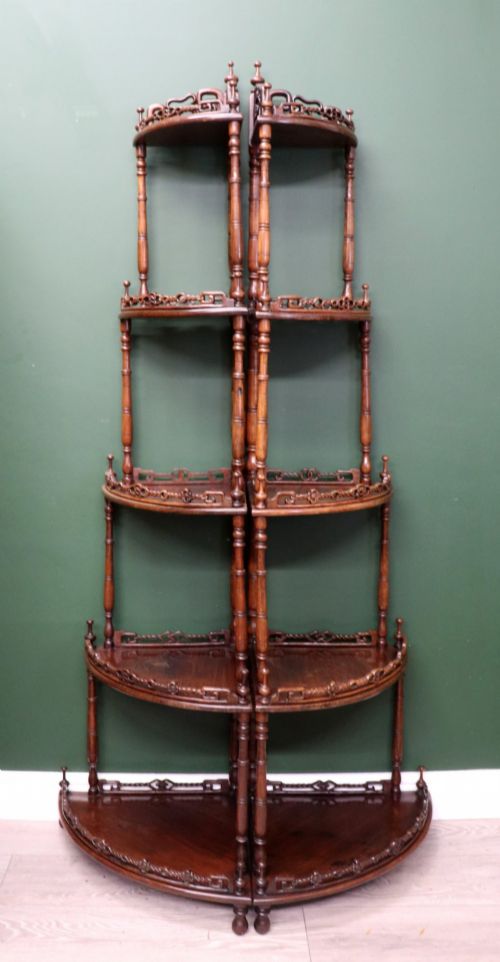
A walnut etagere stand brings tiered open display and rich timber grain to a room, drawing the eye upwards through multiple open shelves.
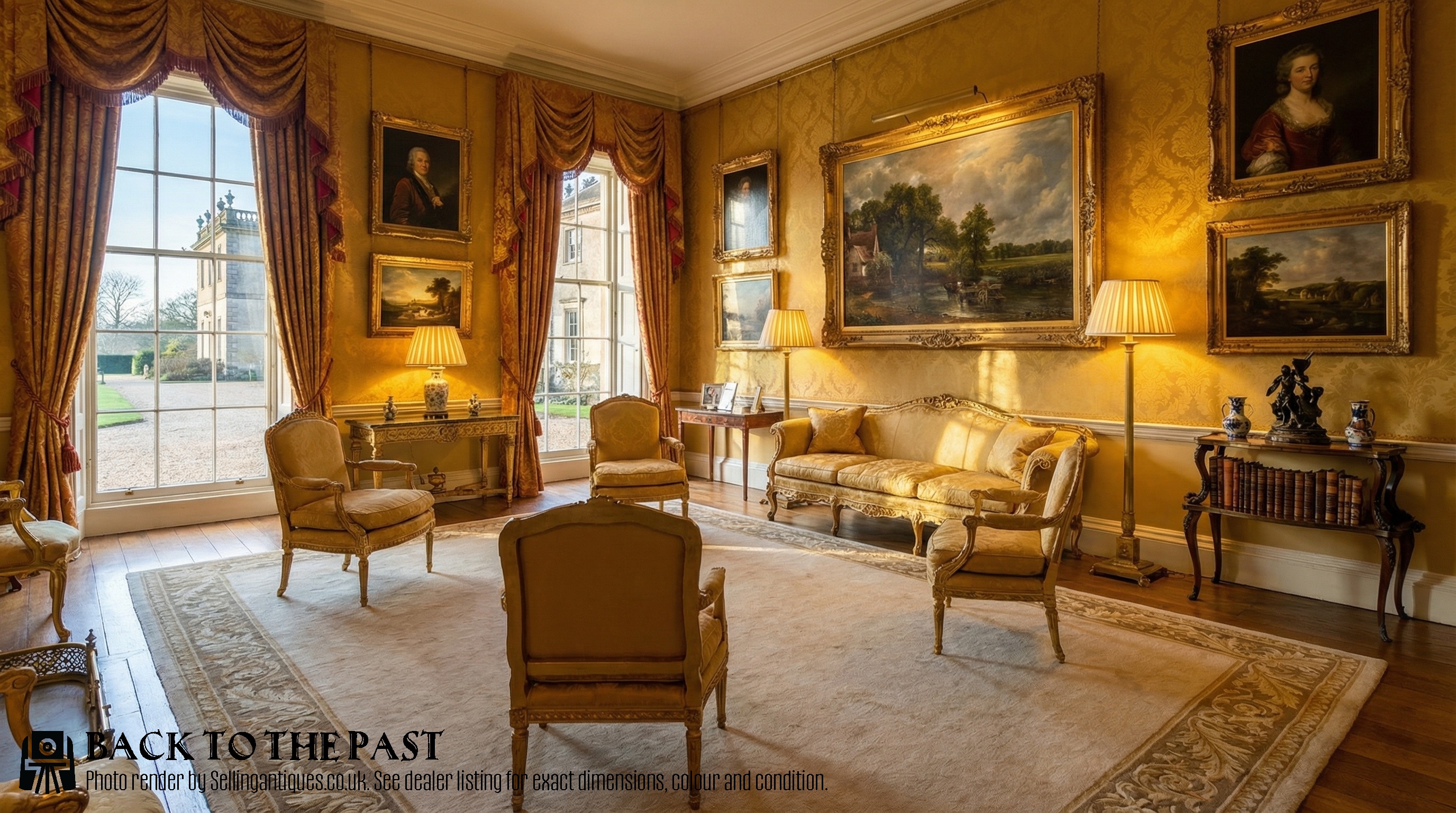
Walnut Etagere Stand
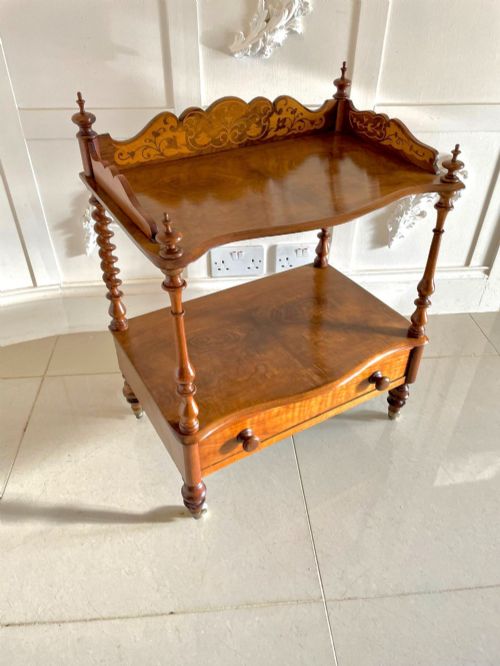
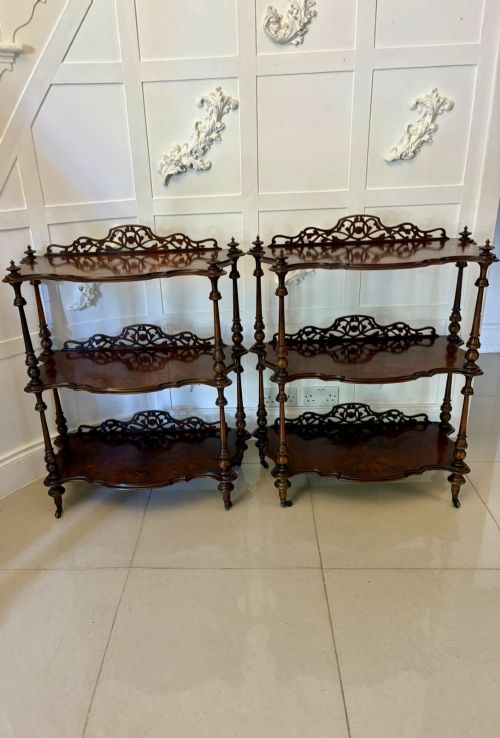
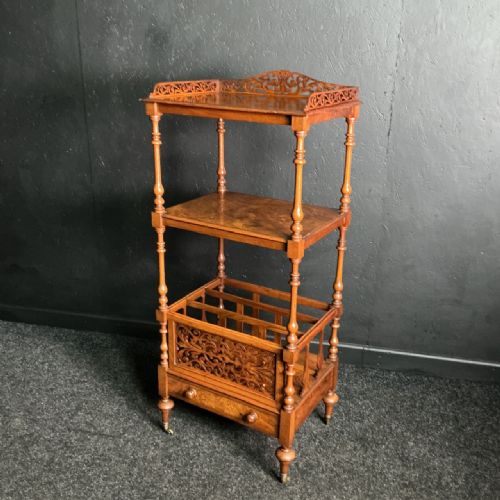
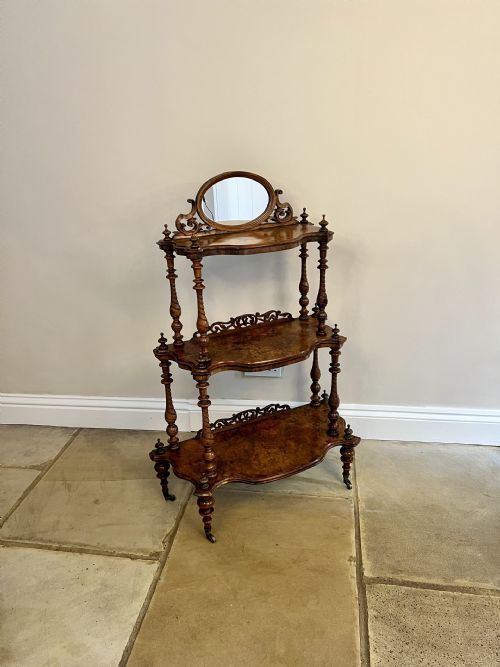
A walnut etagere stand combines open tiered shelving with the rich, figured grain of walnut timber. These pieces serve primarily to display ornaments, books, or small collections in a drawing room or parlour.
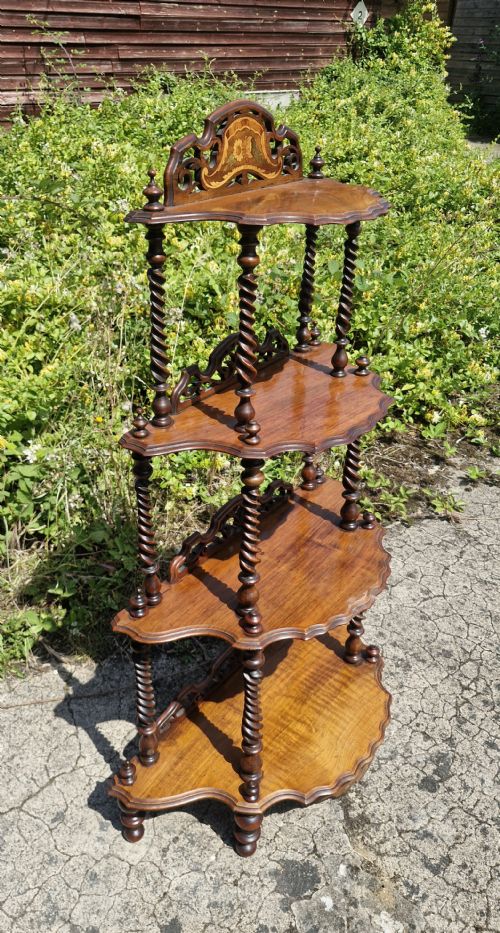
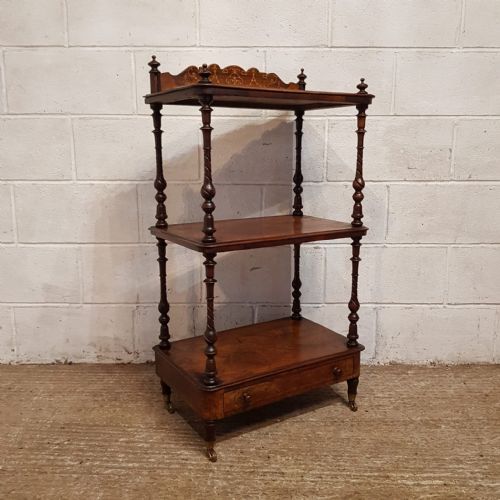
Most examples encountered here date from the Victorian and Edwardian periods, stretching from the mid-nineteenth century into the early twentieth century. English makers and French workshops produced these multi-tiered stands in various configurations, including freestanding three-tier models and corner units designed to fit tight spaces.
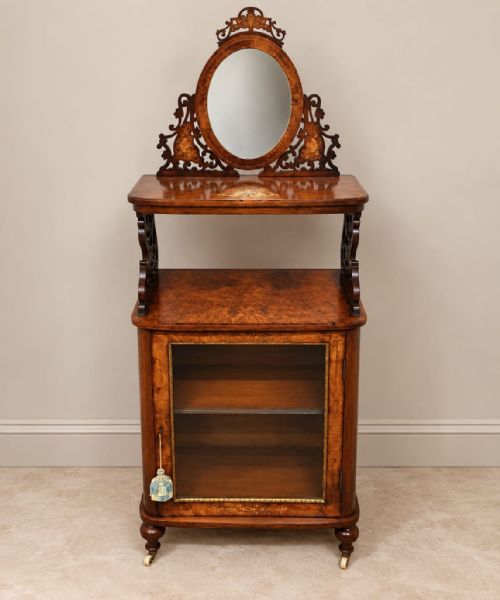
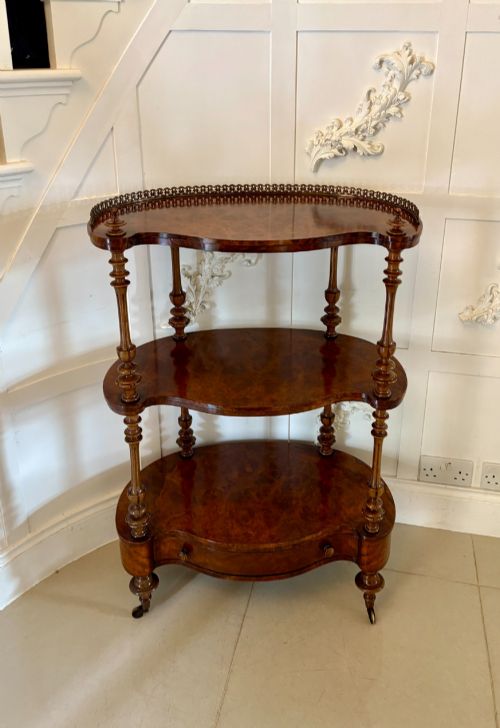
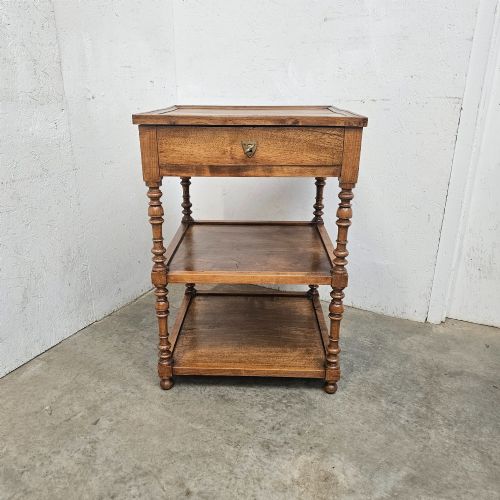
The form frequently overlaps with whatnots, display stands, and occasional tables, sharing the characteristic open shelves supported by slender uprights. Buyers meet tiered freestanding shelves most often on this page, alongside serpentine-shaped cabinets and corner shelves.
How they were made
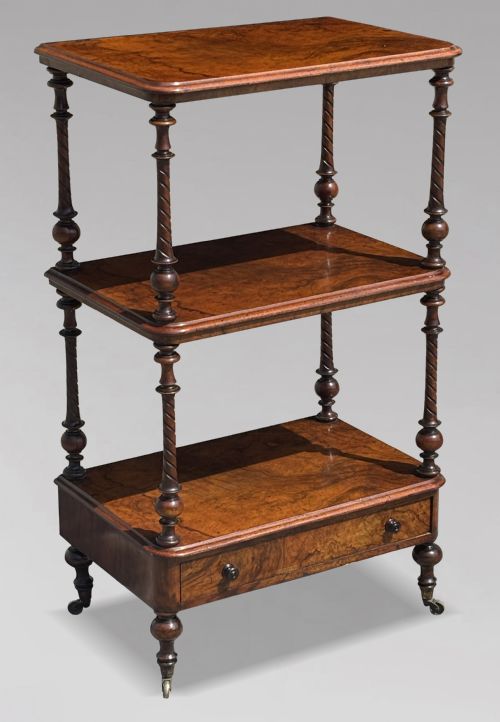
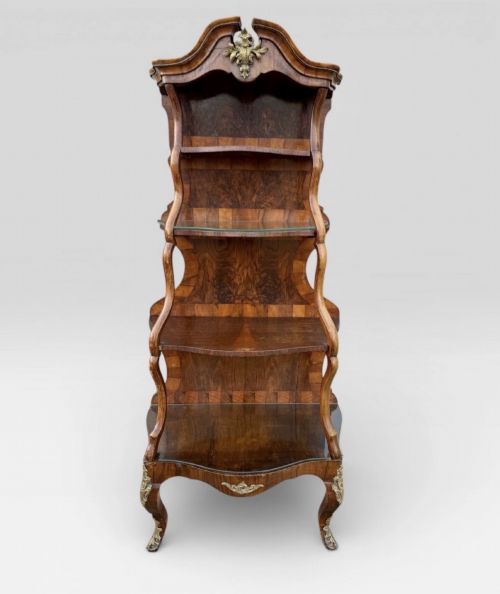
Cabinet makers utilised solid walnut and figured burr walnut veneers applied to secondary timbers to create patterned surfaces on shelves and friezes. Marquetry inlay, brass mounts, ormolu, and gilt bronze frequently decorate the structural framework of French and English pieces.
Turned wooden supports, shaped pillars, and brass galleries separate the individual tiers. Some examples incorporate ebonised wood or glass panels, whilst others utilise marquetry inlay to form floral or geometric patterns across the top shelf.
Victorian households needed distinct shelves for every small ornament, ensuring dust settled evenly across three separate levels.
What varies in quality
Quality rests upon the selection of the timber grain, particularly the depth and figuration of the burr walnut veneer used across the shelves. Superior examples display intricate marquetry work and heavy gauge brass or ormolu mounts rather than plain timber edges.
Construction methods also separate standard production from exhibition pieces, visible in the turning of the upright supports and the rigidity of the multi-tiered joints. Higher grade pieces often feature serpentine shaping, fitted drawers, or cabinet sections beneath the open shelves.
Gabriel Viardot·Gillows
The Walnut Etagere Stand Glossary
- Etagere
- A piece of furniture consisting of a set of open shelves for displaying small objects or ornaments. These tiers rise progressively from bottom to top.
- Whatnot
- A multi-tiered piece of nineteenth-century furniture used for storage or display. The term is frequently interchanged with etagere.
- Burr walnut
- Timber taken from a walnut tree outgrowth, producing intricate and swirling grain patterns. Cabinet makers prized this wood for veneering prominent surfaces.
- Marquetry
- Decorative woodwork where pieces of veneer are fitted into a ground material to form designs. This technique decorates the top tiers of finer stands.
- Ormolu
- Gilded bronze applications used as mounts on furniture. French examples frequently incorporate these metal decorations.
- Serpentine
- A curved line of furniture shaping that undulates inward and outward. This contour appears on the edges of higher quality shelves.
Walnut Etagere Stand: Frequently Asked Questions
What is an etagere stand used for?
These pieces function as open display furniture for ceramics, silver, or small ornaments. The tiered shelves allow items to be viewed from multiple angles.
Historically, they occupied drawing rooms and parlours where display space mattered. Today, collectors use them to hold books or collections without crowding a floor plan.
How do I tell a whatnot from an etagere?
The terms overlap significantly in nineteenth-century furniture trade and modern description. Both denote multi-tiered shelving units designed for display.
French pieces lean towards the term etagere, whilst English makers often catalogued similar tiered furniture as whatnots. Construction and purpose remain largely identical.
Are these stands sturdy enough for daily use?
Tiered stands rely on slender upright pillars to support the upper shelves. They suit lighter decorative objects rather than heavy leather-bound volumes.
Placing them away from heavy foot traffic protects the slender turned columns and applied brass galleries from accidental knocks.
How do I date a walnut etagere?
Dating relies on timber choice, mounting styles, and construction details. Mid-nineteenth-century pieces often feature rich burr walnut veneers and heavy turned supports.
Later Victorian and Edwardian examples sometimes incorporate ebonised elements, marquetry, or French Louis XV revival styling influenced by continental workshops.