
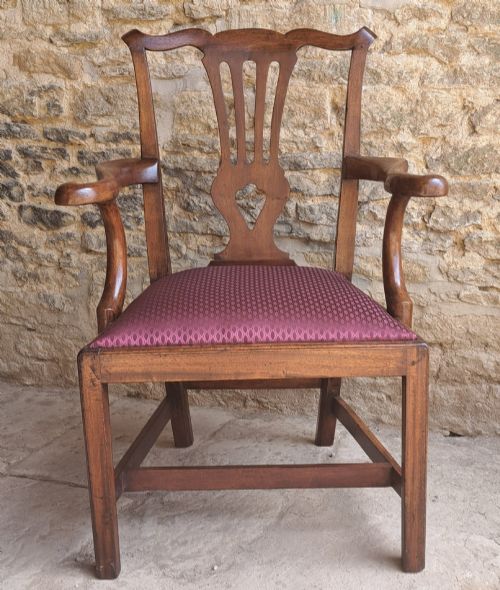
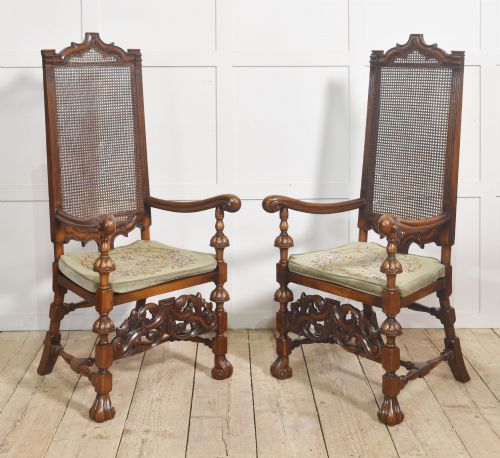
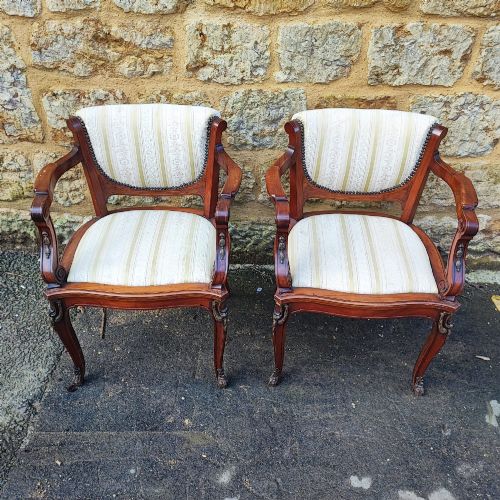
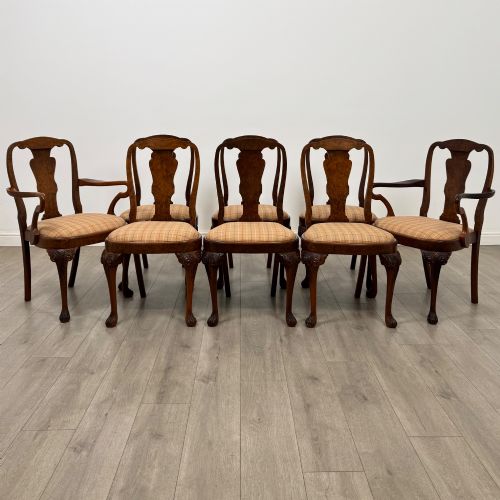
Walnut Carver Chairs
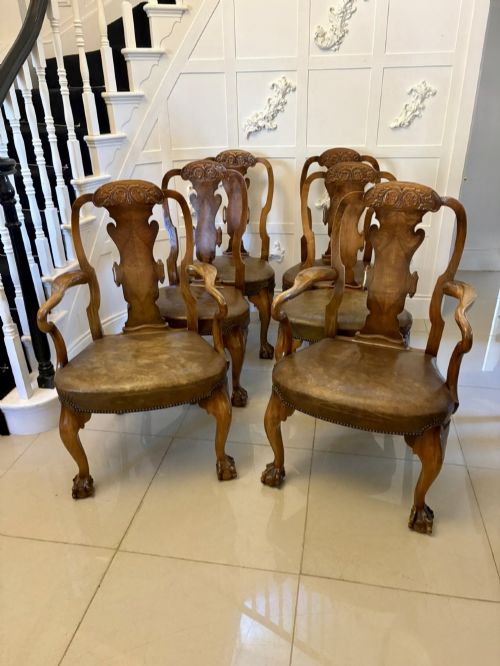
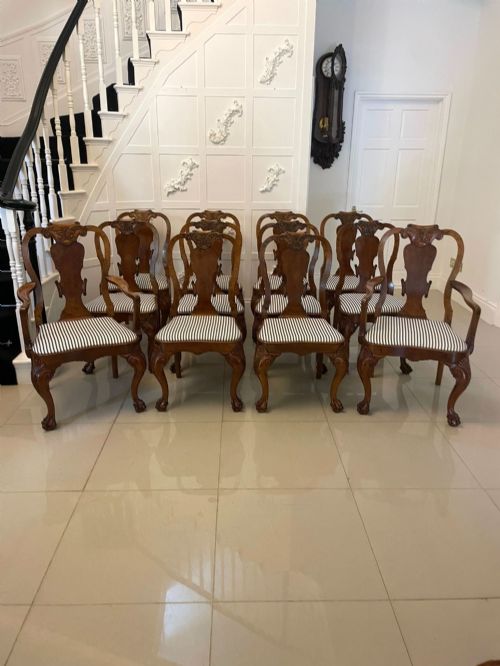
Walnut carver chairs combine sturdy timber framing with armrests for the head of the table or the study.
Walnut Carver Chairs
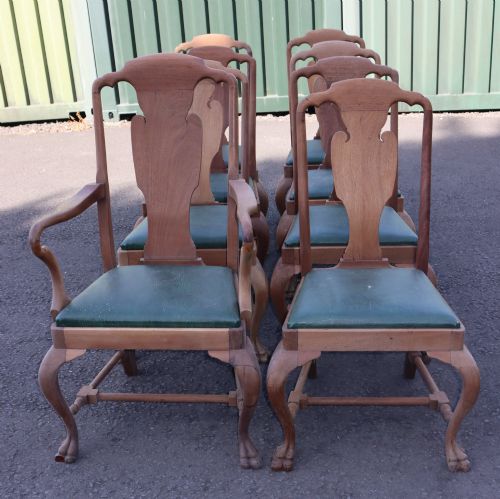
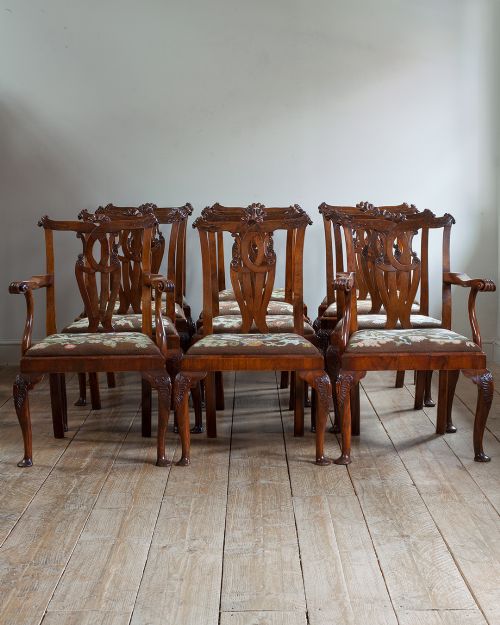
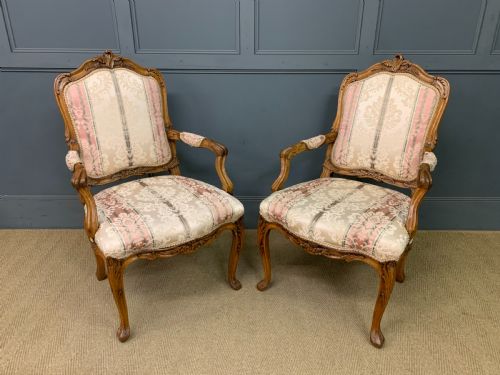
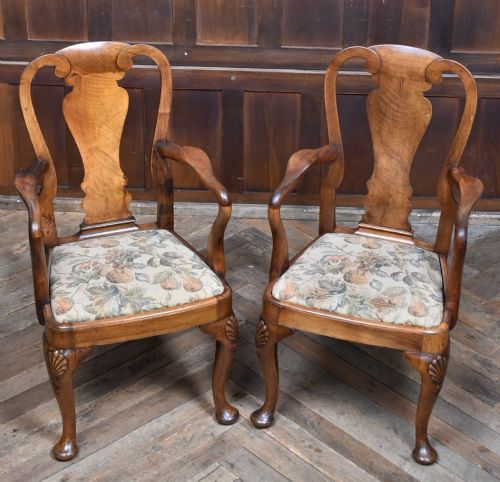
Walnut carver chairs appear across the seventeenth, eighteenth, nineteenth, and twentieth centuries, spanning periods from William and Mary through Victorian, Edwardian, and Art Deco designs. Buyers encounter individual pairs, library armchairs, desk chairs, and larger dining sets including carvers alongside side chairs.
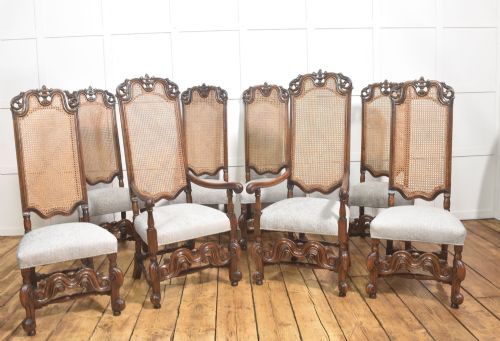
The styles range widely, encompassing Queen Anne, George II, Chippendale, and Hepplewhite influences alongside French, Italian, Dutch, and Scottish regional variations. Many incorporate high backs, cane panels, or padded seats upholstered in fabric, leather, or velvet.
How they were made
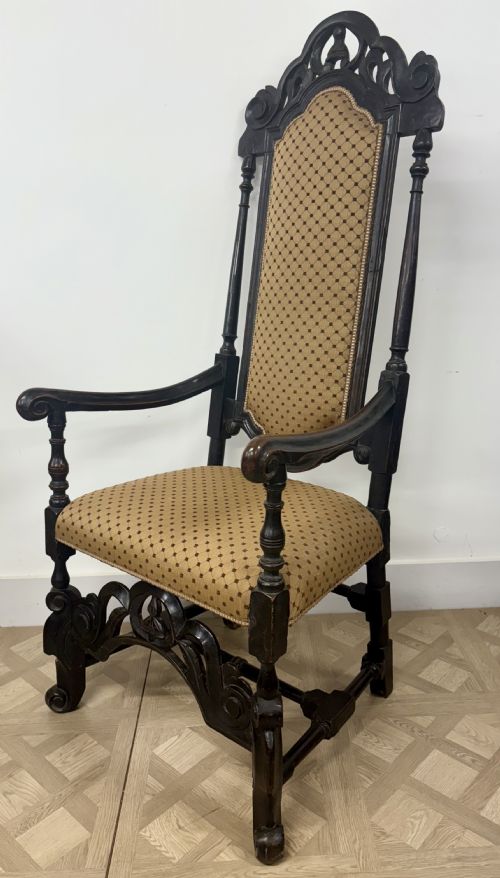
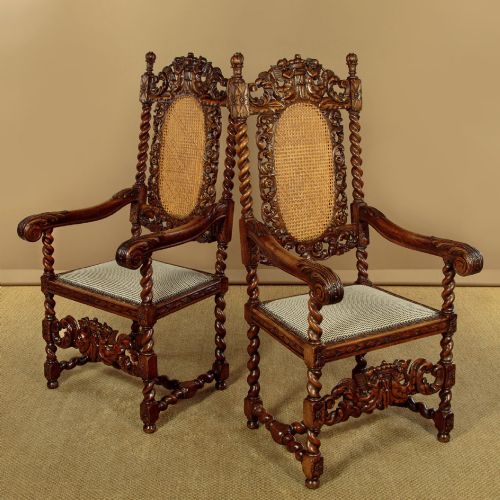
Makers utilised solid walnut and decorative burr walnut veneers applied to carcase timbers, shaping frames through joinery and carving. Many examples incorporate cane work for back panels alongside drop-in or fixed seats upholstered in leather, velvet, and textile fabrics.
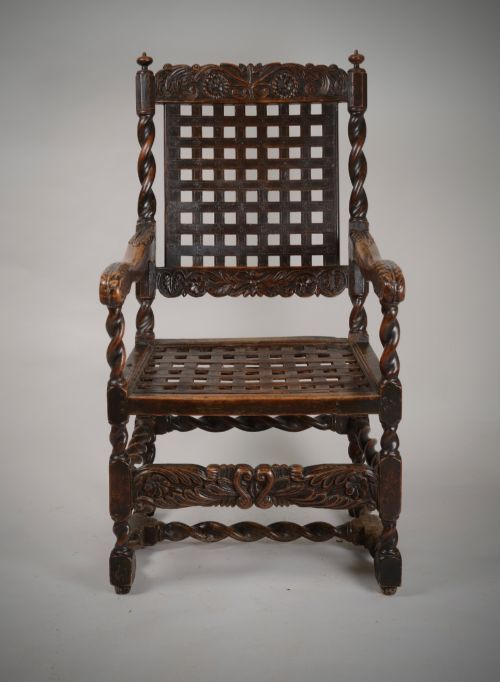
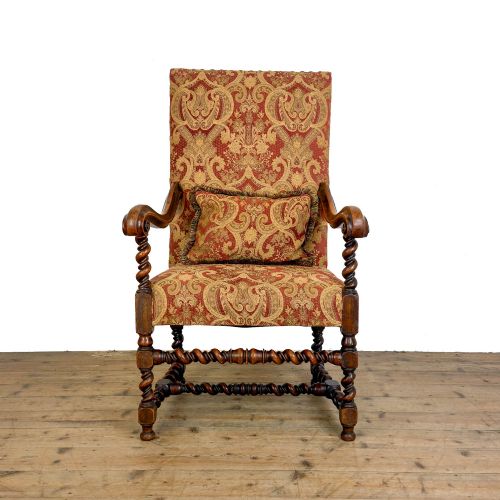
Structural reinforcement frequently involved brass fittings, stretchers between legs, and carved details such as barley twists or cabriole legs. Upholstery methods evolved from early stuff-over foundations to later sprung and webbed interiors.
Walnut Carver Chairs Retail Price Guide 2026
Typical asking prices for walnut carver chairs among the pieces listed under this phrase on Sellingantiques today, from the lower quarter to the upper quarter. They describe what is for sale here now, not the wider market.
One unexpected seventeenth-century survivor spent centuries hiding behind newer upholstery before revealing its original cane work.
What varies in quality
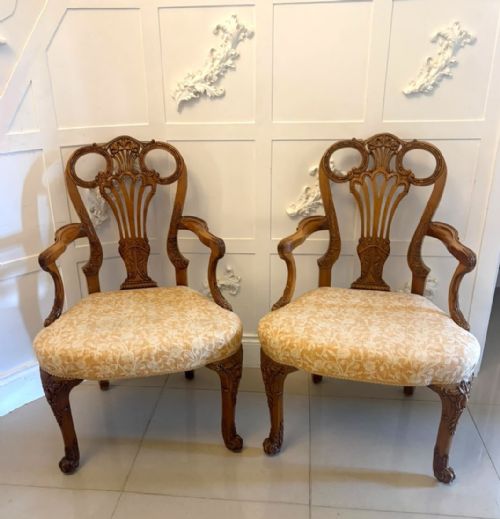
The depth and crispness of carved ornamentation separate standard production from finer workshop output, particularly on crest rails, knees, and arm terminals. The selection of timber grain, especially the figuring in burr walnut veneers, marks the distinction between ordinary and exceptional pieces.
Structural integrity depends upon the tightness of joints, the retention of original timber components, and the fidelity of revival styles to their historical precedents. The quality of upholstery materials and webbing beneath the fabric similarly dictates the standard of execution.
Lamb of Manchester·J and T Scott·Epstein
The Walnut Carver Chairs Glossary
- Carver
- An armchair, typically larger and designed for the head of a dining table or for a desk.
- Burr walnut
- Timber taken from a growth on a walnut tree, yielding highly decorative swirling grain patterns used for veneering.
- Cabriole leg
- A furniture leg that curves out at the knee and tapers inward to an ankle, often ending in a pad or claw foot.
- Cane
- Thin strips of peeled rattan woven into open mesh patterns for chair backs and seats.
- Splat
- The vertical wooden strip down the centre of an open chair back.
Walnut Carver Chairs: Frequently Asked Questions
What is a carver chair?
A carver chair is an armchair built with integrated armrests, traditionally placed at the ends of a dining table for the host.
These chairs also function independently as desk chairs or library seating due to their supportive side arms.
Are these chairs suitable for daily use?
Antique walnut carvers provide sturdy timber frames that withstand regular seating when joints remain tight and stable.
Modern buyers often place them at dining tables or desks, though older upholstery may require periodic maintenance.
How can I tell the age of walnut furniture?
Age is determined by timber patination, construction methods, tool marks, and stylistic indicators corresponding to specific design periods.
Comparing leg turning, stretcher placement, and fastening techniques helps distinguish eighteenth-century originals from later revivals.