


Walnut Candle Table
A walnut candle table offers a compact surface for evening light, combining period timber with the slender proportions of a traditional pedestal stand.
Walnut Candle Table
A walnut candle table is a small, portable pedestal piece designed to hold a light source beside a chair or bed. When searching for a walnut candle table, buyers encounter compact occasional furniture spanning the seventeenth century through to the Edwardian period, with Victorian examples appearing most frequently.
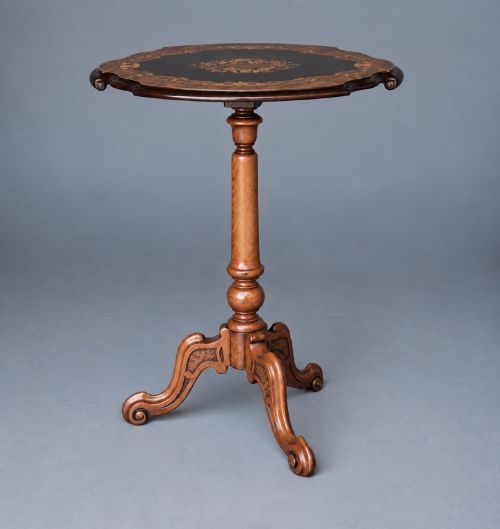
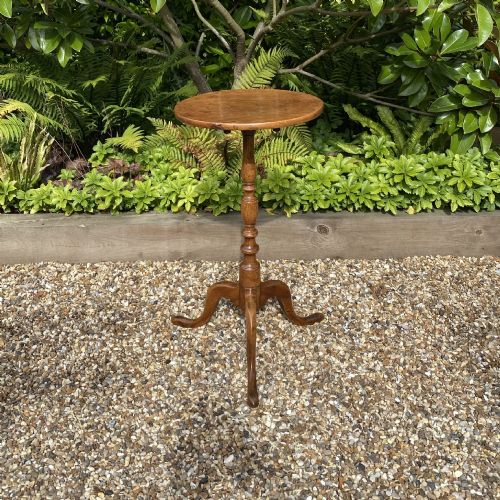
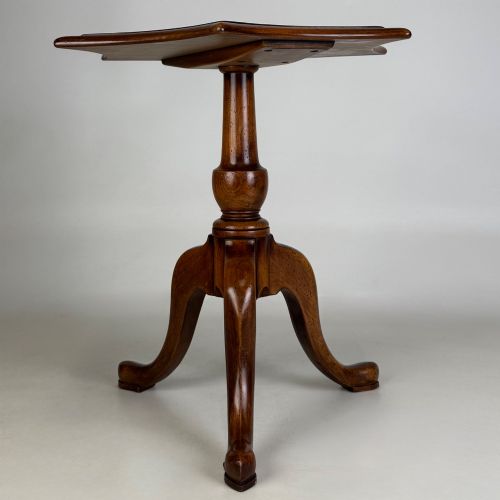
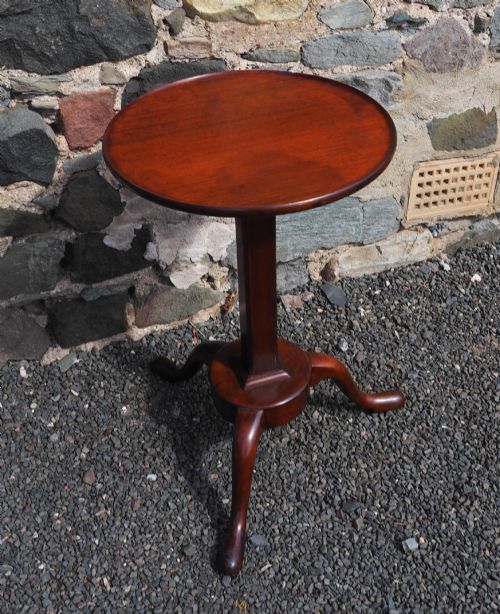
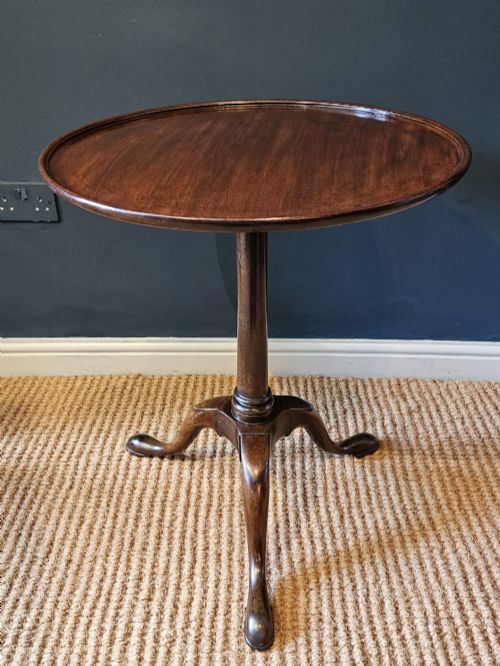
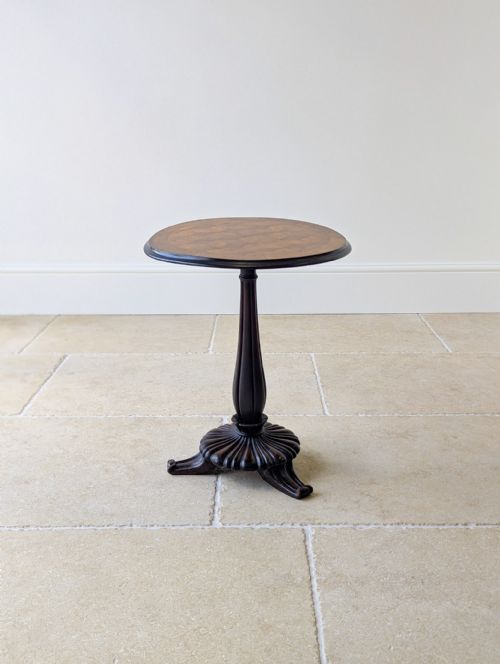
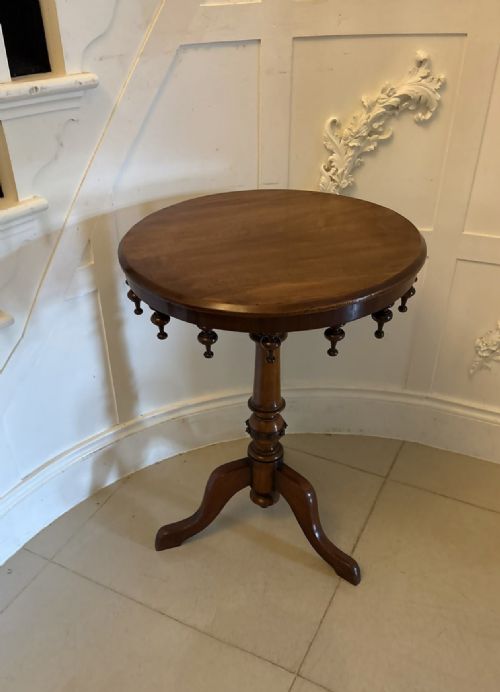
These pieces manifest primarily as tripod wine tables, adjustable candlestands, and snap-top occasional tables. Form follows function through slender central pillars supported by three legs, topped with circular, octagonal, or pie crust surfaces intended for easy repositioning around a room.
Makers utilised rich timber figures, sometimes pairing walnut with mahogany, fruitwood marquetry, or brass fittings. Surviving examples demonstrate how domestic lighting needs shaped small-scale cabinetmaking across successive centuries.
How they were made
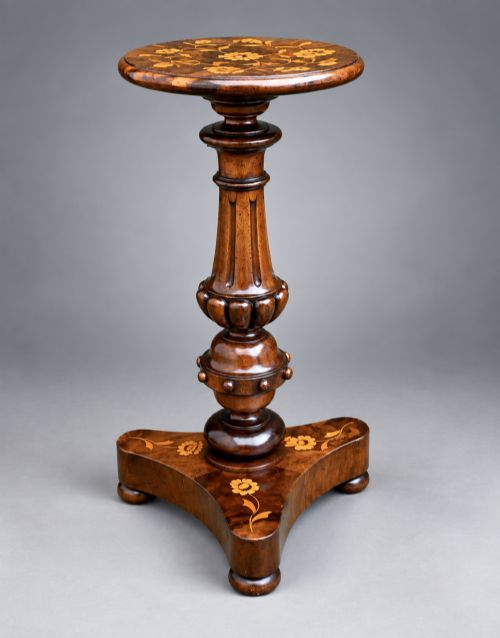
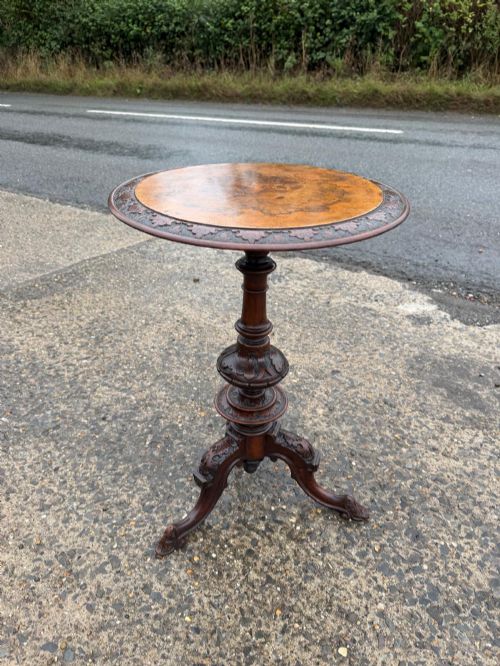
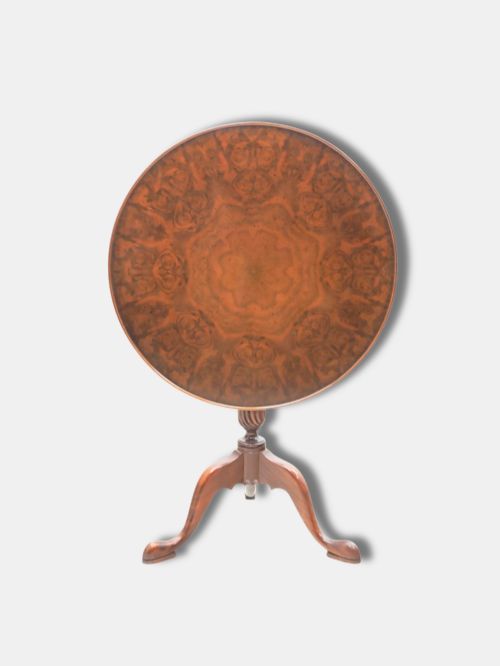
Cabinetmakers selected solid walnut and burr walnut veneer for its deep colour and decorative grain pattern. Surfaces frequently display intricate floral marquetry, wood inlay, or figured borders set onto solid timber frames.
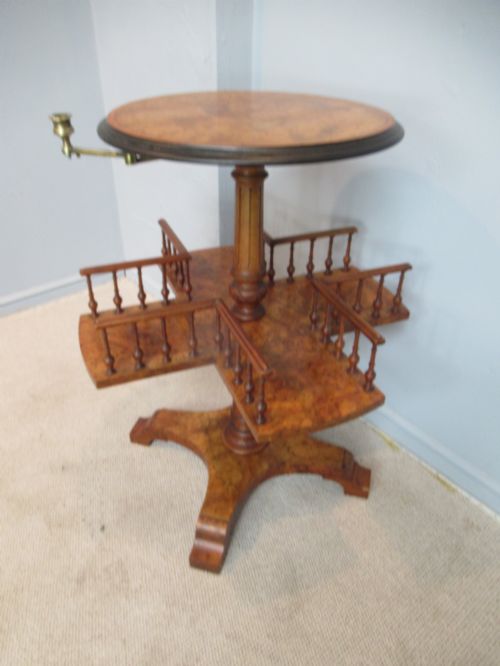
Turned central pedestals rise from tripod bases joined to the shaft with traditional carpentry joints. Mechanics such as snap-top mechanisms and adjustable shafts allowed tables to alter their height or tilt their tops when not in active use.
Listings feature walnut candle tables spanning from seventeenth-century William and Mary designs through to Edwardian interpretations, constructed in solid walnut, burr walnut, and mahogany.
What varies in quality
Quality rests upon the selection of the timber and the precision of the cabinetwork. Tables featuring highly figured burr walnut veneer and crisp floral marquetry sit at the upper end of the range, showing deliberate matching of grain across the top.
Structural integrity of the tripod base and the smoothness of any tilt or adjustment mechanism separate superior pieces from standard workshop production. The crispness of turning on the pedestal and the retention of original timber surfaces determine the lasting character of each stand.
Holland and Son·Charles Hindley and Sons London
The Walnut Candle Table Glossary
- Snap-top
- A hinged table top that folds flat against the vertical pedestal via a catch mechanism. This design allowed tables to stand flat against a wall when not holding a candle or glass.
- Tripod base
- A three-legged support structure radiating from a central turned column. It provides stable placement on uneven floors while maintaining a narrow footprint.
- Marquetry
- Fitted pieces of coloured wood veneer assembled to create pictorial or floral patterns on a surface. Dutch and English examples frequently display floral designs across the table top.
- Candlestand
- A tall, narrow pedestal table specifically proportioned to support a candle or lamp. These pieces often incorporate adjustable heights or raised galleries to secure lighting.
Walnut Candle Table: Frequently Asked Questions
How were candle tables used?
Owners placed these small tables beside armchairs or beds to support lighting fixtures, books, or small refreshments. The raised surfaces kept flames within easy reach during evening hours.
Some versions featured tilt-tops or adjustable heights to suit different seating arrangements. Their modest proportions made them versatile additions to drawing rooms and parlours.
How do I date a walnut candle table?
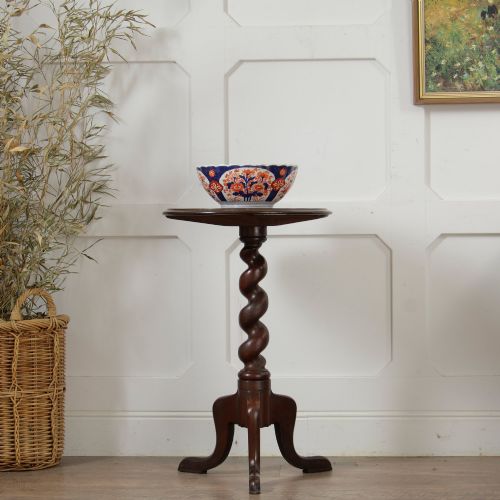
Dating relies on observing construction methods, leg profiles, and timber preparation techniques across different periods. Seventeenth and eighteenth-century examples display simpler turned shafts and heavier feet, while Victorian pieces often utilise elaborate burr veneers and barley twist pedestals.
Hardware details, such as hinges and catch mechanisms, also offer clues to the manufacturing era. Comparing the leg joinery helps distinguish between early Georgian originals and later revival pieces.
Are walnut candle tables stable?
Tripod bases provide three points of contact that naturally accommodate uneven floorboards without rocking. The weight of the timber column helps anchor the low centre of gravity.
While slender in appearance, properly constructed examples maintain balance under normal domestic use. Owners should avoid placing excessive weight on the outer edges of tilt-top variations.
How do I care for antique walnut?
Maintain antique walnut surfaces by keeping them away from direct sunlight and steady heat sources that dry out the timber. Regular dusting with a soft, dry cloth preserves the finish without building up residue.
Apply occasional traditional wax polish to nourish the wood grain and protect the polish. Avoid using modern liquid sprays containing silicone, which can penetrate and damage historic finishes.