
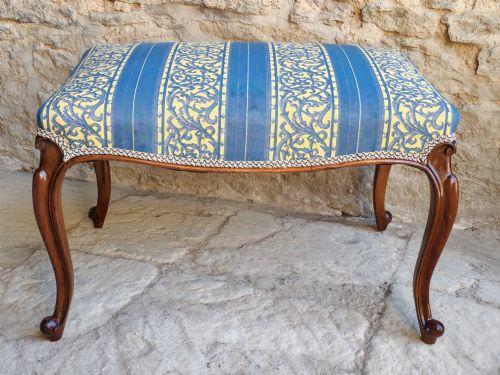
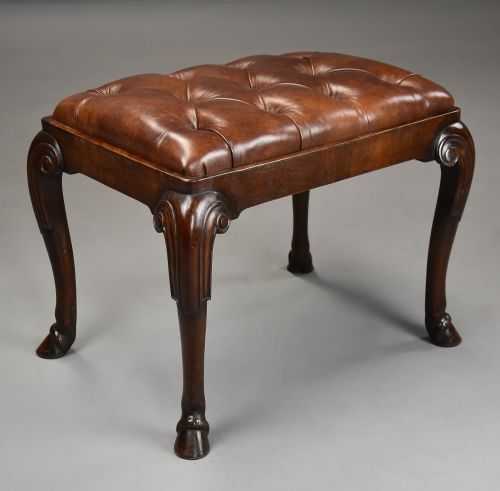
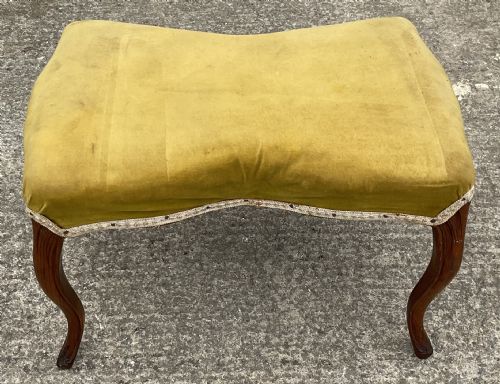
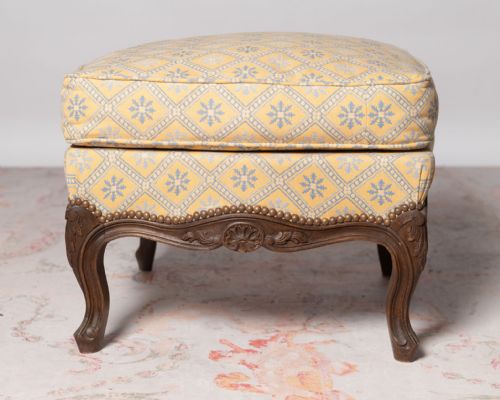
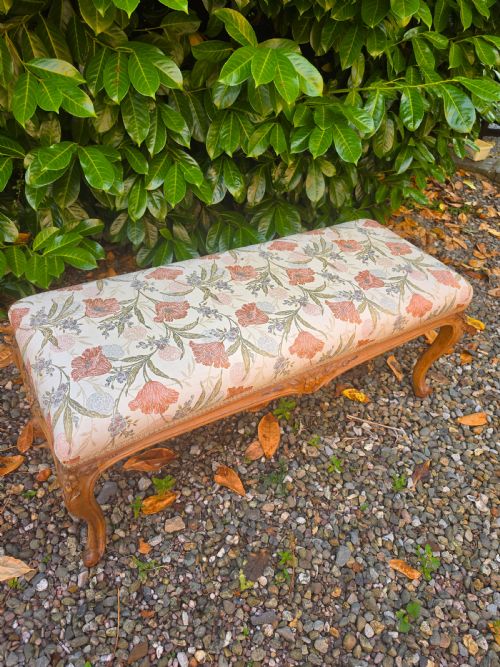
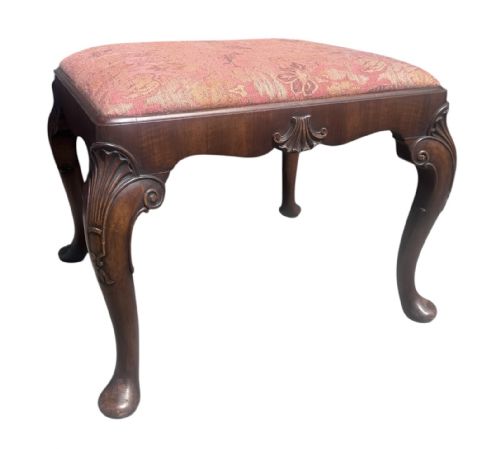
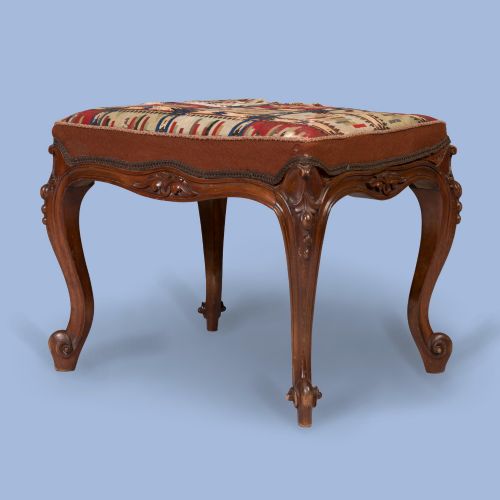

Walnut Cabriole Footstool
These walnut cabriole footstool pieces combine sturdy walnut timber with sweeping legs, offering classic seating for period rooms.
The walnut cabriole footstool
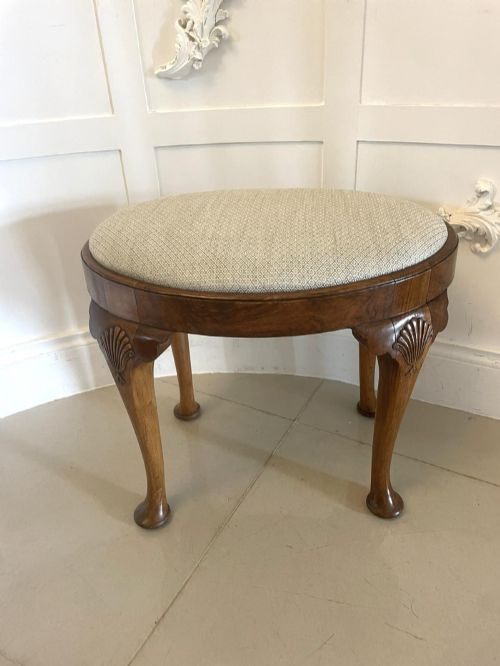
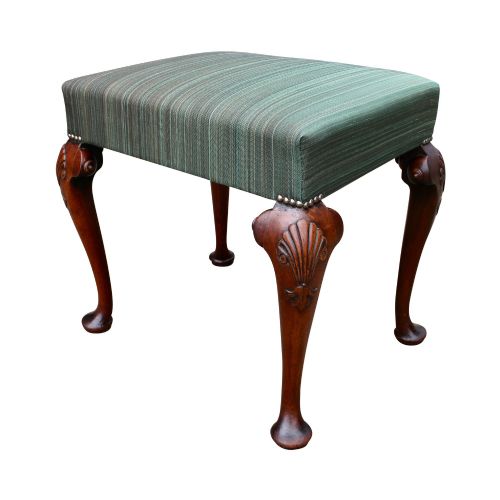
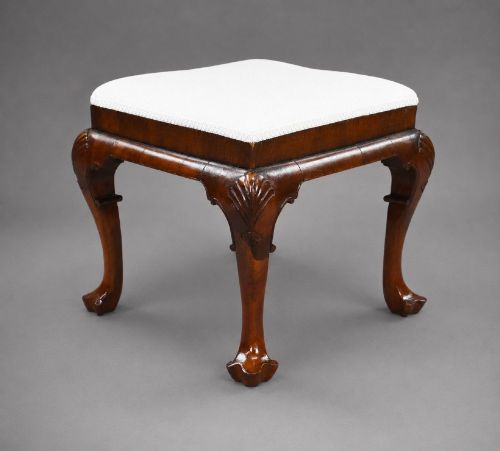
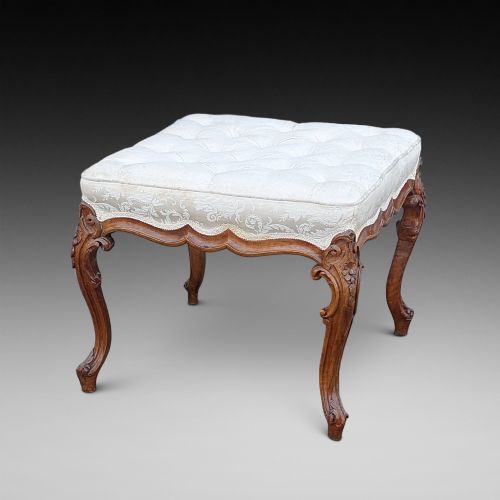
A walnut cabriole footstool takes the form of a low seat raised on curved legs with distinctive knee and foot profiles. Buyers find these pieces appearing in forms such as dressing stools and standard footstools.
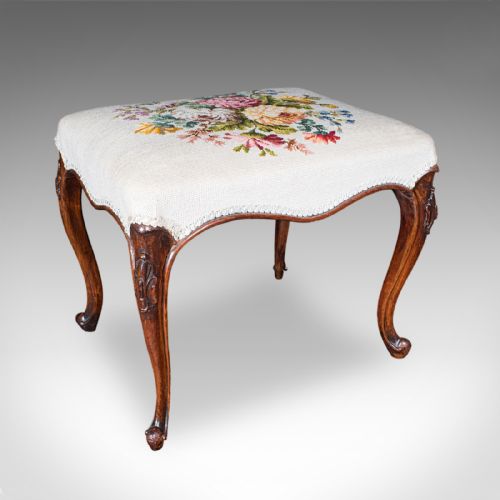
The inventory on this page shows examples ranging across the Georgian era, the nineteenth century, and nineteen-twenty revival pieces. Queen Anne style influences and French Chateau aesthetics dominate the design vocabulary.
Origins stretch from genuine eighteenth-century craftsmanship to later interpretations. Buyers are most likely to meet nineteen-twenty revival stools alongside earlier Georgian pieces.
Materials and construction
Makers utilised solid walnut for the structural frames, shaping the timber to form the characteristic curved legs. This dense wood provides the necessary strength for weight-bearing furniture.
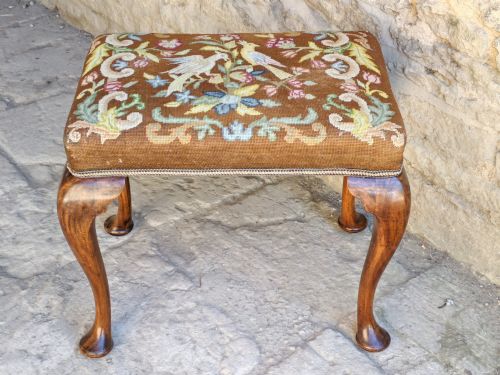
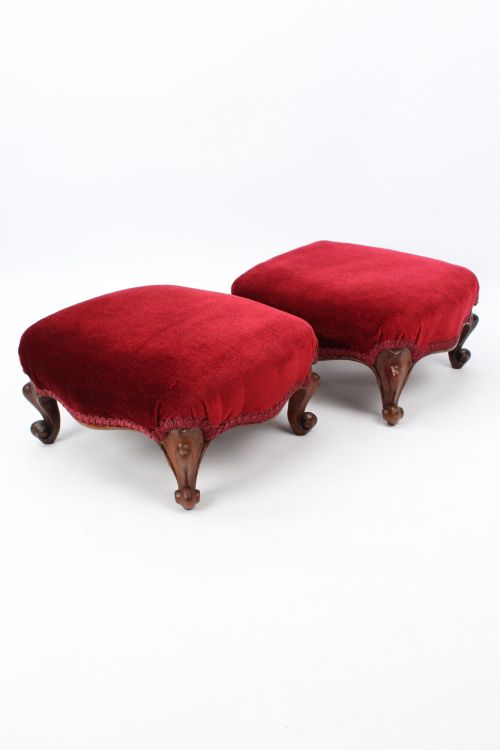
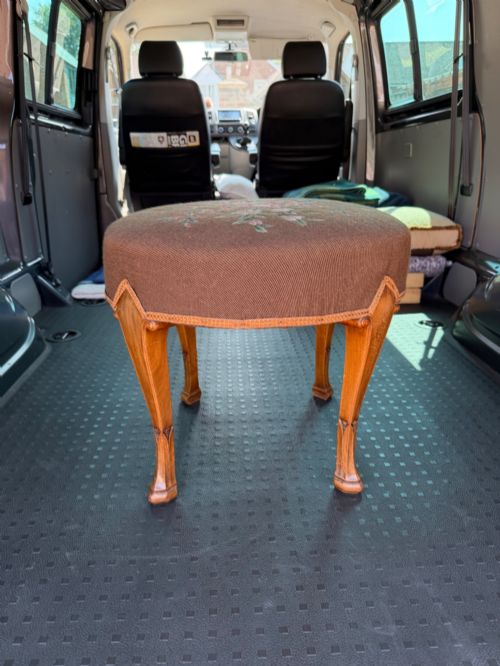
Upholstery materials recorded in the evidence include textile, fabric, tapestry upholstery, and velvet. Metal accents such as brass also appear across the construction of these pieces.
Retail Price Guide 2026
Typical UK retail prices for walnut cabriole footstool, calculated from the Sellingantiques database of over a million retail prices indexed since 2003. This retail price guide relies exclusively on Sellingantiques data; no external sources or auction records are used, so the figures do not describe the wider market.
Listings on this page span the Georgian period, the nineteenth century, and nineteen-twenty, utilising walnut, textile, fabric, tapestry upholstery, velvet, and brass.
Judging quality
Quality reveals itself in the fluency of the carved cabriole leg and the crispness of the timber moulding. Superior pieces demonstrate harmonious proportions between the cushion height and the scroll of the foot.
The choice and execution of the upholstery covering distinguish finer examples from simpler workshops. Tapestry and velvet additions elevate the visual weight of the seating.
The Walnut Cabriole Footstool Glossary
- Cabriole
- A furniture leg that curves out at the knee and tapers inward to a toe, mimicking animal legs. This form defines the silhouette of these stools.
- Walnut
- A heavy, durable timber prized for its rich grain and deep colour. Makers selected this wood for its strength in carved applications.
- Georgian
- The historical period spanning the reigns of the four Georges, known for refined furniture design. Pieces from this era show classical restraint.
- Tapestry
- A heavy hand-woven or machine-woven textile depicting pictorial scenes. This material frequently provides durable seat coverings.
Frequently Asked Questions
What is a cabriole footstool?
A cabriole footstool is a low seat supported by curved legs that bend outward and inward.
These pieces provide decorative resting places for feet in period interiors.
How old are these stools?
The pieces span from the Georgian era through the nineteenth century up to nineteen-twenty.
Revival pieces from the early twentieth century sit alongside genuine eighteenth-century items.
What materials are used?
Frames are constructed from walnut timber with occasional brass details.
Seats feature textiles including velvet, fabric, and tapestry upholstery.
Where do these styles come from?
Designs draw upon Queen Anne style traditions and French Chateau aesthetics.
British and continental workshops shaped these distinct regional influences.