



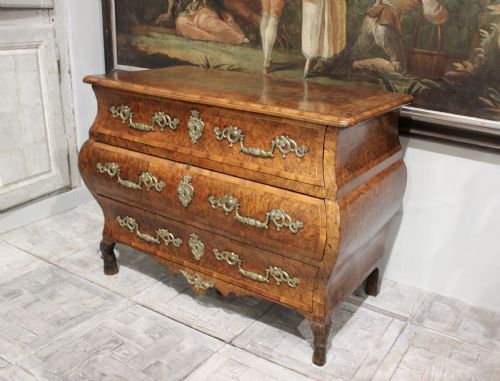


Walnut Bombe Dresser
A walnut bombe dresser brings sweeping curves and rich timber into a room, offering both practical storage and undeniable presence.
Walnut Bombe Dresser
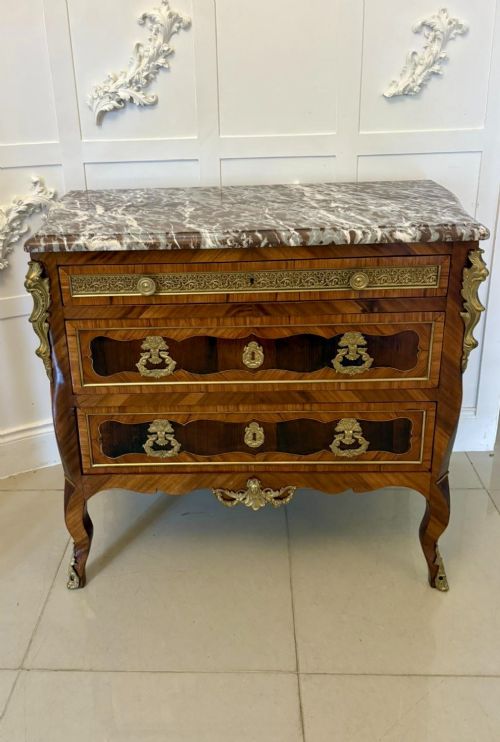
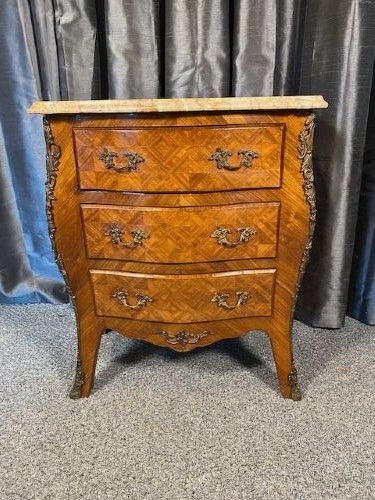
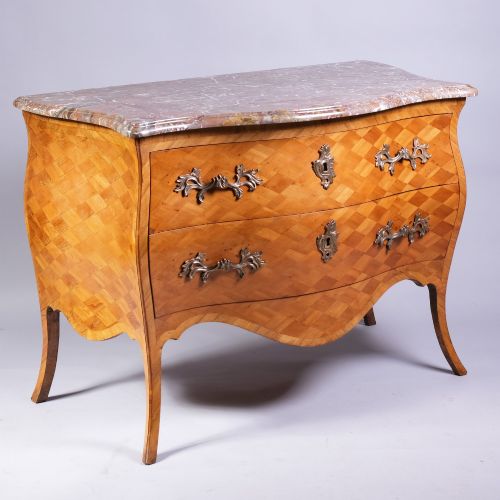
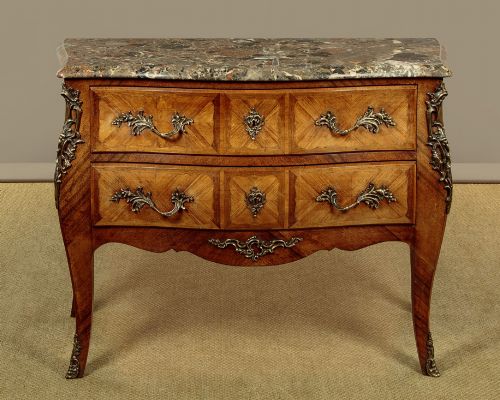
A walnut bombe dresser, often listed as a commode or chest of drawers, is defined by its outward-swelling sides and front. You will most frequently encounter continental European examples, particularly those finished in walnut or burr walnut.
The form spans several periods, with pieces originating from the eighteenth century through to the nineteenth century and later revival eras like nineteen-thirty. Styles lean heavily towards French Rococo, Louis XV, and Dutch Baroque interpretations.
Makers shaped these chests of drawers with serpentine outlines and marble tops, combining utility with decorative ambition. Each walnut bombe dresser reflects the tastes of its specific region, from French provincial workshops to Italian studios.
Materials and construction methods
Cabinet makers built the carcase of a walnut bombe dresser using secondary timbers like oak before applying fine veneers of walnut and burr walnut. This technique allowed craftsmen to wrap the swelling, curved surfaces in decorative grain patterns.
Mounts of ormolu, bronze, and brass were cast and chased to accent the corners and handles of the commode. Marble tops, often fitted precisely to the shaped wooden top, added weight and a finished surface to the piece.
Walnut Bombe Dresser Retail Price Guide 2026
Typical asking prices for walnut bombe dresser among the pieces listed under this phrase on Sellingantiques today, from the lower quarter to the upper quarter. They describe what is for sale here now, not the wider market.
Design styles span French Rococo, Louis XV, Dutch Baroque, and Italian Rococo across commodes and chests of drawers.
Assessing quality in the design
The quality of a walnut bombe dresser rests upon the selection of the timber and the fluency of the curved lines. Superior examples display symmetrical burr walnut grain that follows the challenging contours of the bombé shape without buckling.
Chasing and weight in the ormolu or brass mounts distinguish finer work from simpler production. The integration of the marble top and the precision of the drawer joints further separate the standard examples from the exceptional.
The Walnut Bombe Dresser Glossary
- Bombe
- A swelling, outward-curved profile found on the sides and front of case furniture. This undulating shape requires advanced cabinet-making skills.
- Commode
- A low chest of drawers or cabinet originating in France. Many pieces matching this search take this specific form.
- Ormolu
- Gilded bronze used for decorative mounts and handles. It provides a bright metallic contrast to the dark walnut timber.
- Burr walnut
- Wood taken from the warted growths of walnut trees, showing highly figured, swirling patterns. It is sliced into veneers for decorative surfaces.
- Serpentine
- A line or edge that curves outward and then inward, creating a wavy contour. This profile frequently appears on the front edges of these chests.
Walnut Bombe Dresser: Frequently Asked Questions
What is a bombe chest?
A bombe chest is a piece of furniture featuring rounded, bulging sides and fronts that curve outward. The design requires sophisticated carpentry to achieve the distinctive swelling silhouette.
These chests served primarily as decorative storage in principal rooms rather than utilitarian chamber furniture. Their dramatic profiles made them centrepieces in historic European interiors.
How do I date a walnut commode?
Dating relies on examining the construction methods inside the drawers, the type of timber used in the secondary carcase, and the style of the mounts. Eighteenth-century pieces typically show hand-cut dovetails and regional timber choices.
Later nineteenth-century revivals and nineteen-thirty reproductions often emulate these historic styles using machine-sawn elements or different secondary woods. Comparing the overall wear and patination to known period examples helps clarify the age.
Where were these dressers made?
These pieces were produced across continental Europe, with strong representations from France, Italy, and the Netherlands. Each region developed distinct characteristics in its marquetry, carving, and overall proportions.
French workshops favoured Louis XV and Rococo curves with ornate ormolu mounts, while Dutch makers often utilised bold floral marquetry. Italian pieces frequently displayed dramatic shaping and local walnut varieties.
How do I care for burr walnut?
Burr walnut veneer requires stable environmental conditions away from direct sunlight and strong heat sources. Excessive temperature changes can cause the delicate veneers to lift or split over time.
Maintain the finish by dusting with a dry cloth and occasionally applying a suitable wax polish. Avoid using liquid cleaners or silicone sprays which can damage the historic polish.