




Walnut Bedroom Drawers Marble
Walnut bedroom drawers marble bring substantial timber and cool stone together to anchor a sleeping space with functional weight.
Walnut Bedroom Drawers Marble
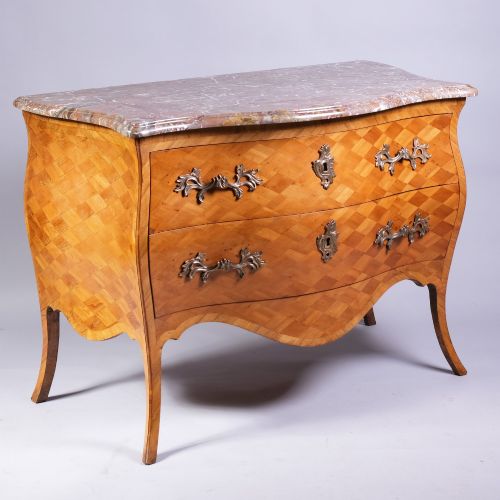
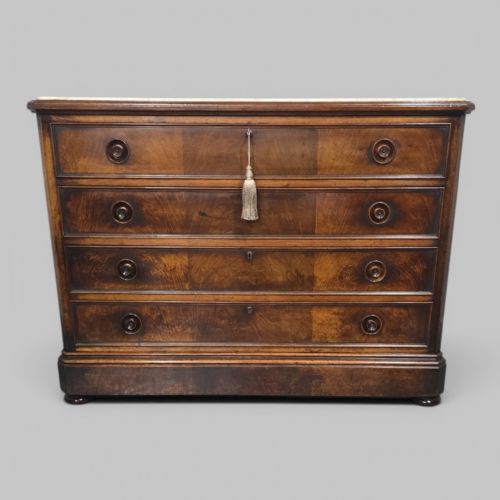
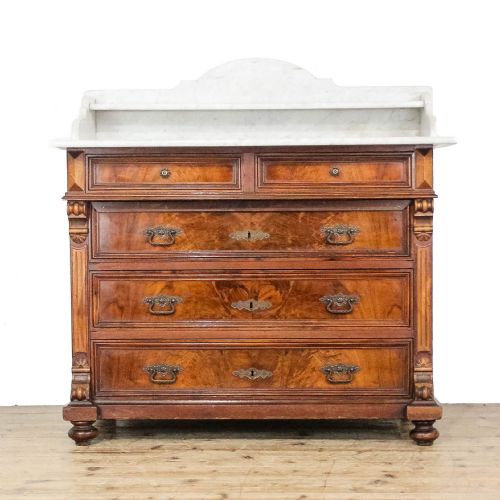
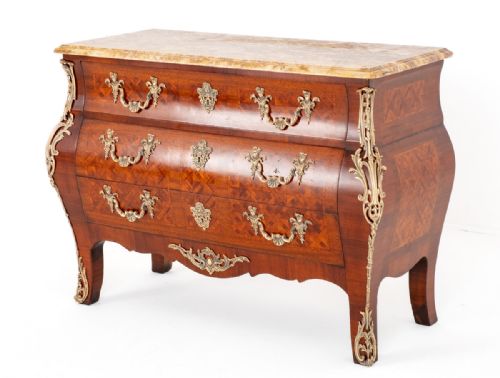
Walnut bedroom drawers marble describe French commodes, chests of drawers, and bedside cabinets fitted with stone tops. These pieces originate largely from the nineteenth century and lean heavily towards Louis styles and transitional designs.
You will most commonly encounter commodes featuring figured burr walnut veneers paired with white or veined marble slabs. Bedside cabinets and tall semainieres appear alongside these broader chests.
The forms span classical revival periods through to early twentieth-century interpretations, carrying proportions designed for domestic utility and formal display.
Materials and construction
Cabinetmakers constructed carcass frames in pine or oak before applying figured walnut, burr walnut, and exotic veneers such as kingwood and tulipwood in geometric parquetry patterns. Ormolu mounts and brass hardware secure the corners and frame the drawer fronts.
Heavy marble slabs rest directly upon the timber carcase, providing a resilient and cool horizontal surface above the stacked drawers. Joinery relies on traditional hand-cut dovetails within the drawer construction to withstand daily use.
Certain tall chests pack exactly seven drawers into their slim frames, originally intended to hold a fresh pair of stockings for each day.
Quality differences
The distinction between tiers rests upon the choice of veneer and the depth of figuring within the burr walnut. Finer examples display symmetrical grain matching across multiple drawers rather than random patched sections.
Mounting hardware also dictates standing, with cast ormolu and bronze elements showing sharper chisel work and heavier weight compared to simpler stamped brass handles.
The Walnut Bedroom Drawers Marble Glossary
- Commode
- A low chest of drawers, often heavily ornamented and designed for domestic storage.
- Semainiere
- A tall, narrow chest traditionally containing seven drawers, one for each day of the week.
- Burr walnut
- Timber taken from the growth excrescences of a walnut tree, yielding complex, swirling grain patterns.
- Ormolu
- Gilded bronze used for decorative mounts and furniture fittings during the eighteenth and nineteenth centuries.
Walnut Bedroom Drawers Marble: Frequently Asked Questions
How do I clean the marble top?
Use warm water and a soft cloth to wipe down the stone surface, avoiding acidic cleaners that etch the polish.
Dry the marble thoroughly afterwards to prevent water marks from settling into the porous grain.
Are these drawers suitable for daily use?
The robust carcases and deep proportions make these pieces well-suited for modern clothing storage.
Drawer runners function best when lightly waxed to ensure smooth sliding action over time.
How do I identify a Louis Philippe commode?
Louis Philippe pieces typically display restrained curved lines, subtle ogee mouldings, and minimal exterior brass mounts.
The focus rests on the rich grain of the walnut timber rather than ornate gilt bronzes.
Can I separate the marble from the chest?
Most nineteenth-century marble tops rest unattached on the timber frame, held in place purely by their substantial weight.
Lift the stone straight up with assistance when moving the piece to prevent cracking.