



Walnut Armoire Mirror
A walnut armoire mirror brings deep timber tones and a functioning looking glass into a bedroom, combining storage with a reflective surface.
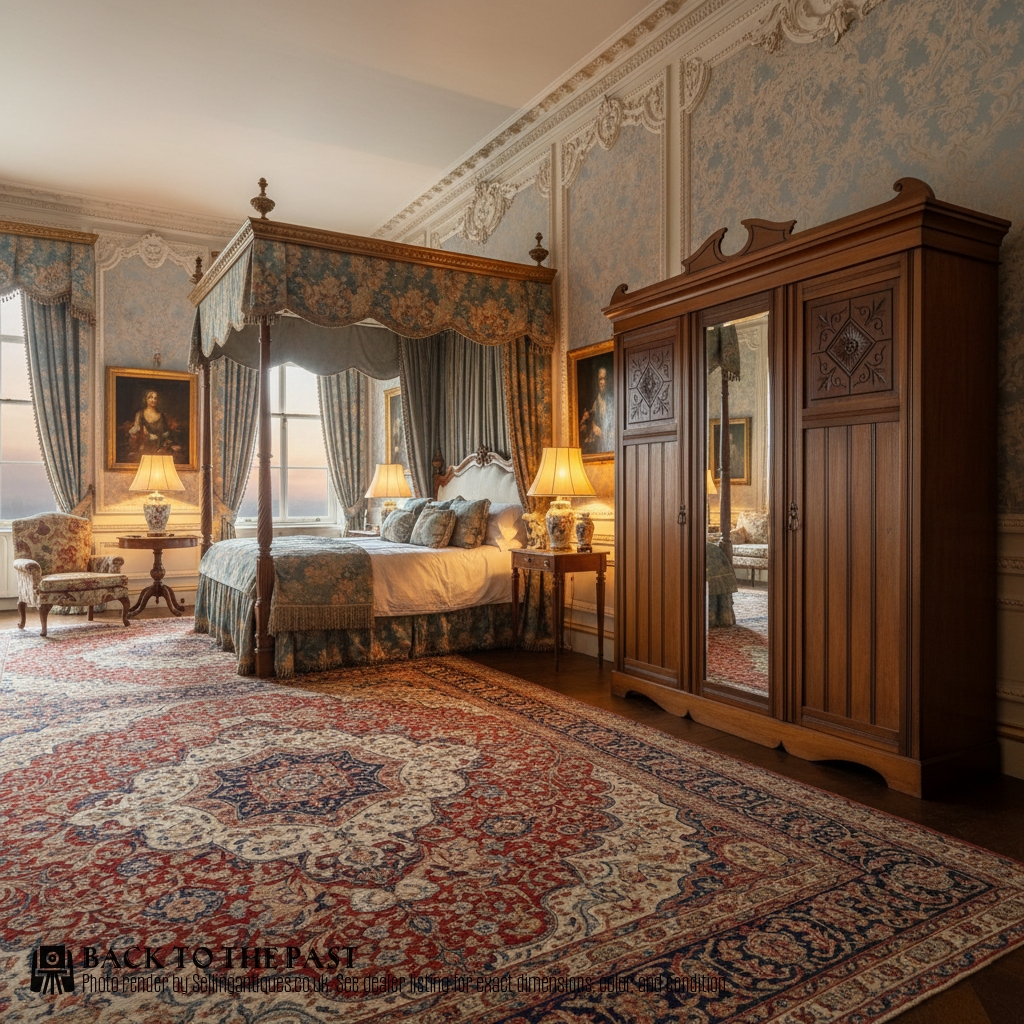
Walnut Armoire Mirror
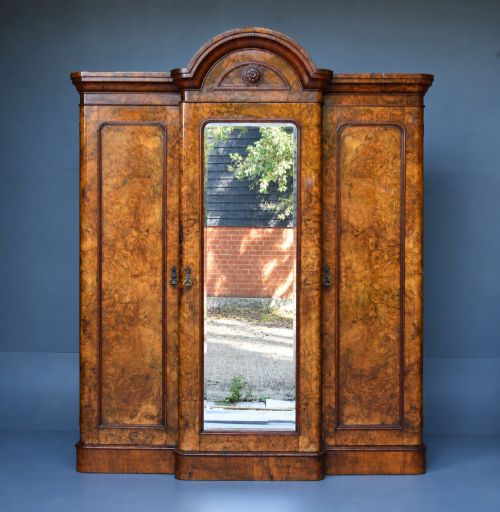
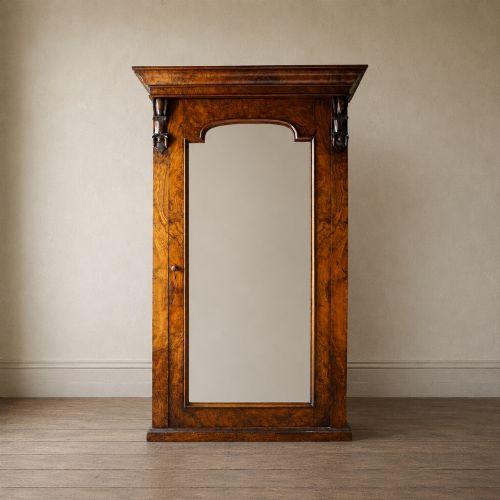
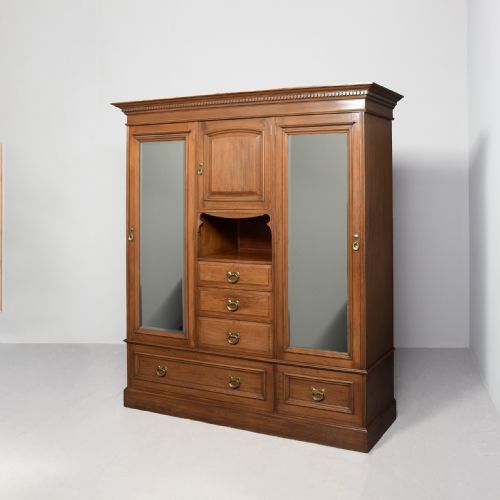
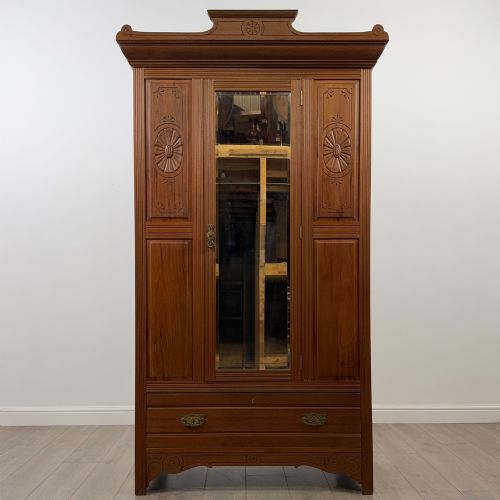
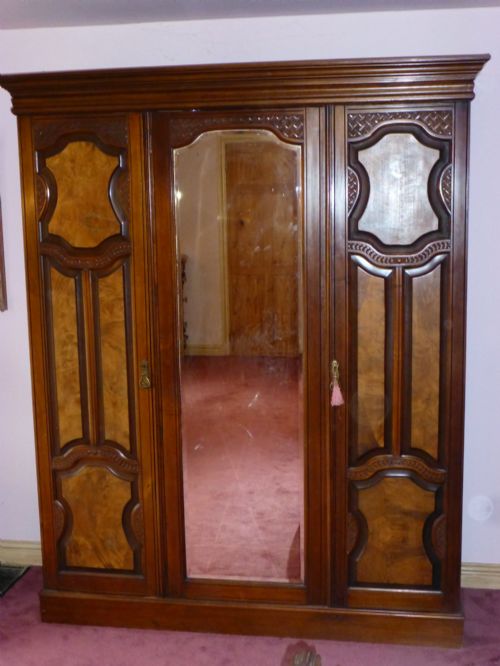
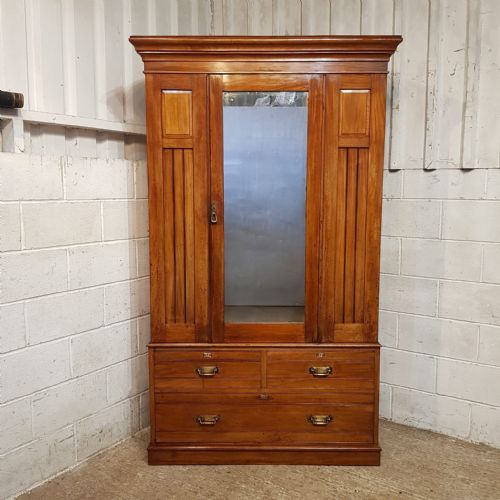
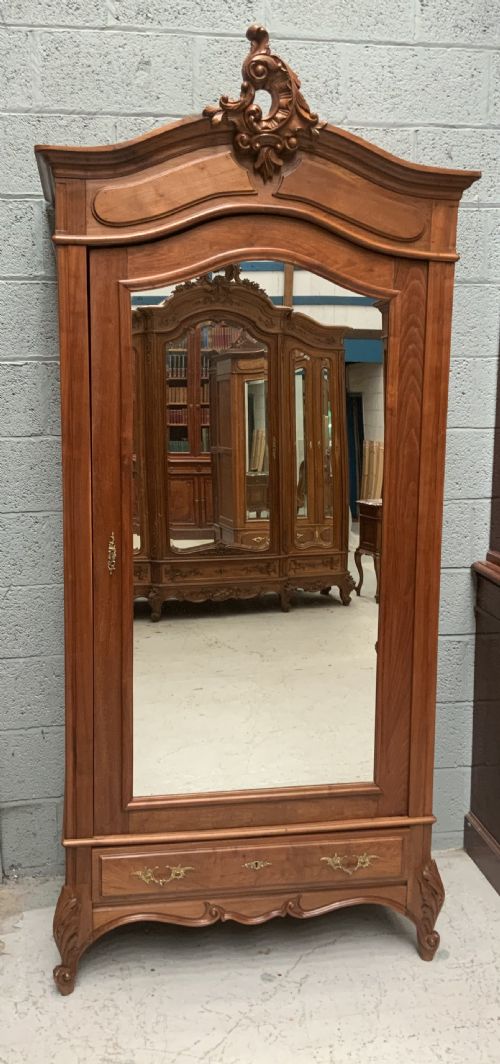
When searching for a walnut armoire mirror, buyers encounter large bedroom storage furniture spanning the Victorian, Edwardian, and Art Deco periods, alongside French and Dutch continental imports. These pieces primarily take the form of wardrobes, compactums, and single or double door armoires that incorporate mirror glass into their construction.
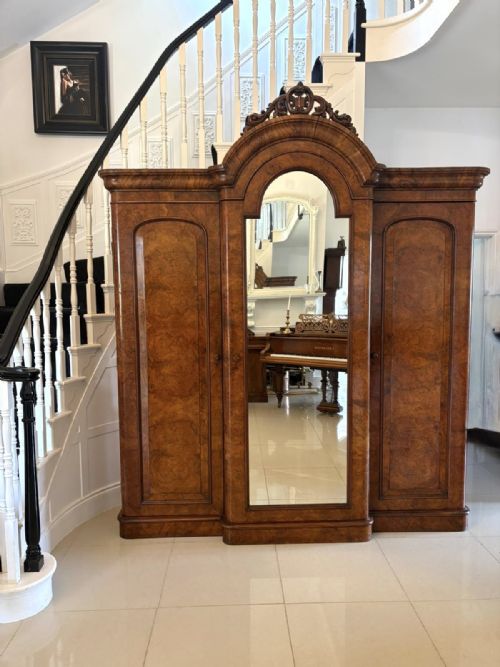
The single mirrored wardrobe or French armoire is the version most frequently met on this page, often built with a full-length glass door flanked by hanging space or interior shelving. Larger triple and combination wardrobes also appear regularly, offering central mirrored doors alongside compartmented sections in walnut and burr walnut.
Origins stretch from British workshops to French provincial makers and Dutch cabinetmakers, spanning dates from the mid-nineteenth century through to the early twentieth century. The integration of mirror glass serves both a practical dressing purpose and an architectural function, bouncing light around period bedroom spaces.
How they were made
Cabinetmakers constructed these pieces using solid walnut, ash, oak, and satinwood, frequently applying decorative burr walnut veneers to door panels and drawer fronts to catch the eye with swirling grain patterns. Traditional joinery methods secured heavy timber frames, while hand-carved details defined styles ranging from Victorian exuberance to Art Nouveau curves and French Rococo influence.
Bevelled and flat mirror glass was fitted into heavy wooden doors, often supported by brass hardware, hinges, and locks. Secondary timbers such as oak provided structural stability to the backs and interiors of large wardrobes and compactums.
Some Victorian gentlemen's wardrobes hide internal linen slides behind mirrored doors, keeping morning shirt selections entirely secret from the dressing table.
What varies in quality
The selection of timber grain largely dictates the visual standing of a piece, with striking burr walnut veneers and straight-grained walnut timber representing the upper tiers of production. Master workshops employed symmetrical veneer matching across wide wardrobe doors, whereas simpler utility pieces relied on plain flat walnut surfaces.
Carving depth and hardware execution separate standard output from works by known makers such as Holland and Sons, Lamb of Manchester, Shapland and Petter, Jean Faure, and Mercier. Heavier architectural mouldings, well-executed parquetry, and substantial brass mounts distinguish superior cabinetwork from plain regional pieces.
Holland and Sons·Lamb of Manchester·Shapland and Petter·Jean Faure·Mercier
The Walnut Armoire Mirror Glossary
- Burr walnut
- A prized wood veneer harvested from the burl growths of walnut trees, displaying chaotic and highly decorative swirling grain patterns. Cabinetmakers used it on prominent surfaces like wardrobe doors.
- Compactum
- A multifaceted wardrobe designed for maximum storage efficiency, incorporating hanging space, linen slides, and drawers within a single carcass. They often feature in Victorian and Edwardian bedroom suites.
- Parquetry
- A geometric mosaic of wood pieces used for decorative veneer on furniture surfaces. It appears on finer continental armoires.
- Sentry box
- A narrow single wardrobe configuration, named for its compact footprint resembling a sentry post. These frequently incorporate mirrored doors.
- Combination wardrobe
- A piece of bedroom furniture that joins wardrobe hanging space with chests of drawers, cupboards, and mirrored doors in one unified structure.
Walnut Armoire Mirror: Frequently Asked Questions
How do I clean the wood and mirror?
Wipe the walnut surfaces with a soft, dry cloth to remove dust, applying a quality beeswax sparingly when the timber appears dry. Avoid commercial silicone sprays that can damage old french polish.
Clean the mirror glass with a mild glass cleaner applied to a cloth rather than sprayed directly onto the glass, preventing liquid from seeping behind the silvered backing.
Will a large wardrobe dismantle for moving?
Many Victorian and Edwardian triple wardrobes and compactums were constructed to dismantle into sections, including a separate cornice, base, and flanking hanging modules held together with internal bolts or wooden pegs. This modular design allowed historical transport up stairwells and through domestic doorways.
Single door armoires and French pieces are often constructed as single solid carcasses that do not dismantle, requiring careful measurement of ceiling heights and staircases before purchase.
How do I date a walnut wardrobe?
Examine the secondary woods used for the interior backs and drawer linings, noting that oak and pine commonly indicate nineteenth-century British manufacture. The style of hardware, such as brass escutcheons and locks, along with the presence of hand-cut dovetails, helps narrow down the production era.
Design influences provide further clues, where heavy carved mouldings point to mid-Victorian periods, flowing asymmetrical lines suggest Art Nouveau or Edwardian Chinoiserie, and geometric parquetry often signals continental work around nineteen hundred.
Can I use these in modern bedrooms?
These large storage pieces offer deep hanging space and shelving that easily accommodate modern clothing, whilst providing a full-length dressing mirror. Their imposing scale anchors contemporary bedroom layouts with rich timber tones.
Pairing a walnut armoire with minimalist decor allows the figured wood grain and carved details to act as a focal point in the room.