
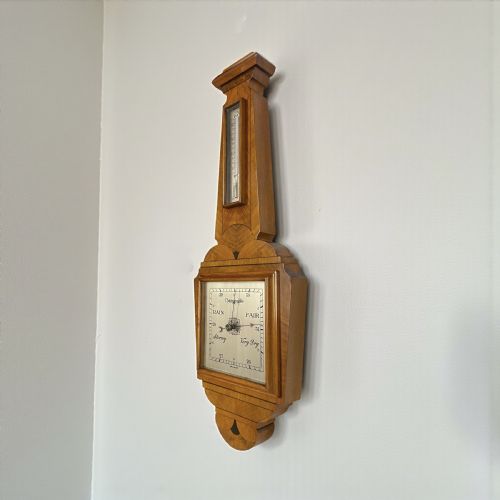


Walnut Aneroid Barometer
A walnut aneroid barometer records atmospheric pressure through a sealed metal capsule, housed in richly figured timber that suits period interiors.
Walnut Aneroid Barometer
A walnut aneroid barometer provides a dependable domestic weather indicator using a sealed vacuum capsule rather than liquid mercury. When you search for this phrase, you encounter wall-mounted instruments designed primarily during the Victorian and Edwardian periods.
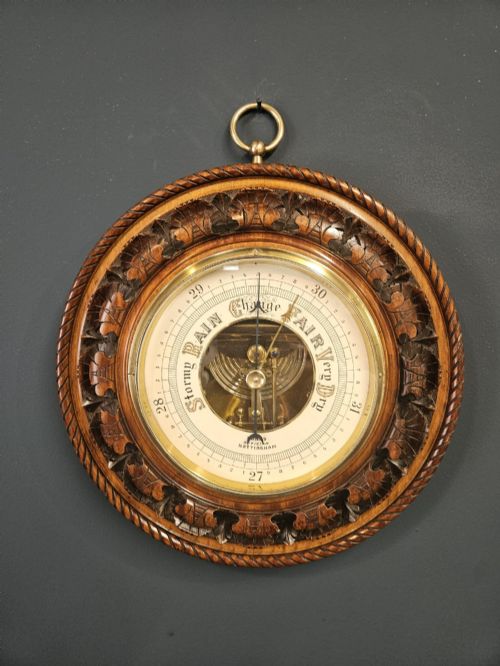
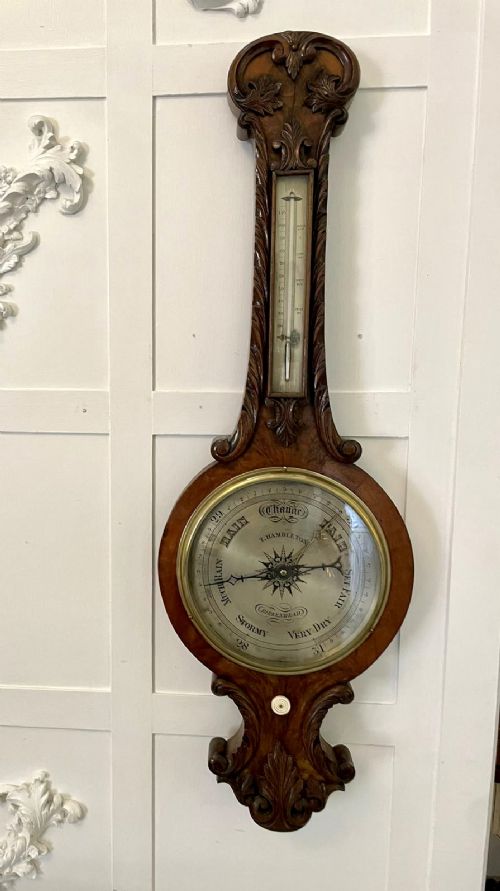
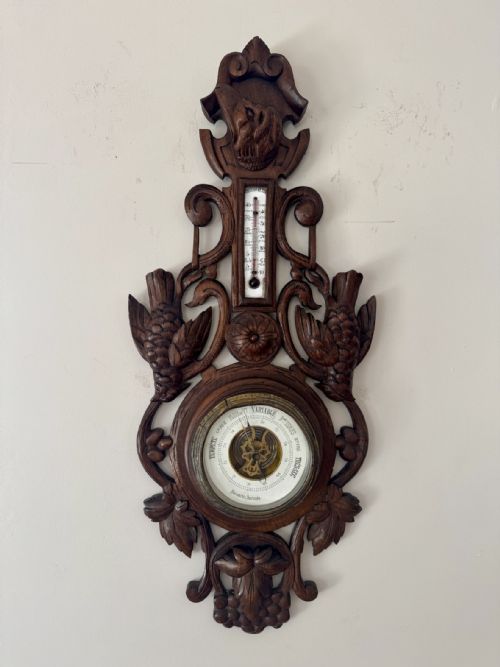
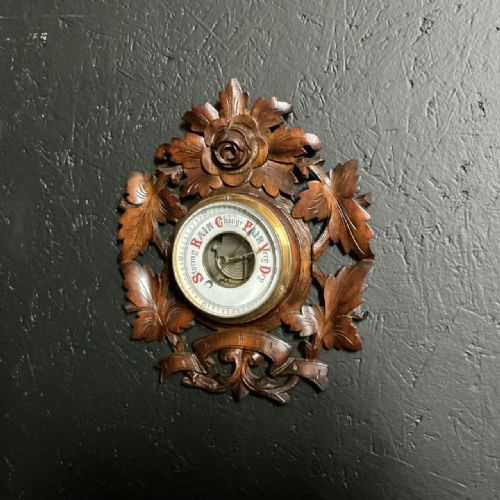
The pieces appearing here span several distinctive regional forms and decorative movements. You are most likely to meet heavily carved Black Forest examples, traditional banjo shapes, and circular skeletonised designs that expose the internal mechanics behind glass.
The corpus includes pieces from the nineteenth century through the Art Deco era, encompassing standard domestic wall barometers, combined thermometer units, and mechanical barographs. Walnut timber provides the unifying dark grain across these varied regional styles.
Materials and construction methods
Makers utilised solid walnut, burr walnut veneers, and carved woods to build sturdy protective enclosures for delicate scientific movements. Carvers shaped foliage, acorn motifs, and rocaille scrolls directly into the timber surrounds.
Internal mechanisms combine brass dials, glass lenses, and visible metal linkages to translate capsule expansion into pointer movement. Ceramic dials and silvered metal scales provide the legible face behind the protective glass front.
Walnut Aneroid Barometer Retail Price Guide 2026
Typical asking prices for walnut aneroid barometer among the pieces listed under this phrase on Sellingantiques today, from the lower quarter to the upper quarter. They describe what is for sale here now, not the wider market.
Listings feature walnut timbers ranging from plain solid boards to heavily figured burr veneers and carved Black Forest woodwork.
Judging quality and execution
The distinction between ordinary and exceptional instruments rests upon the depth of the woodcarving and the choice of timber figure. Plain turned cases contrast with deeply undercut foliage and intricate skeletonised frames that reveal the brass works.
Signed dials by recognised instrument makers elevate the standing of a piece above standard unmarked factory output. The crispness of the engraved scale and the precision of the bezel closure separate superior execution from basic production.
Depree and Young Ltd Exeter·Wilson Bury St Edmonds·Aitchinson of London·CW Dixey London·Short & Mason London·James Pitkin London
The Walnut Aneroid Barometer Glossary
- Aneroid barometer
- An instrument measuring atmospheric pressure by the expansion and contraction of a flexible sealed metal capsule. This design replaced traditional liquid mercury tubes for safer domestic use.
- Barograph
- A recording meteorological instrument that draws continuous pressure changes onto a revolving paper chart. Clockwork mechanisms drive the drum holding the paper.
- Skeletonised
- A design exposing the internal brass movement and linkages through a glass dial or open frame. This style allows the owner to observe the mechanical operation directly.
- Banjo barometer
- A wall-hanging instrument housed in a symmetrical wooden case shaped like a musical banjo. These frequently incorporate thermometers and hygrometers alongside the main pressure dial.
- Burr walnut
- Timber sliced from walnut tree growths that produces intricate swirling grain patterns. Cabinet makers utilised these highly decorative veneers on premium instrument cases.
Walnut Aneroid Barometer: Frequently Asked Questions
How does an aneroid barometer work?
An aneroid barometer relies on a corrugated metal vacuum capsule that compresses or expands as atmospheric pressure shifts. Internal springs and levers transmit this subtle movement to the pointer visible on the dial.
Because the system contains no liquid, the instrument can hang safely on a wall in any orientation without spilling mercury or water.
How do I date a walnut barometer?
Dating relies on stylistic clues, case construction, and the materials used for the dial and bezel. Mid-nineteenth-century examples often feature heavy hand-carving and silvered brass plates, while Edwardian and Art Deco pieces display simpler geometric lines or distinctive veneer patterns.
Signatures or retailer inscriptions painted on the dial surface also provide direct evidence of the manufacturing period.
Can these barometers be calibrated?
Most aneroid barometers include a small adjustment screw accessible from the back or through the dial face. Turning this screw aligns the indicator needle with known local pressure readings obtained from official meteorological sources.
Calibration should be performed gently to avoid putting undue tension on the delicate internal capsule and hairspring.