
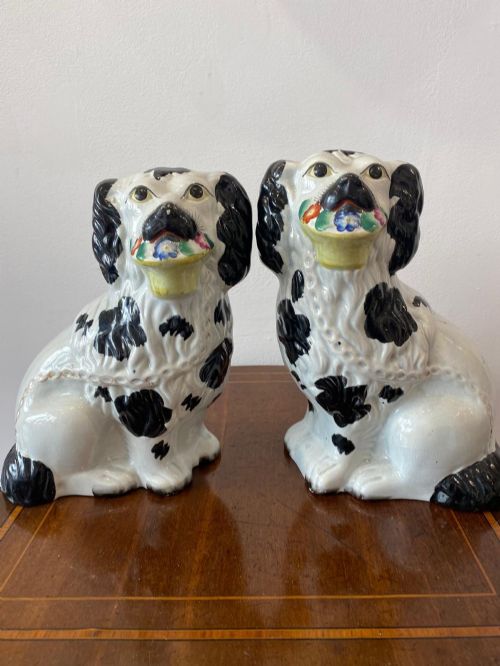


Wally Dugs Figurines
These wally dugs figurines are classic Staffordshire pottery spaniels that bring traditional character and fireside charm to any mantelpiece.
Wally Dugs Figurines
When you search for wally dugs figurines, you encounter earthenware spaniels that originated in nineteenth-century Staffordshire potteries to ornament British hearths. These decorative objects typically appear in pairs, designed to sit symmetrically upon a mantelpiece or shelf.
The pieces on this page span the Victorian era, specifically featuring dates from eighteen eighty through to nineteen hundred. You will most frequently meet pairs rendered in white and gilt, alongside copper lustre and hand-painted variants.
Materials and Manufacture
Makers enhanced select pieces with gold leaf or gilt highlights, while certain nineteenth-century versions incorporated inserted glass eyes for added realism.
Every listed piece dates from the nineteenth century, encompassing Victorian earthenware styles produced between eighteen eighty and nineteen hundred.
Assessing Quality
The presence of original gilt highlights, clean glaze surfaces, and engaging glass eyes elevates certain examples above standard production pieces.
Beswick Staffordshire Dogs
The Wally Dugs Figurines Glossary
- Earthenware
- Porous pottery fired at lower temperatures than stoneware. It serves as the primary ceramic body for nineteenth-century figures.
- Gilt
- A thin layer of gold applied to the ceramic surface. This technique highlights collars, chains, and facial markings.
- Enamel Paint
- Vitreous pigments fused to the glaze during firing. It provides the enduring colours found on Staffordshire dogs.
- Comforter Spaniels
- A traditional term for these mantelpiece dogs. They earned this name because Victorian owners placed them by the hearth for comfort.
Wally Dugs Figurines: Frequently Asked Questions
What are wally dugs?
Wally dugs are ceramic spaniel figurines traditionally made in Staffordshire during the nineteenth century. Scottish households often placed them proudly on mantelpieces.
These pottery dogs served as domestic ornaments rather than toys. They usually sat facing inwards towards each other.
How old are these dogs?
The listed pieces date primarily from the nineteenth century, spanning the period between eighteen eighty and nineteen hundred. Victorian makers produced them in large numbers to satisfy domestic demand.
Exact dating relies on stylistic details, glaze characteristics, and manufacturing methods. Earlier pairs often show finer hand-painted execution.
Why are they sold in pairs?
Staffordshire spaniels were manufactured as symmetrical pairs to flank a clock or ornament in the centre of a mantelpiece. This arrangement suited Victorian interior design preferences.
Separating pairs happened over time, but collectors prize keeping matching dogs together. Each dog faces the opposite direction to mirror its partner.
How do I clean them?
Dust these ceramic figures gently with a soft, dry brush to prevent the accumulation of grime. Avoid harsh chemical cleaners that might damage the delicate enamel paint and gilt.
Keep them away from direct sunlight and excessive moisture to protect the glaze and surface decoration. Handle the pieces securely by the body rather than protruding ears or tails.