


Painted Earthenware Spaniel Figurines
Painted earthenware spaniel figurines are traditional Victorian mantelpiece pottery dogs that bring classic fireside charm to a room.
Painted Earthenware Spaniel Figurines
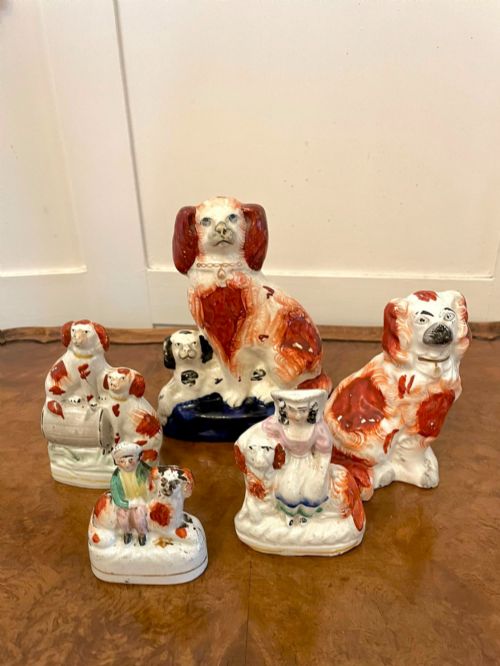
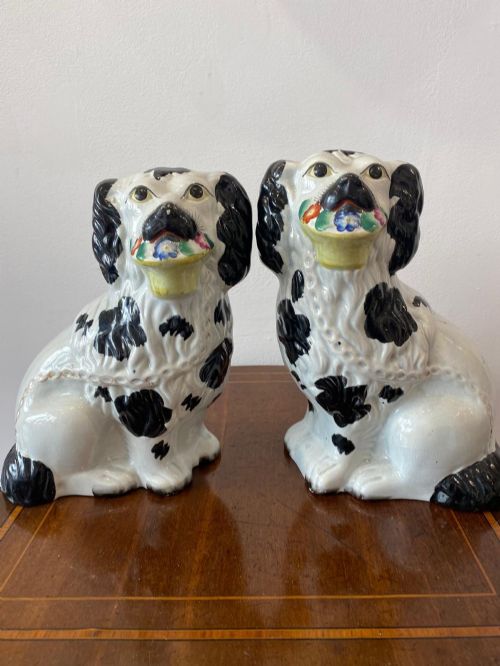
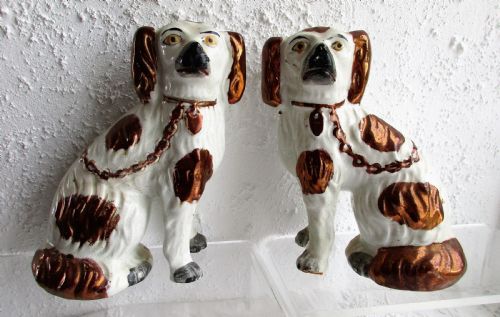
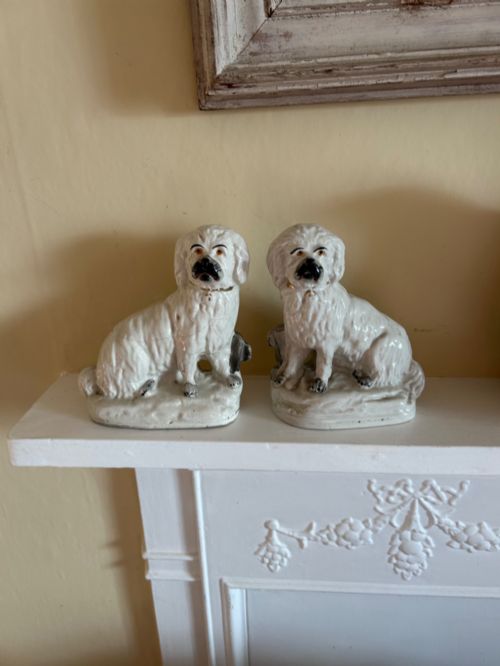
When you search for painted earthenware spaniel figurines, you encounter classic nineteenth century Victorian pottery dogs designed to sit on hearths and mantelpieces. The most common forms on this page are matched pairs of seated spaniels, often known as comforter spaniels, originating from the Staffordshire potteries. These decorative figurines appear in various groupings, including collections of four or six dogs, alongside single figures and occasional pairs of Maltese terriers.
The periods represented stretch across the Victorian era, with dates ranging from eighteen sixty through to nineteen hundred. These ceramic figures served primarily as domestic ornaments during the nineteenth century, reflecting the popularity of pet dogs in British homes. Most examples take the form of hollow pottery models, produced in moulds and finished with painted details or coloured glazes.
How they were made
Makers formed these figurines from earthenware clay using press moulds, joining front and back sections together before firing the ceramic body in a kiln. Once fired, the pieces received liquid glazes and surface decoration utilising enamel paint to render the facial expressions, collars, chains and markings.
Certain examples incorporate copper lustre highlights to add metallic sheen to the collars or lockets, complementing the red and white enamel paint applied over the white glaze. The manufacturing process relied on traditional Staffordshire pottery techniques of the nineteenth century, resulting in sturdy ceramic figures built for mantelpiece display.
Victorian mantelpiece spaniels were said to watch over the household hearth while keeping imaginary burglars at bay.
What varies in quality
The clarity of the mould impression and the uniformity of matched pairs also influence the overall character of the figures. Complete pairs showing balanced proportions and well preserved enamel paint represent the more desirable tier of Staffordshire spaniels.
The Painted Earthenware Spaniel Figurines Glossary
- Earthenware
- Porous pottery fired at relatively low temperatures and glazed to hold water or provide a smooth surface. This ceramic material forms the structural body of nineteenth century Staffordshire spaniel figurines.
- Enamel paint
- Opaque glass-based pigment fused to the pottery surface during a secondary low temperature firing. Artisans utilised this technique to colour the eyes, muzzles and patches on Victorian figures.
- Copper lustre
- A metallic glaze finish containing copper that produces a reflective, bronze-like sheen. Potters applied this glaze to highlight collars and lockets on ceramic dogs.
- Comforter spaniels
- Traditional Victorian mantelpiece figurines depicting seated spaniels that supposedly comforted their owners. These pottery dogs usually stood in pairs on either side of a fireplace.
Painted Earthenware Spaniel Figurines: Frequently Asked Questions
What are Staffordshire dogs?
Staffordshire dogs are nineteenth century earthenware figurines produced in the pottery districts of England to decorate domestic hearths.
Most pieces take the form of seated spaniels, styled as matched pairs to sit on either end of a mantelpiece.
How old are these figurines?
The pieces listed span the Victorian period, with dates concentrated between eighteen sixty and nineteen hundred.
Production of these ceramic dogs peaked during the mid to late nineteenth century across various Staffordshire workshops.
Were they sold in pairs?
Potters frequently manufactured these decorative spaniels as symmetrical pairs designed to face one another on a mantelpiece.
Listings also include individual figures and larger collections comprising four, five or six dogs together.
How do I clean antique earthenware?
Clean these ceramic figures gently using a soft, dry brush to remove dust from the glazed surfaces.
Avoid using water or chemical cleaners, as nineteenth century enamel paint on earthenware can be delicate.