
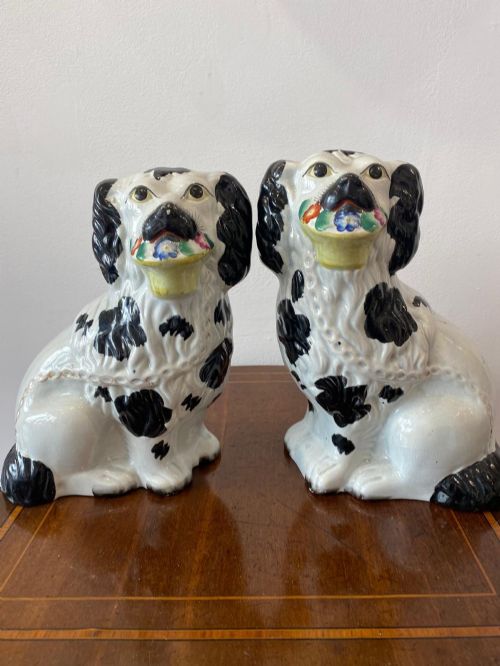


Wally Dog Figurines
These wally dog figurines bring the comforting symmetry of Victorian hearths into modern rooms.

Wally Dog Figurines
When you search for wally dog figurines, you encounter Victorian pottery spaniels that traditionally sat on mantelpieces facing inwards towards each other. The pieces seen here span the nineteenth century, from eighteen sixty onwards, and arrive mostly as matching pairs.
Most examples take the form of seated spaniels designed in English traditional styles. They serve as decorative figures rather than practical objects, capturing a familiar domestic presence from the Victorian era.
How they were made
Potters shaped these earthenware and ceramic figures using moulds before applying surface decoration. The materials recorded include glaze, enamel paint, and gold leaf highlights.
Certain pieces incorporate applied details such as copper lustre finishes or glass eyes. The combination of ceramic bodies and hand-applied paint gives each pair its individual character.
Listings feature earthenware and ceramic materials decorated with enamel paint, gold leaf, and copper lustre across the Victorian period.
What varies in quality
The standard of painting and gilding distinguishes finer pieces from ordinary production. Crisp enamel work and carefully rendered facial expressions lift a pair above simpler versions.
Size and presence also divide the range, with larger grand pairs commanding attention. The inclusion of distinct details like glass eyes or copper lustre glazes marks out superior examples.
The Wally Dog Figurines Glossary
- Earthenware
- Porous pottery fired at lower temperatures, forming the ceramic body of these figures. It requires a glaze to hold liquids and provide a smooth surface for painting.
- Copper lustre
- A metallic glaze finish that creates a reflective, coppery sheen on the ceramic surface. Potters achieved this effect through metallic oxides fired in the kiln.
- Comforter spaniels
- The traditional term for Victorian pottery dogs that sat on mantelpieces to comfort their owners. They represent spaniels modelled in pairs to flank a fireplace.
Wally Dog Figurines: Frequently Asked Questions
What are wally dogs?
Wally dogs are ceramic spaniel figures produced in nineteenth-century England. They typically appear in facing pairs designed to sit upon a mantelpiece.
The term refers specifically to these pottery figures rather than real dogs. They gained popularity as standard household ornaments across the Victorian period.
How were they displayed?
These figures traditionally sat on either end of a mantelpiece above a fireplace. They were arranged to face one another, guarding the hearth.
Pairs were kept together to maintain this symmetrical placement. Their friendly gaze brought a sense of companionship to the Victorian living room.
How do I date them?
Dating relies on the style of modelling, the type of glaze, and the period markers in the listing. Pieces from eighteen sixty often feature copper lustre or gold leaf details.
Victorian examples span from eighteen sixty through to nineteen hundred. Examining the earthenware body and painted decoration helps narrow the era of production.
Are they always in pairs?
The majority of these figures survive and are listed as matching pairs. This reflects their original manufacture and mantelpiece display.
Occasionally you might find a larger collection or individual pieces, but pairs remain the most common configuration. The matching stance is central to their traditional appeal.