


Painted Earthenware Dogs
Painted earthenware dogs are characterful Victorian mantle figures that bring warmth and domestic charm to any room.

Painted Earthenware Dogs
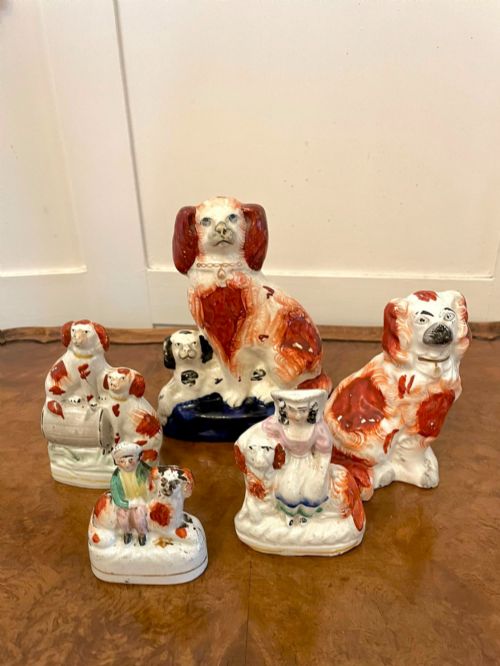
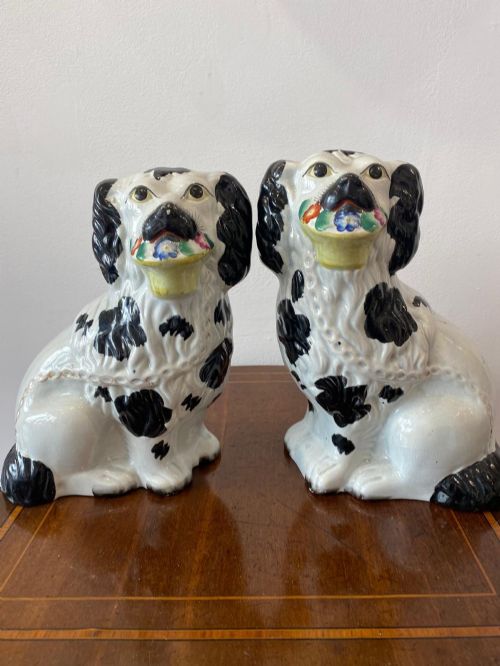
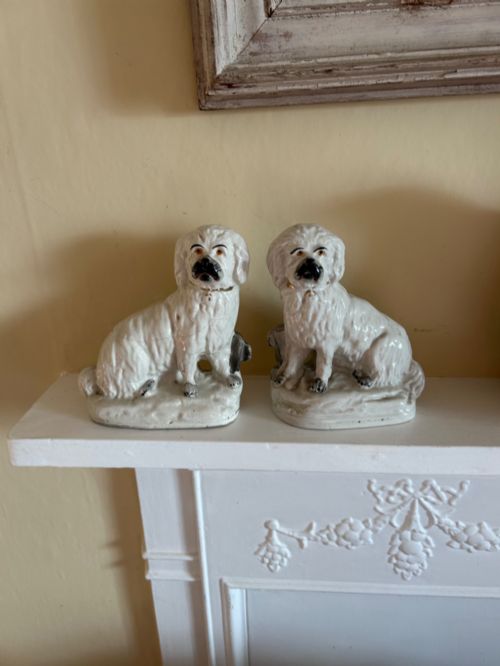
When you search for painted earthenware dogs, you encounter nineteenth-century decorative pottery figures that typically portray spaniels, pugs, dalmatians, and Maltese terriers. These mantle ornaments appear as individual figures or matched pairs designed to sit proudly on either side of a fireplace.
The pieces represented in the current selection span from the mid-nineteenth century into the early twentieth century, with a strong concentration of Victorian examples. Most take the form of pottery figures modelled as seated dogs, often referred to as comforter spaniels.
How they were made
The materials recorded across the listings consist primarily of earthenware and ceramic bodies finished with decorative glazes and enamel paint. Certain pieces also feature terracotta construction, reflecting the diverse manufacturing methods employed by period workshops.
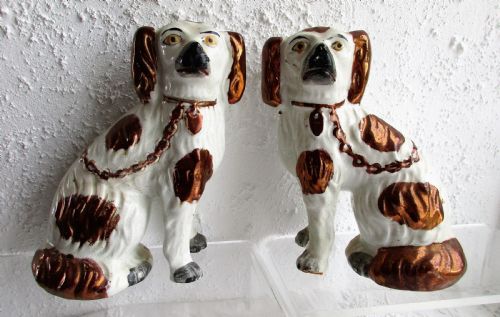
Listings feature Victorian earthenware dogs produced across the nineteenth century, utilising hand-painted enamel and copper lustre finishes.
What varies in quality
Quality in painted earthenware dogs rests primarily on the crispness of the moulding and the sensitivity of the hand-painted decoration. Finer pieces display carefully delineated facial expressions and neatly applied enamel paint rather than hasty brushwork.
The scale and presence of the figures also influence their appeal, with larger pairs and less common breeds commanding particular interest. Well-preserved painted surfaces with minimal wear distinguish the more desirable examples from simpler decorative wares.
Bernard Bloch Austria
The Painted Earthenware Dogs Glossary
- Earthenware
- A porous type of pottery fired at relatively low temperatures and glazed to ensure it holds water or simply to provide a smooth decorative finish. This ceramic medium forms the base of almost every figure found in this category.
- Comforter spaniels
- Popular Victorian mantelpiece ornaments modelled as seated spaniels, traditionally placed on either side of a fireplace. These pottery figures served a purely decorative purpose in nineteenth-century homes.
- Copper lustre
- A metallic pottery glaze that produces a coppery sheen when fired in a reducing atmosphere. Makers utilised this technique to highlight collars, locks, and facial markings on ceramic figures.
- Enamel paint
- Opaque glass-based pigment applied over a fired glaze and subsequently fixed with a lower temperature second firing. This method allowed decorators to add bright reds, blacks, and golds to the finished dogs.
- Terracotta
- Unglazed or glazed fired clay of a brownish-red colour, distinct from standard white earthenware bodies. Certain sculptural animal figures employ this heavier material.
Painted Earthenware Dogs: Frequently Asked Questions
What are Staffordshire dogs?
Staffordshire dogs are ceramic mantelpiece figures modelled after popular breeds like spaniels, dalmatians, and pugs during the nineteenth century. Potters in the Staffordshire region produced vast quantities of these decorative ornaments for Victorian homes.
They usually appear in pairs intended to face one another from opposite ends of a fireplace. Their appeal lies in their folk art charm and the variety of hand-painted markings.
How old are these pottery dogs?
The pieces available in this category predominantly date from the Victorian era, spanning the mid-nineteenth century through to around nineteen hundred. Stylistic details and manufacturing materials help establish these approximate production periods.
While exact manufacture dates are rarely marked on the base, stylistic traits point clearly to the nineteenth century. Most examples reflect the aesthetic preferences of Victorian interior decoration.
Where should I display them?
Painted earthenware dogs look most authentic when placed on a mantelpiece, bookshelf, or sideboard where their colours can be appreciated. Their original purpose was to flank a fireplace, making that a traditional and effective spot.
Pair them with other period ceramics or let them stand alone as a focal point in a room. Their cheerful presence suits both traditional living spaces and eclectic modern interiors.
How do I care for antique pottery?
Care for these ceramic figures by dusting them gently with a soft dry cloth and avoiding harsh cleaning agents. The hand-painted enamel and gilt details can be sensitive to moisture and abrasive materials.
Keep them out of direct sunlight to prevent any fading of the painted surfaces over time. Handle them securely by the body rather than protruding ears or tails when moving them.