


Wall Mounted Thermometer
A wall mounted thermometer measures ambient temperature while doubling as a decorative fixture on wood-panelled or papered walls.
Wall Mounted Thermometer
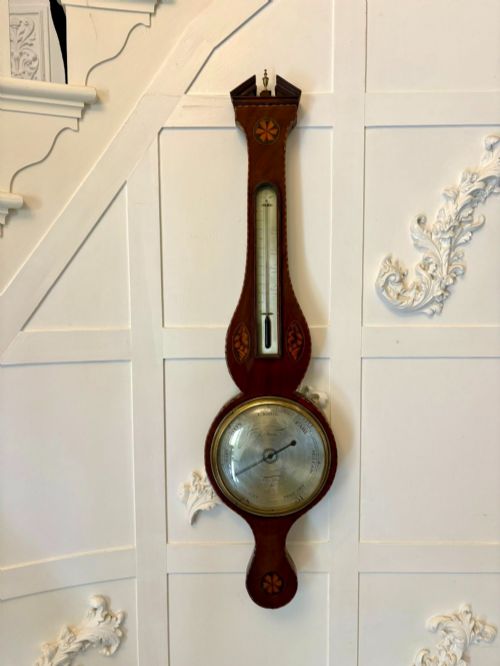
When you search for wall mounted thermometer, you encounter instruments and combined meteorological pieces originating from the Georgian, Victorian, Regency, and Edwardian eras. The selection spans simple recording instruments to complex combined systems that incorporate barometers and clocks alongside the thermal scale.
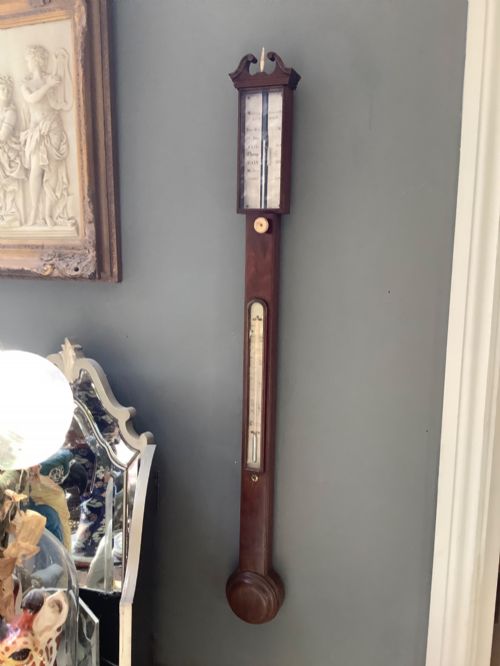
The most frequent examples on this page are banjo and stick barometers containing embedded thermometers, frequently housed in cases of mahogany, oak, or walnut. Standalone thermometers in porcelain also appear, reflecting domestic monitoring needs of the nineteenth and early twentieth centuries.
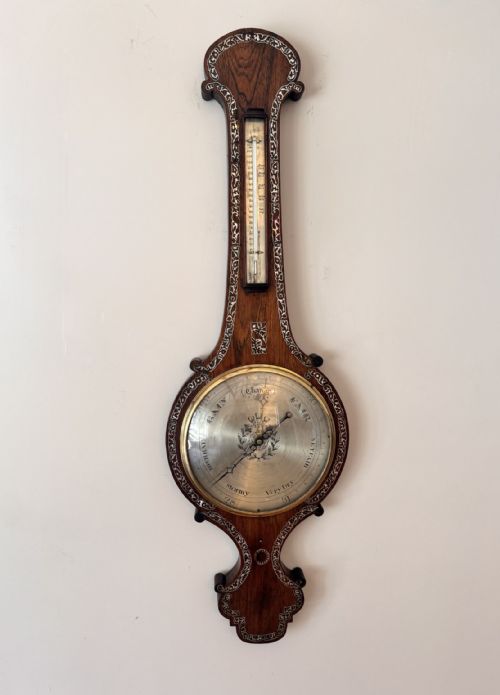
Origins stretch from English workshops in London, Taunton, Exeter, and Shrewsbury to Scandinavian carvers working in walnut. Forms range from compact carved oak bodies to inlaid mahogany banjo shapes embellished with mother of pearl or shell motifs.
What varies in quality
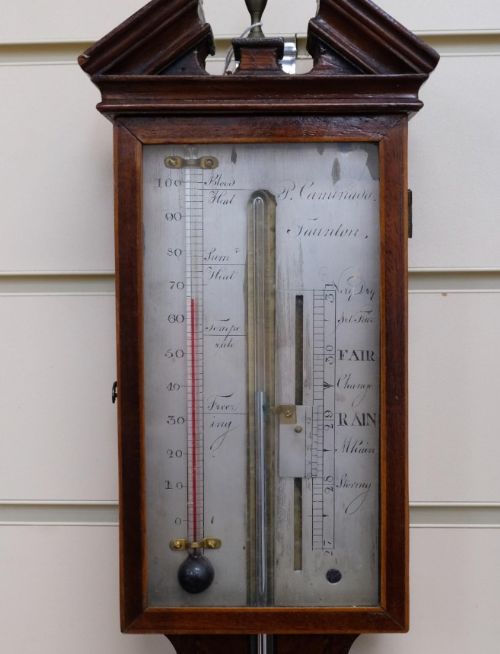
Cabinetwork separates standard production from finer output, seen in the crispness of carved oak foliage, the precision of shell and mother of pearl inlays, and the choice of figured mahogany or walnut veneers. Signatures on the dial from makers based in London or regional centres indicate workshop pedigree.
The materials used for scales and indicators, such as finely engraved silvered brass or painted porcelain plates, alter the visual refinement of the instrument. Complete instrument assemblies retaining original glass tubes and combined clockwork mechanisms hold higher standing than altered examples.
Some instruments pack a clock, thermometer, and barometer into one wooden frame, ensuring no household member escapes knowing the time, temperature, and pressure.
P Caminada Taunton·Dollond London·Corti of Exeter·George Dollond of London
The Wall Mounted Thermometer Glossary
- Banjo barometer
- A household weather glass housed in a case shaped like a banjo, typically combining a dial barometer with a thermometer.
- Stick barometer
- A tall, narrow instrument containing a vertical mercury tube exposed on a wooden trunk, often finished with a bone or ivory vernier scale.
- Silvered brass
- A brass dial plate treated with a silver solution to create a bright, matte finish that receives engraved lettering clearly.
- Vernier scale
- A small auxiliary sliding scale used on barometers and thermometers to read fractional parts of the main subdivisions.
Wall Mounted Thermometer: Frequently Asked Questions
How do I read a wall mounted thermometer?
Read the top of the liquid column against the engraved markings on the scale plate. Lower temperatures sit near the base while higher values ascend the tube.
Compare the reading against any adjacent silvered brass scale or vernier if fitted to determine precise fractions of degrees.
Where should I hang a wall mounted thermometer?
Hang the instrument on an interior partition away from direct sunlight, radiators, or draughts to secure an accurate room temperature reading.
Ensure the wall fixing supports the weight of the timber case securely using appropriate screws and rawlplugs.
What wood types are common?
Mahogany, oak, and walnut dominate the surviving cases from the Georgian and Victorian periods. Satinwood and rosewood appear on select decorated examples.
These timbers were chosen for stability and decorative grain patterns that suited domestic interiors of the era.
How do I tell Victorian from Georgian pieces?
Georgian pieces often feature cleaner architectural lines, straight-grained mahogany, and delicate string inlay. Victorian items frequently showcase heavier carved oak ornament and varied dial configurations.
Look at the overall proportions and the style of lettering engraved on the brass or porcelain plates for period clues.