
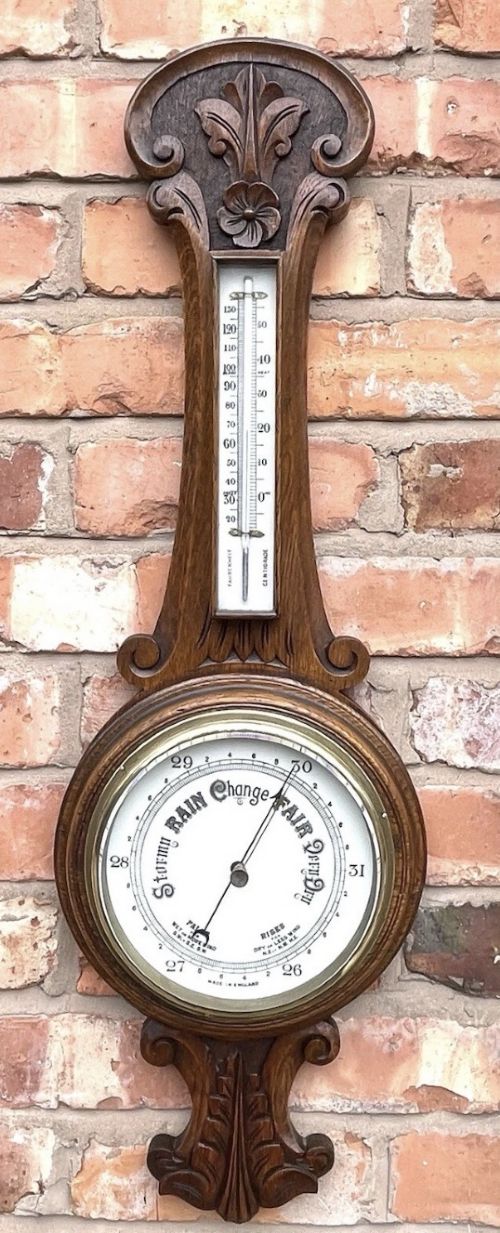


Antique Aneroid Thermometer
An antique aneroid thermometer measures atmospheric pressure and temperature without liquid, housed in carved timber cases from the nineteenth and early twentieth centuries.
Antique Aneroid Thermometer
When you search for an antique aneroid thermometer, you encounter instruments housed within wall-mounted banjo frames, desk compendiums, and table barographs originating from the Victorian and Edwardian eras. These domestic meteorological instruments combine weather-measuring dials with mercury or spirit-filled thermometer scales mounted on wooden backplates.
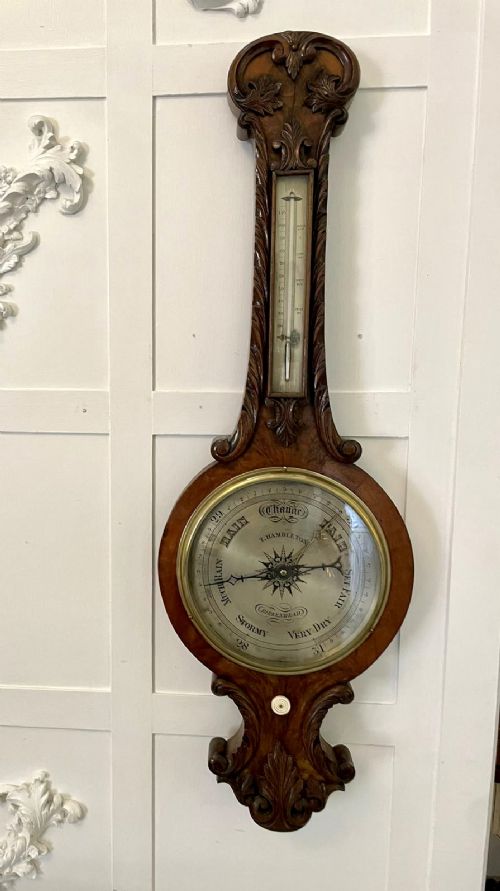
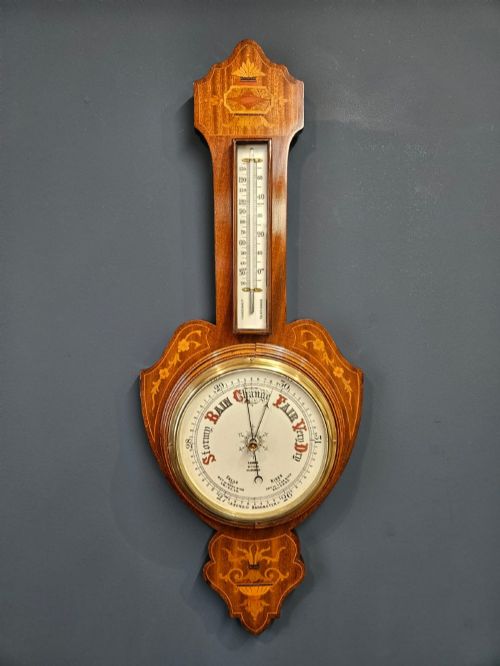
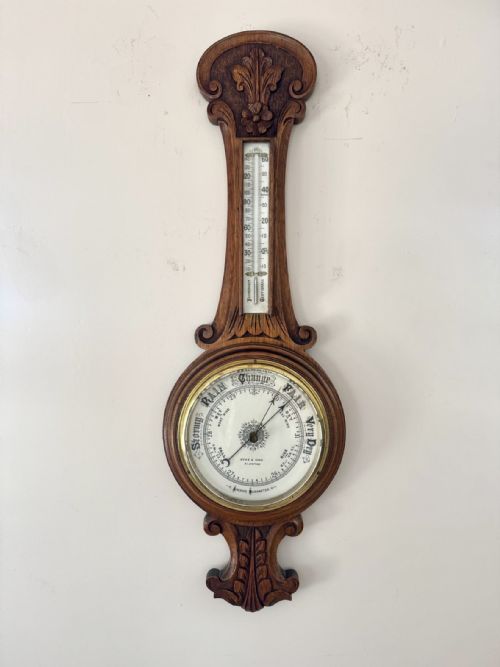
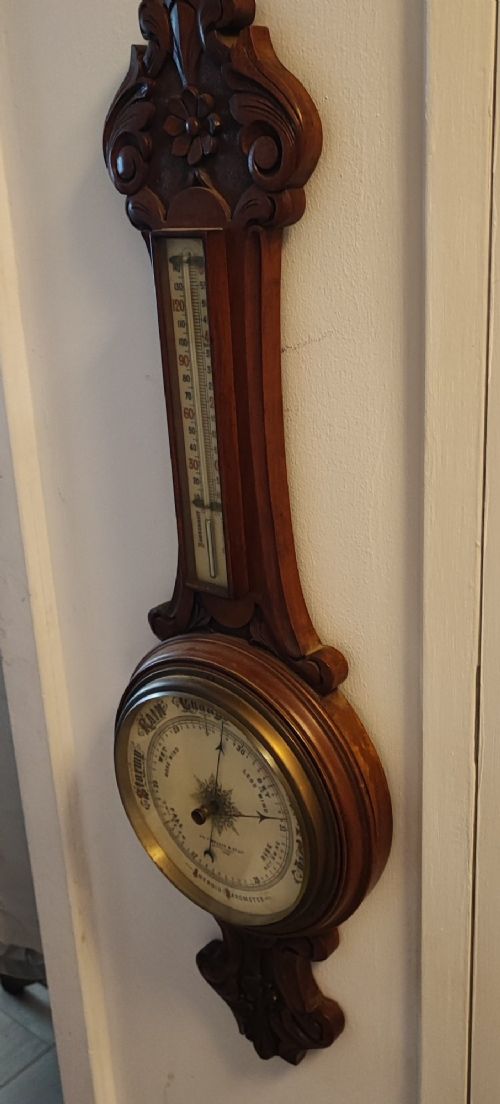
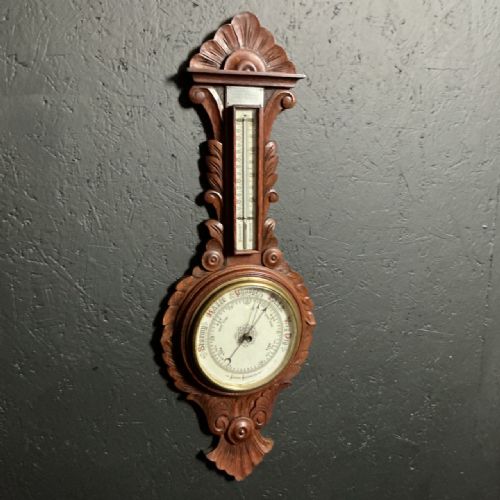
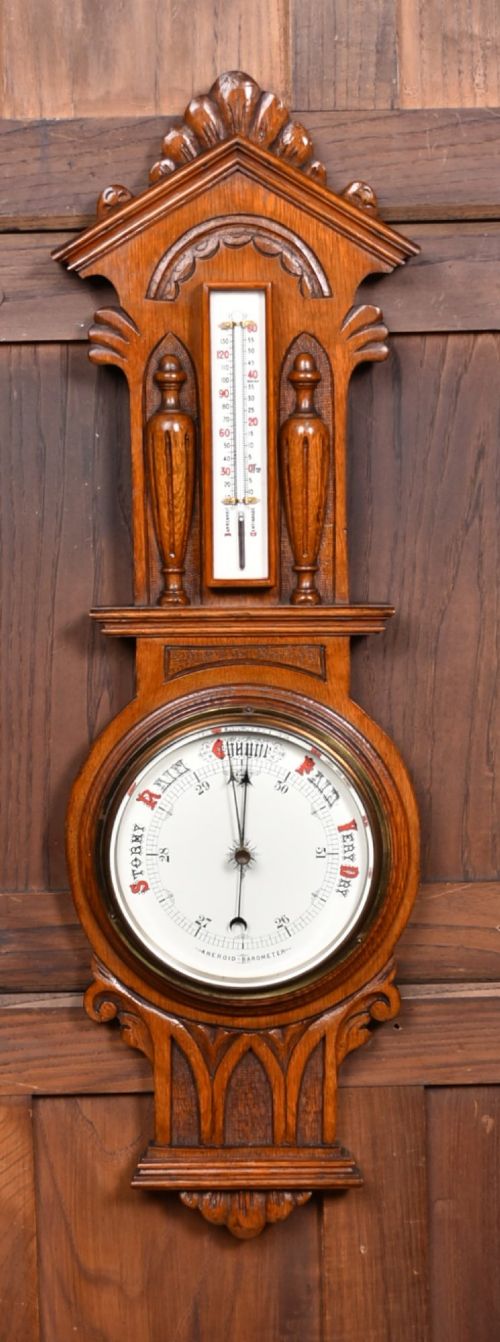
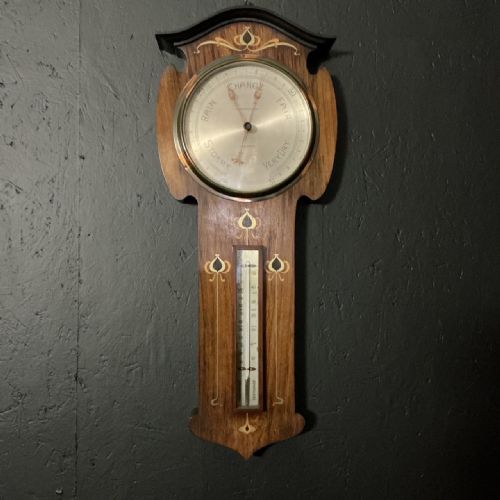
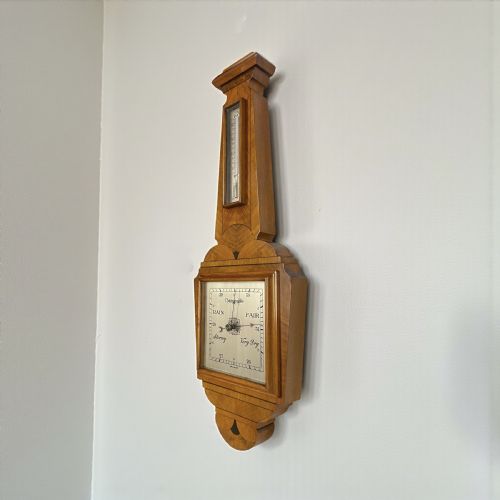
The most common form on this page is the banjo barometer, which places a circular thermometer scale above or below the main dial. Carved oak, walnut, and mahogany cases dominate the selection, reflecting the domestic interior tastes of the nineteenth century and the subsequent Art Deco period.
Makers such as Negretti & Zambra and Hyde & Sons produced pieces that integrated precision movements into decorative timber housings. Regional makers and retailers also signed dials, providing a clear record of local trade during the late nineteenth and early twentieth centuries.
Materials and construction methods
Casework relies heavily on native and imported timbers, including solid oak, mahogany, walnut, and burr walnut, shaped through carving, turning, and marquetry inlay. Edwardian and Victorian workshops utilised hand-carved foliage and geometric banding to adorn the perimeters of banjo frames and desk compendiums.
The interior aneroid mechanism employs a sealed corrugated metal capsule that expands and contracts with barometric pressure changes, linked mechanically to a visible pointer on a paper or porcelain dial. Bevelled glass protects the dial face, whilst brass bezels secure the glass elements to the wooden chassis.
Thermometer scales are typically mounted on carved wooden or porcelain plates, utilising engraved glass tubes filled with coloured spirits or mercury to indicate ambient temperature alongside atmospheric readings.
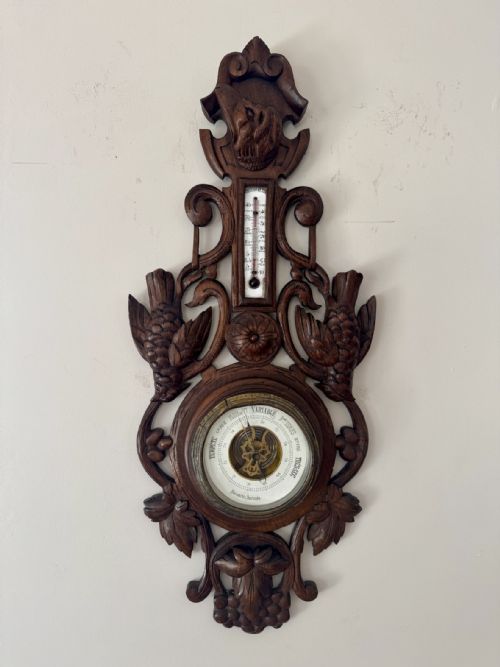
Massive Victorian oak barometers emerge carved with elaborate birds, ensuring your weather forecast arrives with avian company.
Factors influencing quality
The depth and execution of the wood carving separate standard production models from exceptional items. Carved oak examples featuring detailed birds, foliage, or deep relief work indicate superior craftsmanship compared to plain moulded surrounds.
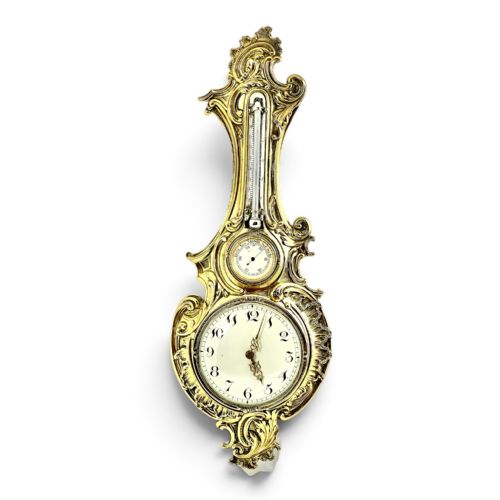
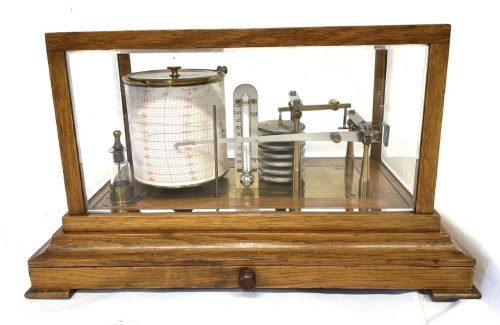
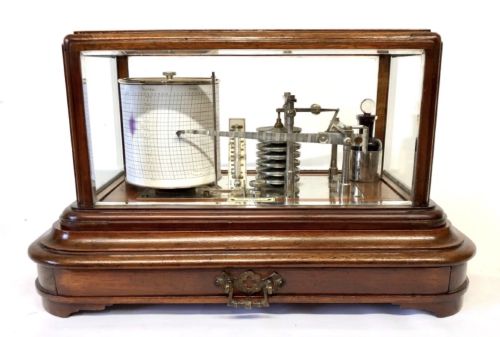
The presence of secondary functions, such as integrated clocks, chart drawers in barographs, or silver-gilt mountings, elevates the complexity of the piece. Signed dials from notable scientific instrument makers carry greater distinction than unsigned retail stock.
The condition of the timber case, the legibility of the dial graduations, and the original bevelled glass retainment all contribute to the overall integrity of the surviving object.
Hyde & Sons Sleaford·GAUPP & CO·Negretti & Zambra London·W Watson & Sons
The Antique Aneroid Thermometer Glossary
- Aneroid barometer
- An instrument that measures air pressure using a flexible metal capsule rather than liquid mercury, first invented in the nineteenth century. This design allowed barometers to be made compactly and mounted on walls without spilling fluid.
- Banjo barometer
- A wall-hanging barometer shaped like a banjo, featuring a narrow stem for the thermometer and a bulbous lower section for the dial. This form was widely produced throughout the Victorian and Edwardian periods.
- Barograph
- A self-recording meteorological instrument that draws a continuous graph of atmospheric pressure onto a rotating paper chart. Many examples incorporate a thermometer alongside the recording drum.
- Desk compendium
- A multi-functional desk object combining a clock, barometer, and thermometer within a single housing. These portable items often date from the late nineteenth century.
- Bevelled glass
- Glass with an angled edge polished to a slope, commonly used to protect instrument dials in quality barometers. This detail adds depth and catches light across the brass bezel.
Antique Aneroid Thermometer: Frequently Asked Questions
How do aneroid barometers work?
An aneroid barometer uses a sealed, flexible metal box called an aneroid capsule. As atmospheric pressure changes, the capsule flexes inward or outward.
This movement connects through levers and springs to a pointer on the dial, translating pressure changes into a visible reading without using liquid mercury.
How do I read the thermometer?
The thermometer scale sits alongside or above the main pressure dial, featuring a glass tube filled with coloured spirit or mercury. You read the temperature by noting where the top of the liquid aligns with the engraved markings on the backplate.
Most domestic instruments measure in Fahrenheit on older pieces, sometimes accompanied by Centigrade scales on Edwardian or later variants.
Where should I hang a banjo barometer?
Hang your barometer on an interior wall away from direct sunlight, radiators, and draughts. Sudden temperature changes can affect the internal mechanism and the timber case.
Secure the instrument firmly to a wall plug or stud using the hanging bracket on the reverse, ensuring the case hangs plumb for accurate dial movement.
How do I tell Victorian from Edwardian pieces?
Victorian barometers often feature heavy, deep oak carvings, walnut finishes, or ornate Black Forest craftsmanship with naturalistic motifs. The lettering on dials tends to use traditional serif fonts.
Edwardian pieces frequently display lighter mahogany with inlaid stringing, simpler classical lines, or cleaner oak frames reflecting changing interior fashions after nineteen hundred.