



Vintage Wrought Iron Planters
Vintage wrought iron planters bring structure to gardens and conservatories through durable metalwork and timeless garden utility.
Vintage Wrought Iron Planters
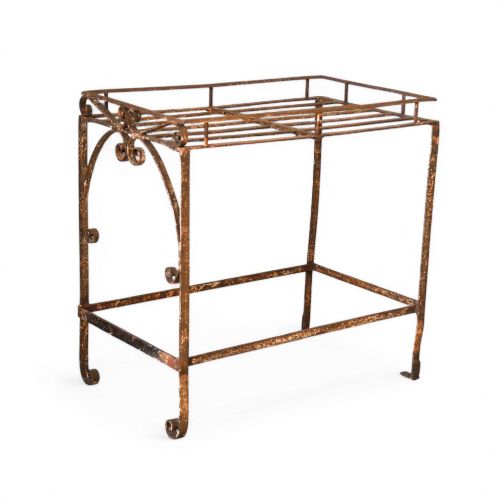
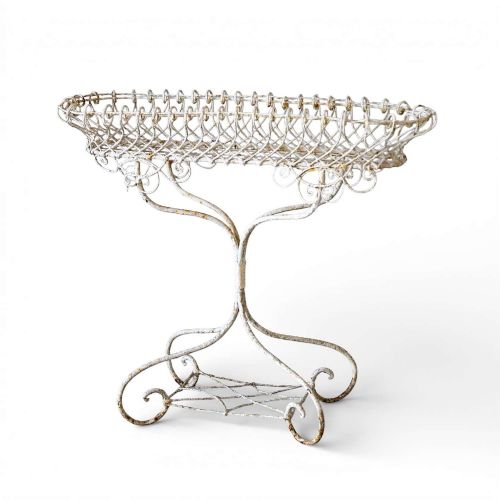
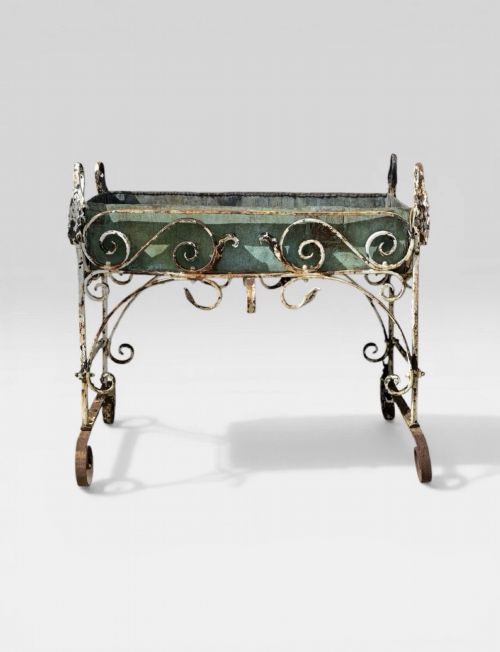
Vintage wrought iron planters comprise garden plant stands, window boxes, strapwork planters, and jardinieres designed to hold botanical displays. These pieces originate from periods spanning the Georgian, Victorian, and Edwardian eras through to the mid-twentieth century.
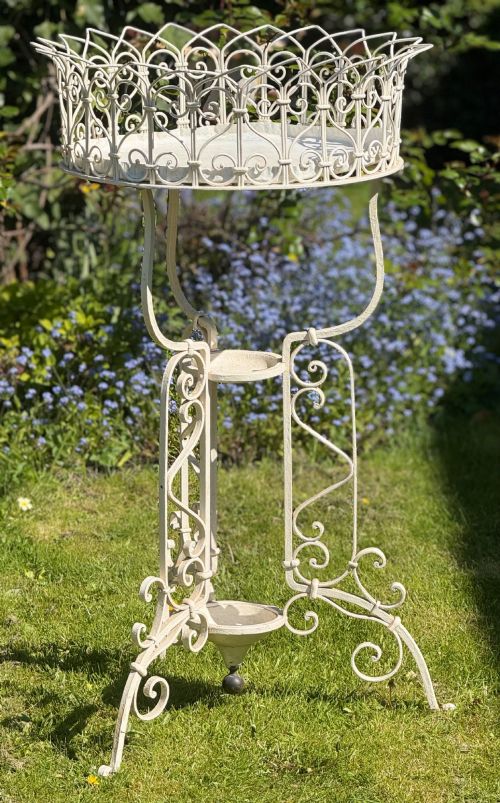
The versions met most frequently on this page combine hand-formed iron frames with baskets, lattice tops, or scrolling details intended for patio, garden, and conservatory placement.
How they were made
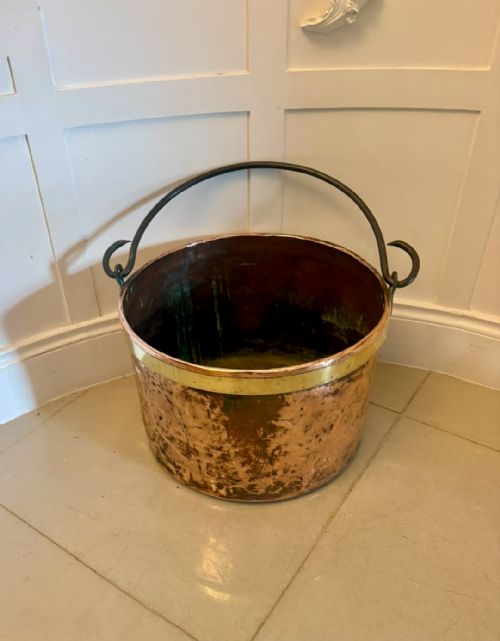
Makers shaped wrought iron manually into scrolls, strapwork, and structural frames, often combining the metal with copper, cast iron, oak, or zinc elements. Rivets, metal banding, and painted finishes secure the robust vessels and stands built to endure outdoor exposure.
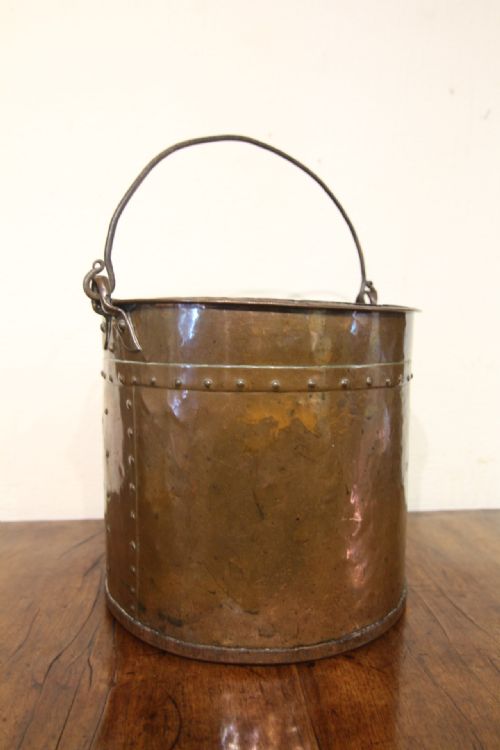
Several pieces started life far from the garden, serving as fairground boats or industrial coal buckets before finding botanical retirement.
What varies in quality
Quality rests in the complexity of the scrollwork, the weight and gauge of the iron, and the integrity of the structural joints. Pieces featuring estate-made detailing or balanced symmetry stand apart from simpler utilitarian vessels.
The Vintage Wrought Iron Planters Glossary
- Wrought iron
- Iron heated and hammered into shape by hand, known for its fibrous grain and durability. This material resists snapping under stress better than cast iron.
- Jardiniere
- An ornamental pot or stand designed to hold plants or flowers. These vessels often sit on elevated legs or tripod bases.
- Strapwork
- Flat strips of metal interwoven or applied in geometric patterns. It provides both structural reinforcement and decorative surface detail.
- Scrollwork
- Spiral or curved ornamental metal motifs. Master blacksmiths formed these shapes by heating and bending iron bars.
- Conservatory plant stand
- Multi-tiered or single-level furniture built to display potted plants inside glasshouses or sunrooms. They lift vegetation off damp stone floors.
Vintage Wrought Iron Planters: Frequently Asked Questions
How do I clean vintage iron planters?
Brush away loose debris and dirt using a soft bristle brush. Avoid harsh chemical cleaners that strip historical painted surfaces.
Apply a light coat of protective wax or specialised oil to deter rust on exposed metal areas.
Can I leave iron planters outside?
Most pieces handle outdoor exposure well due to their durable metal construction. Protecting them during severe winter frosts prevents moisture expansion damage.
Keep them elevated on paving stones to avoid prolonged contact with damp ground.
How do I date an iron planter?
Examine the fabrication marks, joinery methods, and surface patination. Hand-forged elements and uneven strapwork often point toward nineteenth-century origins.
Compare the scroll style and associated materials like copper or oak against documented period examples.
Are these planters heavy?
Solid iron and mixed metal construction yields substantial weight across most items. Larger estate pieces and multi-tiered stands require multiple people to move safely.
This heft provides stability against garden winds when loaded with soil and plants.