


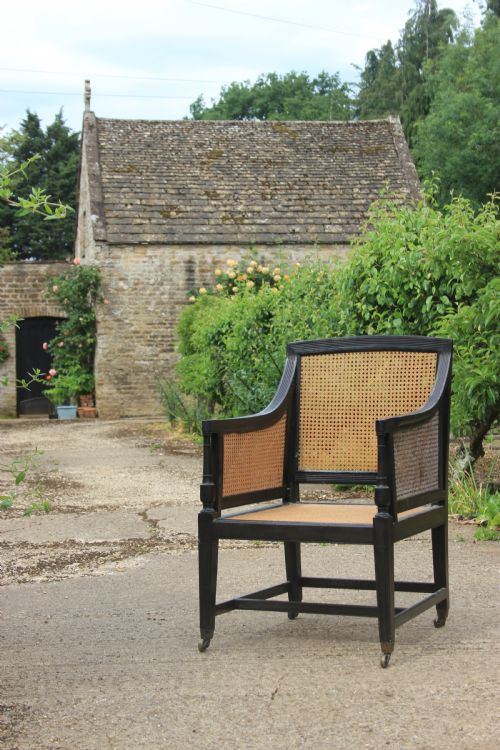

Vintage Woven Seat Armchairs
These vintage woven seat armchairs combine sturdy wooden frames with flexible plant-fibre seating to deliver practical comfort.
Vintage Woven Seat Armchairs
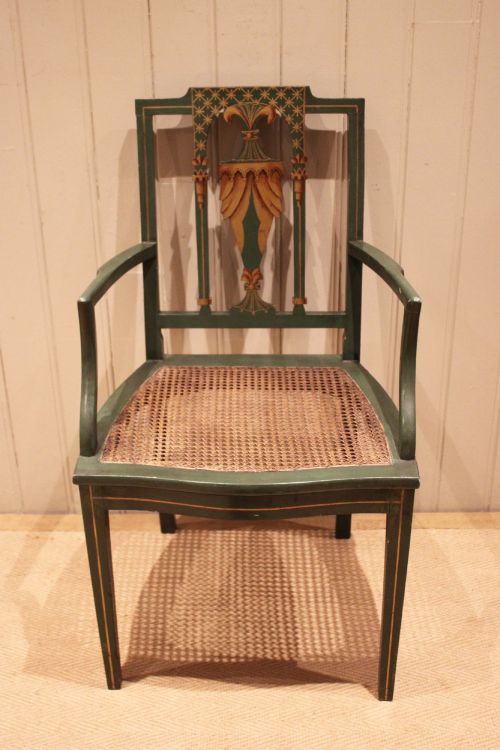
When searching for vintage woven seat armchairs, buyers encounter seating built from wood frames fitted with natural plant materials across the seat or back. These pieces span periods from the nineteenth century through the 1930s, crossing styles like Arts and Crafts, Art Deco, and Edwardian vernacular.
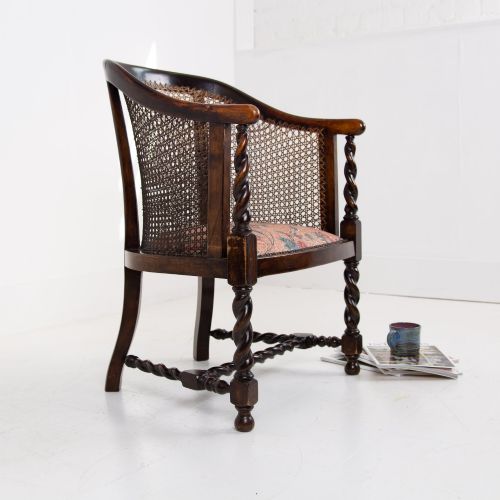
The selections on this page appear most frequently in forms such as low armchairs, bergere chairs, rocking chairs, and lounge seats. Oak, mahogany, and walnut form the structural frames, while rush, cane, rattan, and wicker provide the pliable woven surfaces.
Origins stretch from English workshops to Anglo-Indian studios and Scottish makers. Buyers find everything from heavy dining chairs to folding steamer variants and garden room seating.
How they were made
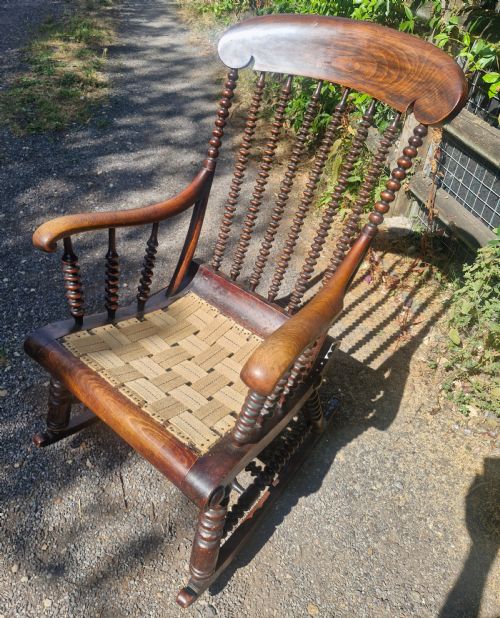
Makers constructed the supportive skeletons using hardwoods like oak, mahogany, walnut, teak, and ebony, shaped sometimes with turned bobbins, bentwood, or carved detailing. Frames required solid joinery to support the tension exerted by the woven inserts.
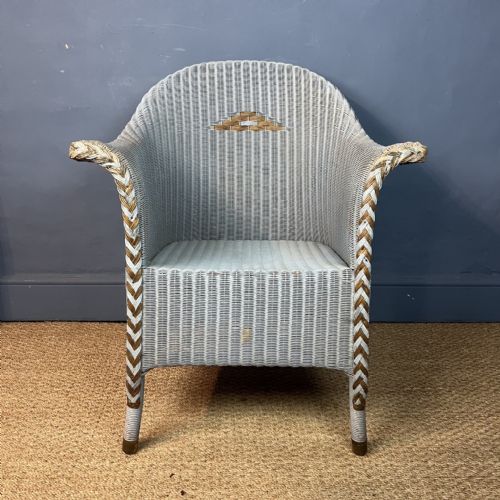
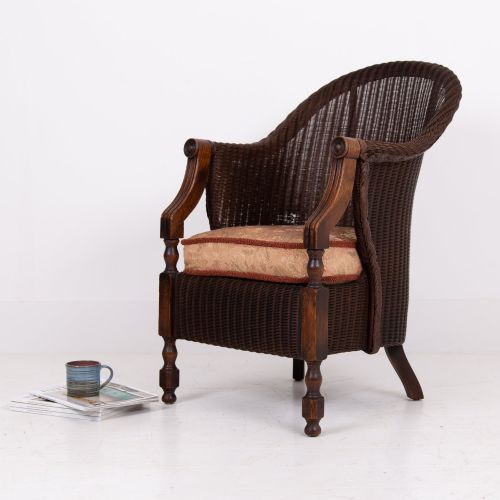
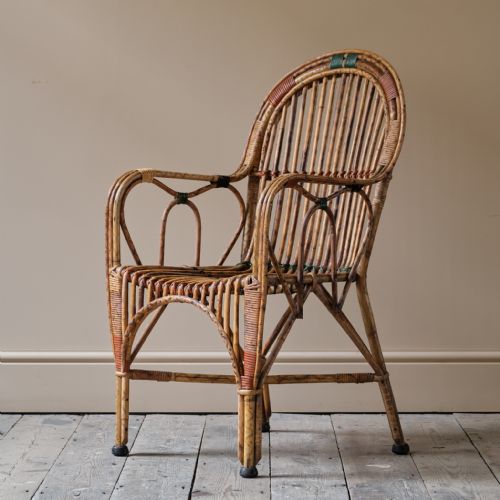
The seating surfaces utilise materials such as split cane, rush, rattan, wicker, and willow, often hand-plaited or threaded through frame perforations. Lloyd Loom items introduced twisted wire-reinforced paper fibre woven on specialised machinery during the 1930s.
Surface treatments range from original paint and lacquer to polished mahogany and painted finishes. Some examples feature additional upholstery like Spanish leather or kilim fabric applied to frames alongside the woven panels.
Listings feature woods including oak, mahogany, walnut, teak, ebony, and bentwood, paired with woven cane, rush, rattan, and wicker.
What varies in quality
The integrity of the frame construction dictates the foundation of the piece. Solid hardwoods like mahogany, ebony, and oak demonstrate superior durability compared to simpler regional vernacular woods.
The condition and tension of the woven material dictate daily usability. Tightly woven split cane, intact rush, and firm rattan panels show careful hand-workmanship and proper maintenance over the decades.
Provenance and maker attribution elevate certain examples. Pieces carrying documentation or stamps from known makers like Liberty, Morris & Co, or Dryad exhibit finer detailing and more deliberate stylistic cohesion.
Liberty Morris And Co·Dryad And Co·Morris And Co·Dryad Of Leicester·Dicon Nance St Ives Studio·Howard And Sons·Liberty And Co
The Vintage Woven Seat Armchairs Glossary
- Bergere
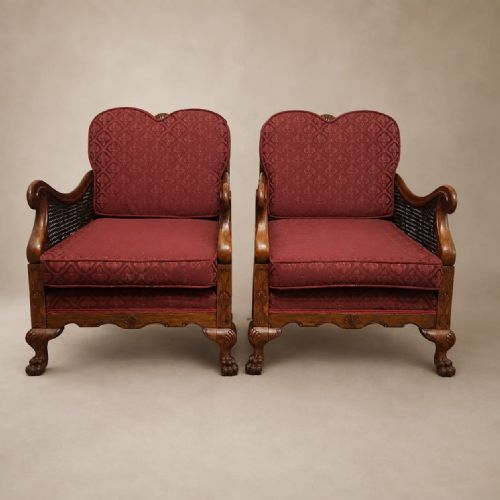
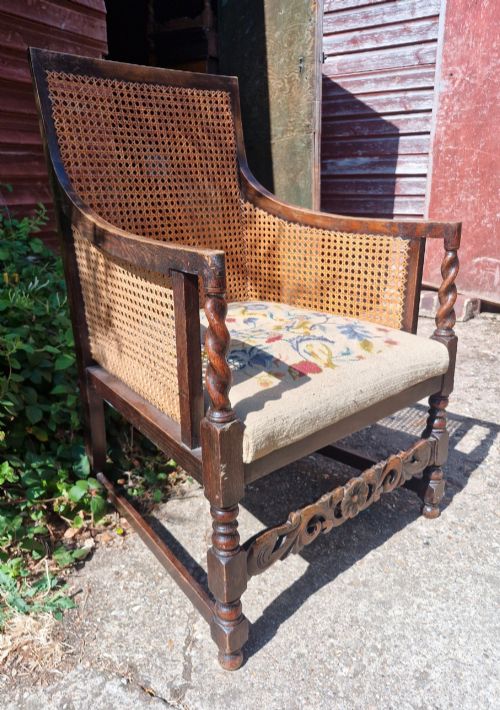
- An upholstered wooden armchair with enclosed cane panels on the back and sides. This French-inspired form appeared frequently in walnut, mahogany, and oak during the nineteenth and early twentieth centuries.
- Rush
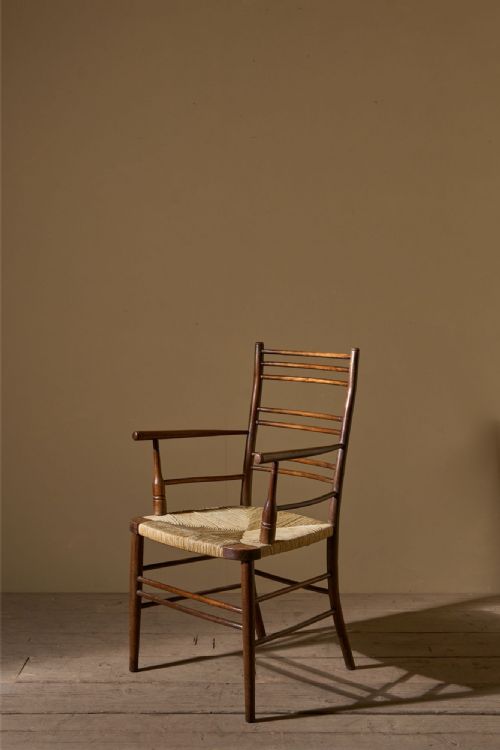
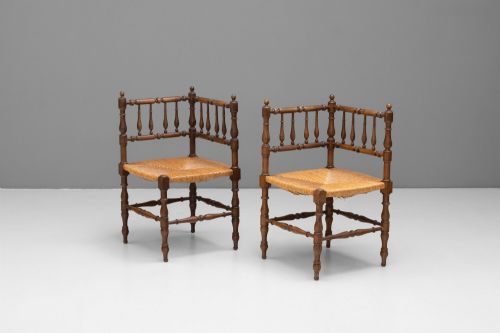
- A wetland plant material twisted into cords and hand-woven to create durable, textured seat bases. It is commonly found on Arts and Crafts ladderback chairs.
- Cane
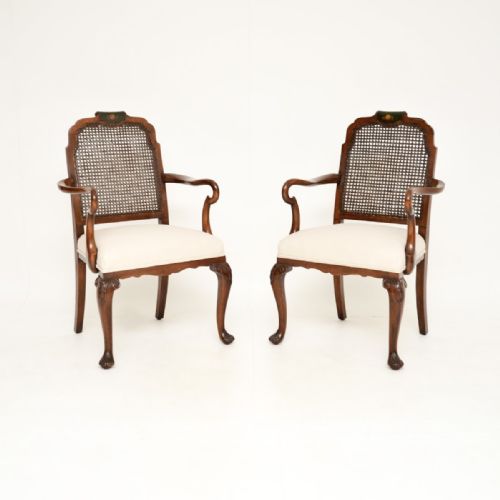
- Strips of peeled rattan woven into patterned meshes for chair seats and backs. Split cane variants offer a smooth, pliable surface for seating.
- Lloyd Loom
- A patented material made of twisted cellulose fibre spun around a wire core and woven on looms. Developed in the early twentieth century, it provided a strong, snag-free alternative to traditional wicker.
- Anglo-Indian
- Furniture made in India during the colonial period, typically utilising local timbers like teak and ebony combined with traditional European chair forms.
Vintage Woven Seat Armchairs: Frequently Asked Questions
How do I clean vintage woven seats?
Dust regularly using a soft brush attachment to prevent debris from settling between the fibres. Wipe wooden frames with a dry cloth and avoid harsh chemical cleaners.
Keep natural plant materials from drying out by maintaining moderate humidity in the room. Occasional light dampening can help keep rush and cane supple.
Can I use these chairs outdoors?
Most vintage woven seating is designed strictly for interior use, particularly garden room or lounge environments. Exposure to moisture and direct sunlight degrades natural cane and rush.
Keep historic pieces away from damp patios and conservatories lacking climate control. Protecting them from weather extremes preserves the original plant fibres.
Are these chairs comfortable for daily use?
Woven seats offer a flexible, supportive surface that yields slightly to the body. Many designs include supportive armrests and reclined backs suited for reading or relaxing.
Adding a loose cushion can increase seating comfort without altering the historic structure. Lower lounge and bergere formats provide relaxed seating angles.
How do I identify the period of a chair?
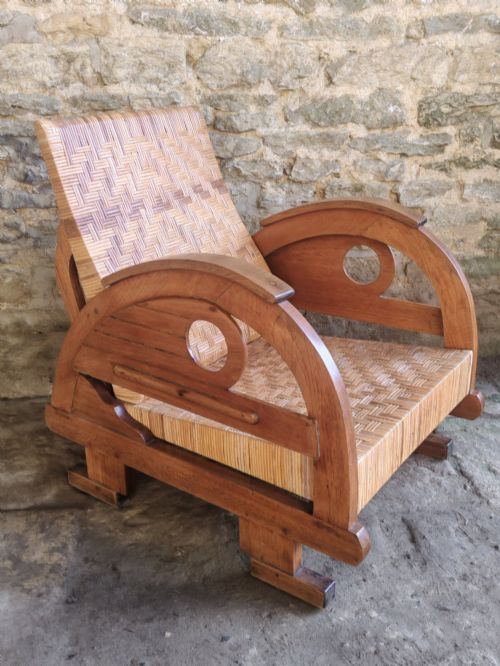
Examine the wood species, joinery methods, and overall silhouette to establish a baseline era. Arts and Crafts pieces show honest construction, while Art Deco examples favor streamlined curves and rattan.
Look for maker marks, stamps, or labels on the underside of the frame. Comparing the style against documented nineteenth and early twentieth-century designs clarifies the date.