
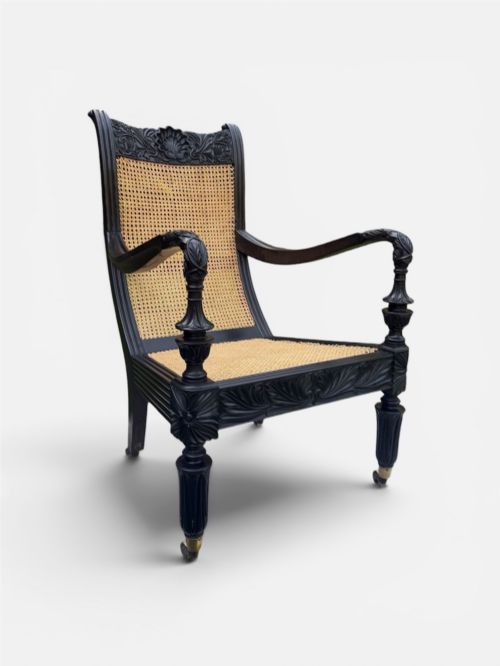
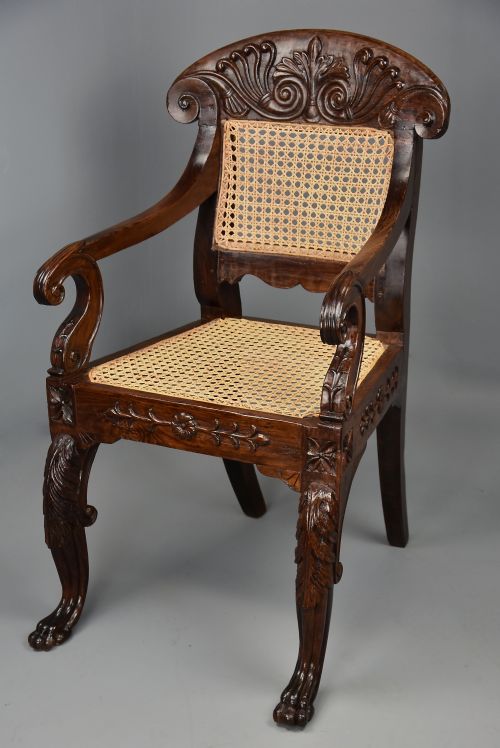

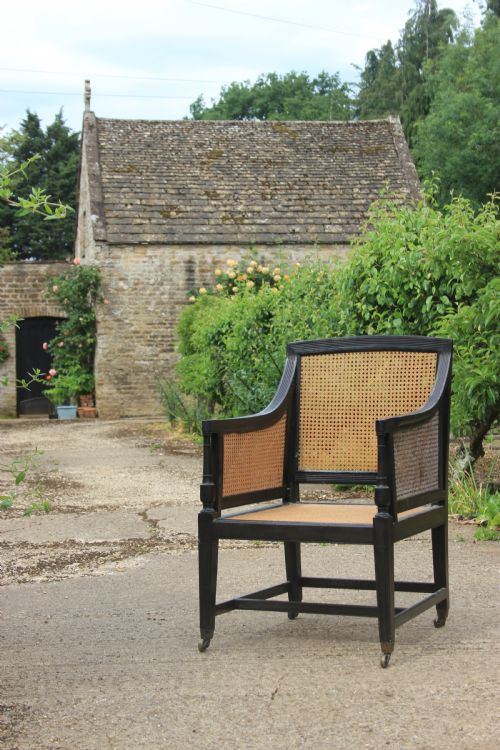
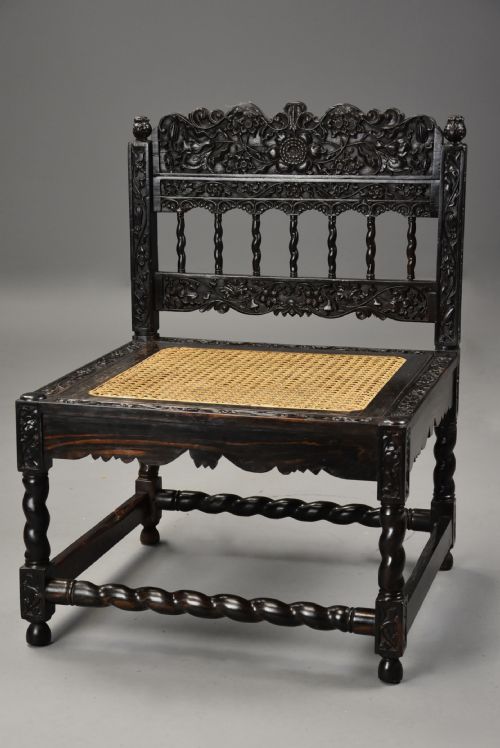


Colonial Cane Seat Chairs
Colonial cane seat chairs are seating pieces crafted overseas for British homes, bringing carved exotic woods and airy mesh to drawing rooms.
Colonial Cane Seat Chairs
Colonial cane seat chairs span open armchairs, side chairs, dining chairs, hall chairs, accent chairs, and reclining plantation models. These seats emerge from periods ranging from the seventeenth century through the nineteenth century, extending into the nineteen-thirties with Art Deco examples.
The aesthetic bridges regional hands and British tastes, encompassing Anglo-Indian, Anglo-Indian Regency, Indo-Portuguese, British Colonial, and Anglo-Burmese Colonial styles. Buyers regularly encounter pieces originating from locations like Ceylon and the Coromandel Coast.
Forms vary from robust solid ebony armchairs to folding variants and low chairs. Each example employs woven cane inserts to provide resilience and breathability in warm climates.
Judging quality in construction
Quality rests upon the density and weight of the timber, alongside the depth and crispness of the carving. Heavier woods like solid ebony command attention for their durability and substantial presence.
The tightness of the cane weave and the integrity of the frame joints distinguish fine examples. Superior pieces maintain structural rigidity while displaying refined proportions across arms, legs, and backrests.
Object forms range from folding chairs and reclining plantation models to standard dining, hall, and armchairs.
The Colonial Cane Seat Chairs Glossary
- Cane
- Woven material made from peeled rattan palms. It provides a lightweight and breathable surface for seats and backs.
- Padouk
- A heavy tropical hardwood known for its rich reddish-brown colour and stability. Makers utilised it for detailed carving work.
- Satinwood
- A luminous yellowish timber harvested in tropical regions. It takes a high polish and was favoured for decorative hall and side chairs.
- Coromandel Coast
- A historical coastal region of southeastern India. Furniture originating here often displays distinctive regional carving motifs.
Colonial Cane Seat Chairs: Frequently Asked Questions
How do I clean caned seats?
Wipe the cane gently with a damp cloth to remove dust from the woven strands. Avoid harsh chemical cleaners that can dry out the natural material.
Keep the timber nourished with appropriate furniture wax while protecting the cane from excessive moisture and direct heat sources.
Are these chairs comfortable for daily use?
The woven cane yields slightly to body weight, offering a flexible and cool seating surface. Many include armrests or low profiles suited for relaxed sitting.
Adding a loose cushion can increase comfort for prolonged sitting while preserving the original caned base underneath.
How can I tell the period?
Examine the timber species, carving style, and structural joinery to understand the era of manufacture. Regency influences show classical restraint, whereas Art Deco pieces introduce geometric lines.
Comparing the turning of the legs and the intricacy of the backrest helps separate seventeenth-century examples from nineteenth-century productions.