

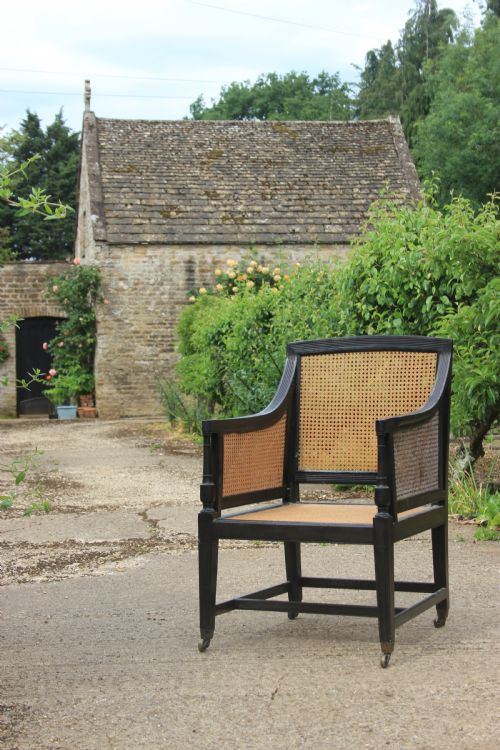


Vintage Woven Cane Seating
Vintage woven cane seating brings natural texture and flexible comfort to a room, offering enduring style through traditional craftsmanship.
Vintage Woven Cane Seating
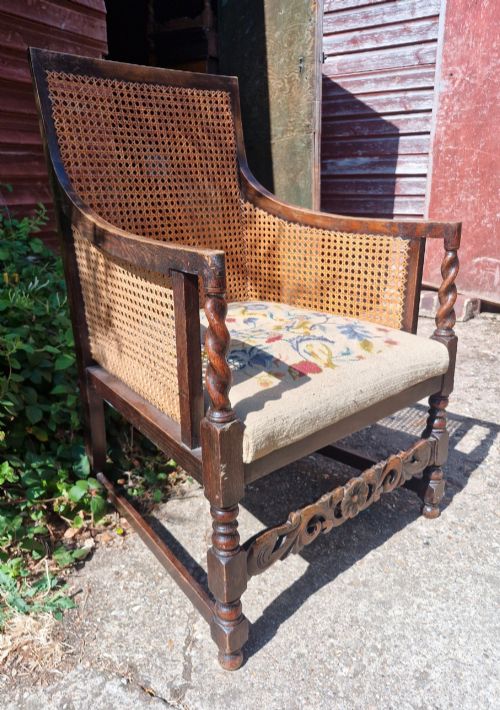
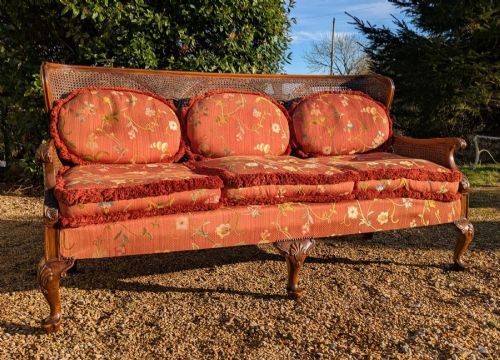
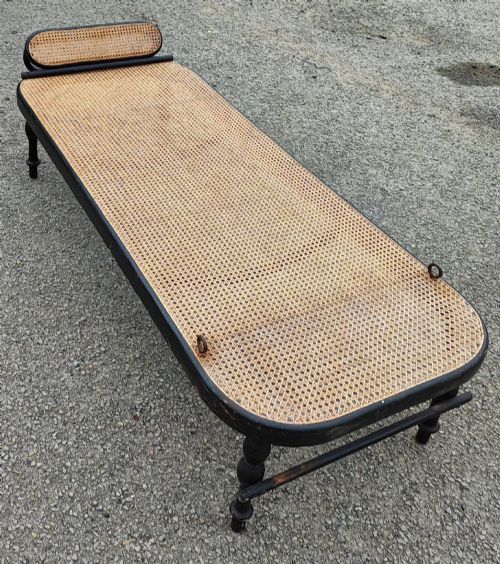
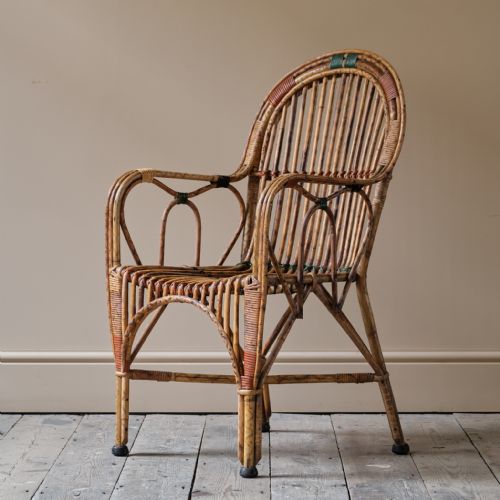
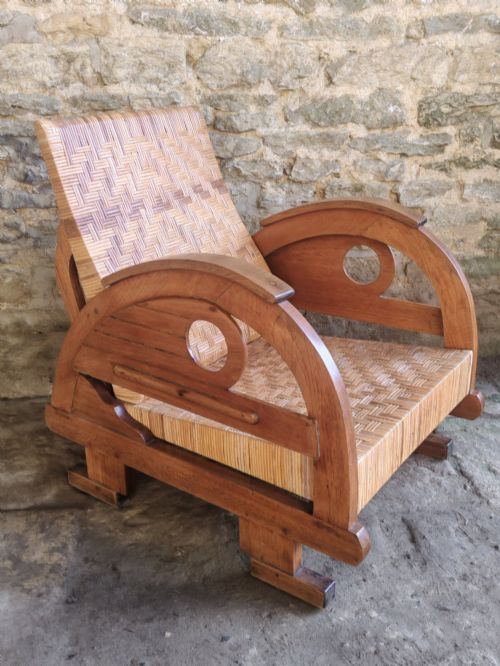
Vintage woven cane seating encompasses chairs, sofas, stools, and daybeds constructed with woven plant materials across various historical periods. When searching for vintage woven cane seating, buyers encounter pieces ranging from Victorian and Regency designs to early twentieth-century Arts and Crafts, Art Deco, and Colonial productions.
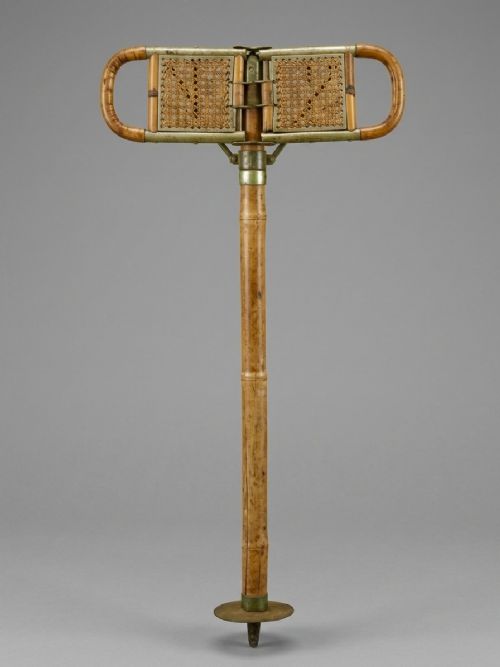
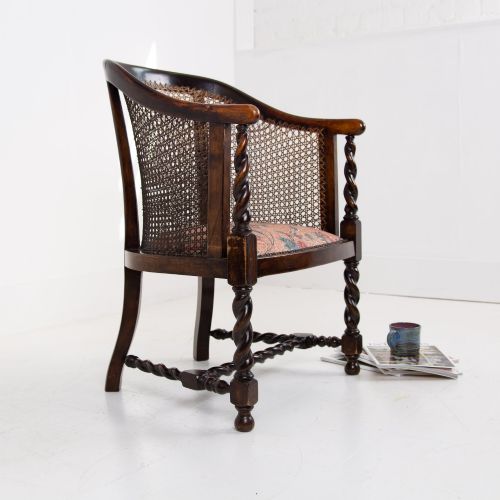
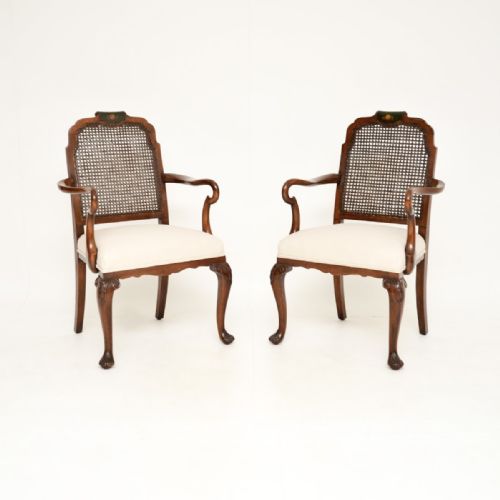
The selections on this page heavily feature armchairs and bergere chairs alongside dining chairs, rocking chairs, and folding campaign seats. Frames are constructed from woods such as oak, mahogany, walnut, beech, teak, and ebony, paired with cane, rattan, and wicker.
Origin points span domestic English workshops, French styles, Anglo-Indian colonial production, and Burmese craftsmanship. Pieces appear from the nineteenth century through the 1920s, 1930s, and 1940s, reflecting diverse historical revivals including Jacobean, Carolean, and Hepplewhite.
Materials and construction methods
Frames rely on hardwoods including solid mahogany, walnut, oak, teak, and ebonised or painted beech, shaped through turning, carving, and bentwood techniques. Joinery methods secure these sturdy structural skeletons to support the openwork woven panels.
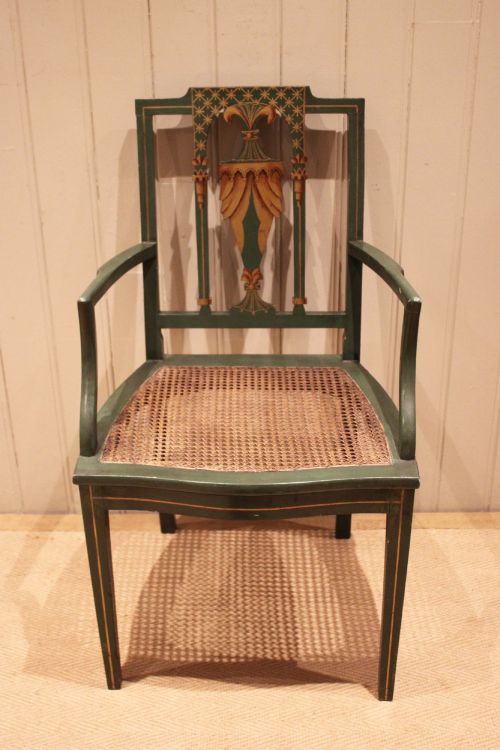
The seating panels utilise natural cane, split cane, rattan, and wicker, threaded through drilled frame holes or inset channels. Artisans manipulate these pliable plant fibres to create flexible, breathable surfaces for seats, backs, and bergere panels.
Some nineteenth-century travellers insisted on folding plantation chairs with reclining cane backs so they could nap anywhere.
Distinctions in craftsmanship and design
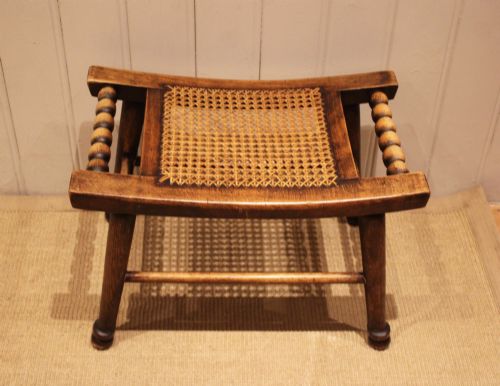
Quality separates along the rigidity of the wooden frame and the tightness of the cane weaving. Superior pieces demonstrate precise joinery, such as barley twist legs or carved details, paired with evenly tensioned natural cane that distributes weight correctly.
The provenance and stylistic ambition dictate the upper tier, including labeled maker pieces or finely decorated Anglo-Indian and colonial seating. Simpler utility forms and later bentwood items occupy the accessible end of the range.
Dryad & Co·Dryad of Leicester
The Vintage Woven Cane Seating Glossary
- Bergere
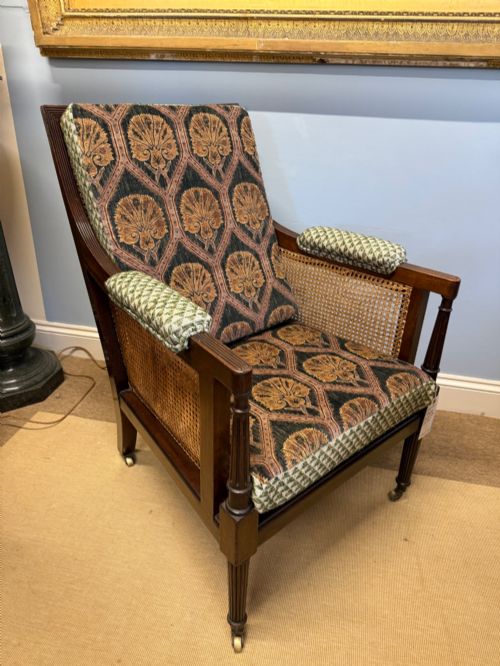
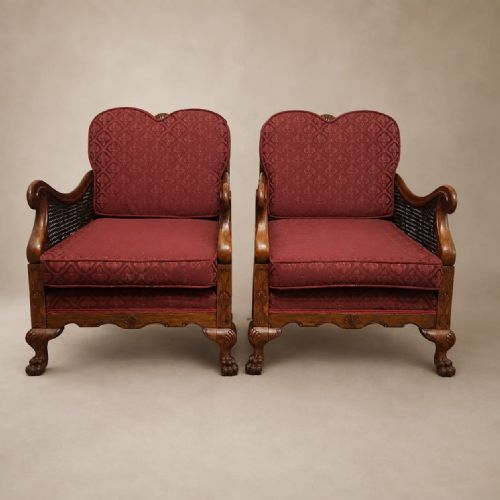
- An upholstered enclosed armchair with a wooden frame and woven cane back and sides. These seats frequently include loose feather or fabric cushions.
- Cane
- The peeled, fibrous outer bark of the rattan palm used for weaving seats and backs. This material provides both flexibility and resilience.
- Bentwood
- Wood softened by steam and bent into curved shapes for chair frames. This technique creates lightweight and durable seating.
- Campaign chair
- Portable folding furniture designed for travel and military use during the nineteenth century. These items combine collapsible wooden frames with woven cane or fabric.
- Rattan
- A climbing palm with strong stems utilised for wickerwork and structural framing. It forms the core skeleton for many woven chairs.
Vintage Woven Cane Seating: Frequently Asked Questions
What is a bergere chair?
A bergere chair is an enclosed upholstered armchair featuring wooden frames with woven cane panels on the back and sides. These pieces often include comfortable loose cushions for the seat.
Originating in historical French designs, they appear across Edwardian and Art Deco periods in woods like mahogany, walnut, and oak.
How do I care for cane seats?
Cane seating requires moderate humidity to prevent the natural plant fibres from becoming brittle and snapping. Avoid placing these chairs near direct heat sources or dry radiators.
Cleaning involves dusting with a soft brush and occasionally dampening the underside of the cane with warm water to maintain elasticity.
Are folding campaign chairs comfortable?
Campaign chairs were originally constructed for military officers and travellers requiring portable seating during transit. Their clever folding mechanisms allow easy storage without sacrificing structural support.
Textiles, leather, or woven cane panels adapt to the sitter's body, providing surprising ergonomic comfort for nineteenth-century portable furniture.
How do I date a cane chair?
Dating relies on examining the timber species, framing style, and the drilling pattern of the cane work. Victorian and Regency pieces often feature distinct carved motifs and dense hardwoods like mahogany.
Twentieth-century examples transition toward Arts and Crafts simplicity, bentwood curves, or distinct Art Deco geometric lines.