
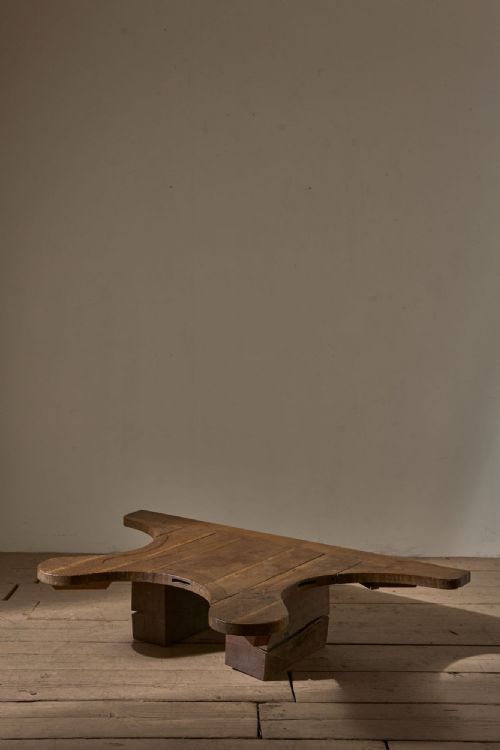
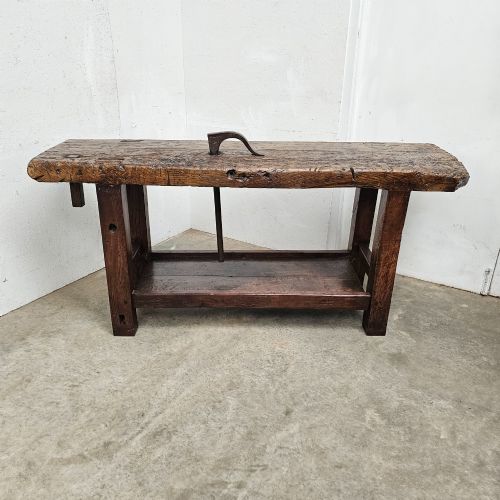
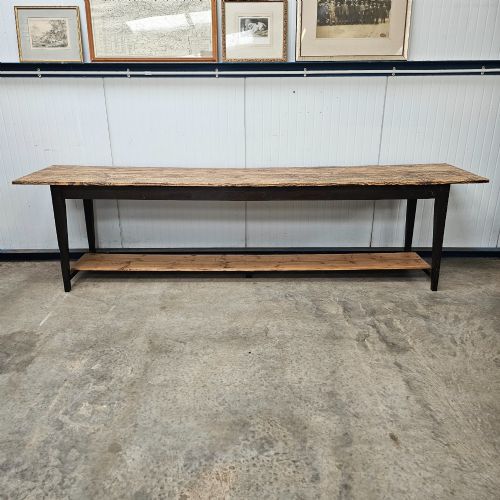
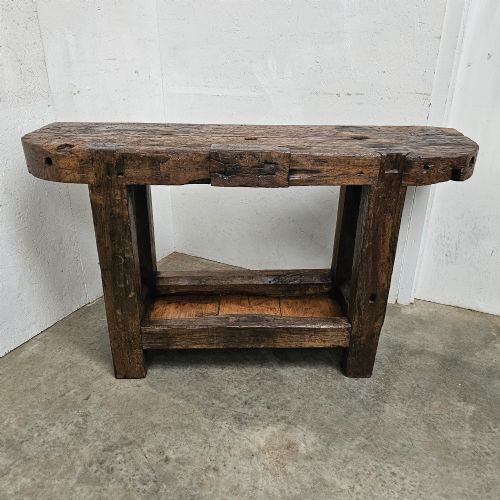


Vintage Workbench Table
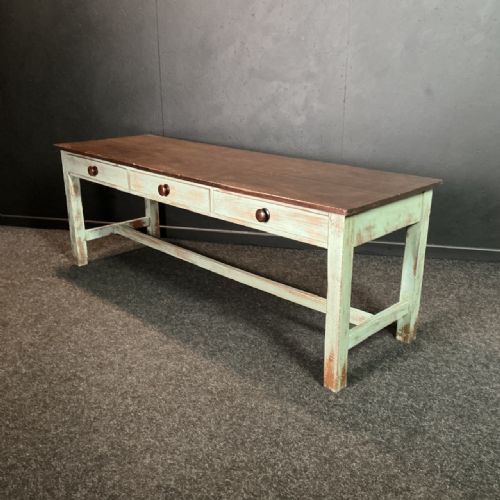
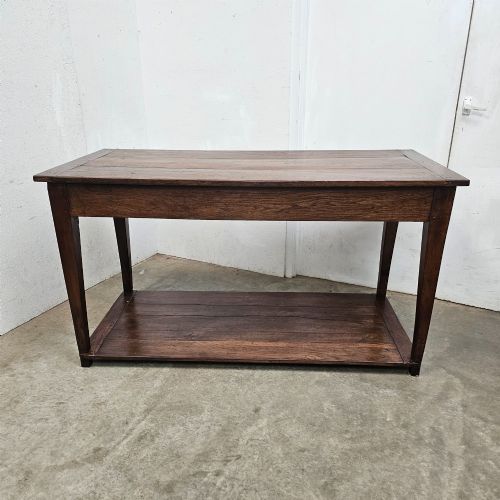
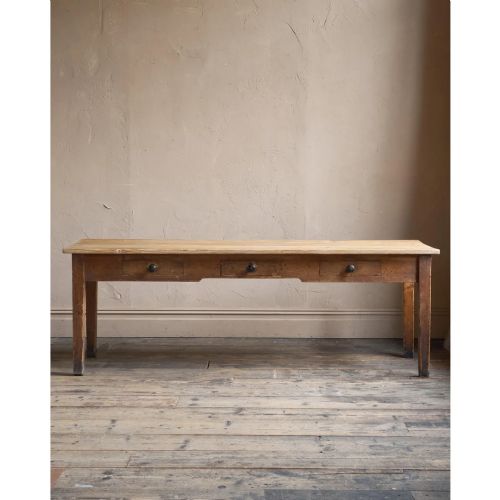
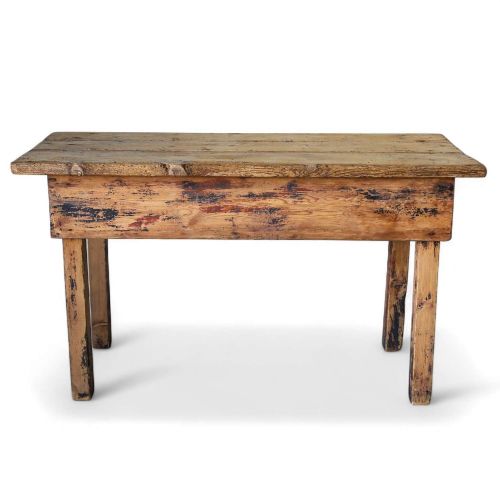
A vintage workbench table brings honest utility to a room, offering robust surfaces shaped by decades of practical workshop or kitchen use.
Vintage Workbench Table
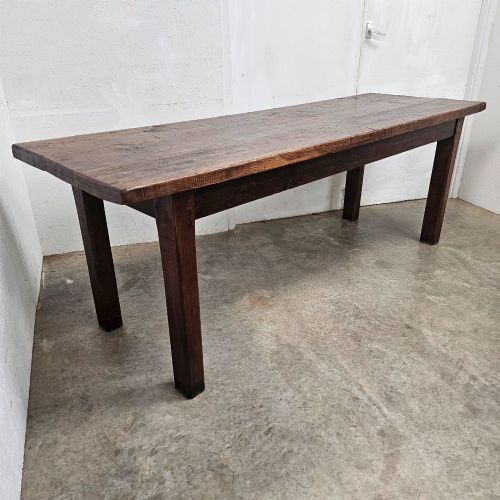
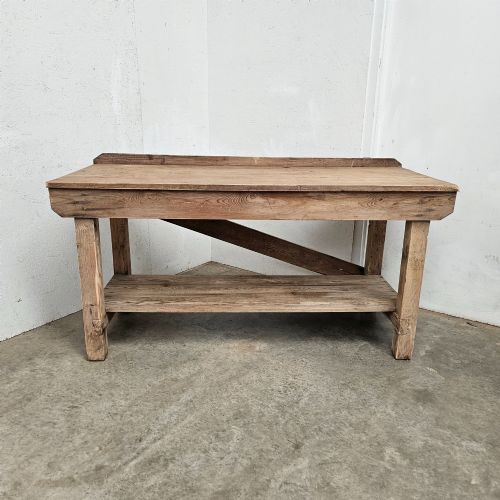
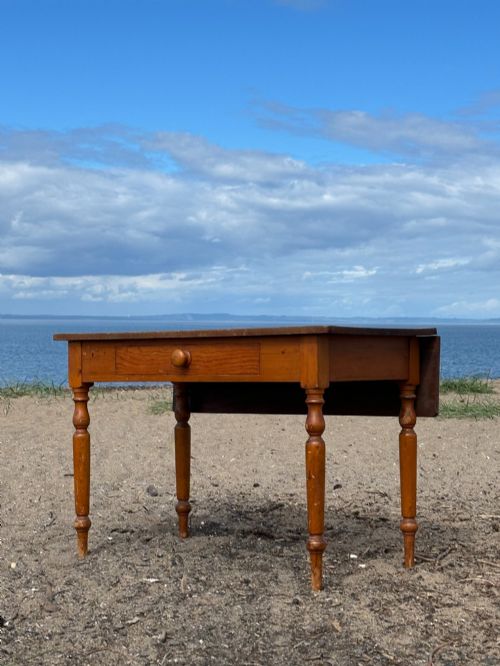
A vintage workbench table bridges the gap between utilitarian workshop salvage and domestic furniture, serving diverse roles from kitchen preparation to console surfaces. Buyers seeking a vintage workbench table encounter heavy timber boards, integrated vises, and sturdy trestle supports that reflect nineteenth and early twentieth-century trades.
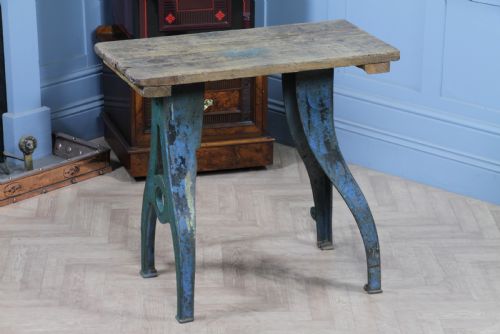
The selection ranges from French craftsmans benches and Welsh pine farmhouse work tables to industrial steel-based designs and post office sorting tables. These pieces frequently manifest styles spanning rustic farmhouse, industrial salvage, and French provincial, each retaining marks of manual labour.
Originating across England, France, and Scandinavia, these tables appear in substantial lengths alongside smaller console and coffee table formats. The core purpose remains practical surface area, adapted through decades of trade use into domestic settings.
Materials and construction
Construction relies on dense timber tops paired with robust supporting frames, utilising solid pine, oak, elm, beech, and sycamore alongside heavy cast iron and steel. Thick boards form the primary working surfaces, designed to withstand hammering, cutting, and daily handling without flexing.
Joinery methods prioritize absolute rigidity, employing through-tenons, sturdy trestle bases, and functional mechanisms such as wooden clamping bars and metal vises. Iron and steel reinforcement provides structural stability for industrial and domestic utility.
Listings feature pieces spanning from the mid-nineteenth century through the 1930s, constructed in pine, oak, elm, and cast iron.
Assessing quality and character
Quality rests in the integrity of the structural timber, the retention of original working mechanisms like vises and drawers, and the depth of surface patina accumulated through use. Pieces retaining their authentic working configuration command greater interest than heavily altered examples.
The balance between raw industrial utility and domestic proportion determines suitability for interior spaces. Superior examples demonstrate harmonious integration of heavy iron bases with well-worn wooden tops, preserving the authentic history of the trade.
The Vintage Workbench Table Glossary
- Trestle table
- A table supported by side assemblies consisting of two or more uprights connected by a horizontal beam. This design provides exceptional legroom and stability.
- Scullery table
- A heavy utilitarian wooden table traditionally used for food preparation and washing tasks in large houses. These pieces feature thick pine tops built for heavy daily use.
- Clamping bar
- A wooden or metal mechanism built into the side of a workbench to secure materials in place during crafting. It adds functional mechanical interest to the piece.
- Patina
- The surface sheen and coloration developed through years of handling, polishing, and natural wear. It signifies the age and authenticity of the timber.
- Post office sorting table
- A specialised functional table featuring divided compartments or expansive flat surfaces designed for organising mail. These forms offer unique industrial configurations.
Vintage Workbench Table: Frequently Asked Questions
How do I clean a wooden work table surface?
Maintain the surface by wiping with a slightly damp cloth and applying natural beeswax to nourish the aged timber. Avoid harsh chemical cleaners that strip the historic patina.
Regular oiling preserves the dry wood without altering the authentic texture earned through decades of workshop use.
Can these industrial tables function as dining furniture?
Many examples adapt well to dining spaces, provided the height and leg clearance accommodate standard seating. The generous proportions of harvest and scullery tables suit modern dining rooms.
Check the knee clearance beneath drawers or metal frames before pairing with chairs.
How do I identify the period of a pine table?
Dating relies on construction methods, timber grain, and tool marks left by early saws and planes. Nineteenth-century examples often feature hand-cut joints and dense, mature pine.
Twentieth-century pieces tend to show standardised fixings and more uniform industrial framing.