






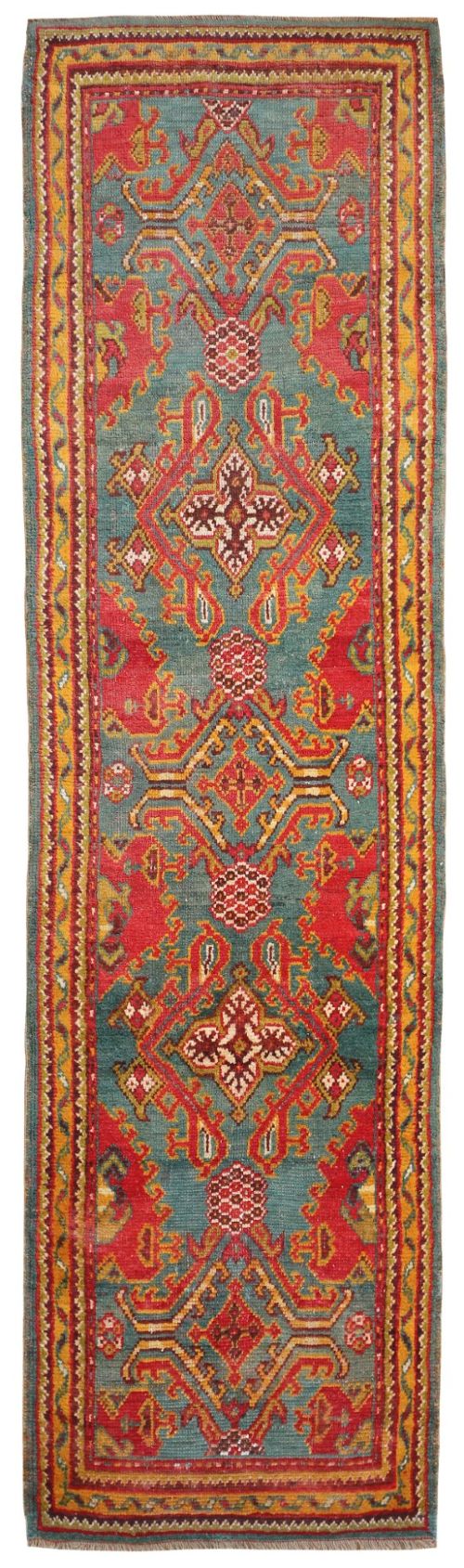
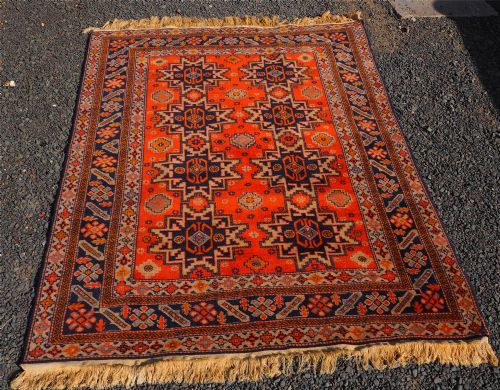
Vintage Wool Runner Rug
A vintage wool runner rug brings narrow spaces alive with colour and pattern woven across decades.
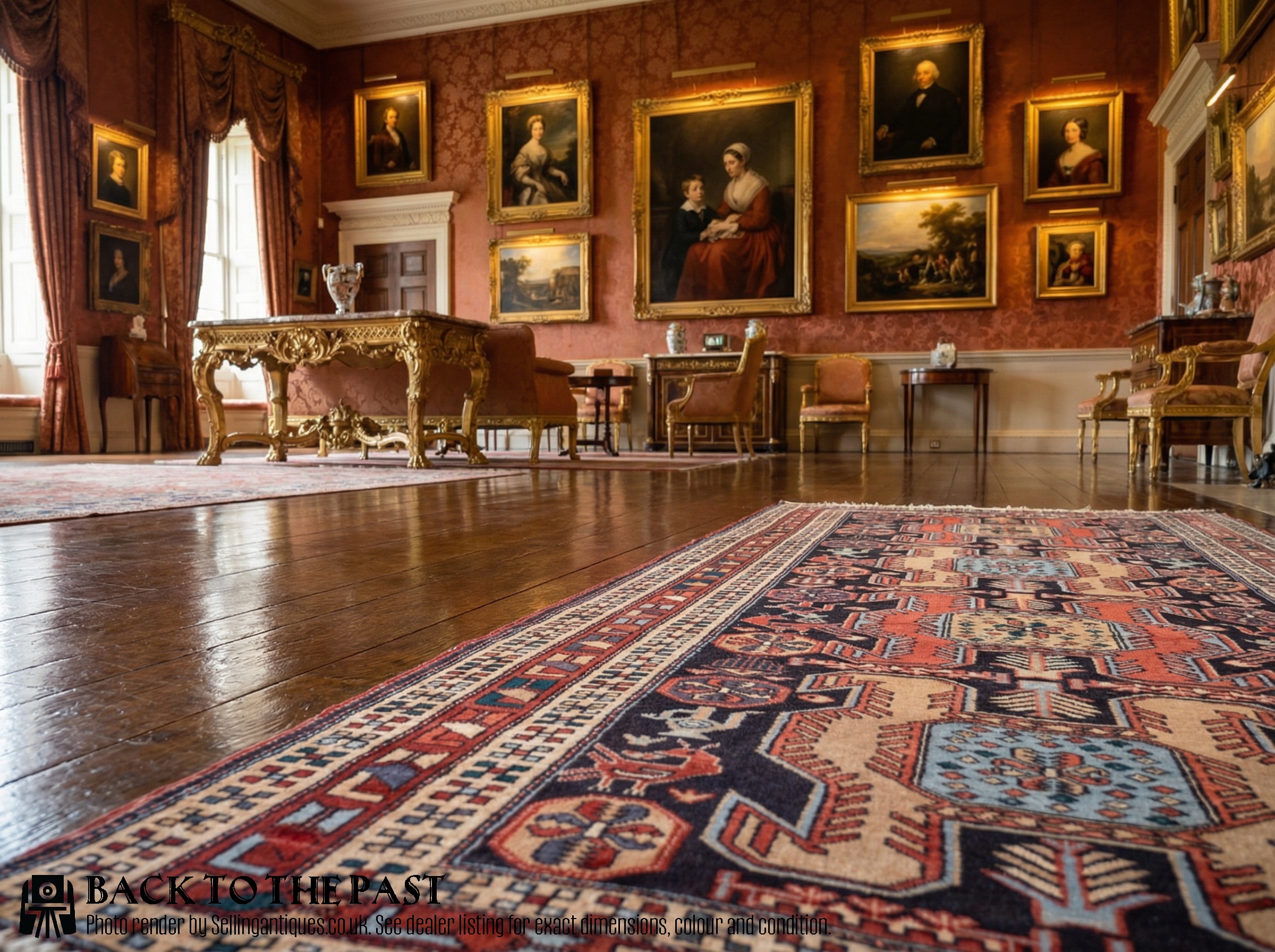
Vintage Wool Runner Rug
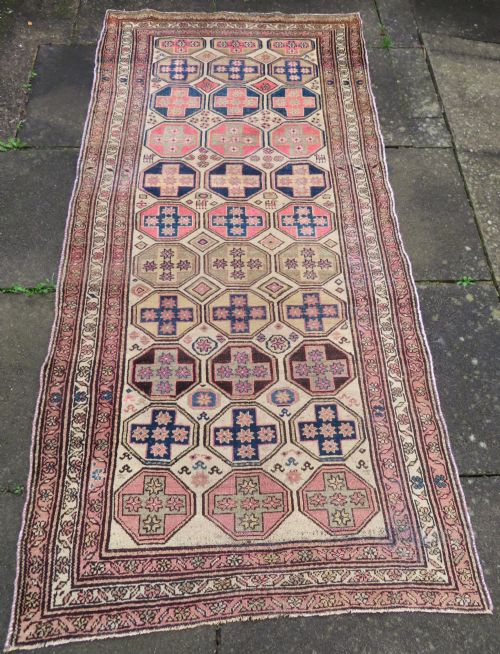
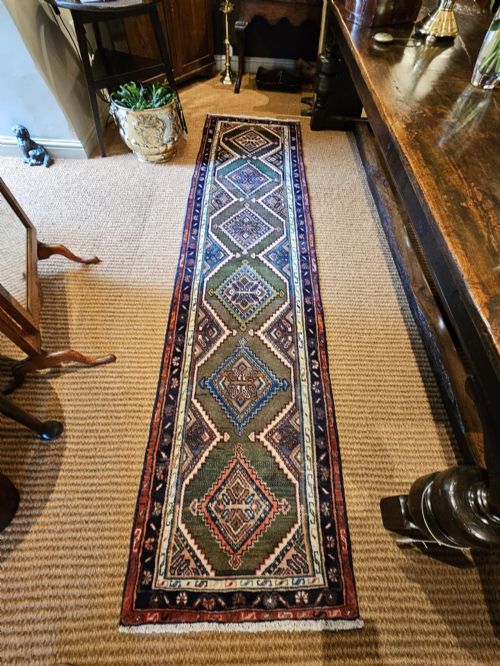
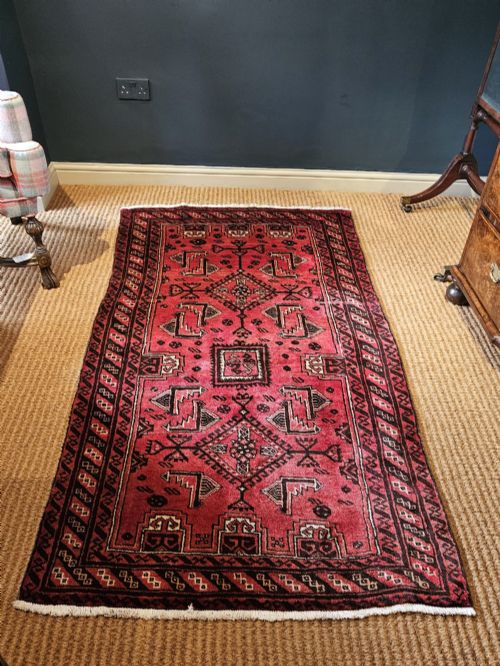
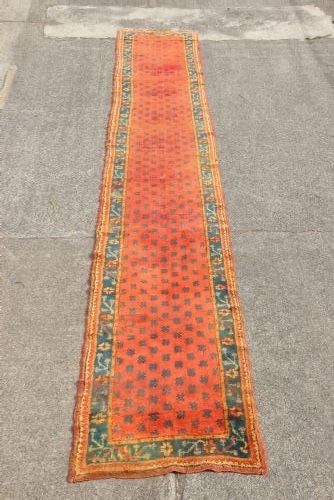
When you search for a vintage wool runner rug, you encounter long, narrow textiles designed for hallways, corridors and staircases. These pieces originate from Persian, Caucasian, Anatolian, Tibetan and Turkmen weaving traditions, spanning periods from the late nineteenth century through the early twentieth century.
The format focuses on linear geometry and repeated medallions tailored to walkaways rather than central rooms. They bridge practical floor covering and folk art, offering durable utility underfoot alongside rich cultural histories.
Most examples rely on traditional village or tribal workshops rather than large urban manufactories. This connection grants them an unhurried, idiosyncratic character where minor irregularities reflect individual hand-knotting.
How they were made
Weavers constructed these pieces predominantly from wool pile knotted onto cotton or wool foundation warps and wefts. Pure wool provides both spring and resilience, standing up to decades of foot traffic while holding saturated vegetable and early synthetic dyes.
Certain examples incorporate camel hair into the foundation or pile for natural tonal variation without dyeing. Loom techniques vary regionally, yielding asymmetric or symmetric knots tied by hand over vertical frames.
Some weavers quietly hid tiny accidental colour shifts inside long borders, leaving a personal fingerprint for future footsteps to find.
What varies in quality
Quality rests in the density of the knotting and the crispness of the drawing across the field. Tightly packed knots secure the pile against premature wear and allow intricate geometric or floral lattices to remain sharp.
Dyestuff stability and wool lanolin content determine how gracefully a piece ages under sunlight and friction. Superior examples maintain rich, deep hues and a supple handle rather than stiffening or shedding excessively.
The Vintage Wool Runner Rug Glossary
- Runner
- A long, narrow carpet format specifically proportioned for corridors, hallways and stairs. It guides movement through a building.
- Pile
- The upright loops or cut ends of yarn that form the soft surface of the rug. It absorbs the impact of footsteps.
- Warp
- The stationary vertical threads stretched tightly on the loom before knotting begins. The foundation bears the structural tension of the textile.
- Weft
- The horizontal threads passed across the warps between rows of knots to lock them securely in place. It stabilizes the width of the piece.
- Kilim
- A flat-woven textile produced without a pile by interlocking warp and weft threads. These function as lighter floor coverings or coverings.
Vintage Wool Runner Rug: Frequently Asked Questions
Where do these runners work best?
These runners suit long, narrow architectural spaces such as hallways, landings and corridors where standard rectangular carpets fail to fit. They soften wooden floorboards and insulate stone pathways.
Position them in transitional zones to draw the eye forward through a home while protecting high-traffic timber from direct wear.
How do I clean a wool runner?
Regular gentle vacuuming without a rotating beater bar prevents grit from settling deep into the wool pile. Prompt attention to spills avoids staining.
Professional specialist washing remains essential every few years to flush accumulated dirt from the foundation threads safely.
Are these pieces durable?
Natural wool fibres contain inherent lanolin that resists moisture and provides remarkable tensile strength under foot traffic. These textiles survived a century or more precisely because of that resilience.
Using a quality underlay beneath the runner prevents slipping and cushions the weave against hard subfloors, extending its lifespan further.
How do regional styles differ?
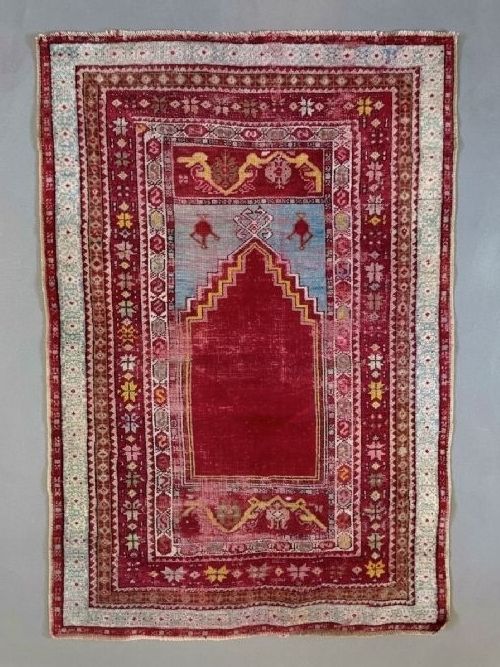
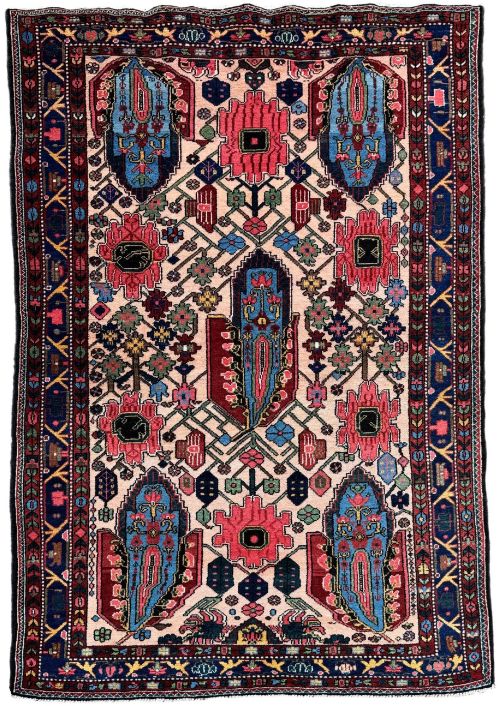
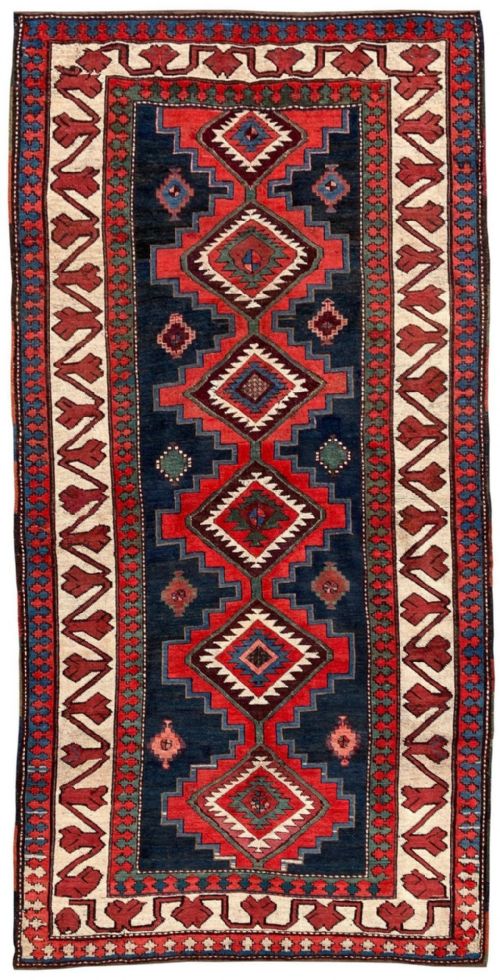
Persian and Anatolian pieces often feature complex floral lattices, medallions and prayer mihrabs rendered in rich reds and blues. Caucasian and Turkmen styles lean towards stark geometric polygons, hooked guls and tribal motifs.
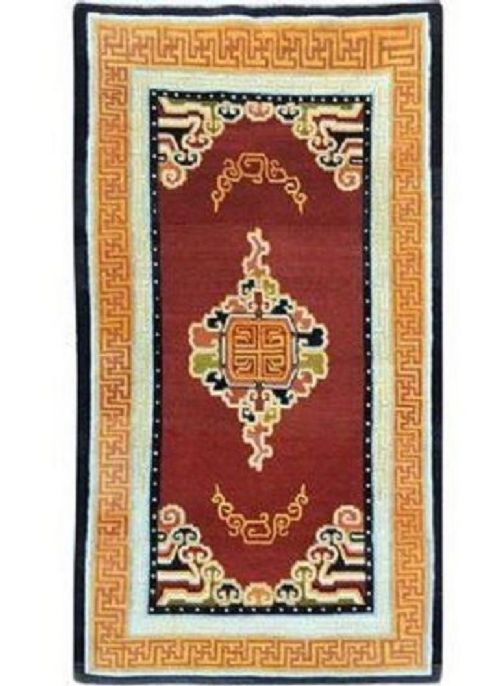
Tibetan pieces display distinctive border arrangements and softer, pillowed wool textures originating from Himalayan workshops.