

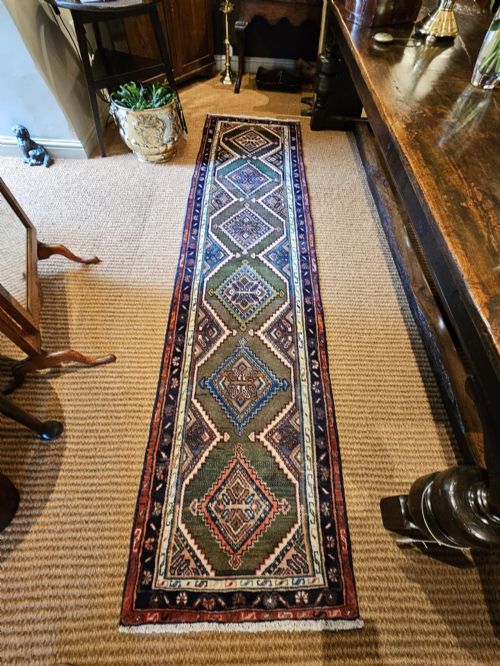




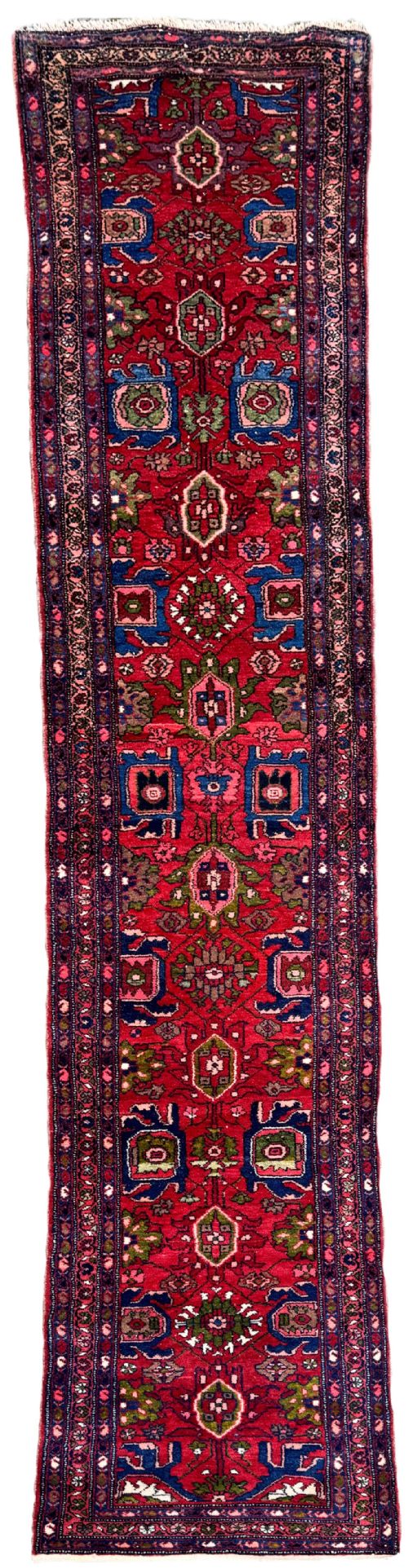
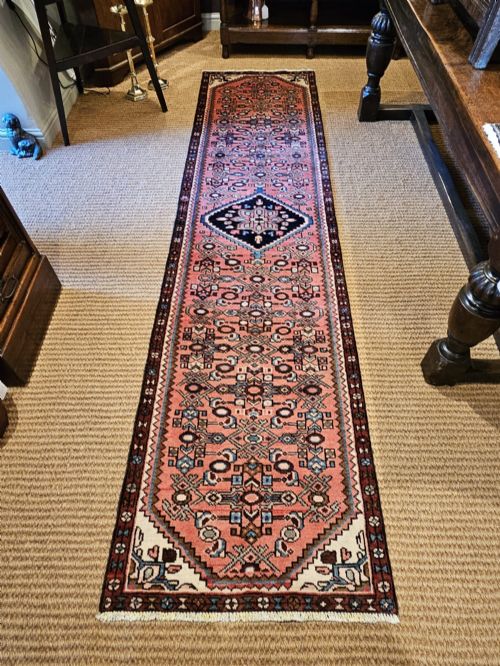


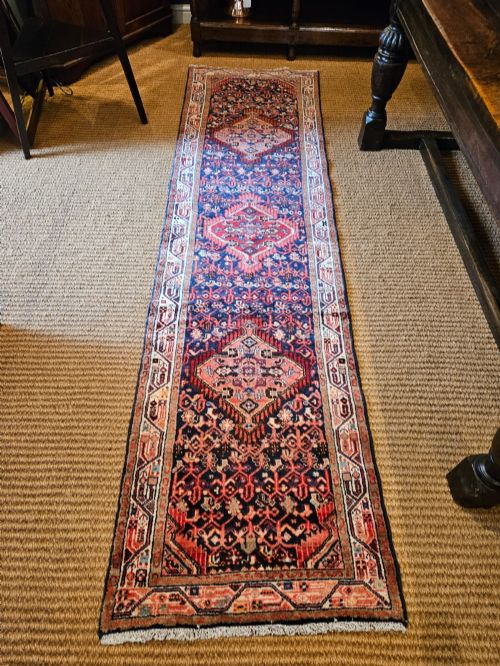
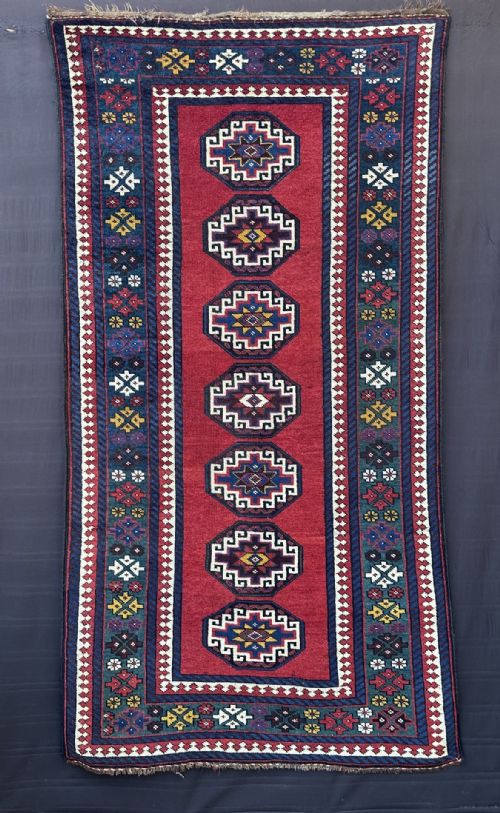
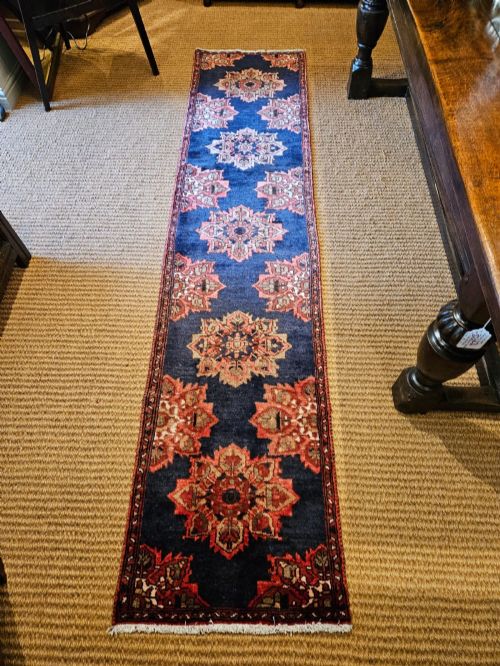
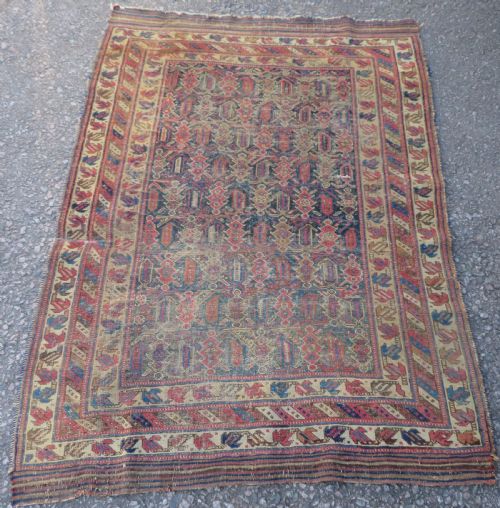
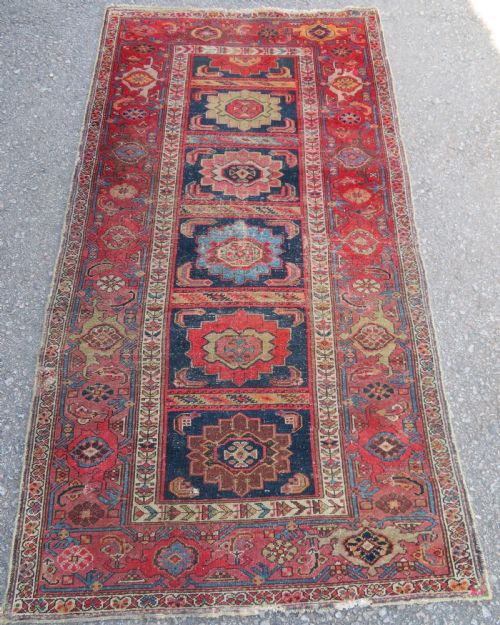
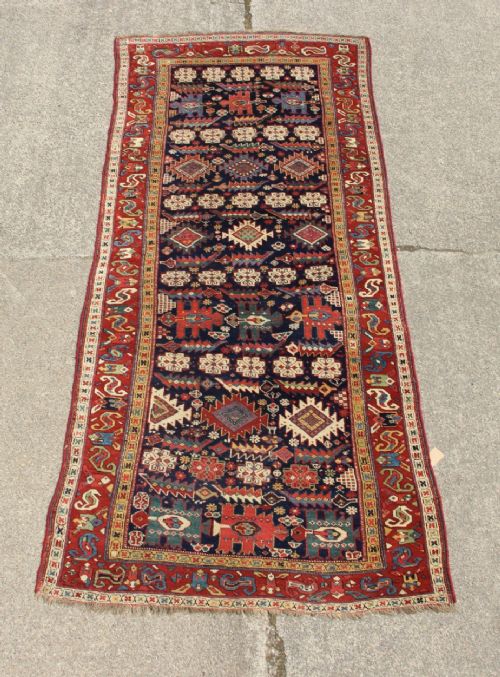
Geometric Persian Hallway Runner
A geometric persian hallway runner brings structured tribal design and narrow proportions into a corridor, offering lasting floor coverage.
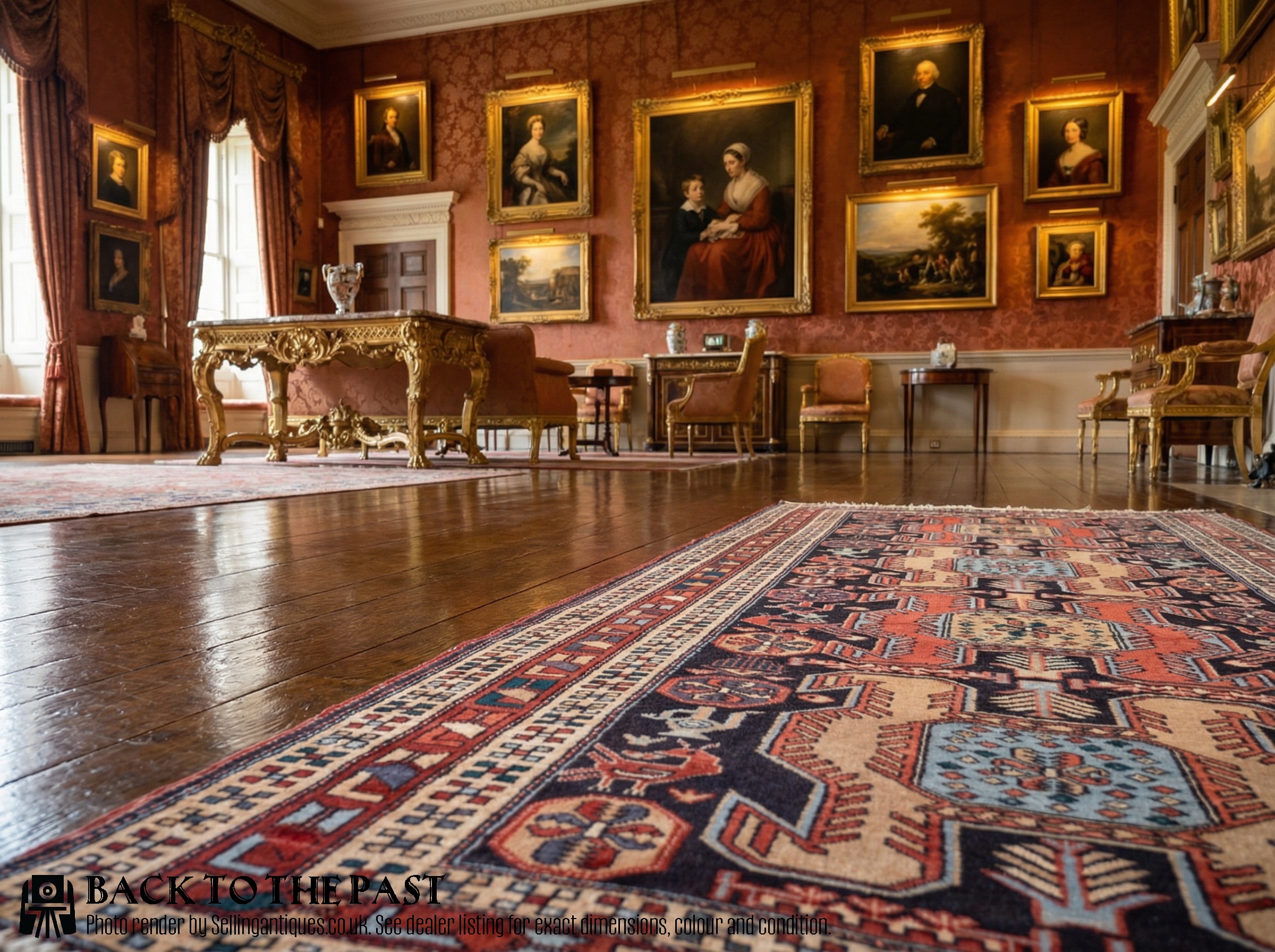
Geometric Persian Hallway Runner
A geometric persian hallway runner is an elongated floor covering designed specifically for corridors, combining linear precision with traditional Near Eastern patterns. These pieces span production dates from the nineteenth century through the early decades of the twentieth century, originating across various weaving regions.
The format typically appears as narrow runner rugs, rug runners, and long rugs designed to fit domestic passageways. Pieces emerge from specific weaving traditions including Heriz, Hamadan, Kurdish, and Bakshaish origins.
Tribal and traditional designs dominate the selection, often presenting repetitive medallions, lattice work, and angular motifs. Buyers encounter both room-length corridors and shorter hallway dimensions produced in wool.
How they were made
Production relies primarily on natural wool and hand-spun wool fibres, frequently paired with cotton foundations to provide structural stability. Weavers utilise traditional handwoven techniques passed through regional workshops and nomadic traditions.
The construction employs dense knotting designed to withstand heavy foot traffic in narrow spaces. Natural dyeing methods deliver the palette seen across the nineteenth and early twentieth century examples.
Listings span production dates from the nineteenth century through the 1930s, featuring wool and cotton materials across tribal and traditional Persian styles.
What varies in quality
The refinement of the wool and the tightness of the weave separate individual examples, influencing how flat the pile lies along a corridor. Hand-spun materials show variation in texture and consistency across different regional workshops.
Structural integrity depends on the preservation of the edges and the foundation yarns. Even wear across a long passage reflects the original utility and the grade of materials selected by the weaver.
Heriz·Hamadan·Kurdish·Bakshaish·Gendje·Shahsavan·Kelardasht·Afshar·Karaja·Bidjar·Kazak·Shirvan
The Geometric Persian Hallway Runner Glossary
- Runner
- A long, narrow carpet format intended for corridors, hallways, and stairs. This shape accommodates restricted floor widths while spanning considerable lengths.
- Heriz
- A region in north-west Persia known for bold geometric medallions and durable village weaving. These runners typically display strong structural symmetry.
- Hamadan
- A major trading hub and surrounding weaving area producing diverse runner formats. Pieces from this origin often utilise camel hair and distinct repeat patterns.
- Kurdish
- A tribal weaving style characterised by robust wool and expressive geometric layouts. These long rugs frequently incorporate saturated blue and red tones.
- Hand-spun wool
- Yarn processed manually on a drop spindle or wheel rather than by industrial machinery. This material retains variable thickness that adds character to the surface.
Geometric Persian Hallway Runner: Frequently Asked Questions
Where should I place a hallway runner?
These long formats suit corridors, entryways, and narrow passageways where linear floor coverage protects high-traffic floorboards.
The elongated proportions bridge separate rooms while introducing texture and pattern to transitional spaces in a home.
How do I identify a nineteenth century piece?
Nineteenth century examples generally display hand-spun wool with natural dye variations that settle into softer secondary tones over decades of use.
Structural traits like irregular selvedges and denser knot counts also point toward earlier village and tribal production before commercial dyes became widespread.
Are these runners made from pure wool?
Many listings specify wool, cotton, or hand-spun wool construction across the pile and foundation yarns.
Traditional weavers relied on locally sourced animal fibres to ensure resilience against constant foot traffic in busy hallways.
What is the difference between Heriz and Hamadan runners?
Heriz runners typically feature large, bold geometric medallions and robust structural rigidity. Hamadan pieces encompass a wider variety of village designs, often utilising repeating diagonal motifs and distinctive dark outlines.
Both styles originated in north-west Persia but reflect different local weaving traditions and knotting densities.