



Vintage Wooden Writing Cabinet
A vintage wooden writing cabinet brings practical workspace and period character into a room.
Vintage Wooden Writing Cabinet
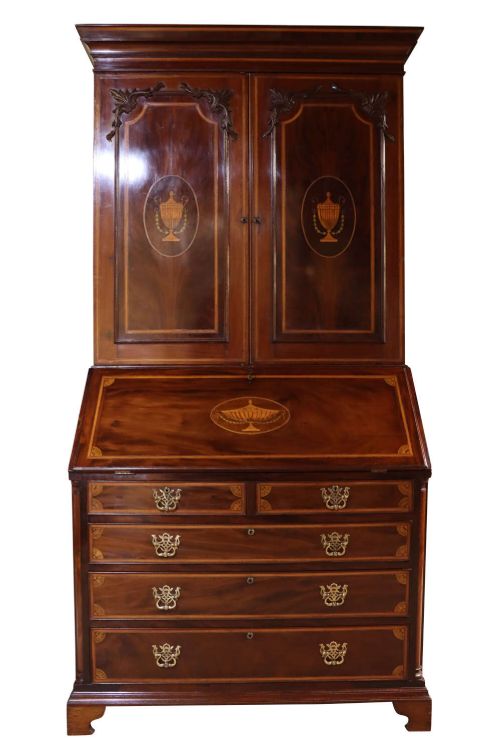
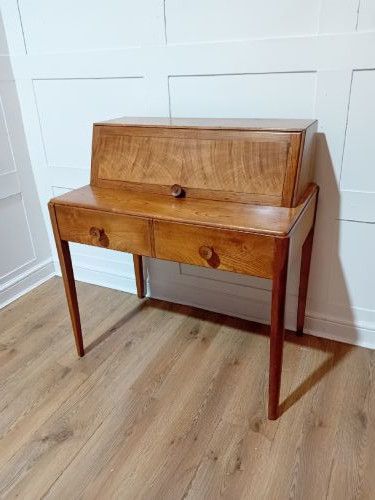
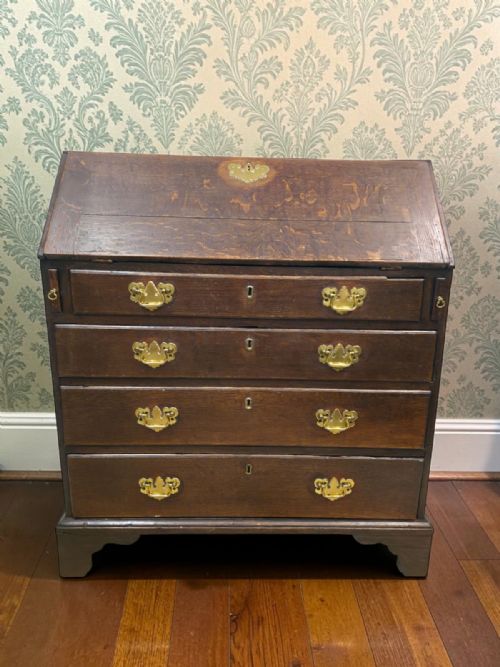
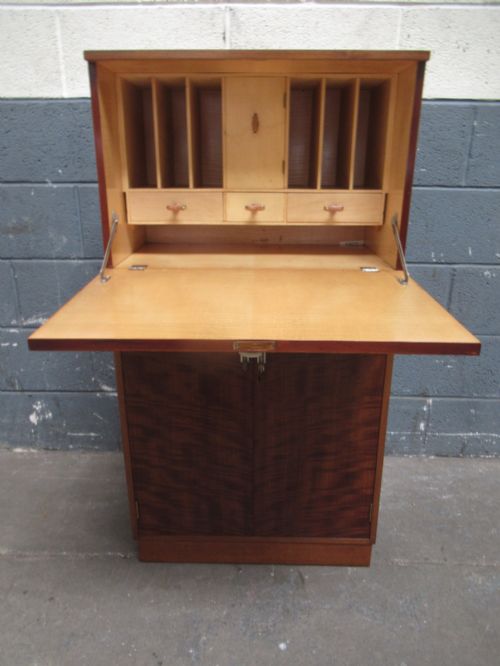
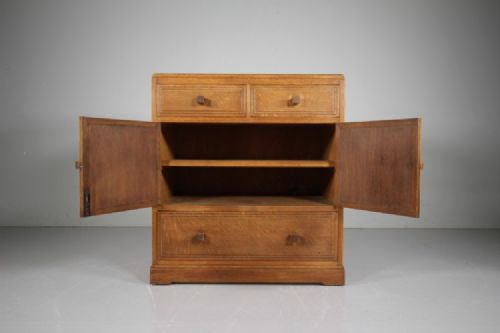
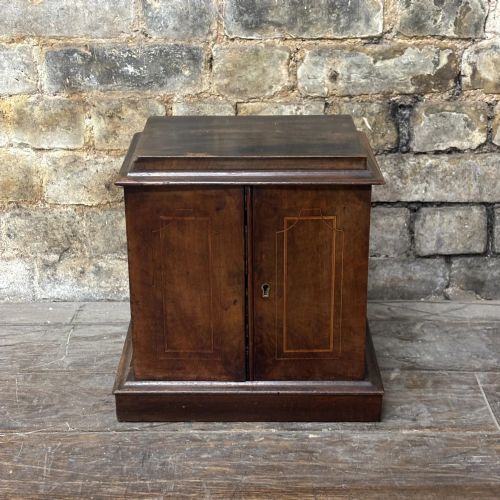
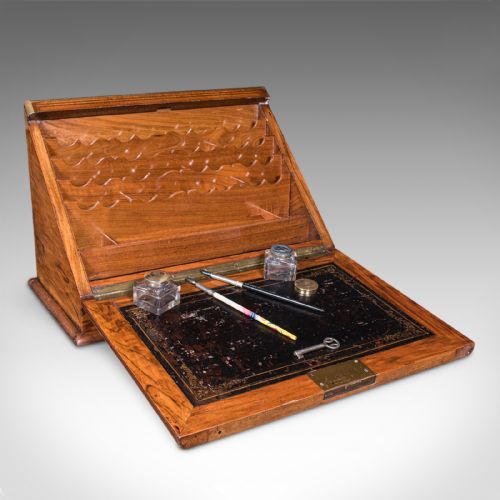
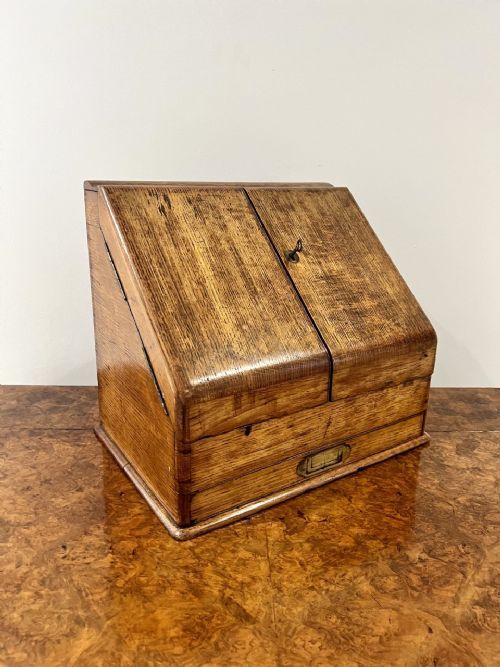
A vintage wooden writing cabinet offers dedicated space for correspondence and administrative tasks within domestic interiors. These items range from compact tabletop stationery boxes and fall-front bureaux to larger bureau bookcases designed for storage and display.
Buyers exploring this category encounter pieces originating from the Georgian, Victorian, Edwardian, and Art Deco eras. Mahogany and oak dominate the available forms, accompanied by walnut, satinwood, and yew wood variations.
The most common formats on this page include drop-front writing bureaux and compartmentalised stationery cabinets intended for desk organisation.
Materials and construction
Cabinet makers relied predominantly on solid hardwoods such as mahogany, oak, and walnut, often combined with satinwood for interior details or marquetry decoration. Brass hardware, including hinges, campaign handles, and lock escutcheons, provides functional structural support.
Secondary materials such as leather inserts appear on writing surfaces, whilst glass panels feature in the doors of bookcase variants. Construction techniques involve traditional joinery suited to the period, from early dovetail joints on drawers to framed panel doors.
Listings span the Georgian, Victorian, Edwardian, and 1930s periods, featuring oak, mahogany, walnut, and satinwood.
Factors determining quality
Quality rests on the selection of timber grain, the precision of cabinet joinery, and the integrity of internal fittings such as pigeonholes and secret drawers. Superior pieces display thoughtful proportions, balanced veneer matching, and original hardware rather than later replacements.
The presence of maker labels, clever metamorphic mechanisms, or distinctive regional characteristics elevates certain examples above standard production items from the same decade.
ARTHUR BASIL REYNOLDS·J.C VICKERY
The Vintage Wooden Writing Cabinet Glossary
- Bureau
- A writing desk featuring an angled hinged flap that drops down to form a writing surface, revealing interior compartments and small drawers.
- Stationery Cabinet
- A tabletop box or small cabinet fitted with internal shelves, racks, and slots designed to organise writing paper, envelopes, and letters.
- Bureau Bookcase
- A tall piece of furniture combining a lower writing bureau with an upper glazed or panelled bookcase section.
- Cylinder Desk
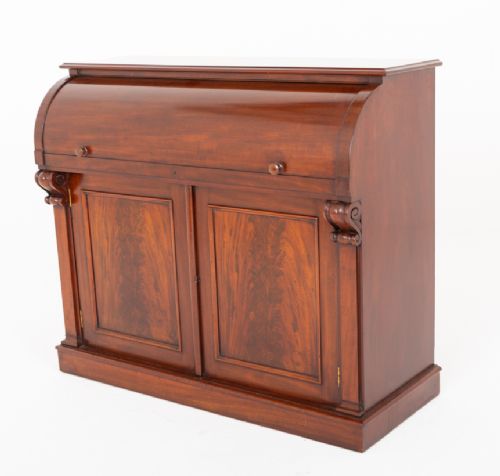
- A writing desk with a curved, rolling wooden shutter that conceals the writing surface and interior pigeonholes when closed.
- Fall Front
- A hinged writing flap that opens outward into a horizontal position, supported by sliding lopers or the desk structure itself.
- Inlaid
- Decorated by inserting contrasting woods, brass, or shell into carved recesses on the surface to create geometric or floral patterns.
Vintage Wooden Writing Cabinet: Frequently Asked Questions
What is a vintage wooden writing cabinet?
A vintage wooden writing cabinet is a piece of furniture designed for correspondence and document storage, encompassing items from small desktop stationery boxes to full-sized bureaux and writing desks.
These pieces typically date from the Georgian, Victorian, Edwardian, and mid-twentieth-century periods, constructed in timbers such as mahogany, oak, and walnut.
How do I use a bureau in a modern home?
A bureau serves well as a compact workspace in a living room, bedroom, or hallway. The drop-front flap provides a practical writing surface that closes shut to hide paperwork when not in use.
Internal compartments and drawers help organise stationery, letters, and small modern accessories like tablets or notebooks.
What is the difference between a bureau and a stationery cabinet?
A bureau incorporates an integrated writing surface with a fold-down flap, allowing you to sit and write directly at the unit. It often includes drawers beneath the desk section.
A stationery cabinet sits on a desk or table and is built solely to store writing paper, envelopes, and inkwells without a fold-out writing bed.
How do I date an antique writing cabinet?
Dating relies on observing the timber species, construction methods, decorative styles, and hardware used in the piece. Georgian items often feature straight lines and rich mahogany, whilst Victorian pieces can be heavier with elaborate carvings.
Edwardian examples frequently display lighter satinwood inlays, and Arts and Crafts pieces showcase solid oak with honest, exposed joinery.