
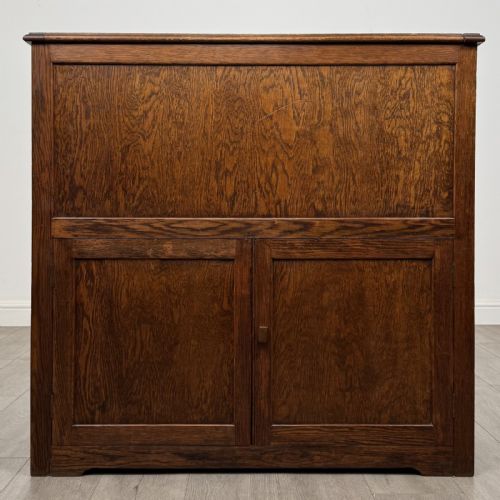
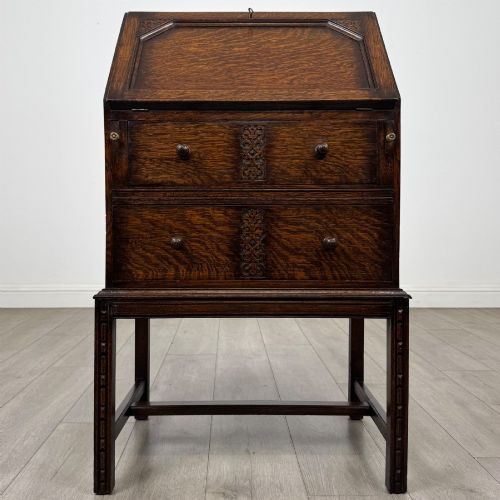
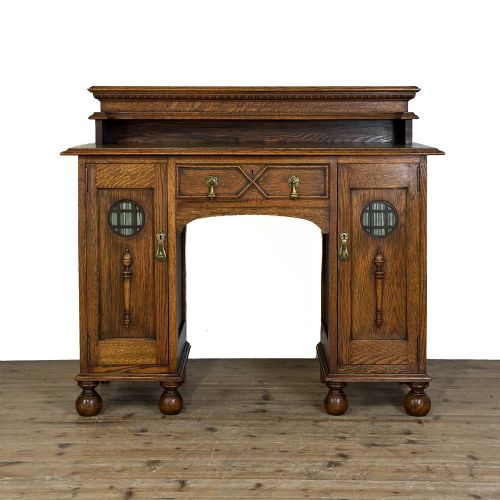
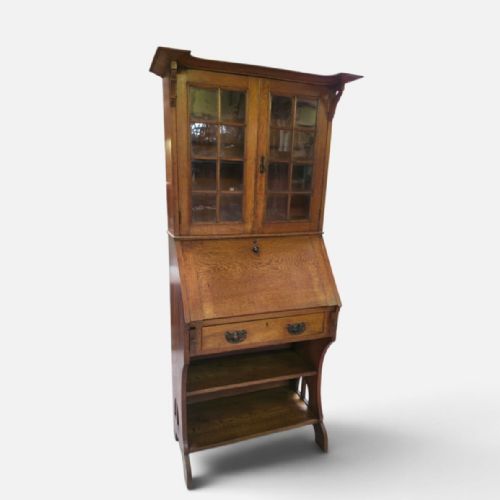
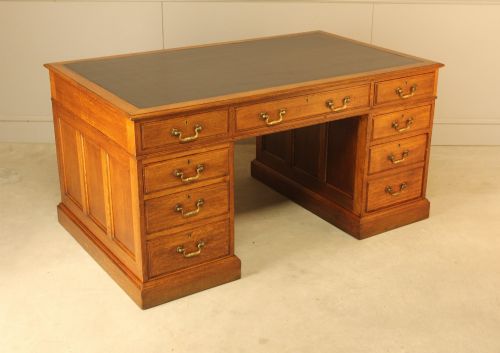
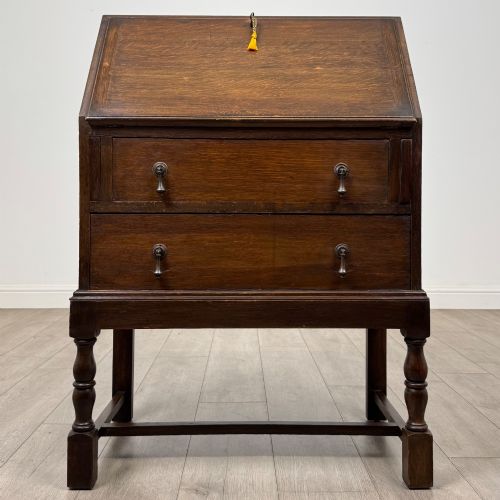
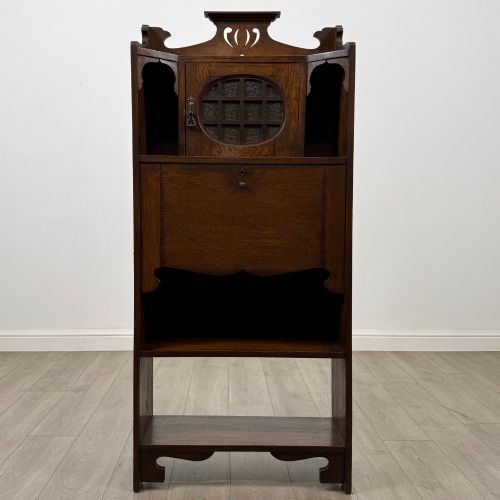
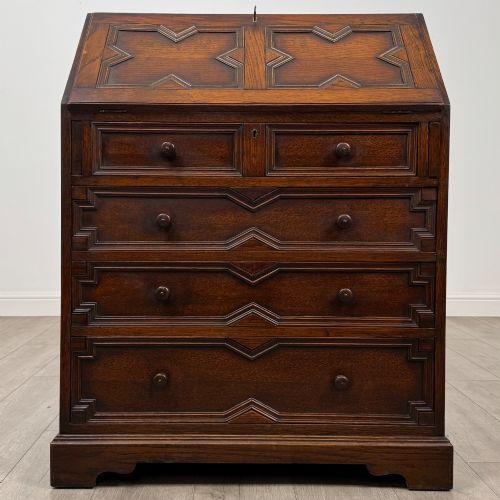
Edwardian Oak Bureau Desk
An edwardian oak bureau desk brings practical writing space and fitted interior compartments together in a sturdy timber frame.
Edwardian Oak Bureau Desk
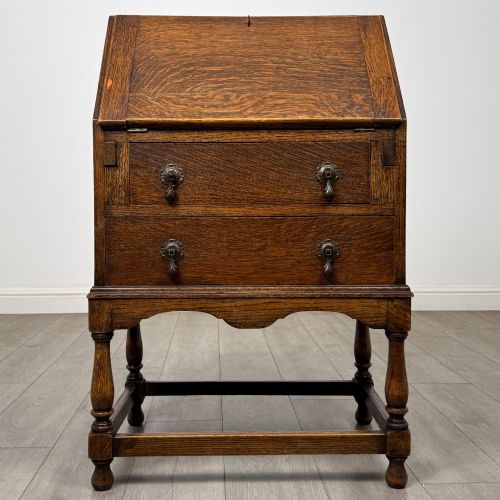
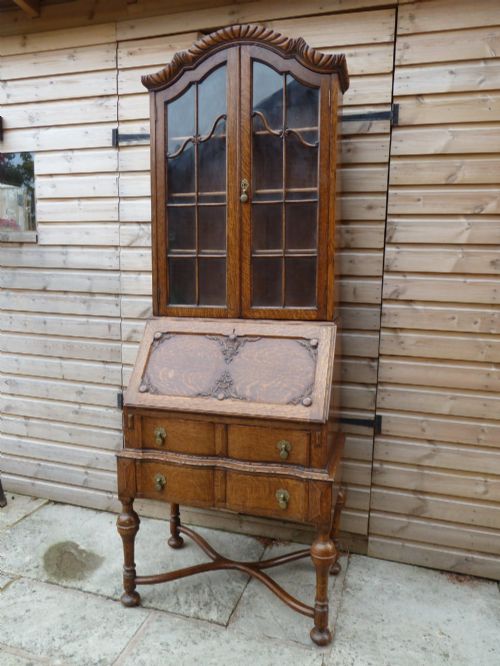
An edwardian oak bureau desk combines a sloped fall-front writing flap with internal pigeonholes and drawers, sitting atop a chest of drawers or stand. Most examples encountered here date from the Edwardian era and the early twentieth century, though related forms extend into late Victorian periods.
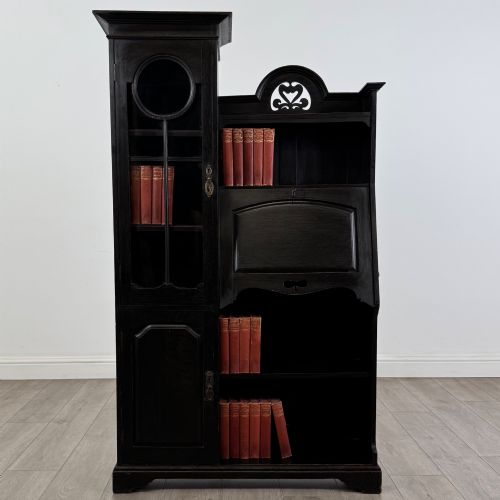
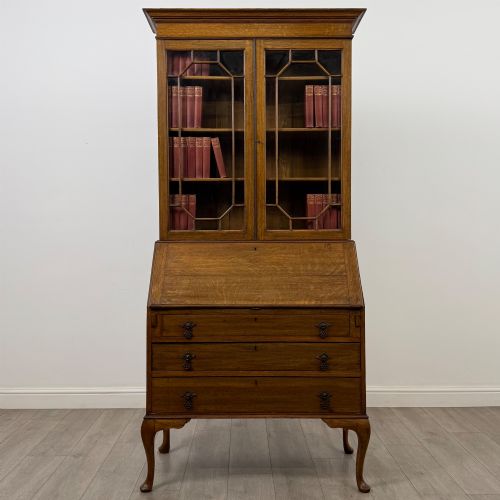
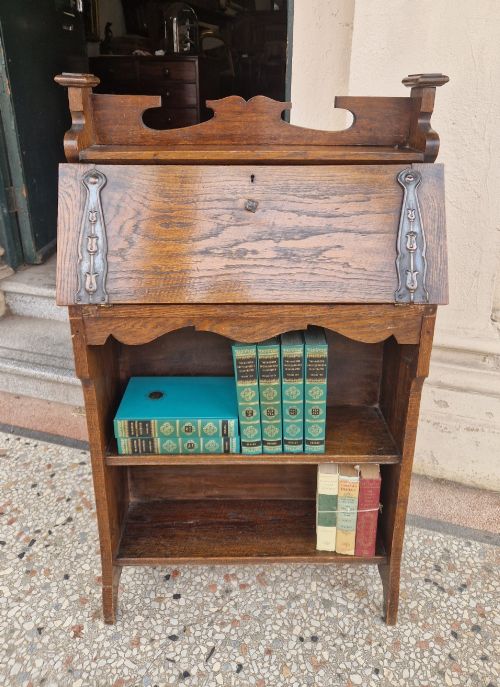
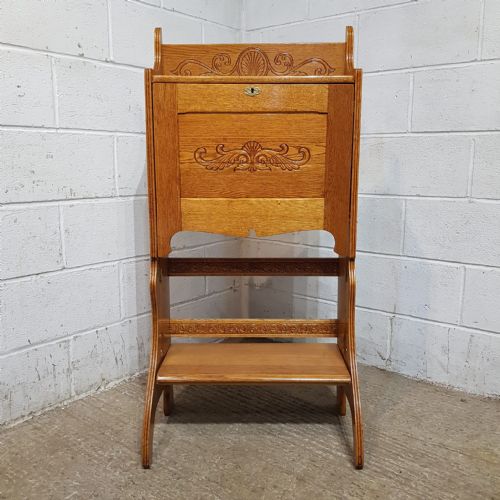
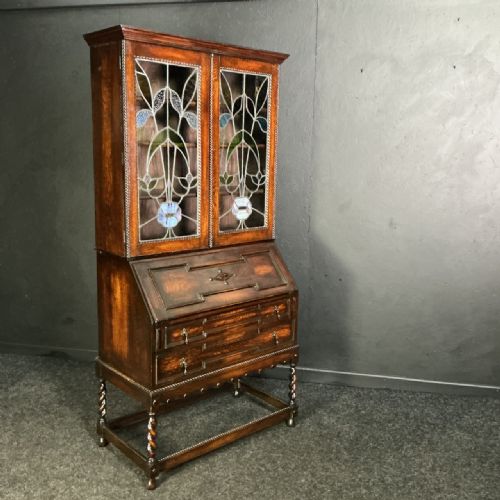
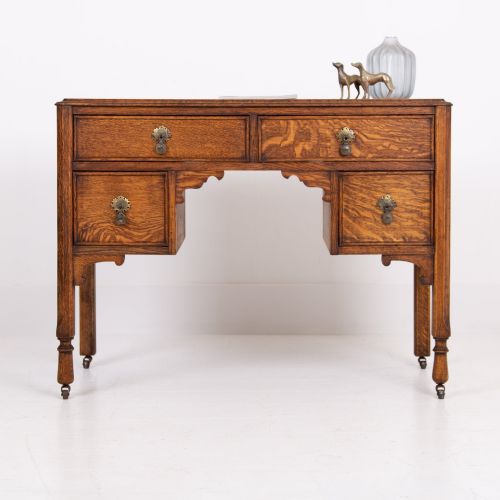
The selection ranges from compact writing tables and student bookcases to substantial bureau bookcases with glazed upper cabinets. Versions appear in golden oak, dark finishes, and revival styles such as Arts and Crafts or Jacobean.
Makers and retailers from the period, including Liberty of London and Harris Lebus, produced notable variations incorporating Moorish motifs or functional bookcase attachments. Buyers select these pieces for domestic studies and reception rooms requiring compact manuscript storage.
Distinction in Execution
Quality separates ordinary utility pieces from finer examples through the depth of carved ornamentation, the selection of figured oak grain, and the integration of crossbanding. Superior items feature cleanly dovetailed oak drawer linings and robust brass hardware.
The complexity of the interior architecture marks the grade of a bureau desk, where secret compartments, shaped pigeonholes, and small subsidiary drawers reflect higher standards of cabinet making. The cohesion of revival styles, whether Arts and Crafts or Jacobean, dictates the refinement of the finished desk.
Listings on this site feature oak construction alongside brass, glass, and leather across Edwardian, Victorian, and Arts and Crafts periods.
Harris Lebus·Liberty of London·Globe Wernicke·Jenners
The Edwardian Oak Bureau Desk Glossary
- Fall front
- The hinged sloping panel on a bureau that pulls down to create a writing surface. It conceals internal compartments when closed.
- Bureau bookcase
- A combination furniture form featuring a writing bureau base beneath an enclosed upper shelving or cabinet section. Glass doors frequently protect the upper portion.
- Tambour
- A flexible shutter made from narrow strips of wood glued to canvas, allowing roll-top desks to slide smoothly around a curve.
- Crossbanding
- A border technique where veneer strips are applied across the grain to frame drawer fronts or writing flaps. This adds a decorative visual contrast.
- Pigeonhole
- A small, open compartment within the fitted interior of a desk used for sorting letters and papers.
Edwardian Oak Bureau Desk: Frequently Asked Questions
What is an edwardian oak bureau desk?
An edwardian oak bureau desk is a compact writing cabinet featuring a sloping fall-front flap that opens to reveal internal stationary dividers and small drawers.
These pieces typically sit upon a chest of drawers, a stand with legs, or a dedicated pedestal base, providing both workspace and enclosed storage.
How do I identify an Arts and Crafts bureau?
Arts and Crafts versions of these desks emphasise visible construction, straightforward joinery, and minimal applied ornamentation in golden oak.
They often feature hand-hammered copper or brass hardware and draw inspiration from the design movements associated with workshops of the late nineteenth and early twentieth centuries.
What is the difference between a roll top and a bureau?
A bureau utilises a flat sloped board that hinges downward to form a writing surface, hiding pigeonholes behind a vertical plane.
A roll-top desk employs a slatted wooden tambour that slides backward along a curved track to expose the entire working surface and internal compartments.
Where were these desks placed in a home?
These desks served as functional writing surfaces in libraries, drawing rooms, and hallways of period homes for managing correspondence.
Compact variations were also built for students or ladies' boudoirs, offering dedicated writing space without occupying the footprint of a large library table.