
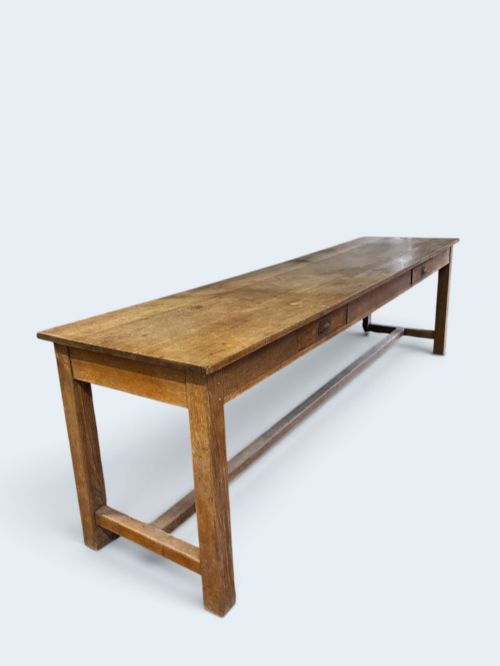
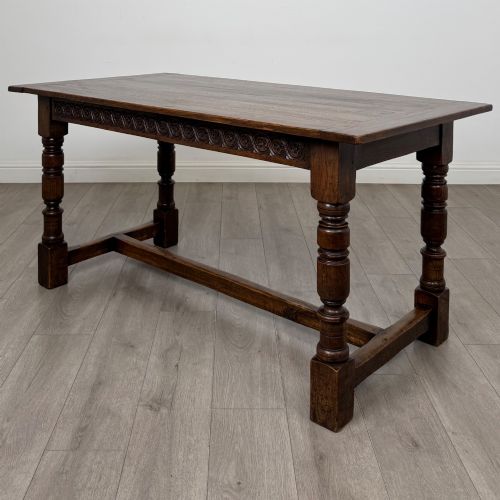
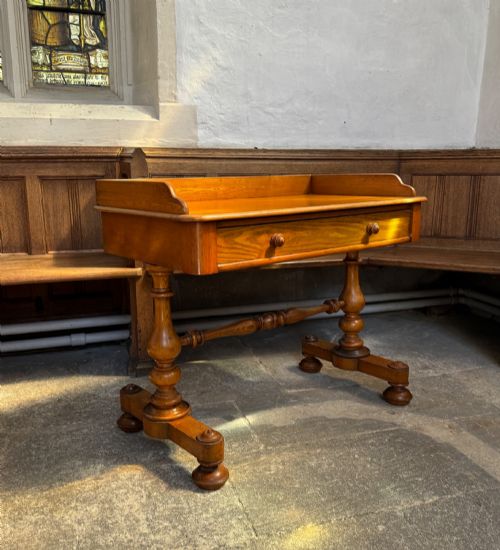
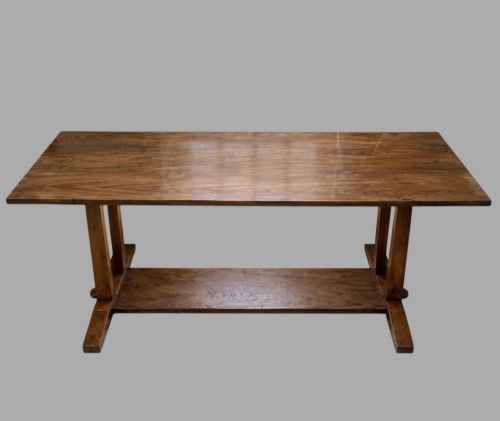
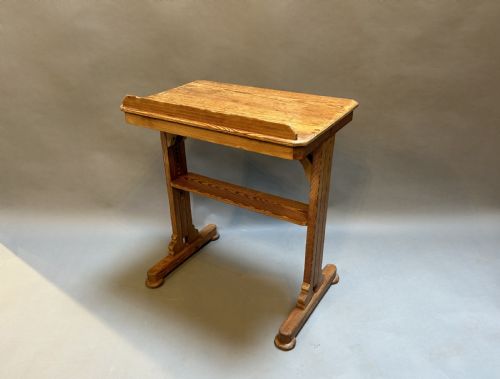


Vintage Wooden Trestle Desk
A vintage wooden trestle desk provides robust working space and simple character, rooted in practical forms from the nineteenth and twentieth centuries.
Vintage Wooden Trestle Desk
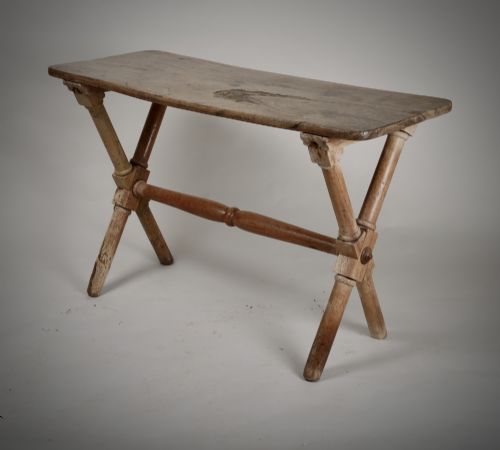
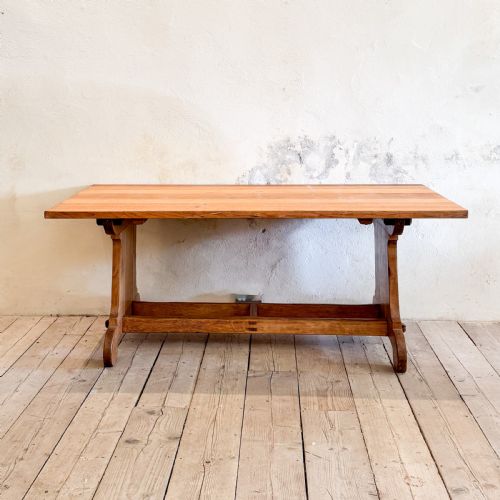
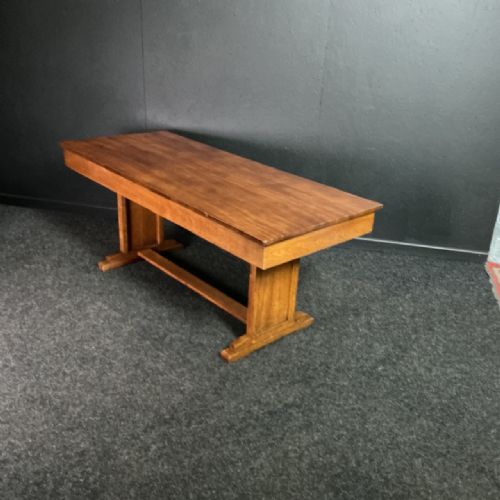
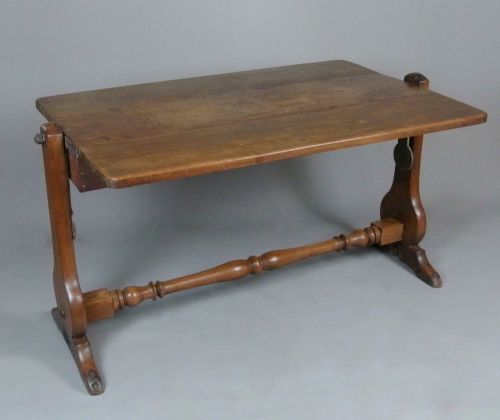
A vintage wooden trestle desk brings together sturdy supports and generous boards, drawing on forms seen in traditional dining, tavern, and library tables.
The pieces on this page span the nineteenth century and the early decades of the twentieth century, including Edwardian and Victorian examples alongside French and English Provincial designs.
Materials and construction
Makers utilised solid timbers such as oak, pitch pine, elm, and mahogany, selecting woods that could endure daily labour and heavy use.
Construction methods rely on traditional joinery, sturdy cross bases, and iron or wooden supports, sometimes finished with historic paints like Swedish Falu or left as scrubbed timber.
One curious offering includes a child desk attributed to Pairs MFG Co, proving that proper workspace habits start early.
Judging the standard
Quality rests in the integrity of the timber, the weight of the hardware, and the honesty of the surfaces, distinguishing honest working pieces from later imitations.
The best examples display deep patination earned through decades of service, balanced proportions, and tight joints that require no modern intervention to remain stable.
The Vintage Wooden Trestle Desk Glossary
- Trestle
- A horizontal beam supported by two pairs of sloping legs, forming the sturdy base for a large tabletop. This design allows for maximum legroom underneath.
- Pitch pine
- A dense, resinous softwood common in nineteenth-century furniture, valued for its durability and strong grain pattern. It darkens richly with age.
- Scrubbed
- A surface finish achieved through repeated vigorous cleaning, leaving the raw timber pale, smooth, and clean. This treatment is typical of utilitarian kitchen and tavern tables.
- Patina
- The deep, lustrous surface sheen developed on wood and metal over decades of handling, exposure, and wax polishing. It serves as a visual indicator of genuine age.
Vintage Wooden Trestle Desk: Frequently Asked Questions
How do I care for a vintage wooden desk?
Keep the timber nourished by applying a natural beeswax polish occasionally, avoiding silicone-based sprays that damage historic surfaces.
Position the piece away from direct heat sources and strong sunlight to prevent the timber from drying out and splitting.
Can these desks be disassembled for moving?
Many traditional trestle designs feature loose tops resting on separate base supports, allowing the units to be taken apart easily for transport.
Fixed-frame examples require careful measuring of doorways and stairwells before attempting to move them between rooms.
What periods do these pieces come from?
The listings span the nineteenth century, the Victorian era, the Edwardian period, and the early decades of the twentieth century up to the 1930s.
Earlier examples from the 1800s often show heavier utility construction, while 1920s and 1930s pieces reflect simpler provincial styles.
Where were trestle tables originally used?
Historic trestle forms served in working environments such as libraries, public schools, taverns, and farmhouses where large, stable surfaces were essential.
Their practical design allowed them to be packed down or rearranged quickly in busy domestic and institutional spaces.