




Vintage Wooden Specimen Box
A vintage wooden specimen box is a purposeful container for natural history or small treasures, offering compartments and glass fronts that display delicate finds.
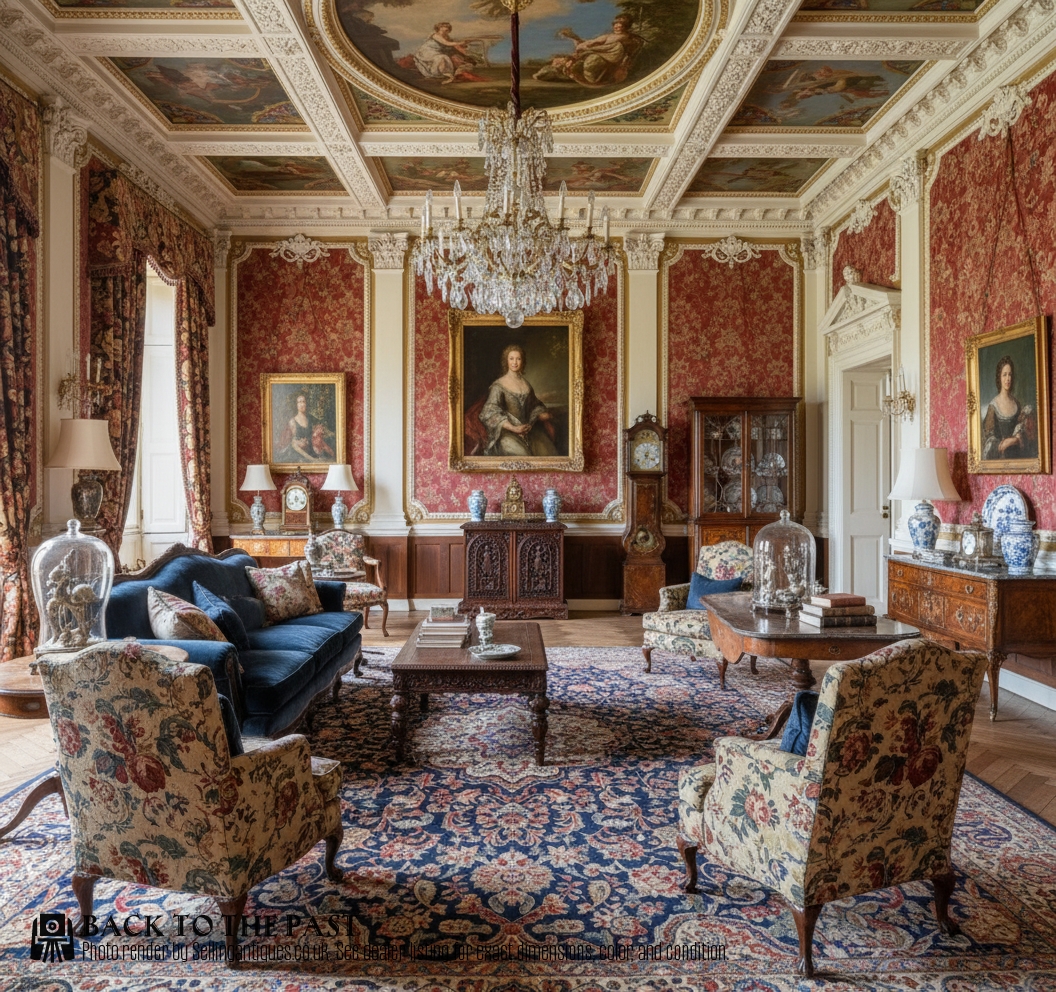
Vintage Wooden Specimen Box
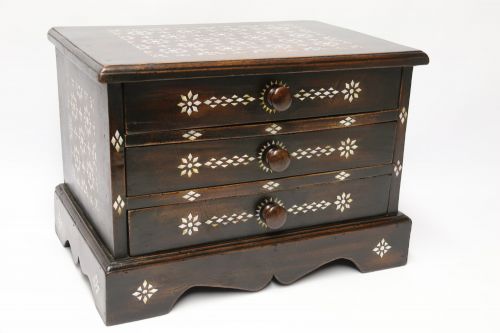
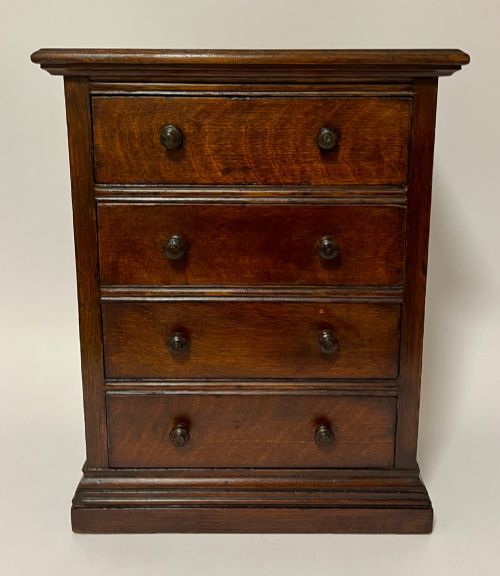
A vintage wooden specimen box encompasses tabletop cabinets, miniature chests of drawers, and glazed display cases designed to house collections. These pieces emerge from various periods including the Georgian, Victorian, and Edwardian eras, alongside Anglo-Indian colonial workshops.
Buyers most frequently encounter oak and mahogany tabletop cabinets fitted with multiple small drawers or glazed viewing lids. Forms range from rustic provincial pieces to finely inlaid hardwood chests meant for a desk or tabletop.
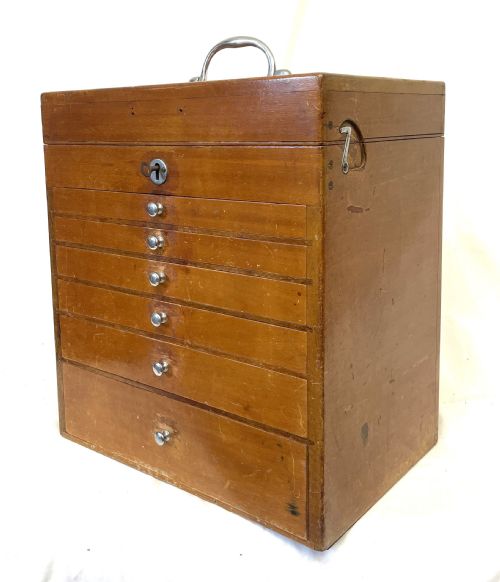
The objects serve multiple roles beyond natural history, functioning as instrument cases, apothecary storage, and desktop collector chests. Each example reflects the specific storage demands of nineteenth and early twentieth-century collectors.
How they were made
Cabinetmakers constructed these pieces using dense hardwoods like oak and mahogany, often enhanced with brass handles, hinges, and locks. Glazed lids and doors were integrated to protect contents from dust while allowing clear observation.
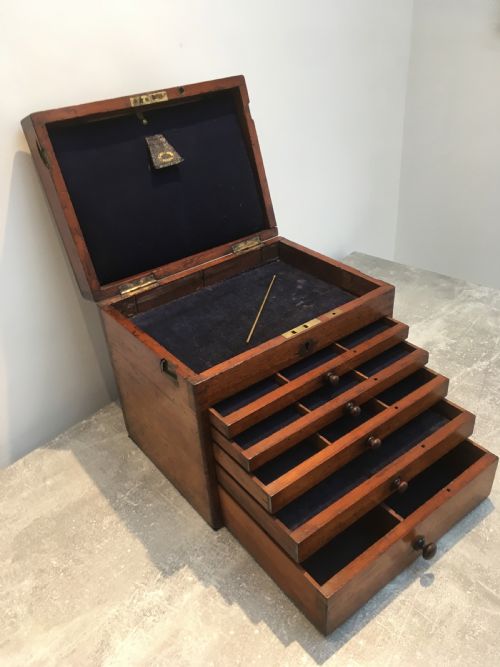
Interior fittings frequently involved felt linings to cushion delicate specimens, alongside bone or ivory pulls on smaller internal drawers. Inlaid hardwood examples incorporate contrasting timber work executed by regional artisans.
Materials appearing across the inventory include oak, mahogany, glass, brass, iron, bone, felt, and various hardwoods.
What varies in quality
Quality reveals itself in the precision of the drawer joinery and the selection of timber figures. Superior boxes display tight tolerances in the drawer runners and consistent grain matching across the facade.
The presence of original brass hardware, working keys, and intact glass or felt linings elevates the integrity of a piece. Finer examples maintain their structural tightness and functional drawer operation over centuries of use.
The Vintage Wooden Specimen Box Glossary
- Specimen cabinet
- A specialised storage unit containing shallow drawers designed to hold natural history collections or small artefacts. These cabinets often feature tight-fitting drawers to protect contents from pests.
- Tabletop cabinet
- A small-scale storage piece intended for placement on a desk or table rather than standing on the floor. They provide accessible storage for miniature objects and documents.
- Glazed display case
- A cabinet featuring one or more glass panels designed to exhibit contents while keeping them secure. This term applies to both wall-hanging and tabletop variants.
- Collector chest
- A portable or desktop box fitted with multiple internal drawers for sorting small items. They are typically constructed from sturdy hardwoods like oak or mahogany.
- Instrument case
- A fitted wooden box originally built to house scientific, medical, or optical tools. They often include specialised interior compartments tailored to specific hardware.
Vintage Wooden Specimen Box: Frequently Asked Questions
What did people store in a vintage wooden specimen box?
These boxes originally held natural history specimens such as insects, shells, minerals, and botanical samples. Collectors used the shallow drawers and compartmentalized trays to organise delicate items safely.
Over time, owners also adapted them to store small instruments, coins, stamps, and jewellery. The secure lids and fitted drawers made them ideal for safeguarding any diminutive collection.
How do I date a wooden collector cabinet?
Dating relies on examining the construction methods, timber choices, and hardware styles. Georgian and Regency pieces often feature hand-cut dovetails and native timbers like oak or mahogany, while Edwardian examples might show more standardised machine-made elements.
Secondary materials such as brass hinges, locks, and internal felt linings also provide clues. Comparing the construction to known period furniture helps narrow down the decade of manufacture.
Are these cabinets suitable for modern home display?
These cabinets suit modern interiors well, offering compact storage that fits easily on desks, sideboards, or shelves. Their glass panels and small drawers provide practical organisation for contemporary collections.
Placing them away from direct sunlight and extreme temperature fluctuations protects the antique wood and any historical finishes. Regular dusting keeps the exterior timber and glass in good condition.
What distinguishes an Anglo-Indian specimen box?
Anglo-Indian boxes typically feature dense hardwoods adorned with intricate inlay work reflecting nineteenth-century colonial craftsmanship. Artisans combined traditional British furniture forms with local decorative techniques.
These pieces often utilise contrasting timbers to create elaborate geometric or floral patterns across the exterior. The result is a distinct aesthetic that sets them apart from standard domestic English cabinetry.