
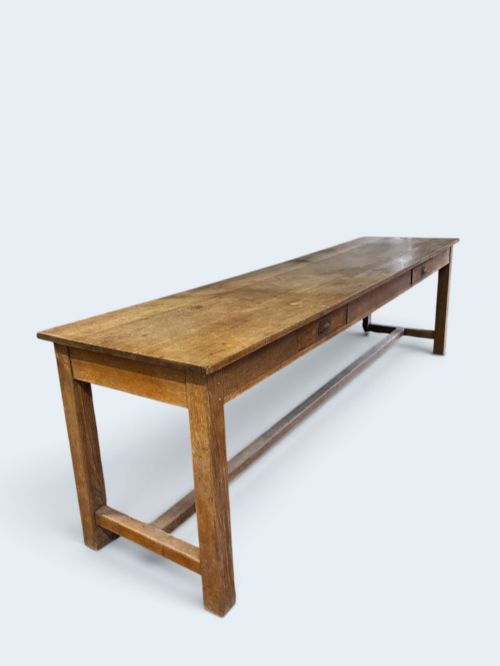
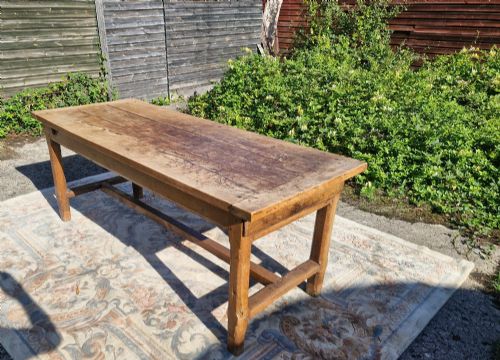
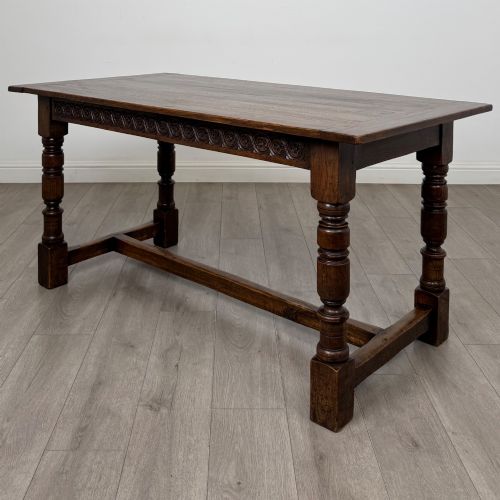
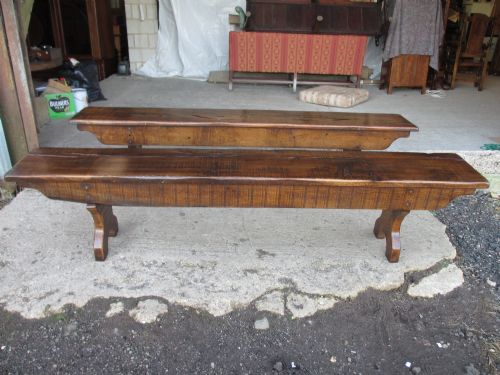
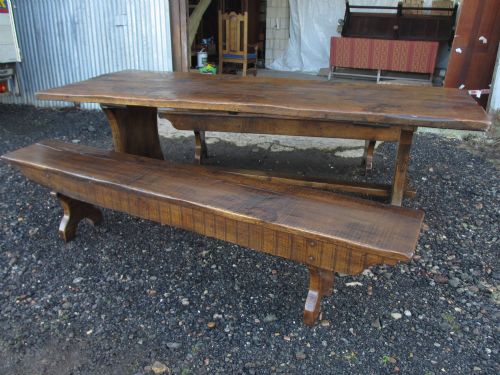
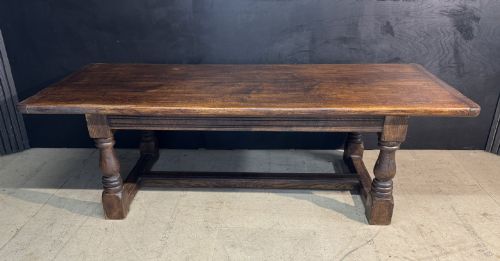
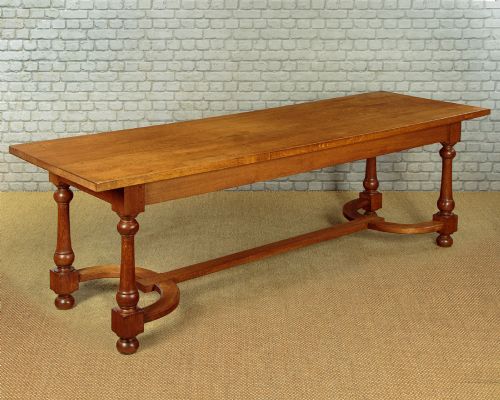
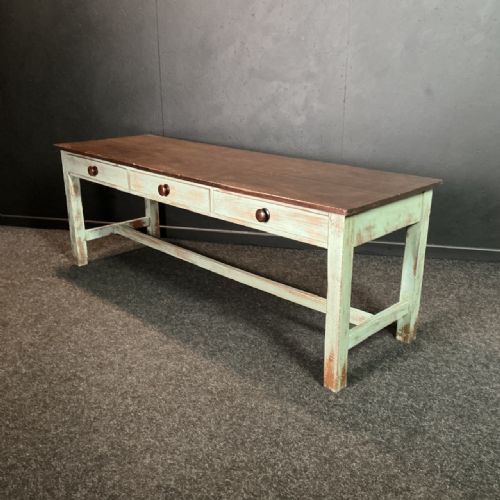
Vintage Wooden Refectory Table
A vintage wooden refectory table brings historic communal dining into a modern interior, offering a sturdy surface built for daily gathering.
Vintage Wooden Refectory Table
A vintage wooden refectory table represents a robust tradition of long dining surfaces designed for communal meals, drawing on centuries of vernacular furniture design. When exploring this selection, buyers encounter formats ranging from seventeenth-century revivals to early twentieth-century interpretations.
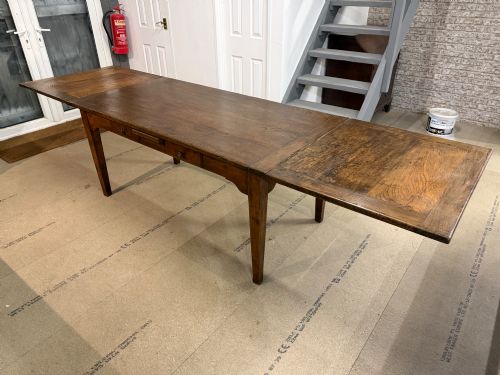
The pieces appearing on this page most frequently date from the nineteenth century through the 1930s, spanning Victorian, Edwardian, and Arts and Crafts movements. Common configurations include draw-leaf mechanisms, fixed tops, and heavy trestle ends adapted for domestic kitchens and dining rooms.
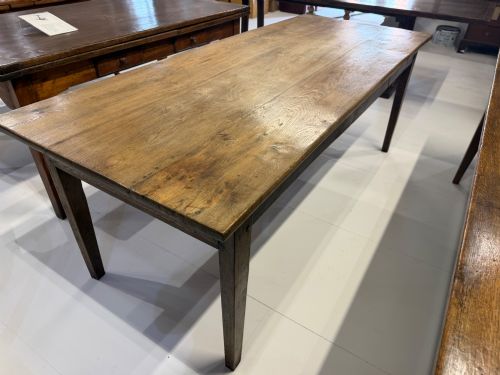
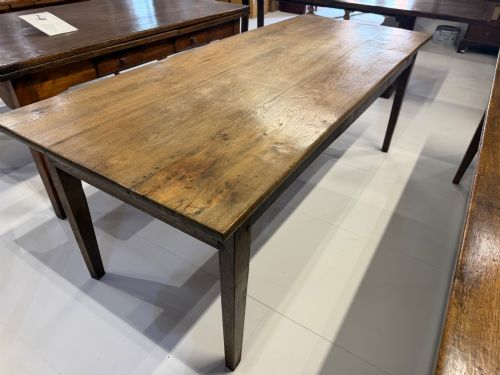
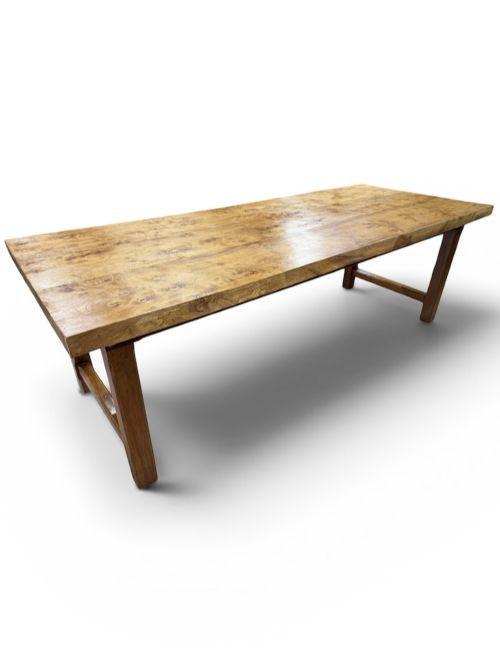
Makers and workshops produced these tables primarily in oak, pine, and elm, often incorporating regional French provincial styles or English farmhouse characteristics. Such surfaces served heavy daily use, resulting in patinated timber tops and structural joinery built to endure.
Materials and construction methods
Makers relied heavily on solid oak, pine, and elm for these tables, selecting dense hardwoods for tops and structural frames. Beech and iron occasionally appeared in support structures, turnings, and hardware.
Joinery techniques prioritised durability, utilising pegged mortise and tenon joints to secure heavy legs and stretchers. Tops were fashioned from single timber boards or multi-board planking, sometimes incorporating draw-leaf extension systems for versatility.
Listings feature oak, pine, and elm timbers across Victorian, Edwardian, and 1920s periods, spanning dining, serving, and library table forms.
Assessing quality and craftsmanship
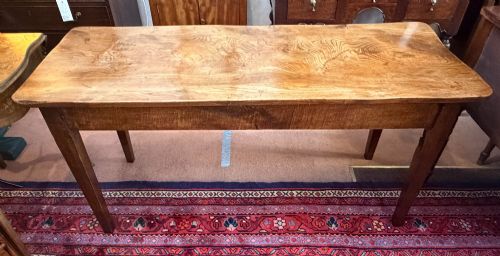
Superior examples distinguish themselves through timber selection, favouring quarter-sawn oak or well-figured elm with stable, straight-grained planks. Poorer quality pieces may display uneven timber shrinkage or heavy modern alterations that compromise the historic integrity of the frame.
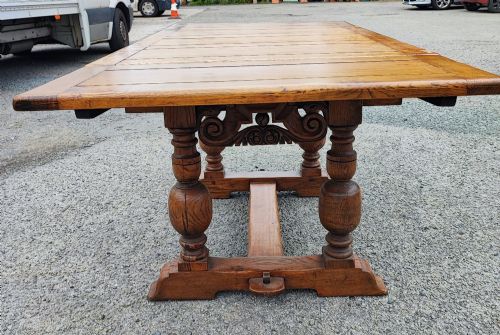
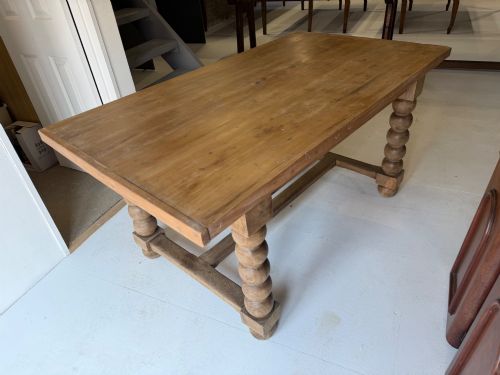
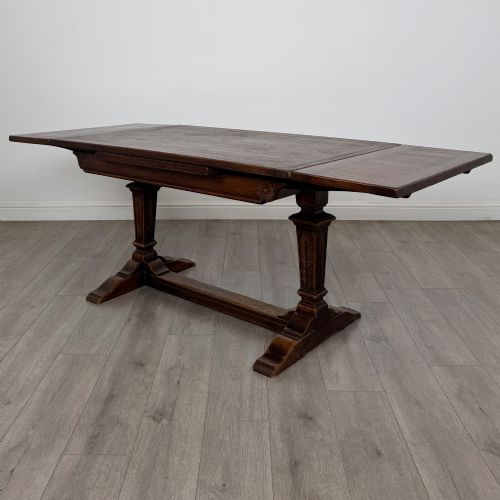
The finesse of the undercarriage and leg turning dictates the tier of craftsmanship, ranging from simple tapered legs to intricately carved Jacobean revival stretchers and shaped trestle ends. Original surface treatments, such as natural wax finishes or period bleaching, hold greater appeal than stripped and heavily varnished replacements.
The Vintage Wooden Refectory Table Glossary
- Refectory table
- A long dining table traditionally used in monasteries and large halls for communal meals. These pieces feature long timber tops supported by sturdy legs connected with floor stretchers.
- Draw-leaf table
- A dining table equipped with sliding extension leaves stored beneath the main top. Pulling these leaves outward extends the surface length instantly.
- Trestle ends
- Support structures comprising vertical uprights connected to horizontal feet. They distribute weight evenly across the floor without corner legs obstructing diners.
- Draw leaf
- An extension mechanism where auxiliary leaves pull out from beneath the primary surface. This design permits rapid adjustment of table length.
- Quarter-sawn
- A method of timber cutting that exposes distinctive grain patterns and increases dimensional stability. This technique reduces warping in wide oak boards.
Vintage Wooden Refectory Table: Frequently Asked Questions
How do I seat eight people comfortably?
Look for tables measuring at least six to eight feet in length, noting whether trestle ends restrict leg room at the corners.
Draw-leaf versions offer flexible sizing, allowing you to extend the surface when guests arrive and shorten it for daily use.
Are these tables suitable for everyday kitchen use?
Solid timber construction makes these tables resilient for daily dining and food preparation. Oak, pine, and elm surfaces handle regular cleaning with damp cloths.
Applying occasional bees wax protects the historic patina from moisture and daily wear.
How do I distinguish Edwardian pieces from nineteenth-century examples?
Edwardian tables often display lighter golden oak tones and influences from the Arts and Crafts movement or Jacobean revival styles. Nineteenth-century variants tend to show heavier farmhouse patination and simpler structural timber.
Examine the hardware and underframe joinery for clues regarding manufacturing decades.
What is the difference between a refectory table and a harvest table?
Refectory tables typically feature robust trestle ends or heavy side stretchers derived from monastic dining furniture. Harvest tables generally rely on four corner legs and originated to accommodate seasonal farm workers.
Both styles utilise durable timbers like oak, pine, and elm.