
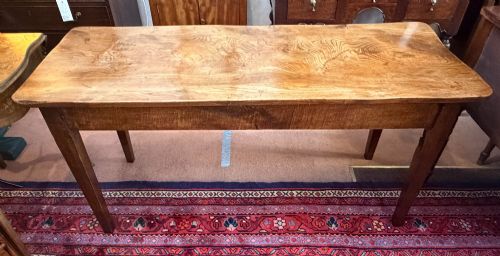
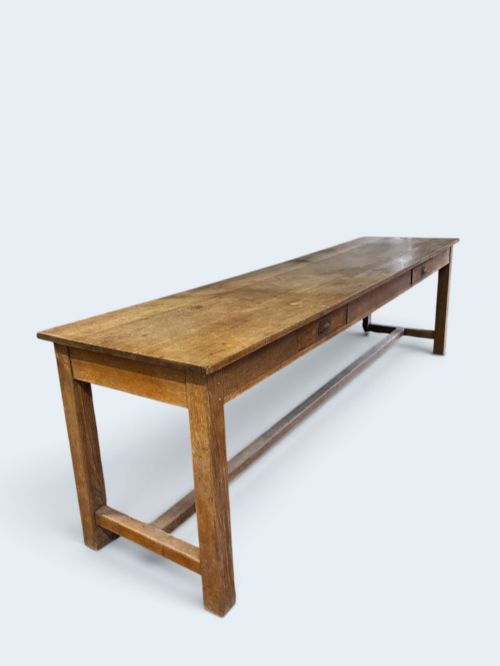
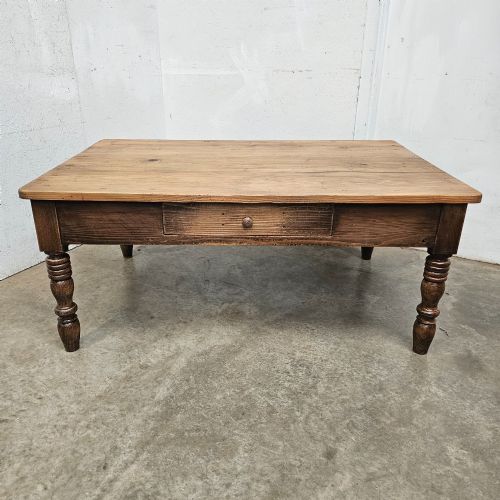
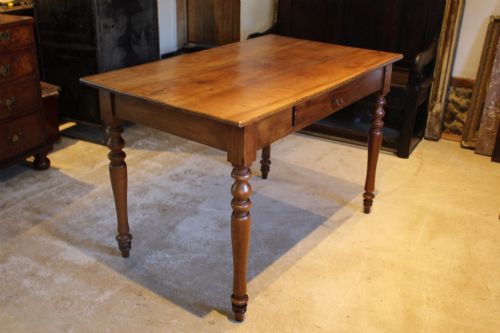

Brown Wood Farmhouse Table
A brown wood farmhouse table anchors a room with sturdy warmth, built for daily gathering from solid timbers like oak, cherry and pine.
Brown Wood Farmhouse Table
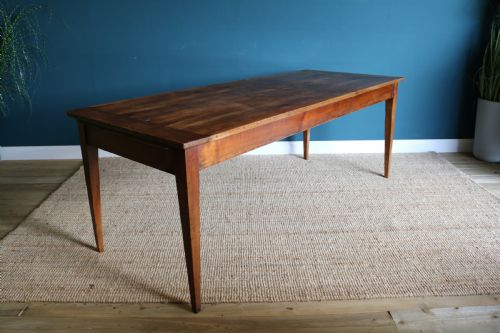
A brown wood farmhouse table is a practical dining or work surface designed for heavy domestic use. The listings here centre on eighteenth and nineteenth-century examples, spanning regional English, French and Italian styles.
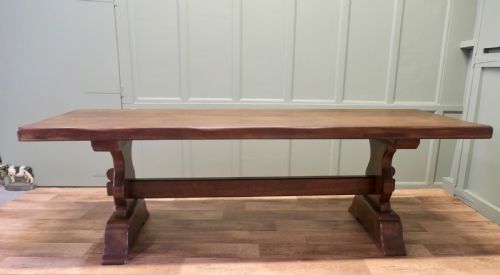
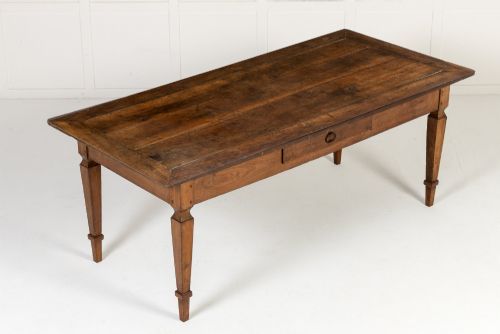
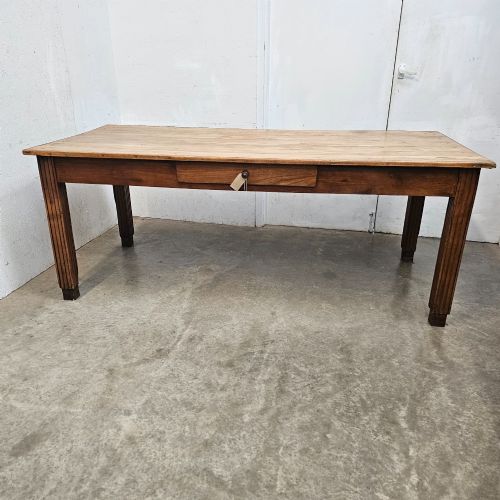
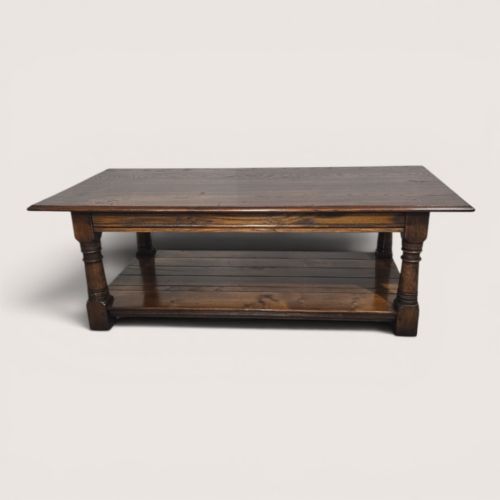
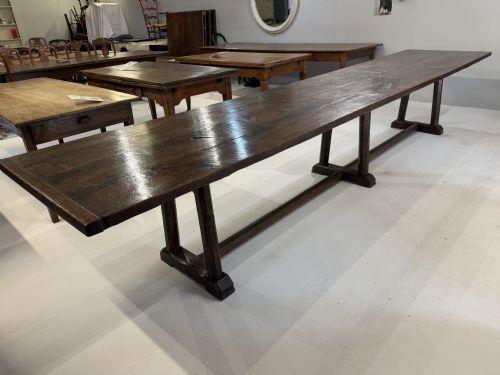
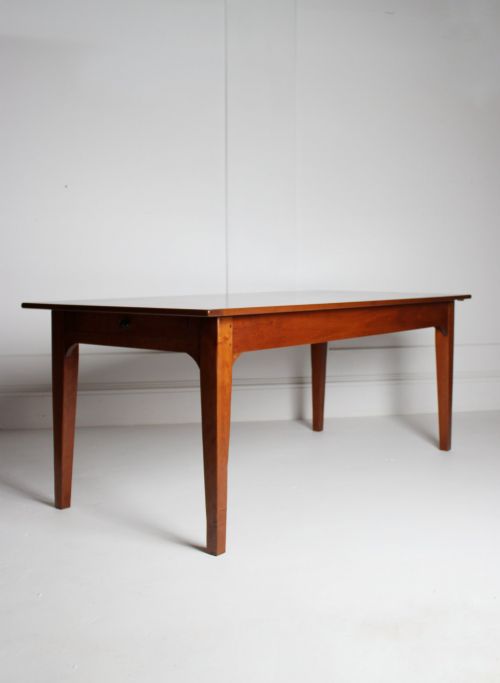
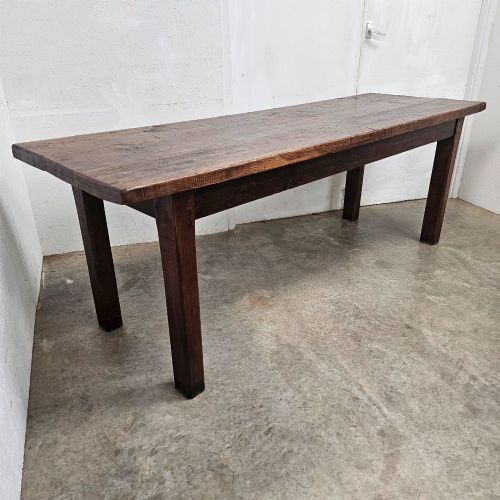
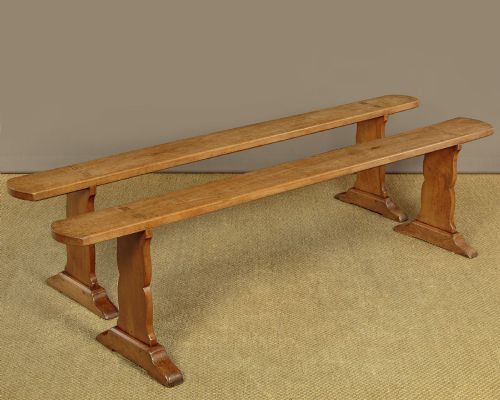
Most pieces appearing on this page take the form of large refectory dining tables, prep tables and kitchen tables. Buyers also encounter smaller iterations such as coffee tables, console tables and benches.
Origins range across European workshops, featuring provincial styles like French Country, Rustic Farmhouse and Georgian. Construction prioritises utility, with thick tops and robust legs designed to withstand decades of daily meals and food preparation.
How they were made
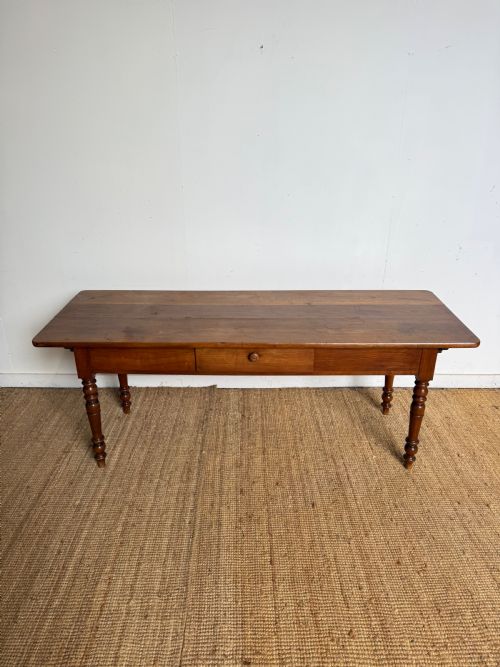
Carpenters constructed these tables using solid regional timbers including oak, cherry wood, fruitwood, elm, walnut, pine and beech. Planks were selected for durability, often forming thick tops capable of enduring heavy kitchen work.
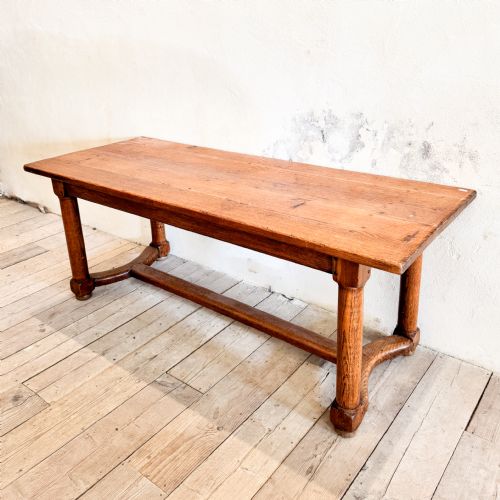
Joinery techniques relied on traditional framing methods, sometimes incorporating turned legs, barrel legs, or trestle supports. Many tables include practical additions such as drawers for utensils or sliding bread boards for food preparation.
Periods represented on this page range from the eighteenth century through the nineteenth century and into the early twentieth century.
What varies in quality
The quality of a brown wood farmhouse table depends largely on the choice of timber and the integrity of its construction. Tables fashioned from dense hardwoods like oak and cherry generally demonstrate superior longevity compared to softer woods.
Proportion and execution set finer examples apart from utilitarian ones, particularly in the turning of legs and the thickness of the plank top. Tables retaining original drawers, sliding boards and uncompromised structural joins hold greater integrity.
The Brown Wood Farmhouse Table Glossary
- Refectory table
- A long dining table traditionally used in monastic refectories and later adopted in domestic farmhouses. These pieces usually feature long plank tops supported by substantial legs or trestles.
- Bread board
- A sliding wooden board built directly beneath the tabletop of a kitchen table. It provided an immediate surface for slicing bread and preparing food.
- Trestle table
- A table comprising two or more supports connected by a horizontal beam. This design maximises legroom along the length of the table.
- Fruitwood
- A dense timber harvested from fruit-bearing trees such as cherry, pear, or apple. Furniture makers favoured it for its fine grain and rich warm tone.
- Plank-top
- A tabletop constructed from several wide boards laid side by side. This method allowed makers to utilise wide trees before the advent of industrial panel production.
Brown Wood Farmhouse Table: Frequently Asked Questions
What is a farmhouse table used for?
These tables served as the central hub of domestic life for dining, food preparation and daily chores. Their sturdy construction allowed families to gather for meals and work simultaneously.
Today, they function primarily as large kitchen or dining tables that bring rustic character to modern interiors.
How do I care for a wood table?
Maintenance involves wiping surfaces with a damp cloth and avoiding harsh chemical cleaners that strip historic finishes. Regular waxing helps protect the timber grain and maintains the patina.
Keep wooden tables away from direct heat sources and excessive moisture to prevent warping or splitting of the planks.
How can I tell the period of a table?
Dating relies on examining the timber species, tool marks left by early saws, and the style of the legs and joinery. Eighteenth-century examples often feature hand-planed surfaces and pegged joints.
Nineteenth-century pieces frequently introduce turned legs or different regional proportions associated with Victorian or provincial French designs.
Are these tables suitable for modern kitchens?
Their enduring utility makes them highly adaptable for contemporary dining spaces and open-plan kitchens. The generous proportions provide ample seating for families and guests.
Pairing an antique table with modern seating creates a balanced look that highlights the historic timber.