
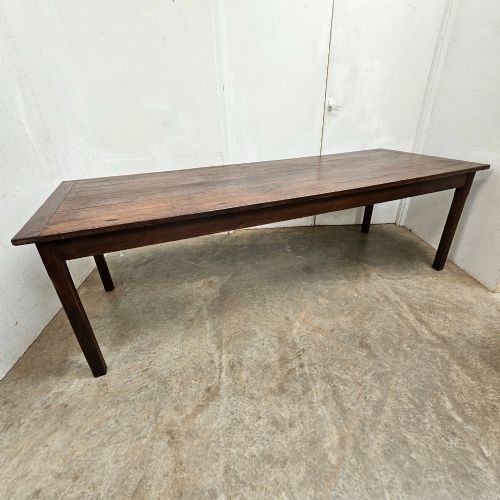

Long Rustic Farmhouse Table
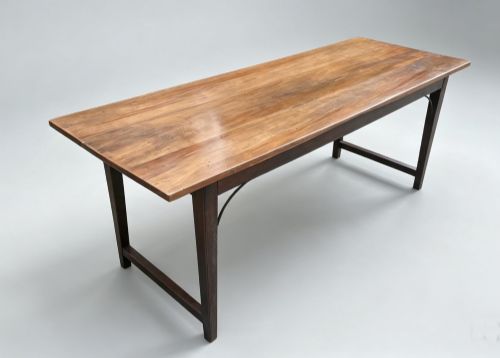
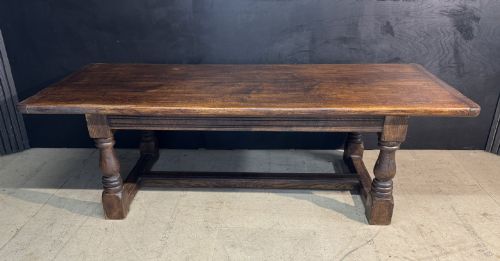
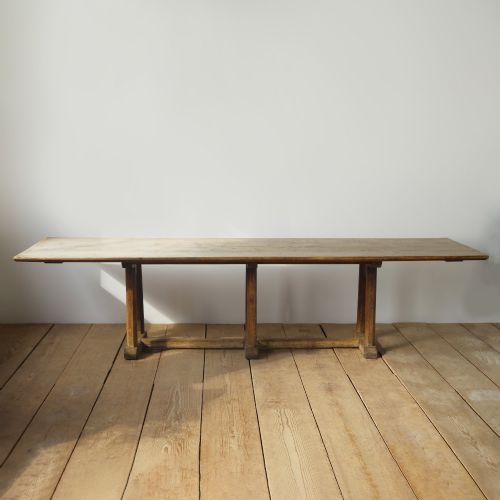
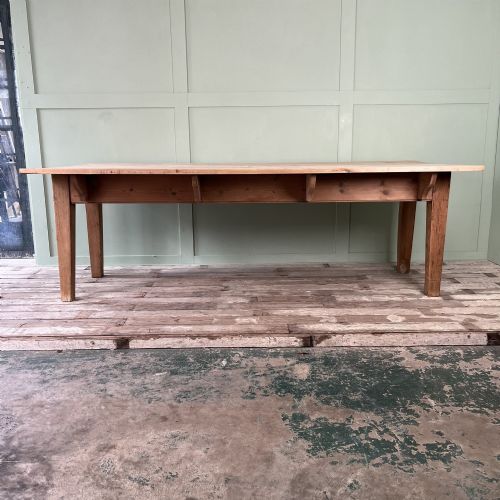
A long rustic farmhouse table anchors the kitchen or dining room with heavy timber, sturdy boards, and centuries of practical use.
Long Rustic Farmhouse Table
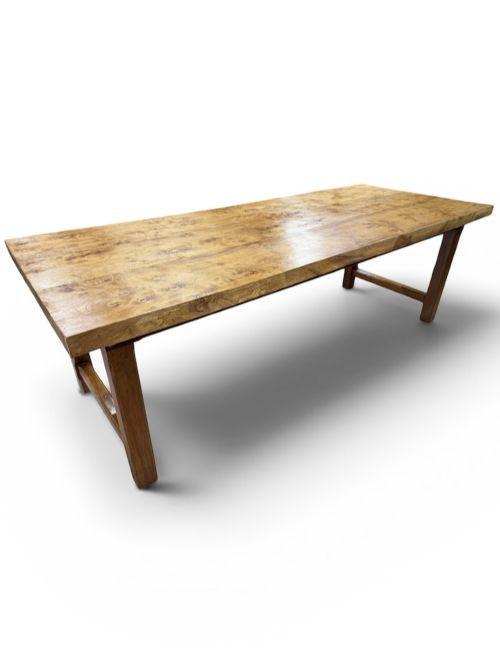
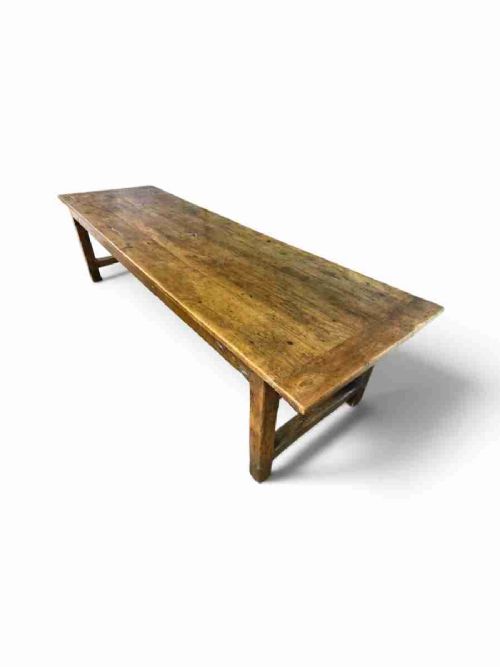
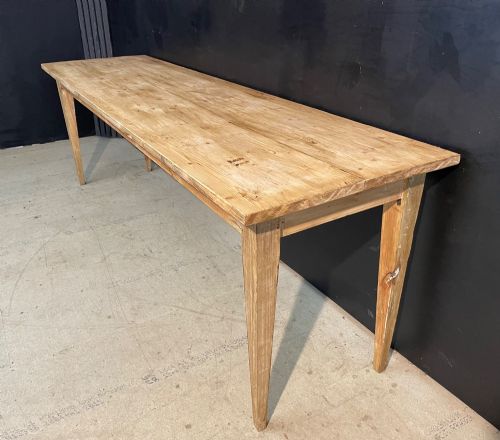
A long rustic farmhouse table serves as the central gathering place for meals, food preparation, and daily domestic life. Buyers seeking a long rustic farmhouse table typically encounter generous proportions, robust timber constructions, and surfaces bearing the marks of active service.
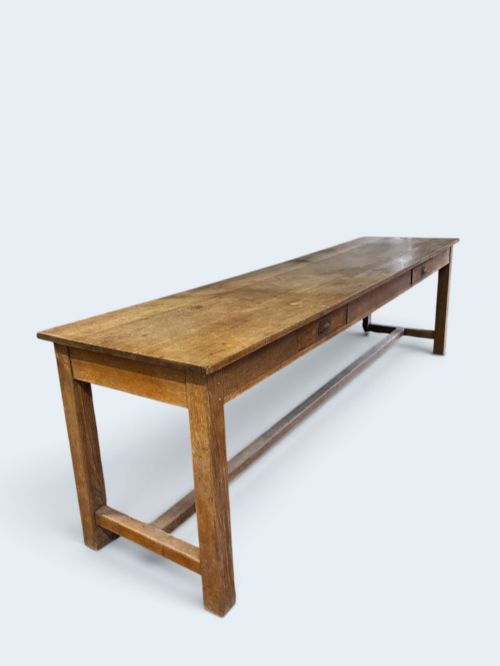
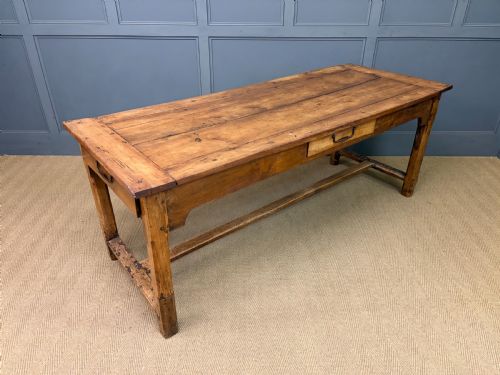
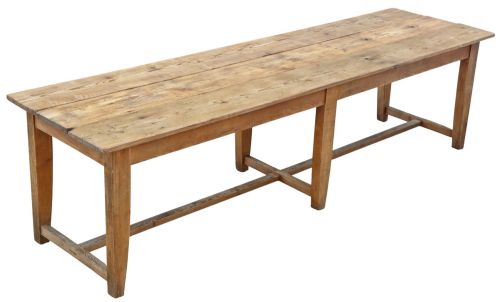
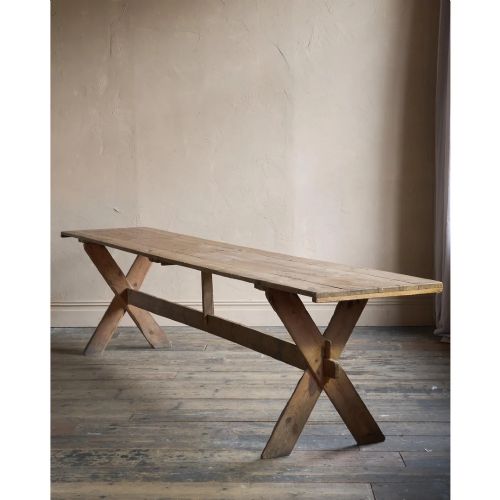
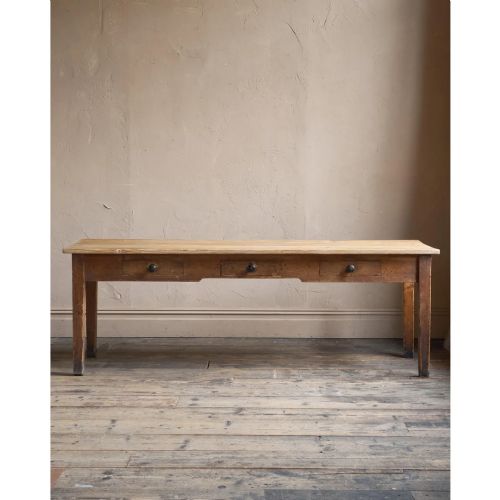
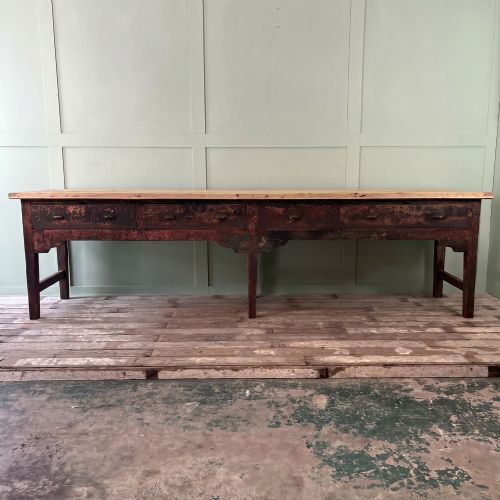
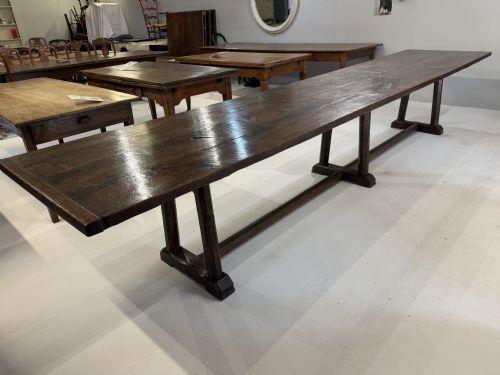
The selections span English, French, and Swedish origins, encompassing formal refectory formats alongside utilitarian scullery and harvest designs. Common structural variations include stretcher bases, trestle supports, and functional storage drawers built directly into the aprons.
Dated examples originate primarily from the eighteenth and nineteenth centuries, supplemented by early twentieth-century interpretations. Timbers such as oak, pine, cherrywood, and fruitwood define the regional character of these domestic boards.
Materials and construction methods
Makers utilised solid hardwoods and softwoods depending on regional availability, relying on oak, elm, and chestnut for structural integrity alongside pine and fruitwood for domestic surfaces. Planks were joined using traditional timber framing techniques, often displaying pegged mortise and tenon joints.
Surfaces developed distinct patinas through generations of scrubbing and daily use, while secondary woods like beech provided hidden strength in framing and legs. Iron hardware occasionally appears in braces, hinges, and drawer pulls on later or heavily repaired variants.
One remarkably sociable harvest table arrives advertised explicitly for Christmas dinner, picnics, and barbecues.
Assessing quality and proportion
Quality rests in the integrity of the timber selection and the retention of original surface patinas rather than uniform perfection. Tables constructed from thick, single-board plank tops or dense hardwoods command greater interest than heavily altered or reconstructed counterparts.
Proportion and height dictate practical utility, distinguishing dedicated dining boards from lower console or serving variants. The presence of original working drawers, authentic stretcher bases, and minimal timber replacement separates superior survivals from standard utility pieces.
The Long Rustic Farmhouse Table Glossary
- Refectory table
- A long narrow dining table originally designed for monastic dining halls. These boards often feature substantial stretcher rails running close to the floor.
- Harvest table
- A utilitarian table designed for seasonal agricultural work and large communal meals. They frequently incorporate long, narrow proportions to seat numerous guests.
- Potboard
- A lower slatted shelf fitted between the legs of a serving table. This platform traditionally held heavy earthenware pots and kitchen utensils.
- Trestle table
- A table supported by two or more upright framework assemblies rather than four corner legs. This construction allows unhindered legroom along the length of the board.
- Plank top
- A table surface constructed from parallel boards joined lengthwise. Early examples typically utilise wide, individually selected timber planks.
Long Rustic Farmhouse Table: Frequently Asked Questions
How do I clean a wooden farmhouse table?
Maintain the surface using a damp cloth and mild soap, avoiding harsh chemical cleaners that strip natural oils. Regular applications of beeswax nourish the timber and preserve the historic patina.
Prevent excessive moisture damage by using coasters and trivets during daily meals. Allowing the wood to breathe naturally ensures the continued stability of antique joints.
Can I seat people comfortably along the sides?
Extended lengths and recessed stretcher bases generally allow ample legroom for multiple diners. Reviewing the clearance between floor and underside aprons ensures standard chairs fit underneath.
Benches offer flexible seating arrangements that tuck neatly beneath the boards when not in use. Selecting matching benches or mismatched chairs depends on the desired rustic aesthetic.
How do I distinguish oak from pine tables?
Oak provides a dense, heavy structure with visible grain figuring and deep brown tones that darken with age. Pine offers a softer, lighter alternative often finished with paint or wax.
Hardwood surfaces resist daily impacts more readily than softer coniferous timbers. Both materials develop distinct traces of historical wear over centuries of domestic service.
What is a scullery table used for?
Scullery tables provided dedicated work surfaces for food preparation, washing, and kitchen chores. Built-in drawers accommodated utensils, linens, and small implements close to hand.
These utilitarian boards now function effectively as kitchen islands or serving stations in modern homes. Their robust construction handles heavy daily tasks without losing structural integrity.