

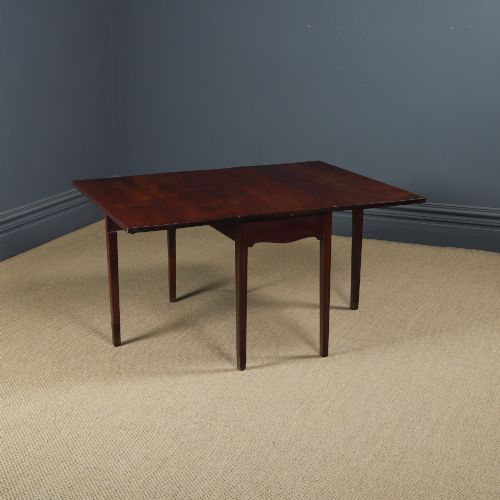
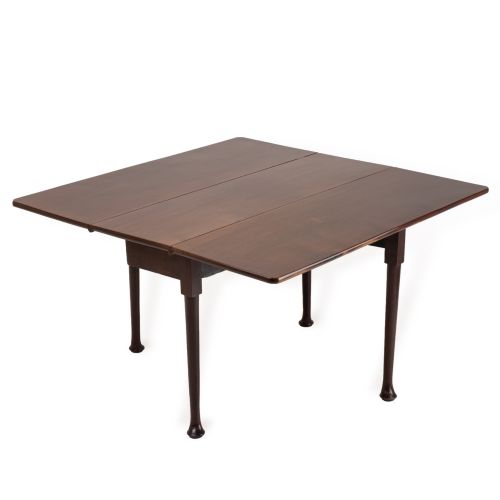


Vintage Wooden Gateleg Table
A vintage wooden gateleg table offers clever folding practicality, unfolding from a compact footprint into a sturdy dining or side surface.

Vintage Wooden Gateleg Table
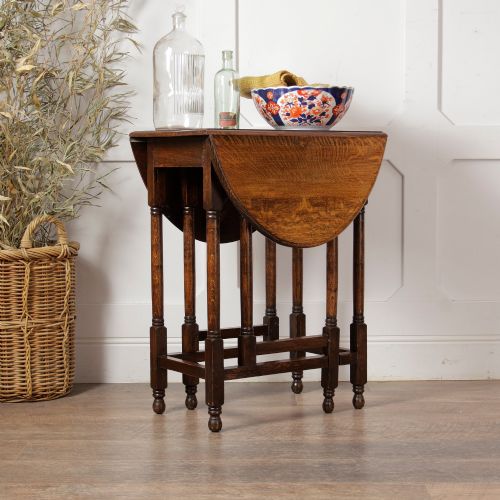
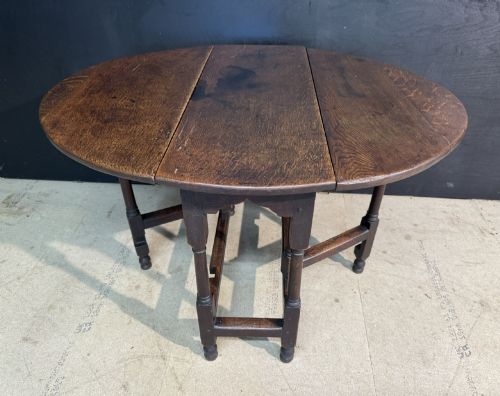
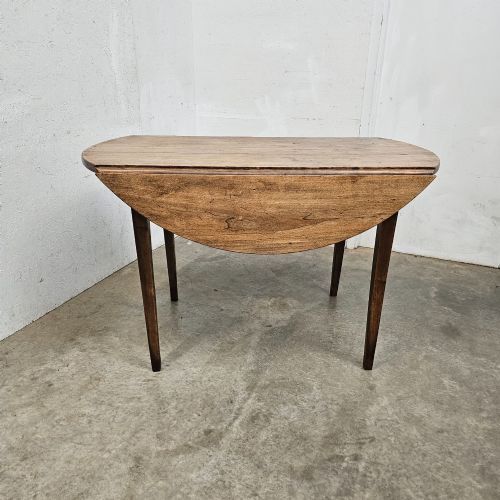
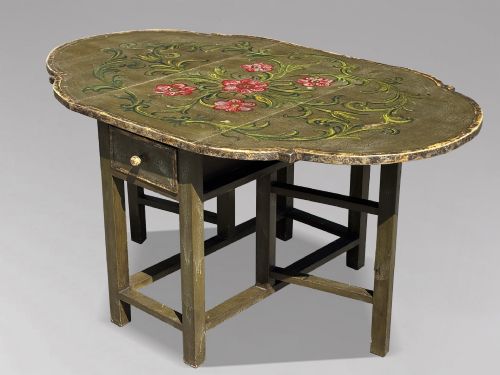
A vintage wooden gateleg table is a folding piece designed to save space while providing a stable surface for dining, tea or display. These tables feature hinged leaves supported by swing-out legs, allowing the overall footprint to expand or contract as needed.
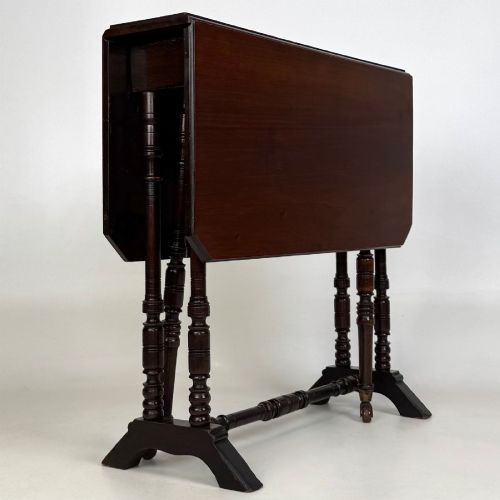
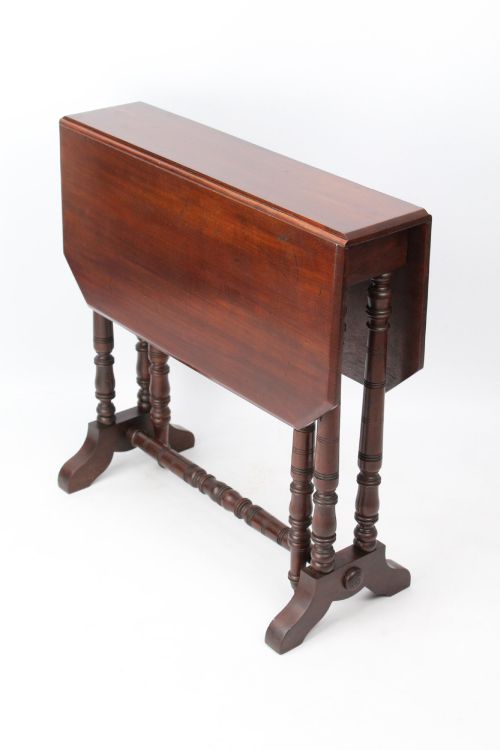
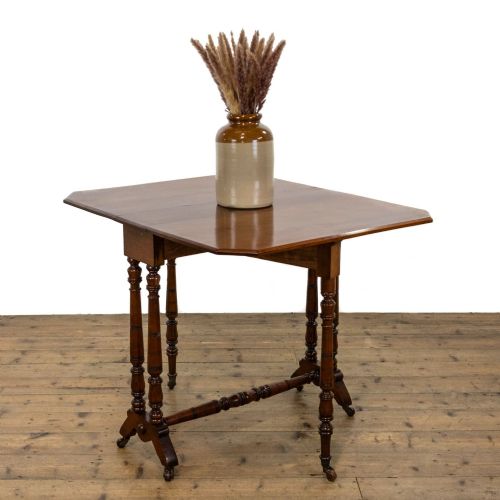
On this page, buyers will frequently meet pieces from the Edwardian and Victorian eras, alongside earlier oak and mahogany examples spanning the eighteenth and nineteenth centuries. Forms range from narrow occasional surfaces and small Sutherland tables to large dining tables intended for family use.
Origins vary from English country workshops to formal metropolitan cabinet makers, capturing a wide sweep of domestic history. Styles lean towards Georgian elegance, Jacobean revival heaviness and Edwardian lightness.
How they were made
Timbers like oak, mahogany and walnut form the structural backbone of these pieces, selected for strength and grain pattern. Cabinet makers utilised solid woods for framing and leaves, occasionally incorporating brass hinges and ceramic castors to aid movement.
Construction relied on mortise and tenon joinery to bear the weight of the dropping leaves and swinging gate legs. Surfaces were finished with polished veneers, satinwood banding or simple wax to protect the timber while highlighting natural figures.
Spider legs offer delicate charm while hiding surprisingly sturdy frames underneath tea tables.
What varies in quality
Quality rests in the precision of the hinge mechanism and the rigidity of the gate legs when fully extended. Superior pieces maintain tight joints and swing smoothly without dropping or sagging at the outer edges of the leaves.
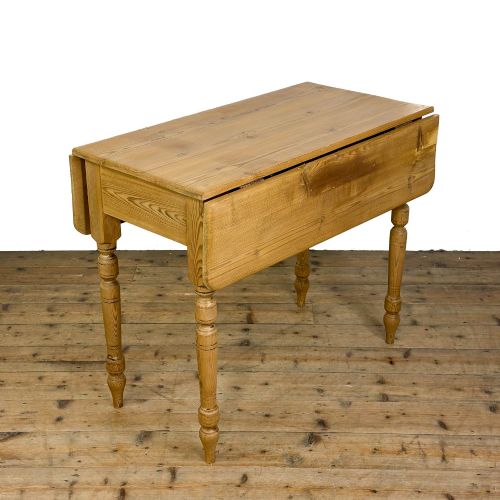
The choice of timber and veneer dictates the visual hierarchy, from plain utility pine to finely figured Honduras mahogany and inlaid satinwood borders. Master cabinet makers achieved seamless joins between the fixed top and folding flaps, ensuring grain continuity across the surface.
The Vintage Wooden Gateleg Table Glossary
- Gateleg table
- A table with hinged leaves supported by one or more legs that swing out like a gate. This design provides robust support for folding surfaces.
- Sutherland table
- A narrow-profile drop-leaf table with exceptionally slender legs and leaves that fold down almost vertically. It was popular during the Victorian and Edwardian periods for occasional use.
- Drop-leaf table
- Any table fitted with one or more hinged flaps that lower when not in use. It allows furniture to sit flat against a wall to conserve floor space.
- Bobbin leg
- A turned furniture leg shaped to resemble a string of spools or bobbins. This decorative turning appears frequently on seventeenth-century revival and Victorian pieces.
- Satinwood banding
- A narrow strip of pale, exotic satinwood inlaid into the border of a darker timber top. It provides a crisp, contrasting frame for the primary wood.
Vintage Wooden Gateleg Table: Frequently Asked Questions
How do I use a gateleg table daily?
Keep one or both leaves dropped against the wall as a console or side table to maximise room space. Pull the table into the centre of the room and swing out the supporting legs whenever you need extra surface area for dining or writing.
Ensure items placed near the edge rest over the main fixed top rather than the folding leaves for maximum stability. Regular gentle polishing preserves the timber hinges and moving joints.
What is a Sutherland table?
A Sutherland table is a specific, highly compact variety of drop-leaf table featuring extremely narrow central fixed top and very wide leaves. When dropped, the leaves hang almost vertically, making the closed piece exceptionally slim.
Victorian and Edwardian makers produced these tables as occasional pieces for tea, reading or display in parlours. Their slender legs often include spider designs or castors for easy repositioning.
How do I date an antique oak table?
Examine the construction marks, timber choice and joinery style beneath the leaves and around the frame. Earlier seventeenth and eighteenth-century examples display pegged joints, hand-sawn boards and dense, dark oak grains.
Later Victorian and Edwardian interpretations often utilise machine-sawn timber, brass fittings and lighter finishes like honey oak or polished mahogany. Comparing the turning style of the gate legs against known period patterns helps confirm the decade of manufacture.
Will a vintage gateleg table seat four?
Many medium to large gateleg tables easily accommodate four or more diners once both leaves are fully raised and secured. Oval and rectangular surfaces provide sufficient knee clearance around the swinging gate legs.
Check the length and width dimensions when open to ensure your dining chairs fit comfortably underneath. Smaller Sutherland and occasional versions remain better suited for two people or drinks service.