

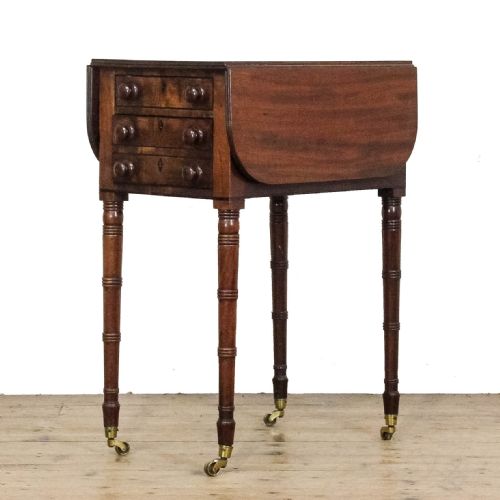


Compact Wooden Accent Table
A compact wooden accent table brings warmth and utility to a tight corner, offering a surface for lamps or tea without crowding the room.

Compact Wooden Accent Table
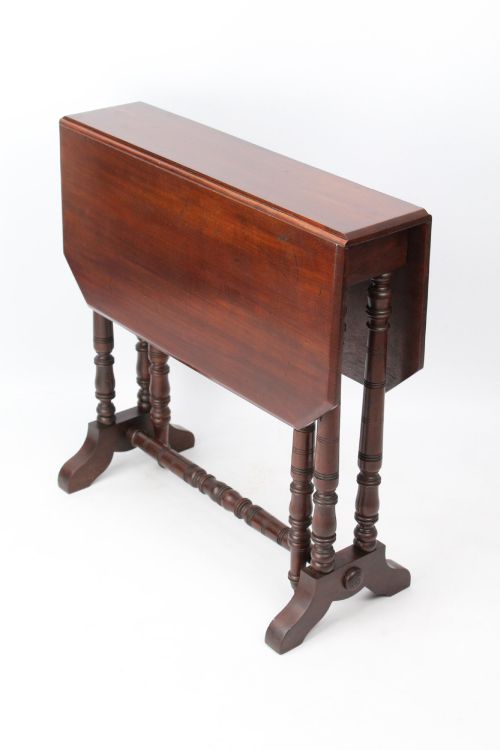
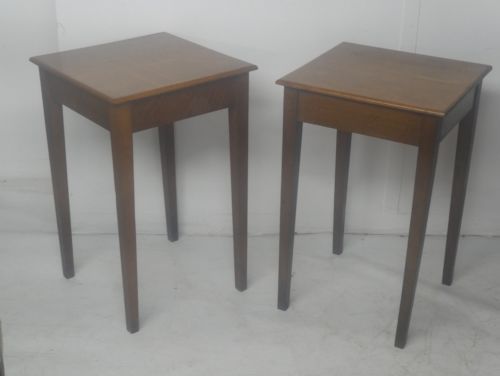
When you search for a compact wooden accent table, you find a variety of small occasional furniture designed to fit modest spaces. The listings feature forms such as occasional tables, side tables, drop leaf tables, nests of tables, tea tables, and pembroke tables. These pieces serve practical functions in living rooms and halls, providing surfaces that can often fold away when not in use.
You are most likely to meet Victorian and Edwardian examples on this page, alongside pieces from the nineteenth century, eighteen-hundred, and nineteen-twenty. Styles span Victorian, Edwardian, Georgian, Jacobean Revival, Scottish Country, French Provincial, English Country, and Art Deco. These diverse origins reflect how cabinetmakers adapted small tables to suit changing domestic habits across generations.
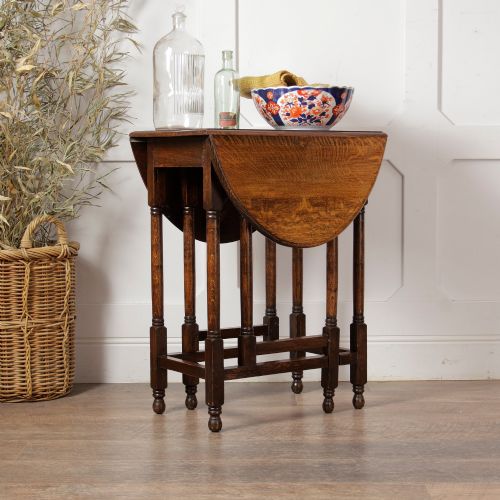
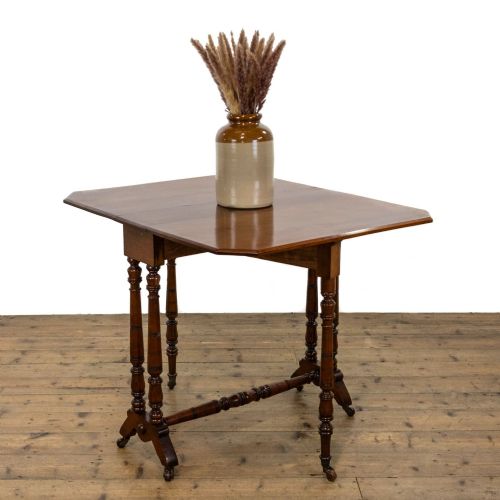
The materials are predominantly timber based, including mahogany, oak, walnut, and rosewood, frequently supported by brass fittings or ceramic castors. Many of these compact tables employ clever mechanisms like drop leaves, gatelegs, or spider legs to maximise floor space. Whether you encounter a walnut sutherland table or an oak nest of coffee tables, each item demonstrates traditional small-scale joinery.
How they were made
Cabinetmakers constructed these small tables using hardwoods such as mahogany, oak, and walnut, often selecting timber with pronounced grain patterns. Workshops utilised traditional joinery techniques to build durable frames that could withstand the demands of frequent folding and unfolding in busy households. Brass hinges, handles, and castors were fitted to movable components like drop leaves and gatelegs to ensure smooth operation.
Surface decoration on these pieces varied according to period and style, ranging from simple polished timber finishes to inlaid rosewood veneers and painted faux bamboo effects. Pembroke and sutherland tables relied on intricate underframes with slender turned or spider legs to maintain stability while keeping the overall footprint small. Every element was scaled down to create portable, functional furniture without sacrificing structural integrity.
Listings feature oak, mahogany, walnut, and rosewood across Victorian, Edwardian, and Georgian periods.
What varies in quality
The distinction between ordinary and superior pieces often lies in the selection of timber and the refinement of the joinery. Tables featuring well-figured mahogany or walnut veneers, alongside delicate inlay work, represent a higher tier of craftsmanship than plain utility items. Finer examples also display greater care in the turning of slender legs and the precise fitting of drop leaf hinges.
Proportion and structural ingenuity further separate the range, particularly in tables designed to fold or nest. A well-constructed sutherland or gateleg table operates smoothly with minimal play in the joints, whereas lesser pieces can feel loose or clumsy in their mechanisms. The overall harmony of design and the retention of original brass hardware contribute significantly to a piece's standing.
The Compact Wooden Accent Table Glossary
- Sutherland table
- A narrow drop-leaf table with exceptionally slender legs and leaves that fold down almost vertically. This design allows the table to be stored flat against a wall when not in use.
- Pembroke table
- A small rectangular table featuring two hinged drop leaves on opposite sides. It typically includes one or more small drawers and rests on four legs with castors.
- Gateleg table
- A table with hinged leaves supported by legs that swing outward like a gate. This construction provides robust support for an expanded surface.
- Spider leg
- A term describing exceptionally thin, delicate turned legs joined by slender stretchers. You often see this feature on nineteenth-century occasional and tea tables.
- Nest of tables
- A set of graduated small tables designed to fit neatly beneath one another. They offer flexible surface space that can be deployed individually as required.
Compact Wooden Accent Table: Frequently Asked Questions
What is a sutherland table?
A sutherland table is a narrow drop-leaf design with leaves that drop nearly vertical and a particularly slender underframe. It was created to occupy minimal space when folded.
Cabinetmakers built these for Victorian and Edwardian drawing rooms where flexibility was paramount. They serve well as tea tables or occasional surfaces.
How do gateleg tables work?
Gateleg tables utilise hinged legs that swing out from the centre frame to support the drop leaves. This mechanism provides sturdy support for an otherwise compact top.
When closed, the leaves hang down to reduce the footprint of the furniture. This made them ideal for smaller rooms across various historical periods.
Where were pembroke tables used?
Pembroke tables functioned primarily as versatile working or occasional surfaces in sitting rooms and parlours. Their drop leaves allowed them to sit flush against walls.
They often incorporate small drawers for storage of writing materials or sewing equipment. Their light construction made them easy to reposition as needed.
Are nest of tables antique?
Nests of tables appear in various historical periods, including the nineteenth and early twentieth centuries. They consist of graduated sets that stack together efficiently.
Victorian and Edwardian makers produced them in woods like mahogany and oak. They provide multiple surfaces while occupying the floor space of a single small table.