
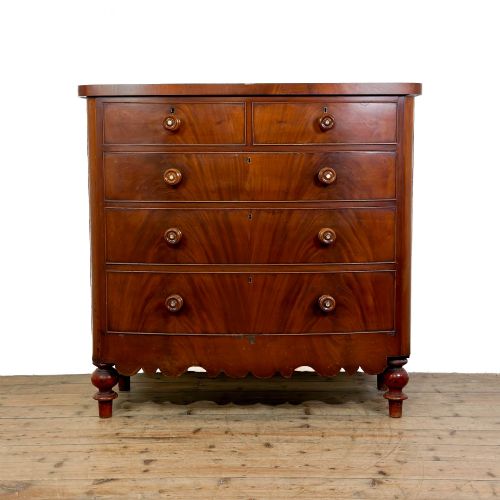
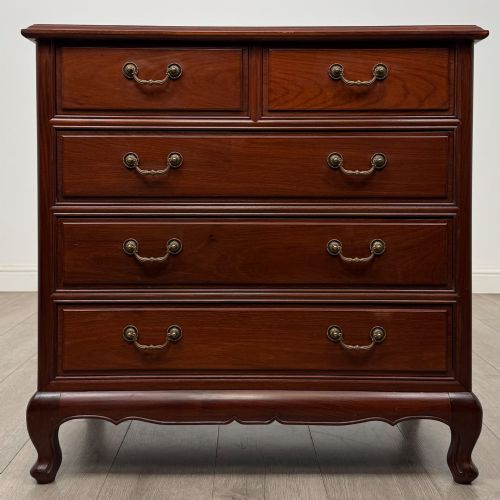
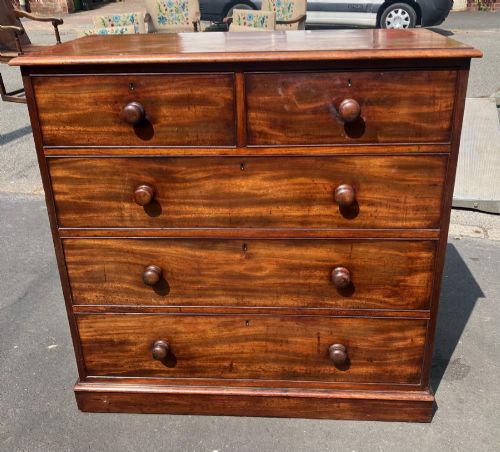

Vintage Wooden Clothes Drawers
Vintage wooden clothes drawers encompass sturdy oak tallboys, mahogany chests, and pine wardrobes built to organise garments across centuries.
Vintage Wooden Clothes Drawers
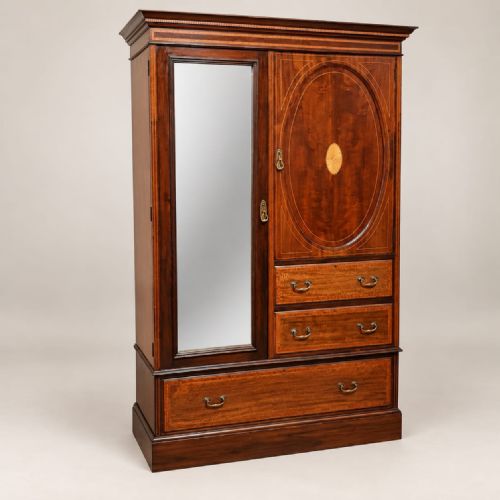
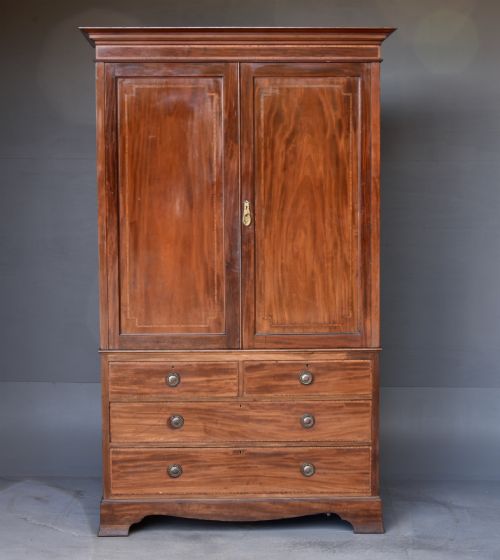
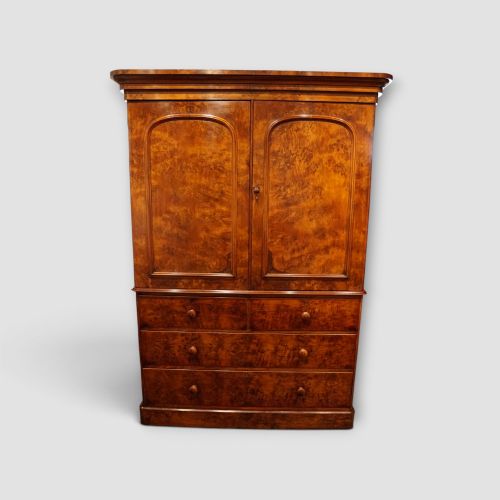
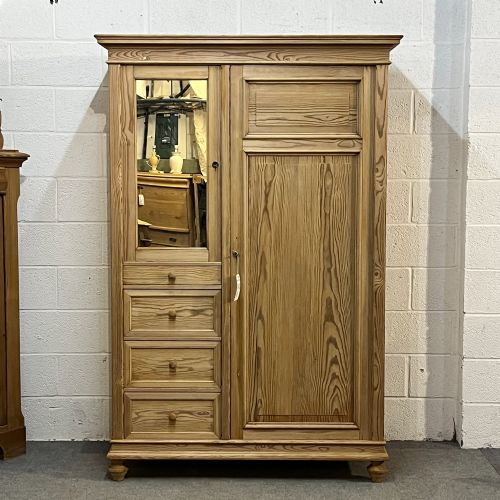
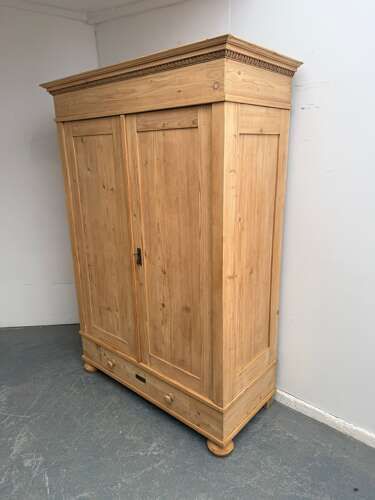
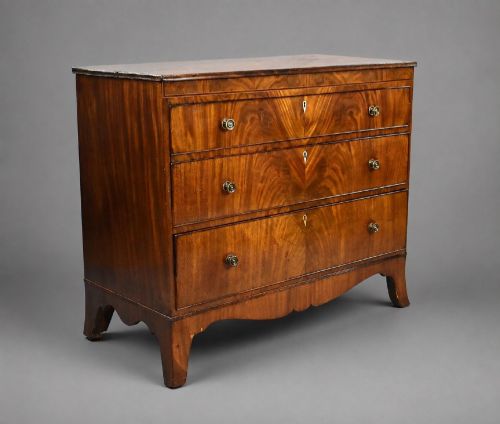
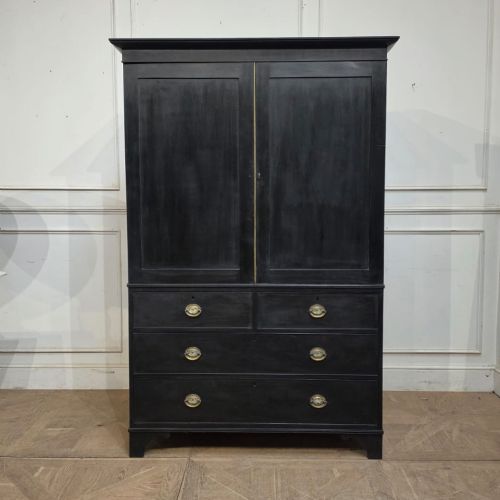
When searching for vintage wooden clothes drawers, buyers encounter substantial storage furniture spanning the Georgian, Victorian, and Edwardian eras, alongside pieces from the 1920s and 1930s. The selection ranges from compact chests of drawers to tallboys, linen presses, combination wardrobes, and storage cabinets.
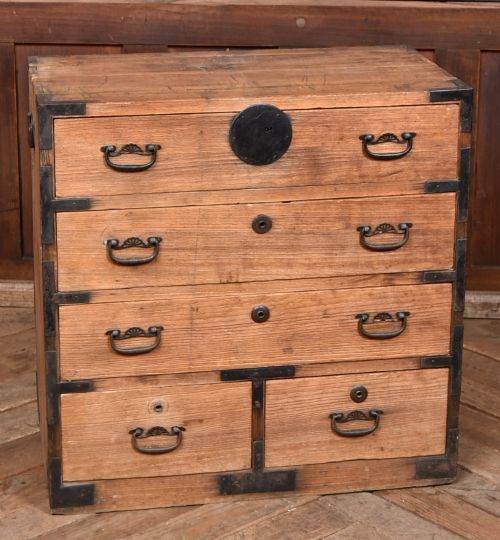
Mahogany and pine dominate the pieces seen here, supplemented by oak, burr walnut, satinwood, chestnut, and ebonized timber. Alongside traditional British styles, the inventory includes specific regional works such as Japanese tansu chests.
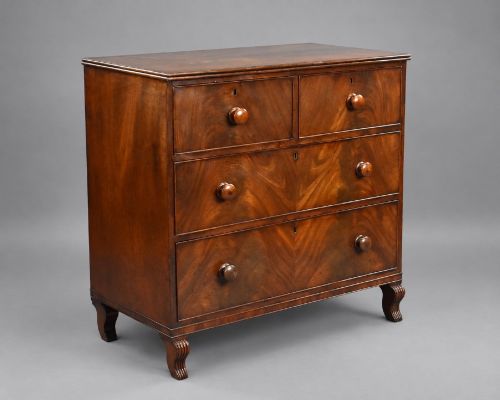
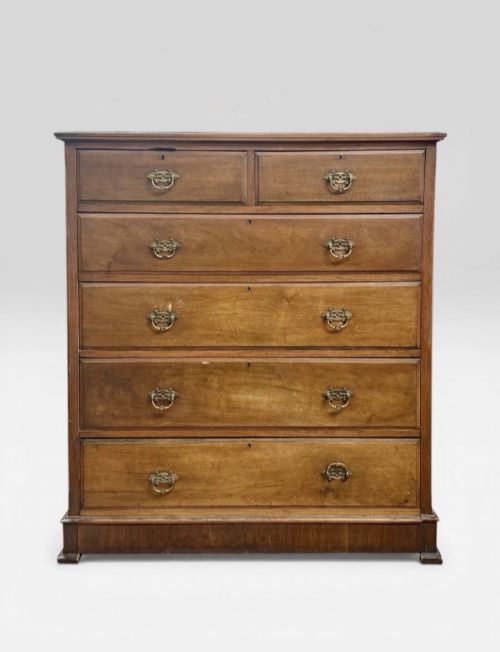
Chest of drawers forms predominate, frequently featuring multiple tiers of timber storage alongside larger wardrobe configurations designed to house hanging garments and linen. These items serve domestic storage needs while displaying period craftsmanship.
How they were made
Cabinet makers utilised solid woods like mahogany, oak, and pine, frequently applying decorative veneers such as flame mahogany, burr walnut, and satinwood to primary display surfaces. Drawer interiors often relied on secondary timbers, with cedar lining certain compartments.
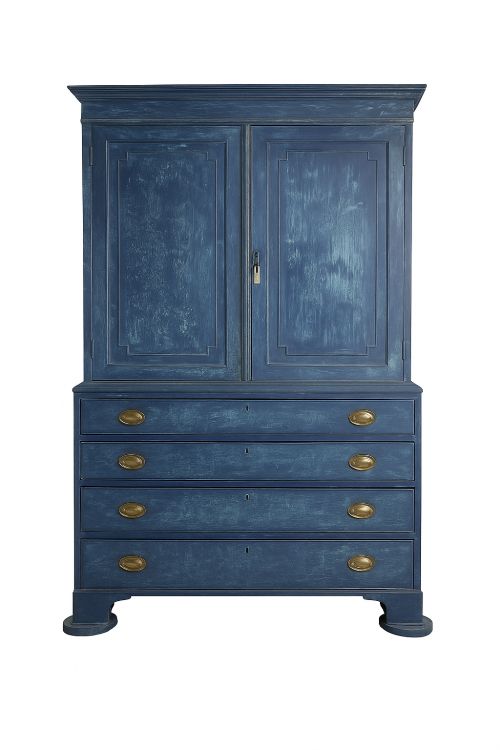
Construction techniques incorporated brass for handles, locks, and key escutcheons, alongside glass mirrors fitted into wardrobe doors and iron structural elements. Surface treatments ranged from natural wax finishes and painted blue schemes to ebonised coatings.
Joinery methods supported sturdy frame construction for large storage cabinets, linen presses, and multi-piece wardrobes designed to withstand daily domestic use.
Materials span brass, mahogany, pine, glass, iron, oak, satinwood, burr walnut, and chestnut.
What varies in quality
Quality separates pieces by the selection of primary timbers and decorative veneers, where finely figured flame mahogany or burr walnut elevates a chest of drawers above plain utility builds.
The precision of subsidiary details dictates overall excellence, including the integration of brass hardware, the execution of inlay work like satinwood lines, and the internal lining of drawers with woods such as cedar.
Structural integrity in large items like combination wardrobes and linen presses reflects the joiner's skill in balancing heavy timber doors, mirrored panels, and sliding internal trays.
maples & co·Heals·Hartman Luggage Co.
The Vintage Wooden Clothes Drawers Glossary
- Chest of drawers
- A freestanding furniture form comprising multiple stacked drawers utilised for garment storage.
- Linen press
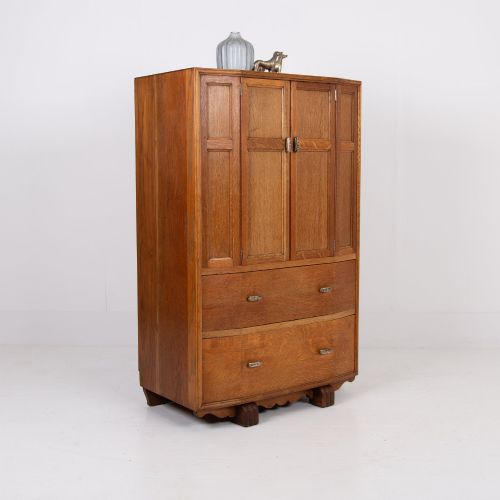
- A tall storage piece featuring upper cupboard doors enclosing shelves or sliding trays above lower drawers.
- Tallboy
- A vertical storage cabinet combining a chest of drawers with an upper cupboard section.
- Compactum
- A multi-compartment wardrobe designed to consolidate various types of clothing storage within a single unit.
- Tansu
- A traditional Japanese mobile chest of drawers constructed from wood with distinct iron hardware.
- Escutcheon
- A protective metal plate surrounding a keyhole on a drawer or door.
Vintage Wooden Clothes Drawers: Frequently Asked Questions
How do I identify a Georgian chest of drawers?
Georgian chests date from the eighteenth and early nineteenth centuries, featuring dense mahogany or oak timbers and restrained proportions.
They often rest on bracket feet and display hand-cut dovetail joints on the drawer construction.
What is a tansu chest?
A tansu chest is a traditional Japanese storage cabinet constructed from wood and fitted with prominent iron corner braces and handles.
These pieces were built for portability and modular stacking within domestic interiors.
How do I care for antique pine furniture?
Antique pine pieces benefit from applications of traditional beeswax to nourish the dry timber and maintain a soft lustre.
Keep wooden furniture away from direct heat sources and dramatic humidity shifts to prevent timber movement.
What is a combination wardrobe?
A combination wardrobe integrates hanging space for garments with internal shelving, cupboards, and exterior drawers within one unit.
Edwardian makers favoured this layout to provide comprehensive bedroom storage in a single footprint.