
Vintage Wooden Bench
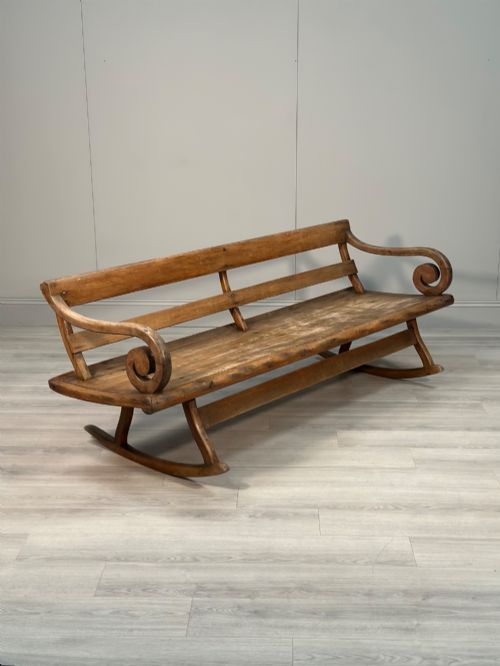
A vintage wooden bench brings the warmth of oak, pine and elm directly into a hallway, garden or kitchen.
Vintage Wooden Bench
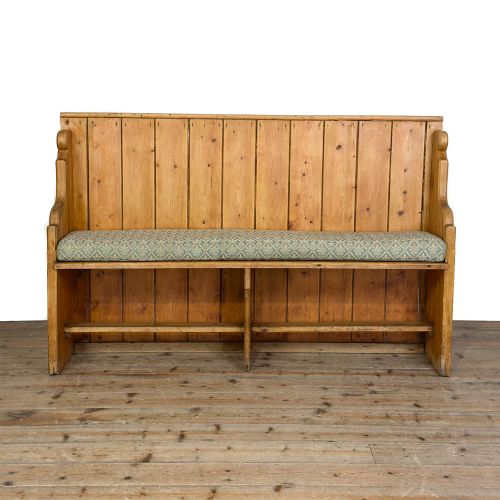
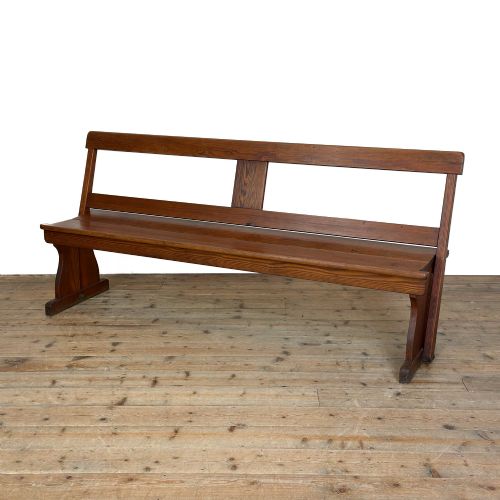
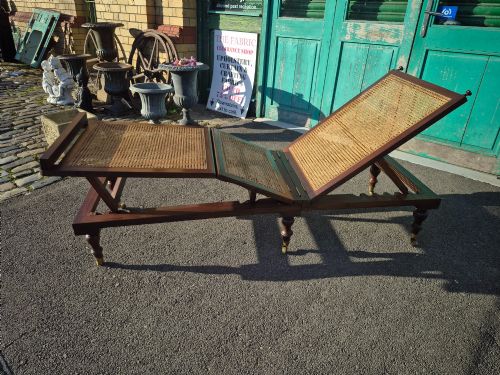
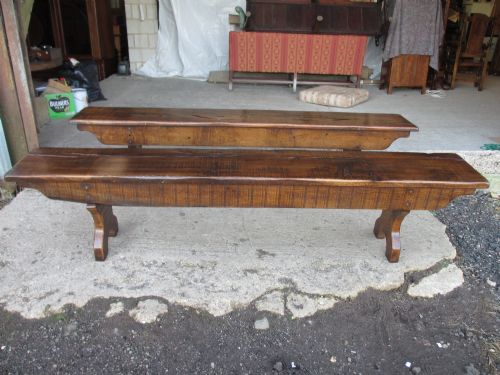
A vintage wooden bench spans practical household seating and garden furniture from the nineteenth and early twentieth centuries. These pieces appear in forms ranging from simple rustic pine hall benches to heavy oak Edwardian refectory seating and carved Gothic styles.
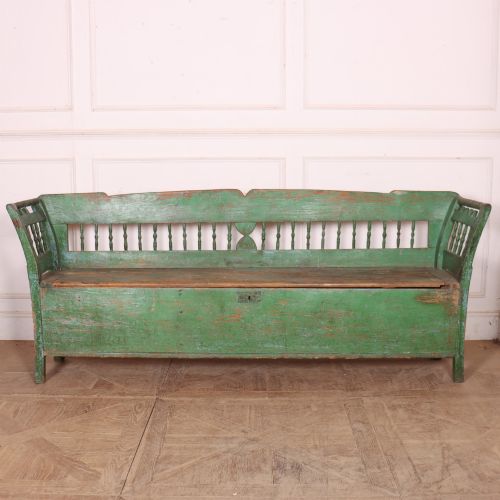
Buyers most frequently encounter robust oak and pine examples designed for hallways, domestic kitchens and outdoor use. Many incorporate practical additions such as lift-up seats, coat stands or trestle ends suited to everyday utility.
Origins stretch across English country workshops, French provincial makers and broader European farmhouse traditions. The selection includes specialised seating such as settles, church pews and garden seats weathered by time.
Materials and construction methods
Makers relied primarily on solid hardwoods and softwoods including oak, pine, mahogany, elm and teak. These materials were frequently joined using traditional carpentry techniques suited to heavy domestic or outdoor wear.
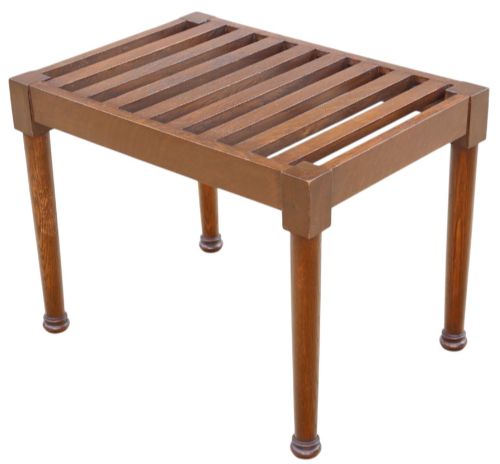
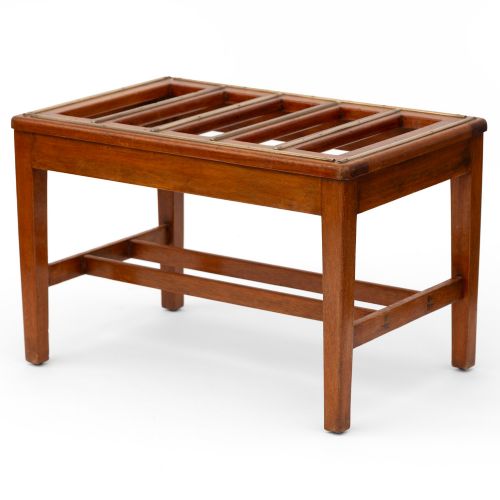
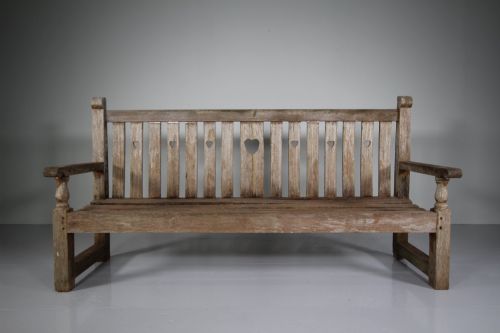
Surface finishes range from polished oak and natural waxed pine to applied coats of paint and weathered teak. Iron and brass fittings often reinforce structural joints, particularly on garden benches and luggage stands.
Listings feature items built from oak, pine, mahogany, elm, teak and beech across the nineteenth and twentieth centuries.
Assessing craftsmanship and construction
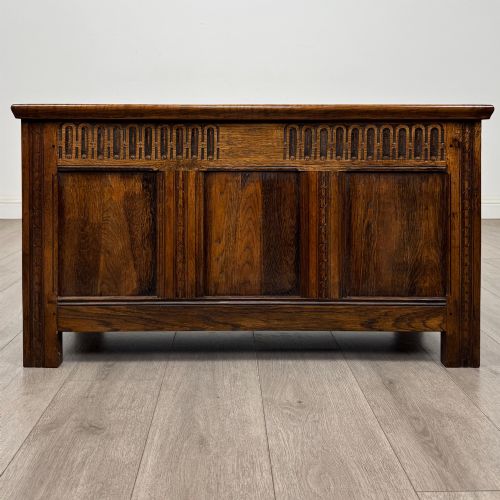
Quality rests in the selection of timber and the integrity of the joinery rather than surface decoration alone. Heavy oak framing and well-proportioned trestle ends separate robust everyday furniture from lighter utility items.
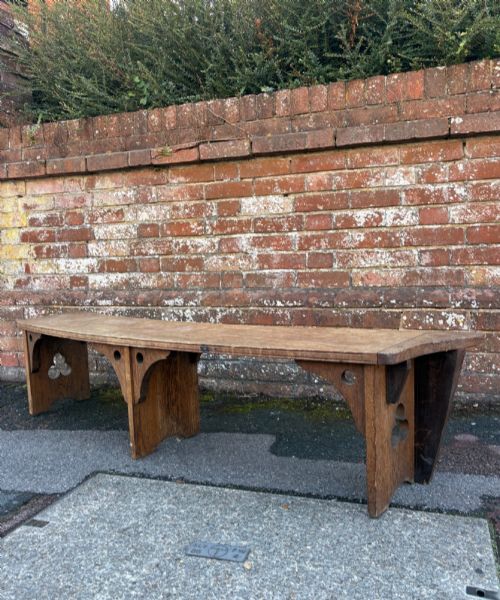
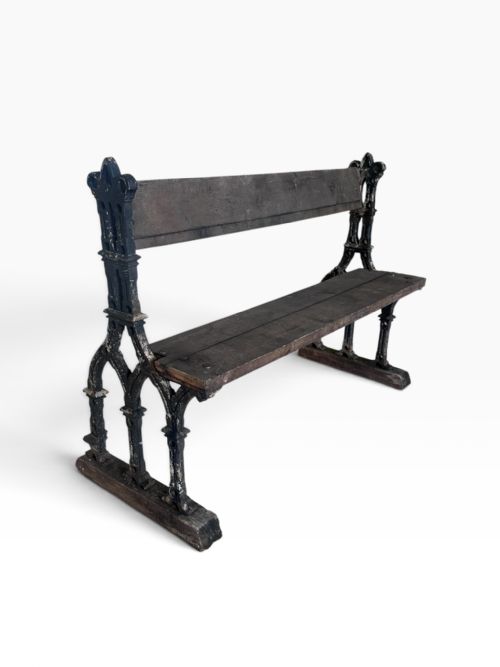
The degree of hand-carving, such as trefoil motifs on Gothic revival pieces or detailed panel work on settles, distinguishes standard workshop production from finer bespoke commissions.
The Vintage Wooden Bench Glossary
- Settle
- A wooden bench with a high back, solid arms and often a storage box beneath the seat. This form was traditionally placed near firesides to block draughts.
- Refectory bench
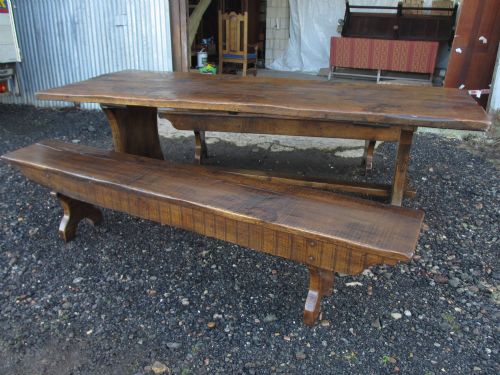
- A long, narrow bench designed to accompany a large dining table. These pieces frequently feature trestle ends for stability.
- Trefoil
- A three-lobed decorative carving resembling clover leaves, commonly found on Gothic revival and Arts and Crafts furniture. It adds structural ornamentation to supports.
- Pitch pine
- A durable, resinous pine variety utilised extensively in nineteenth-century joinery and church pews. Its dense grain withstands heavy wear.
Vintage Wooden Bench: Frequently Asked Questions
Where should I place a wooden bench?
These pieces suit narrow hallways, boot rooms, kitchens or gardens depending on their timber and construction. Weathered teak and cast iron variants are built for outdoor exposure.
Indoor oak and pine examples function well against walls or paired with dining tables. Many feature built-in storage for shoes and household items.
How do I care for vintage timber?
Maintain finished indoor surfaces with appropriate furniture wax applied sparingly with a soft cloth. Avoid placing wooden seating near direct heat sources.
Outdoor garden benches benefit from seasonal cleaning and specialised treatments to protect against moisture. Natural weathering on teak is standard and requires little intervention.
What is the difference between a settle and a bench?
A settle typically incorporates a high solid back and enclosed sides designed to retain heat and block draughts in older homes. Standard benches feature open sides and lower backs.
Many settles also include hinged seats revealing storage compartments beneath. Benches generally prioritize straightforward linear seating.
How can I date a wooden bench?
Dating relies on identifying timber types, tool marks, joinery methods and stylistic influences such as Edwardian restraint or Victorian Gothic revival. Nineteenth-century pieces often show hand-cut joinery.
Twentieth-century examples may incorporate machine-sawn components and different hardware. Associated catalogue descriptions help confirm specific production periods.