

Vintage Windsor Chair
A vintage windsor chair brings robust country character into a room through traditional vernacular timber framing.
Vintage Windsor Chair
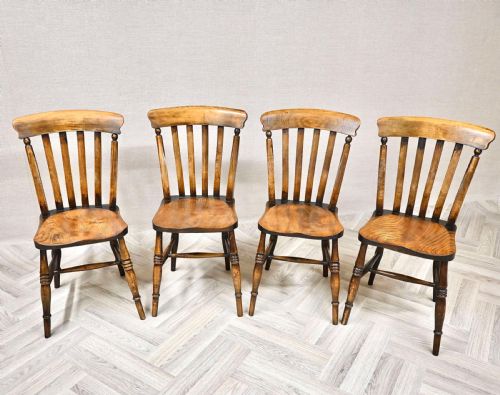
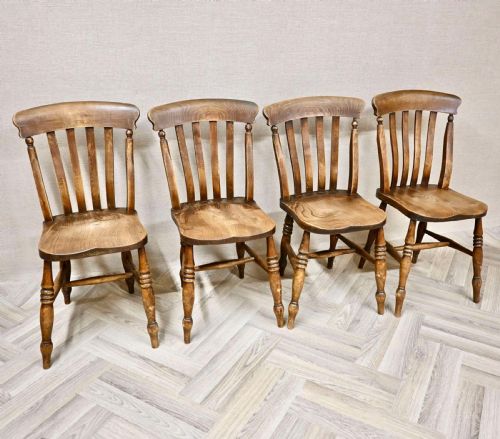
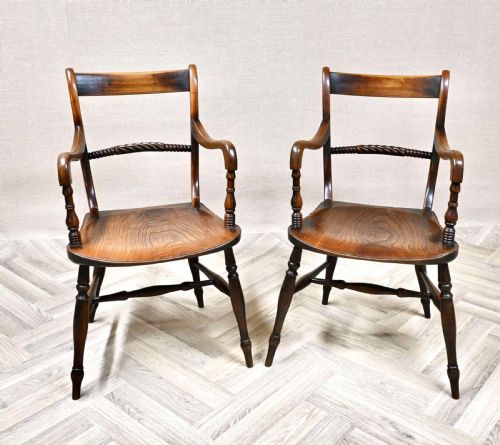
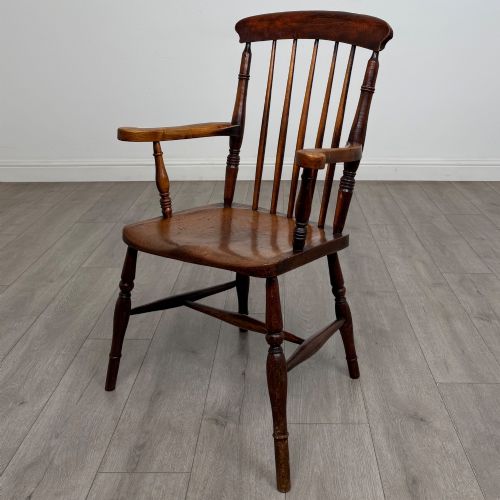
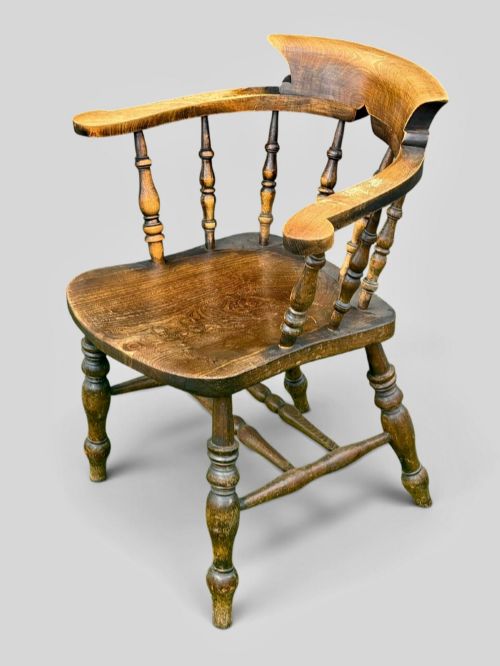
A vintage windsor chair stands as a staple of English country seating, defined by a solid wooden seat into which the legs and back spindles are directly wedged. The versions most commonly met on this page date from the nineteenth century through the Edwardian period, spanning utilitarian kitchen forms to high-backed armchairs.
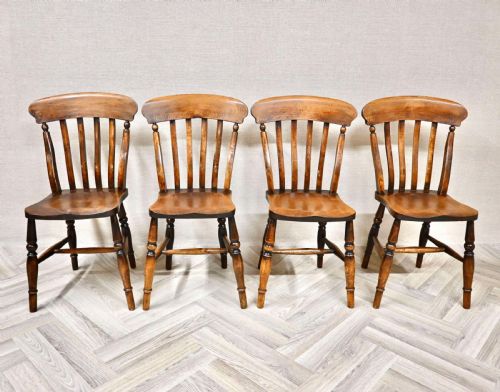
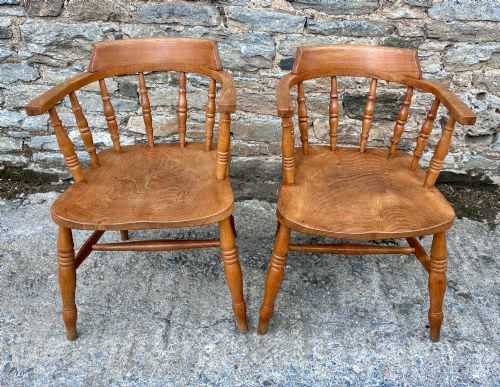
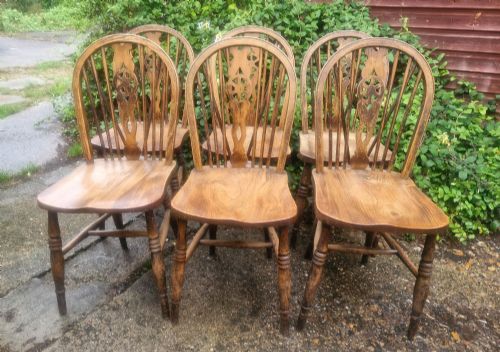
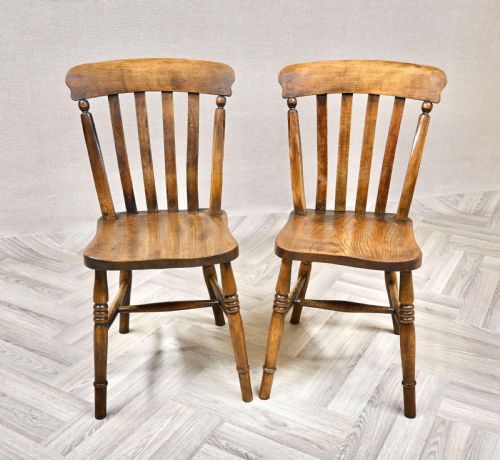
Makers produced diverse formats to suit specific domestic tasks, including low-backed smoking chairs, rocking chairs, and matching sets of dining chairs. Regional variations emerge across the listings, ranging from Thames Valley wheelbacks to Yorkshire and Scottish armchairs.
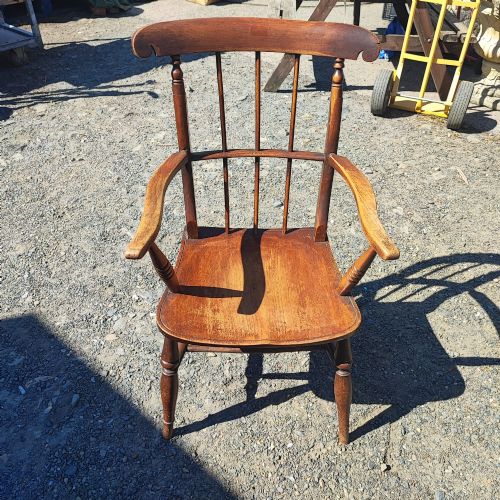
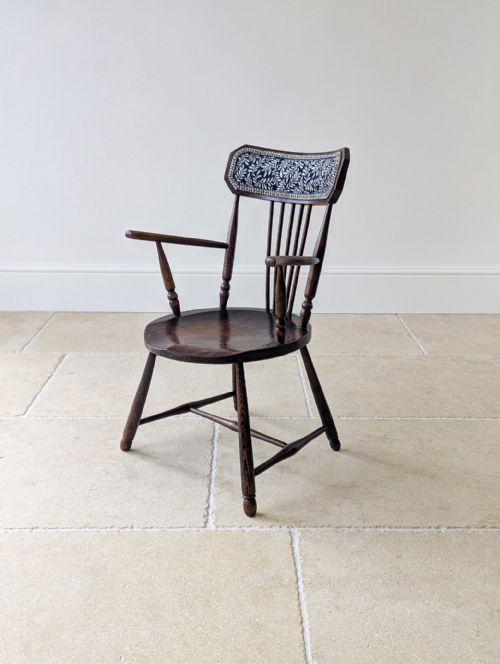
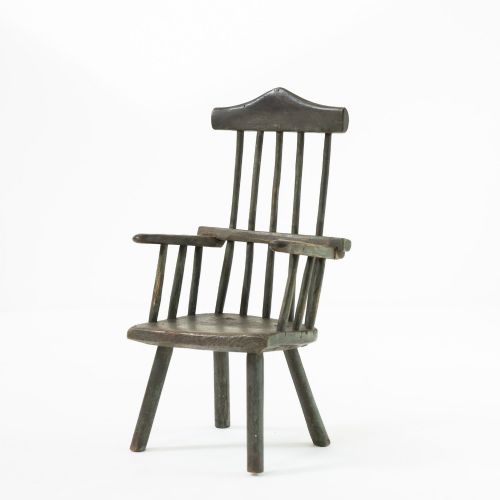
Constructed primarily for practical household or farmhouse use, these seats also encompass smaller children's armchairs and folk art primitive items. Their enduring appeal rests in functional joinery combined with visible timber grain.
Materials and Construction
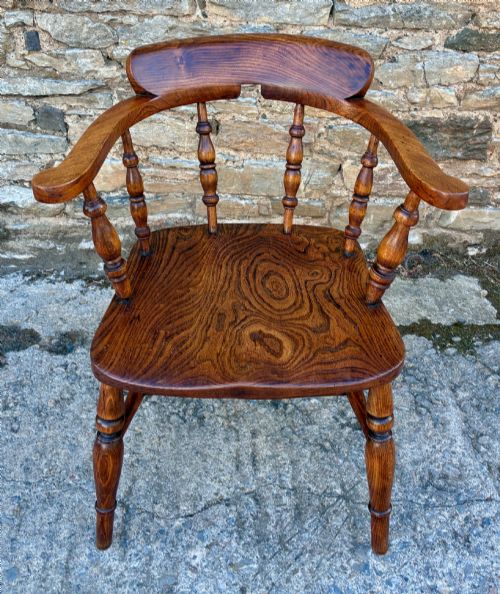
Makers utilised a combination of native hardwoods to give each vintage windsor chair structural strength and resilience. Elm routinely forms the sculpted plank seats, while ash, beech, and oak provide sturdy frames for spindles, legs, and steam-bent hoops.
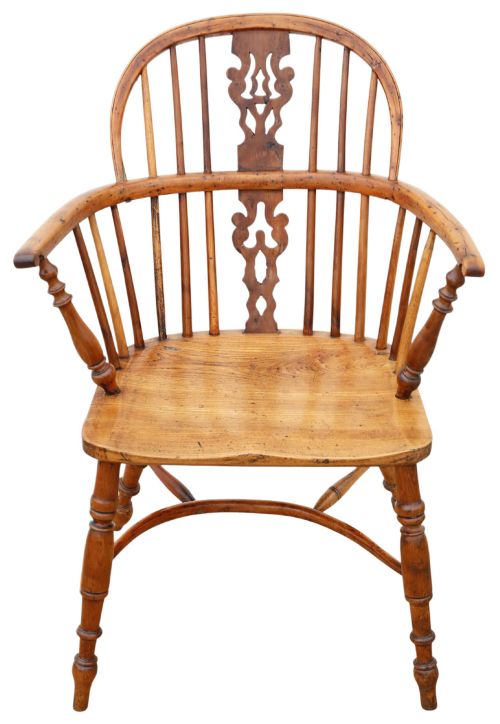
Selected examples incorporate yew wood, prized for its warmth and fine grain pattern. Traditional bodging techniques involved turning green wood on pole lathes, allowing parts to shrink and lock tightly together as they dried.
Sturdy enough for a kitchen yet polite enough for a parlour.
Assessing Craftsmanship
The distinction between ordinary utility seating and finer examples rests in the sculptural shaping of the seat plank and the elegance of the turned spindles. Grain selection in the elm seat and the matching of timber across a set dictate visual harmony.
Structural integrity depends on the tightness of the wedged tenon joints and the preservation of the original undercarriage. Retaining an untouched surface patina with minimal replacement parts elevates an individual piece.
J Spencer·Gabbitass Worksop maker
The Vintage Windsor Chair Glossary
- Wheelback
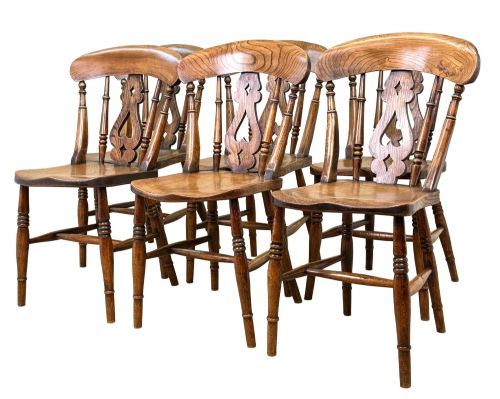
- A Windsor chair design featuring a pierced wooden splat in the centre of the backrest shaped like the wheel of a cart.
- Smoker's bow
- A low-backed Windsor armchair, often called a captain's chair, traditionally utilised in public houses and smoking rooms.
- Bodge
- The traditional craft of turning green timber components in woodland shelters using a pole lathe before final assembly.
- Carver
- An armchair designed to sit at the head of a dining table, built to match a set of smaller side chairs.
Vintage Windsor Chair: Frequently Asked Questions
What is a vintage windsor chair?
A vintage windsor chair is a traditional seat built with a solid carved wooden plank base into which the legs and back uprights are independently fitted. This construction method separates them from standard framed furniture.
Craftsmen produced these pieces in various regional styles across Britain during the nineteenth and early twentieth centuries, utilising native timbers such as elm, ash, and beech.
How do I style a windsor chair?
These chairs integrate easily into contemporary and traditional dining spaces, working well around a rustic wooden table or placed alone as a desk chair. Their sculptural stick-back forms add architectural interest without overwhelming a room.
Mixing different regional versions, such as pairing wheelbacks with hoop-backs, creates an informal harlequin arrangement suitable for everyday living.
How are different periods identified?
Earlier pieces from the eighteenth and early nineteenth centuries often display heavier proportions, continuous arm rails, and deep saddle-seats shaped by hand adzing. Later Victorian and Edwardian examples tend to incorporate steam-bent components and factory-turned spindles.
Examining the tool marks on the underside of the seat plank reveals whether makers shaped the timber using traditional hand-held drawknives.
Are windsor chairs comfortable for daily use?
The saddle-shaped wooden seats are ergonomically carved to fit the body, offering surprising support during extended sitting. Adding a loose cushion provides extra comfort while preserving the exposed timber surface.
Their sturdy stick-back construction absorbs movement, making them robust enough for daily kitchen or dining room tasks.