
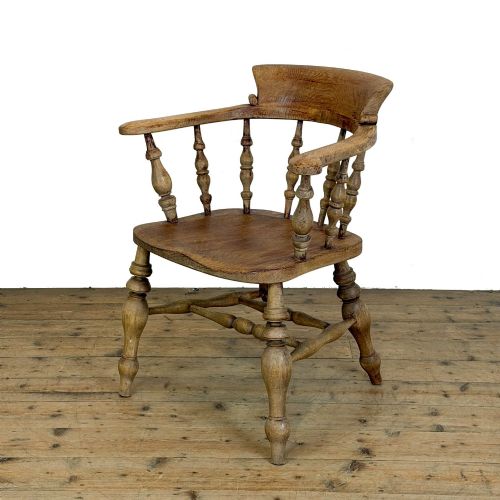


Country Oak Office Chair
These country oak office chairs offer sturdy timber construction and comfortable seating for daily desk work.
Country Oak Office Chair
A country oak office chair provides a sturdy and practical seat intended for working at a desk or table. When buyers search for a country oak office chair, they encounter robust seating forms designed for daily utility.
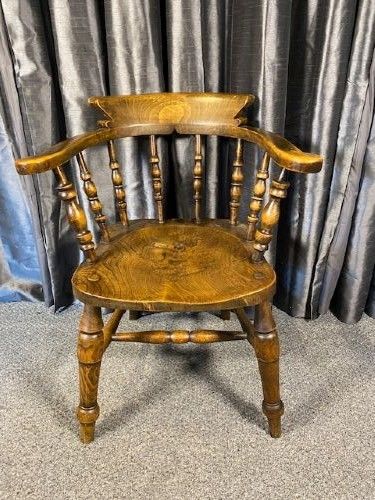
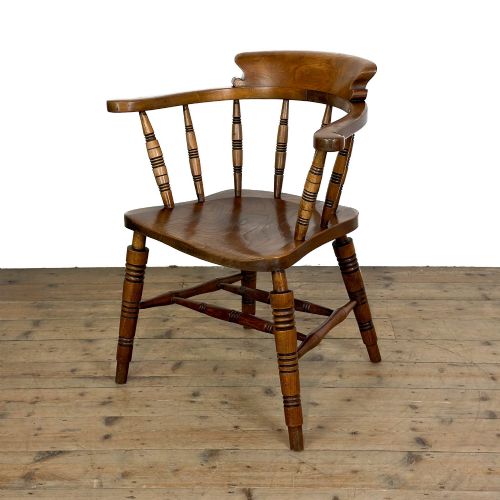
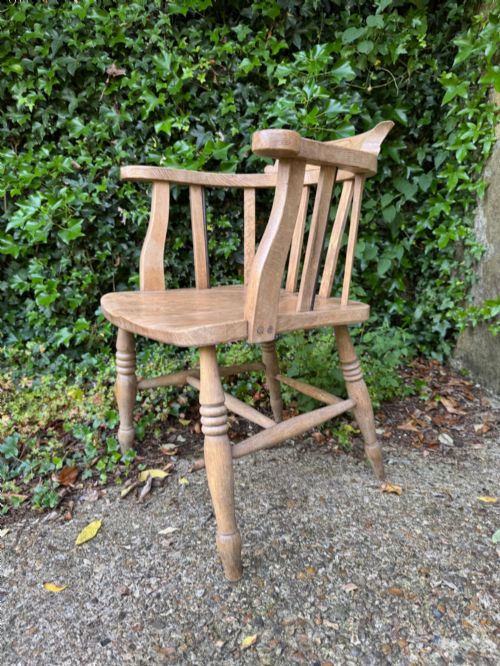
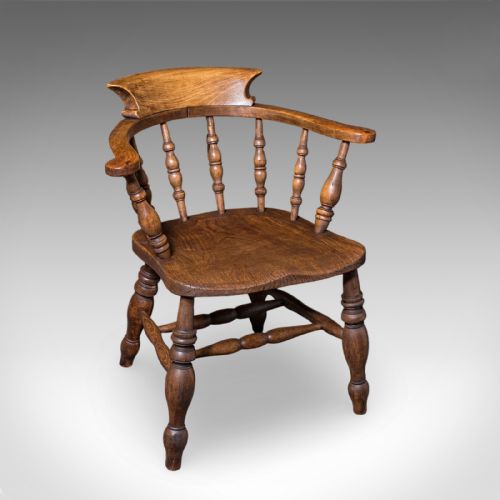
The pieces appearing on this page typically take the form of armchairs, desk chairs, captain's chairs, and smoker's bow Windsor chairs. These examples span the nineteenth century, the Victorian era, and the Edwardian period.
Many of these designs originate from English country houses and workshops, displaying traditional vernacular forms. Buyers frequently find sturdy timber frames shaped for comfortable prolonged sitting.
How they were made
Cabinet makers and bodgers constructed these chairs using a combination of native hardwoods such as oak, elm, beech, and ash. Oak frequently formed the primary structural framing or seat boards, while beech and ash provided tough turned spindles and legs.
Makers utilised traditional joinery techniques, combining steam-bent backrails with carved solid wood seats and pegged mortise and tenon joints. Elm was frequently chosen for the seat because its interlocking grain resisted splitting under heavy use.
Many of these sturdy armchairs survived decades in smoke-filled offices and studies, absorbing plenty of history along the way.
What varies in quality
The overall standard of a country oak office chair rests upon the selection of timber and the integrity of the original construction. Chairs featuring thick, well-figured elm seats and substantial turned ash spindles demonstrate superior craftsmanship.
Proportion and comfort distinguish finer examples from more utilitarian workshop output. A well-balanced frame with smooth surface patination and tight structural joints commands greater appreciation among collectors.
The Country Oak Office Chair Glossary
- Smoker's bow
- A low-backed Windsor armchair featuring a continuous bentwood top rail forming both the back and the arms. This sturdy form proved popular in vernacular domestic and commercial settings.
- Captain's chair
- A traditional low-back armchair designed for office or desk use, typically fitted with a rounded steam-bent rail supported by numerous small spindles.
- Windsor chair
- A chair built with a solid wooden seat into which the legs and back spindles are bored directly. This construction method creates a resilient and stable piece of seating furniture.
- Spindle
- A slender, turned piece of wood used structurally to support the backrail or arms of a chair. These components are shaped on a lathe to uniform thicknesses.
Country Oak Office Chair: Frequently Asked Questions
Are these chairs comfortable for daily desk work?
These nineteenth-century and Edwardian chairs were built with ergonomically curved backrails and generously scooped wooden seats to support prolonged sitting.
Their robust timber construction provides reliable daily utility for modern home offices and studies.
What is the difference between a smoker's bow and a captain's chair?
Both terms describe low-backed wooden armchairs with continuous bentwood rails, though regional vernacular traditions often influenced the specific nomenclature used by makers.
Smoker's bow designs frequently emphasise sturdy proportions and turned spindle arrangements suited to robust commercial or domestic use.
Which woods were commonly used to make them?
Makers relied upon native British hardwoods, combining oak, elm, beech, and ash within a single piece of furniture.
Elm was frequently selected for the solid seat board because its interlocking grain resisted cracking under continuous movement.
How do I date an antique office chair?
Dating relies upon examining the construction methods, tool marks left by nineteenth-century makers, and the natural patination developed over decades of use.
Stylistic markers from the Victorian and Edwardian periods also provide clear chronological reference points for these pieces.