



Vintage Windmill Painting
A vintage windmill painting brings the quiet strength of historic mills and open skies straight onto your wall.
Vintage Windmill Painting
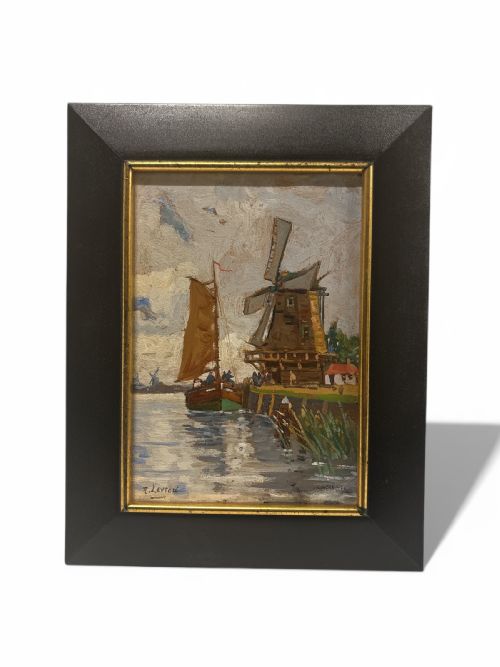
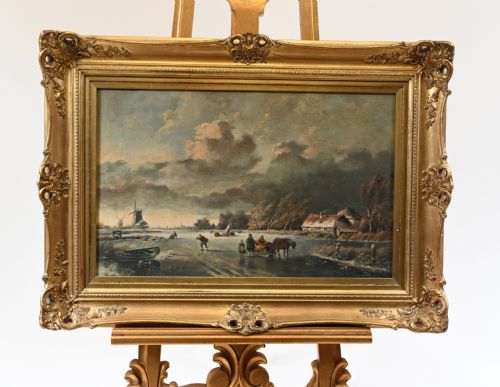
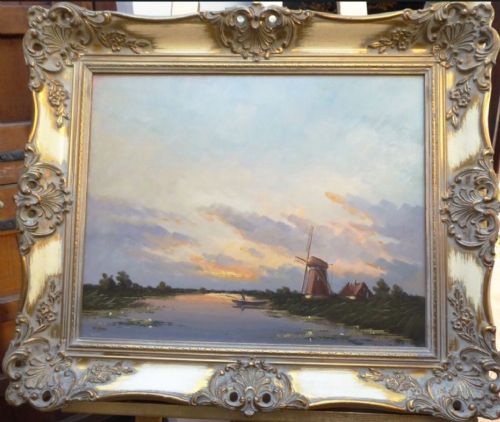
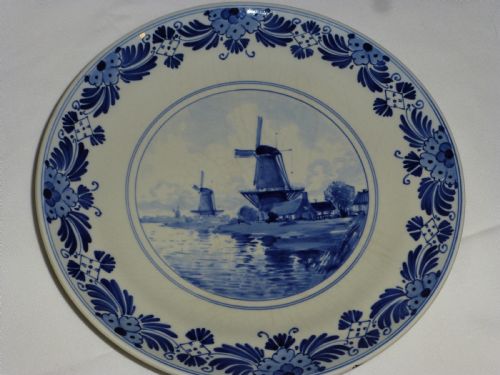
A vintage windmill painting captures rural and coastal machinery, canals, and river landscapes across various decades. These artworks range from moody nineteenth-century Dutch realism to mid-century impressionist watercolours and oils.
Buyers look for these pieces to anchor a room with a sense of heritage and pastoral movement. The selection on this page centres on oil paintings and watercolours on canvas, paper, and wood panel.
The subjects extend from Norfolk broads and coastal English views to frozen Dutch waterways and glowing sunset canals. Each work reflects the prevailing artistic style of its era, from Victorian precision to later naive and impressionist interpretations.
Qualities that set pieces apart
The strength of composition and brushwork dictates the visual impact of a piece, separating hasty sketches from confident, atmospheric studies. Handling of light, particularly in sunset or frozen scenes, defines the artistic success of the work.
Condition of the medium and the originality of the frame contribute significantly to the standing of a painting. Works bearing clear signatures and documented artist attributions carry greater weight among collectors.
Among the windmills and marshes, a nineteenth-century automaton quietly keeps watch over the water.
T. Bergman·Thomas Bush Hardy·Ernest Uden·Charles Harmony Harrison·John D. Walker·Frederick William Jackson·Edward Seago·John Holland Snr·Kershaw Schofield·Cecil Arthur Hunt·Osmond Hick Bissell·Von Goring
The Vintage Windmill Painting Glossary
- Oil paint
- Pigment suspended in a drying oil, typically linseed, allowing for deep colour saturation and gradual blending. This medium dominates the nineteenth-century and mid-century canvases in this collection.
- Watercolour
- A paint consisting of water-soluble pigments, traditionally applied to paper to create luminous, translucent washes. Artists frequently utilised this medium for detailed landscape studies.
- Impressionism
- An art style characterised by relatively small, thin yet visible brush strokes and an emphasis on accurate depiction of light. This approach appears in several twentieth-century river and marsh scenes.
- Wood panel
- A flat wooden board used as a rigid support for oil painting, common in earlier European works. Panels provide a stable surface that preserves fine brushwork.
- Gilt
- A thin layer of gold leaf or gold paint applied to frames and decorative objects. This finish adds a reflective border that complements the tones of the painting within.
Vintage Windmill Painting: Frequently Asked Questions
How do I date a windmill painting?
Dating relies on stylistic clues, framing materials, and the signatures of recorded artists whose working decades are documented. Pigments and canvas types also offer reliable indicators of the period.
Examining the backing paper, stretcher bars, and any handwritten inscriptions on the reverse often reveals additional clues regarding the creation date.
Are these paintings genuine antiques?
The selection spans from the nineteenth century through the mid-twentieth century, encompassing both antique and vintage periods. Each piece reflects the artistic conventions of its specific era.
Materials such as traditional canvas, period frames, and historic watercolours confirm the age and authenticity of the works listed.
How should I hang and light an oil painting?
Hang paintings away from direct sunlight and steady heat sources to protect the canvas, paper, and gilt frames from fading or cracking. Stable indoor humidity prevents warping on wood panels.
Use gentle, low-heat picture lights or ambient room lighting to highlight the brushwork without causing damage to delicate pigments.
What is the difference between Dutch and English windmill scenes?
Dutch scenes typically feature flat polder landscapes, frozen canals, and traditional drainage mills under expansive skies. English views often focus on the Norfolk Broads, coastal marshes, and tidal rivers.
Both regional traditions capture the distinct architecture of local mills, though the surrounding terrain and atmospheric light reflect their respective geographies.