


Vintage Walnut Settees
These vintage walnut settees bring rich timber frames and diverse period styling into a room, offering both seating and strong visual presence.
Vintage Walnut Settees
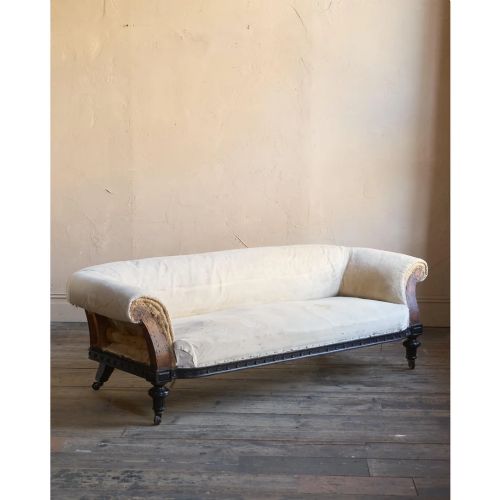
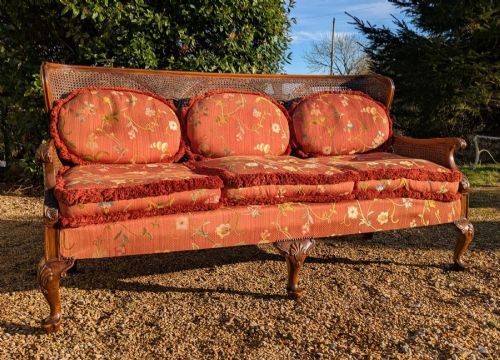
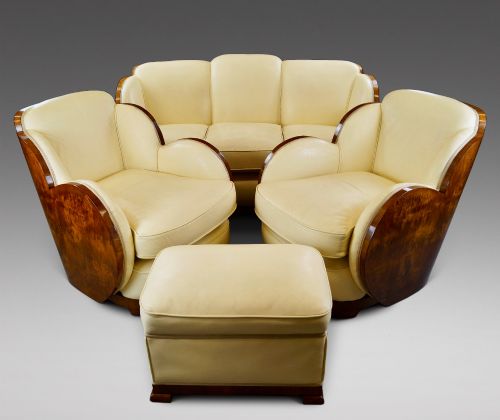
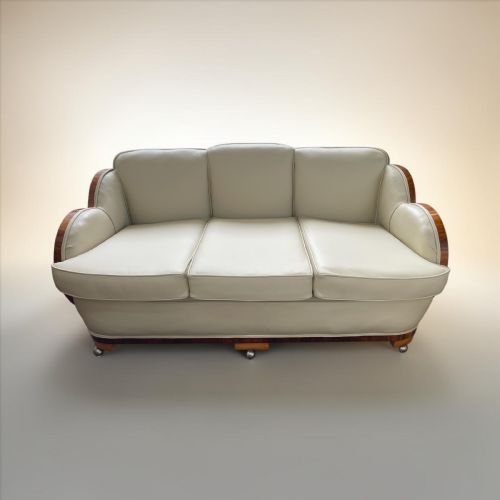
Vintage walnut settees encompass a wide span of periods from the nineteenth century through to the nineteen-thirties, taking forms such as two-seat and three-seat sofas, window seats, and matching salon suites. Buyers looking for vintage walnut settees will encounter diverse stylistic interpretations ranging from restrained Edwardian framing to ornate French revivals and bold Art Deco cloud shapes.
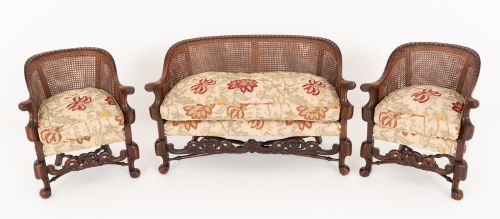
The selection includes specific regional designs, featuring French canapés, Dutch marquetry examples, and English country house pieces alongside Italian hall seats. Many of these settees are paired with armchairs to form complete seating suites, constructed from walnut timbers that show varied grain patterns and tones.
Materials and construction methods
Upholstery methods vary from traditional feather cushions and button-backed textiles to modern leather and patterned upholstery fabrics, frequently secured with brass detailing. Frames range from solid carved walnut supports to lighter Edwardian or Art Deco structures designed for salon and lounge environments.
Materials documented across the collection include walnut timber, cane, leather, brass, and diverse upholstery fabrics.
Distinguishing quality in walnut seating
Quality separates through the crispness of the timber carving and the fidelity of the period style, whether executed in a Queen Anne, Louis XV, or Art Deco manner. The depth of the walnut grain and the integrity of the structural joints dictate the longevity and presence of the piece.
The calibre of the upholstery materials, from antique textiles to fitted leather and caning work, establishes the finishing standard of each settee. Pieces that retain original framing details and proportional harmony stand apart from more utilitarian interpretations.
Epstein·Harry and Lou Epstein·Howard and Sons
The Vintage Walnut Settees Glossary
- Bergere
- An upholstered armchair or sofa with enclosed sides, typically featuring cane work panels within a wooden frame.
- Canapé
- A traditional French term for a decorative sofa or settee, often associated with eighteenth and nineteenth-century revival styles.
- Marquetry
- The art of applying pieces of veneer to a structure to form decorative patterns, frequently seen on Dutch furniture frames.
- Cloud suite
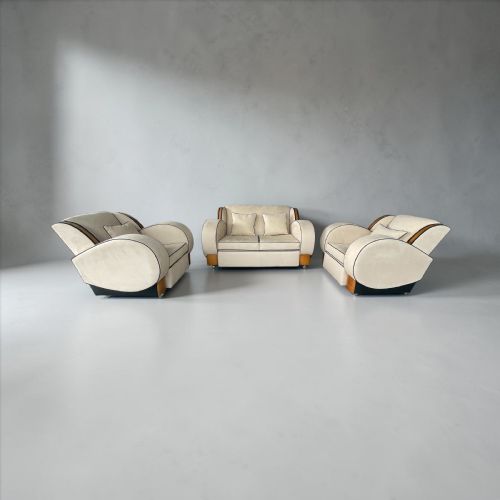
- An influential Art Deco furniture grouping characterised by rounded, voluminous upholstered forms that resemble cumulus clouds.
Vintage Walnut Settees: Frequently Asked Questions
How do I identify the period of a walnut settee?
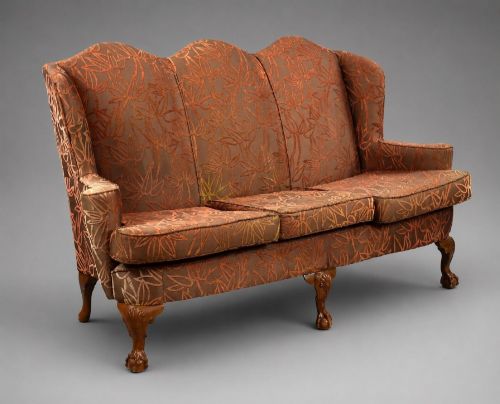
Dating relies on observing the stylistic markers present in the frame, such as the curved cabriole legs of Queen Anne revivals or the geometric rounded lines characteristic of Art Deco designs. Comparing the turning, carving depth, and structural proportions against documented nineteenth and early twentieth-century examples clarifies the origin.
Material finishes also provide clues, as bleached walnut and specific upholstery textiles frequently align with particular decades like the nineteen-thirties or the late Victorian era.
Where were these settees originally used in a home?
These pieces served multiple domestic functions, appearing in formal drawing rooms, parlours, and country house reception spaces as primary seating. Smaller scaled settees and window seats were designed for bedrooms, hallways, or gallery landings.
Complete salon suites and matching lounge groupings were arranged to facilitate conversation and entertain guests in grander residential settings.
Are these settees suitable for daily living rooms?
Many of these settees adapt well to contemporary living spaces, offering substantial seating capacity combined with decorative wood frames. Selecting a piece with supportive cushions or robust upholstery ensures it functions comfortably for regular daily use.
Their varied widths and configurations, from compact two-seater frames to expansive three-seat sofas, allow them to fit diverse room layouts.
What is the difference between a caned settee and an upholstered one?
Caned settees incorporate woven cane panels into the backrests and armrests, creating an open, lighter visual structure that highlights the surrounding walnut timber frame. Upholstered versions rely on padded textile, velvet, or leather surfaces that cover the structural elements for a softer seating experience.
Both styles often feature exposed carved woodwork, but caned examples emphasise the craftsmanship of the woven lattice work.