



Vintage Walnut Music Stand
These vintage walnut music stand options include versatile music cabinets, canterburys, and lecterns designed to hold sheet music and periodicals.
Vintage Walnut Music Stand
A vintage walnut music stand search brings up a diverse group of nineteenth and early twentieth-century furniture, spanning Victorian, Edwardian, and Regency periods. Buyers examining this page will encounter various forms, including music cabinets, canterburys, magazine racks, and adjustable lecterns.
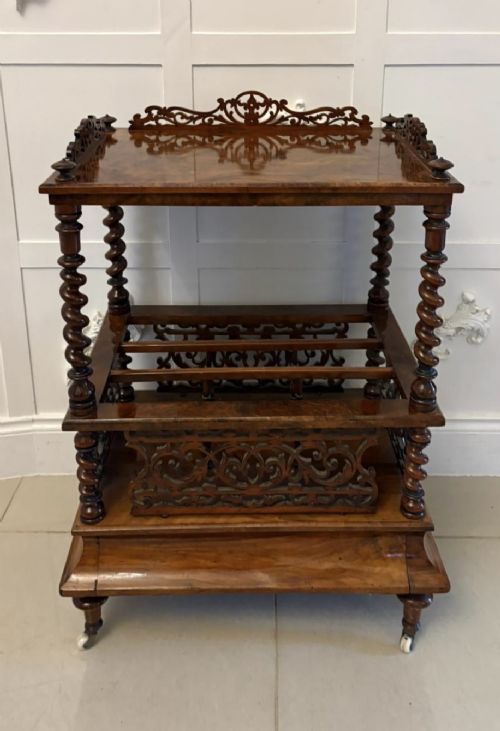
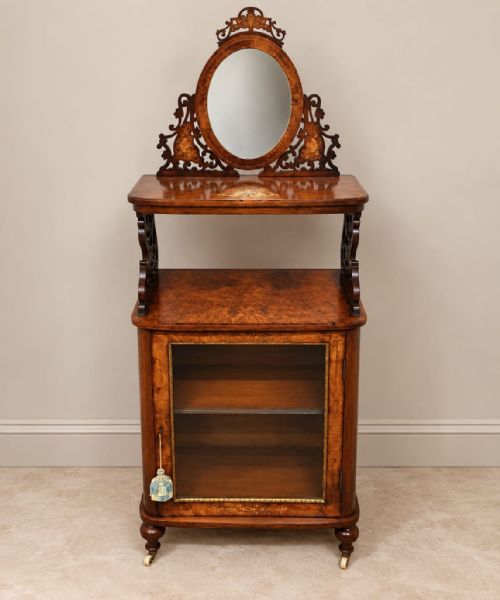
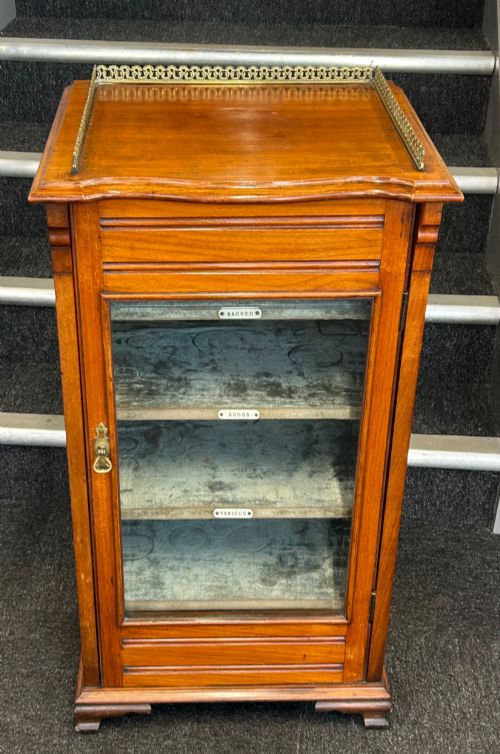
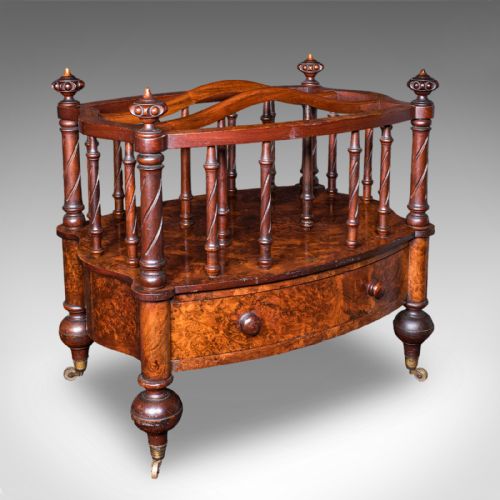
The most common pieces appearing under this description are Victorian and Edwardian burr walnut music cabinets and canterburys. These items combine practical storage for sheet music with decorative occasional tables and display surfaces.
Materials and construction
Makers utilised solid walnut and decorative burr walnut veneers over secondary timbers, often incorporating intricate marquetry inlay. Brass fittings, glass doors, and ceramic components frequently appear on cabinets and canterburys.
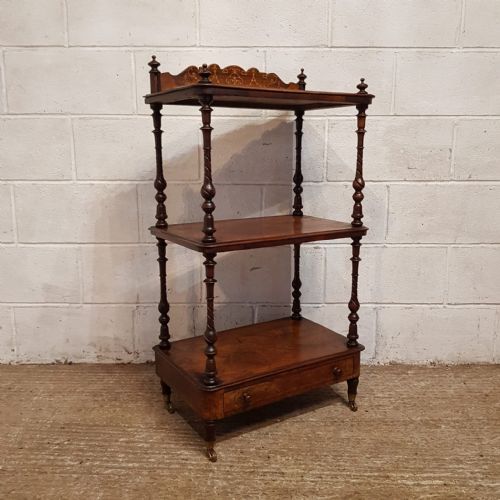
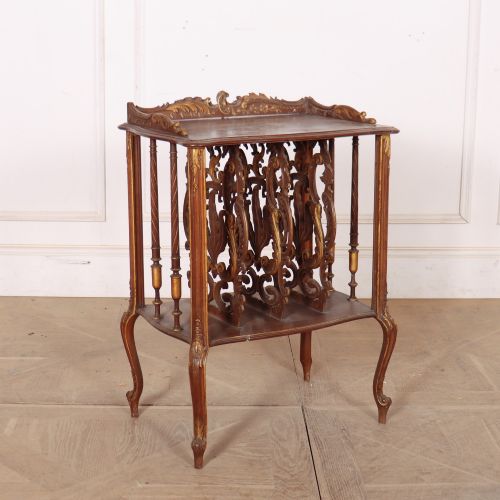
Pieces range from fully adjustable wooden lecterns featuring brass mechanisms to substantial carved cabinets and multi-tiered whatnots. French influences also emerge through carved details and Rococo or Art Nouveau styling.
Assessing craftsmanship
Quality in these pieces is defined by the selection of figured burr walnut veneer and the crispness of any inlaid marquetry. Substantial proportions and well-executed carving separate standard production pieces from finer examples.
Internal engineering matters significantly in items like adjustable lecterns and music cabinets with fitted compartments. Intact original hardware, such as brass fittings and glass panels, distinguishes better-preserved specimens.
Lochmanns
The Vintage Walnut Music Stand Glossary
- Burr walnut
- A highly figured timber veneer harvested from walnut tree growths, prized for its swirling patterns. It frequently covers the primary surfaces of Victorian cabinets and canterburys.
- Canterbury
- A low multi-partitioned stand originally designed for sheet music and books. Victorian examples often incorporate drawers or lower shelves.
- Marquetry
- Decorative veneer patterns formed by fitting together small pieces of different woods. It adds pictorial or geometric detail to tabletops and cabinet doors.
- Lectern
- A slanted reading desk or stand designed to hold scores or books at a readable angle. Some vintage versions offer fully adjustable mechanisms.
- Whatnot
- An open-shelved display cabinet or stand with multiple tiers. These often combine with music storage functions in nineteenth-century furniture.
Vintage Walnut Music Stand: Frequently Asked Questions
What is a music cabinet used for?
Music cabinets provide dedicated internal storage for sheet music, scores, and folios. Their compartmentalised interiors keep paper items organised and protected from dust.
Many styles also function simultaneously as occasional tables or display surfaces for living spaces.
How do I identify a Victorian canterbury?
Victorian canterburys typically feature upright slatted dividers designed to hold upright folios and magazines. They often rest on short legs with castors and frequently include a single drawer below.
Burr walnut and inlaid marquetry are common decorative elements on nineteenth-century specimens.
Are these stands fully adjustable?
Certain specialised lecterns and reading stands feature mechanical adjustment for height and angle. These rely on brass ratchets, screws, or pivots.
Cabinets and canterburys, by contrast, maintain fixed dimensions with internal shelving or fixed partitions.
What distinguishes Edwardian music cabinets?
Edwardian music cabinets tend to display slimmer proportions and lighter construction than their Victorian predecessors. They retain walnut or burr walnut surfaces but often show simpler lines.
These later pieces reflect changing domestic interior fashions at the turn of the twentieth century.