

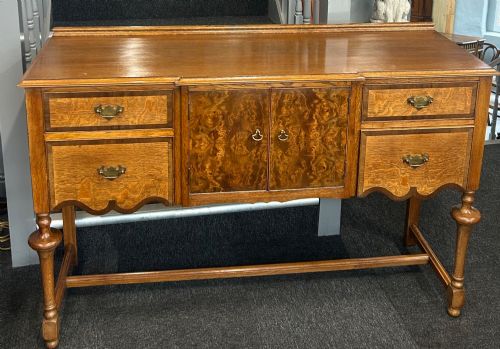


Vintage Walnut Buffet Server
A vintage walnut buffet server provides generous dining room storage while bringing rich timber grain and period presence to an interior.
Vintage Walnut Buffet Server
A vintage walnut buffet server brings together practical storage and striking timber grain for the dining room. When searching this phrase, buyers encounter substantial sideboards, serving tables, and credenzas designed to hold cutlery, linen, and glassware. The pieces span several decades, reaching from nineteenth-century Victorian designs through Edwardian examples to twentieth-century Art Deco forms.
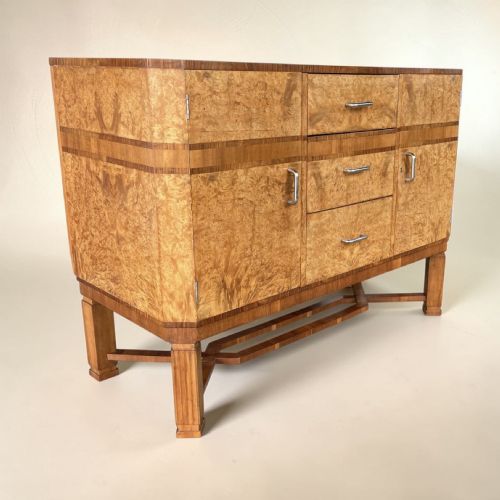
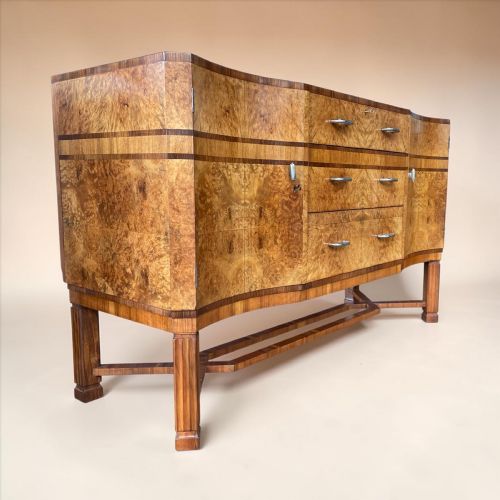
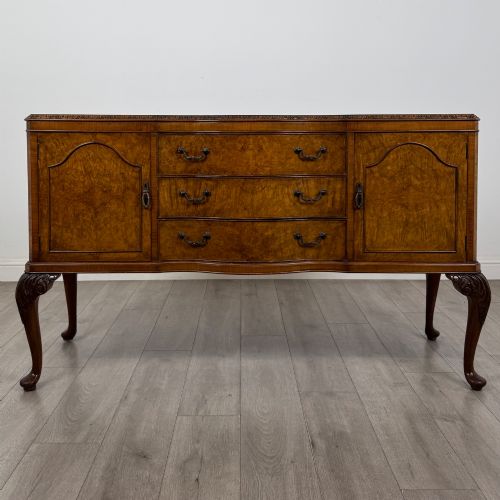
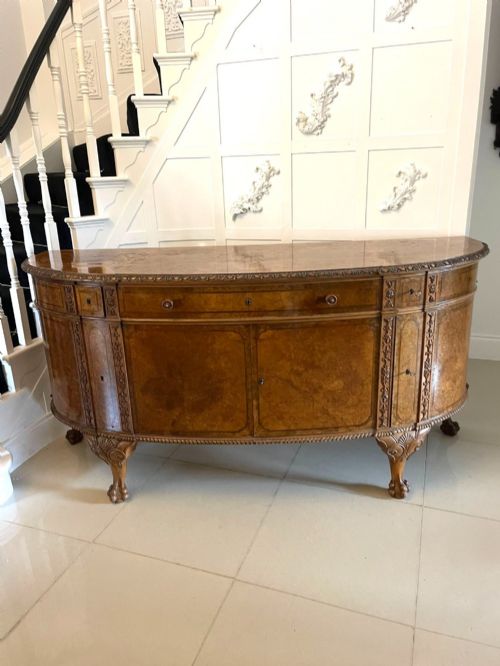
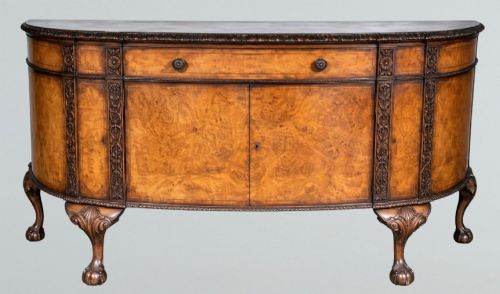
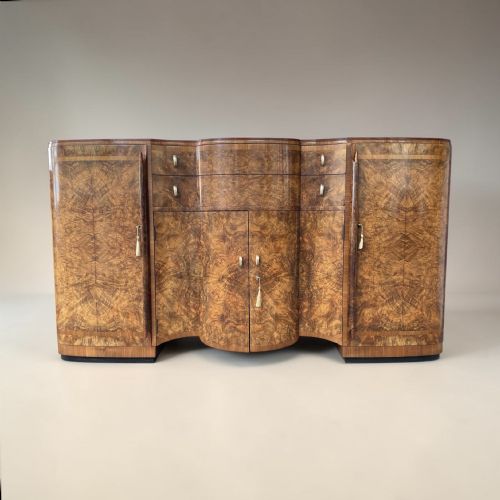
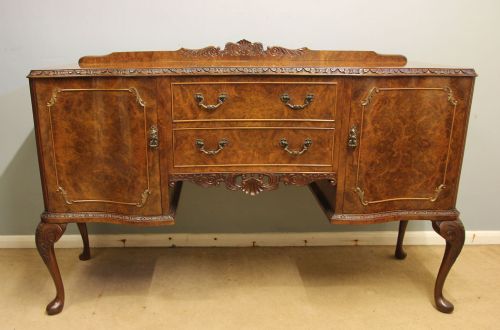
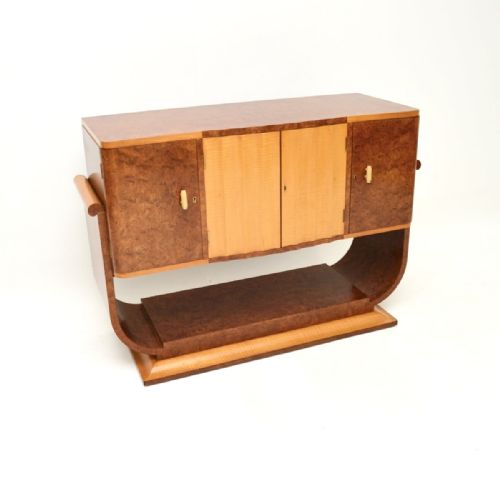
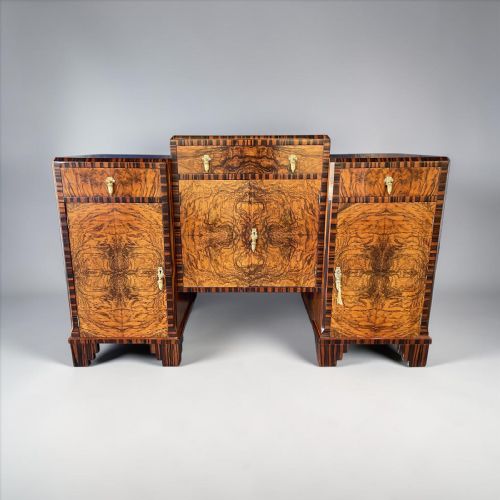
Art Deco examples from the nineteen-thirties dominate the selection, often showcasing figured burr walnut veneers and geometric silhouettes. Alongside these twentieth-century pieces, earlier Victorian and Edwardian iterations appear with carved details, marble tops, and revival styles such as Queen Anne. Origins stretch across British workshops as well as French and Italian makers.
How they were made
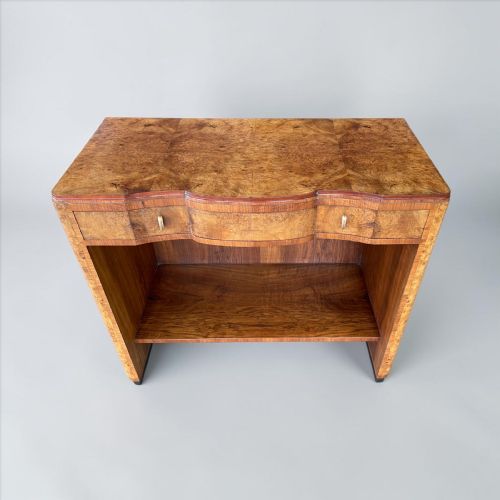
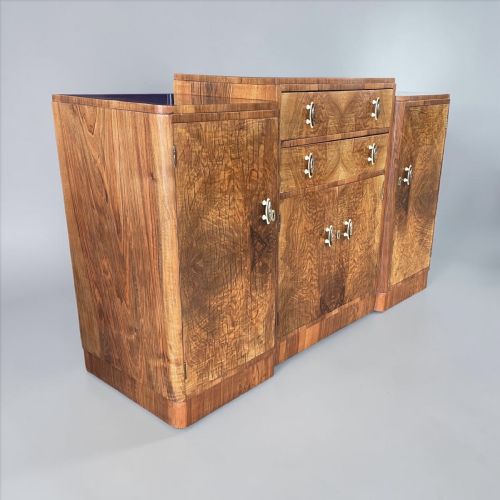
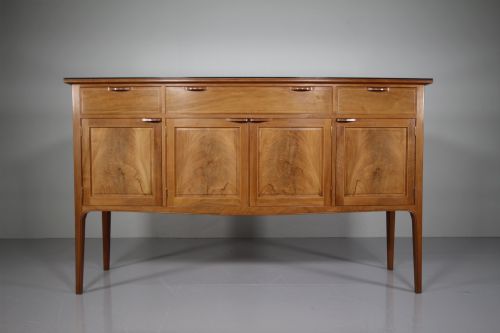
Cabinet makers utilised solid hardwood framing to construct the underlying structure of these servers. Onto this framework, they applied figured walnut and burr walnut veneers, cutting the timber carefully to reveal swirling grain patterns across the primary surfaces. Crossbanding and marquetry details sometimes frame the drawer fronts and doors, adding linear contrast to the warm brown tones of the wood.
Additional materials enhance both utility and visual weight on selected pieces. Smooth marble slabs provide durable surfaces on top of certain servers, while brass handles, locks, and hinges punctuate the timber doors and drawers. Glass elements appear in associated cabinets, and secondary timbers like sycamore line interior compartments.
Materials recorded across the selection include solid walnut, burr walnut veneer, marble, brass, glass, and hardwood.
What varies in quality
The choice and application of veneer dictate much of the visual impact across these servers. Pieces featuring matched burr walnut or intricate marquetry require exceptional skill from the cabinet maker to align the grain symmetrically across doors and drawers. Plain walnut surfaces rely instead on the natural depth and richness of the timber itself to hold the eye.
Construction methods and maker attribution also separate examples within the range. Pieces bearing stamps or attribution to notable workshops demonstrate superior joinery and thoughtful proportions that elevate them above standard commercial production. The integration of auxiliary materials, such as heavy marble tops or quality brass hardware, further distinguishes the finer pieces.
Maurice Adams·Edward Barnsley·Epstein·Harry and Lou Epstein·Hille of London·Hamptons of Pall Mall London
The Vintage Walnut Buffet Server Glossary
- Burr Walnut
- A figured wood grain obtained from walnut tree growths, producing swirling, cloud-like patterns that cabinet makers use for decorative veneer surfaces on high-end furniture.
- Veneer
- A thin layer of superior wood glued to a base timber carcass, allowing makers to display dramatic grain patterns without using solid costly logs.
- Credenza
- A dining room storage cabinet designed for serving food and storing tableware, often standing lower on the wall than a traditional tall sideboard.
- Marquetry
- The art of applying pieces of veneer to a structure to form decorative patterns, pictures, or geometric designs.
- Crossbanding
- A narrow strip of veneer laid around the border of a furniture panel with the grain running perpendicular to the central panel.
Vintage Walnut Buffet Server: Frequently Asked Questions
How do I style a buffet server in a modern dining room?
A buffet server anchors a dining room by offering a low horizontal surface that balances vertical walls and artwork. Place lamps, ceramics, or serving trays on top while keeping the interior stocked with tableware.
The rich grain of the walnut brings warmth to contemporary spaces, contrasting cleanly with plain painted walls or stone floors. Pair the piece with a large mirror or painting hung directly above to complete the arrangement.
What is the difference between a sideboard and a buffet?
Sideboards and buffets both provide dining room storage and serving space, though their proportions and history differ slightly. Traditional sideboards often stand taller with integrated cellarets or cabinets, while buffets traditionally emphasise a lower surface dedicated to serving food.
In modern usage, the terms overlap significantly and describe similar pieces of furniture. Both serve equally well for storing linens, cutlery, and glassware while anchoring a dining room wall.
How can I tell an Art Deco server from a Victorian one?
Art Deco servers from the nineteen-thirties feature clean geometric lines, streamlined curves, and unadorned surfaces that let dramatic burr walnut grain take centre stage. They often present serpentine or bow fronts without heavy mouldings or applied ornament.
Victorian servers, by contrast, display deeper carving, darker timber tones, and more traditional architectural detailing such as panelled doors and turned feet. Marble tops and superstructure backs also appear more frequently on nineteenth-century examples.