



Vintage Walnut Bar Cupboard
A vintage walnut bar cupboard brings serious presence to a room, offering clever internal storage for glassware and bottles behind striking figured timber facades.
Vintage Walnut Bar Cupboard
When you search for a vintage walnut bar cupboard, you encounter a specialised form designed for home entertaining, predominantly originating from the 1920s and 1930s. These pieces function as cocktail cabinets, drinks cabinets, and dry bars, providing dedicated storage for bottles and glassware.
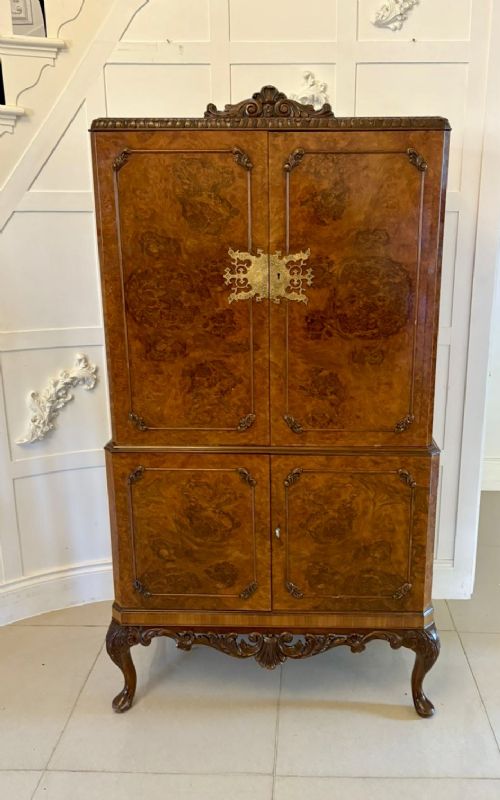
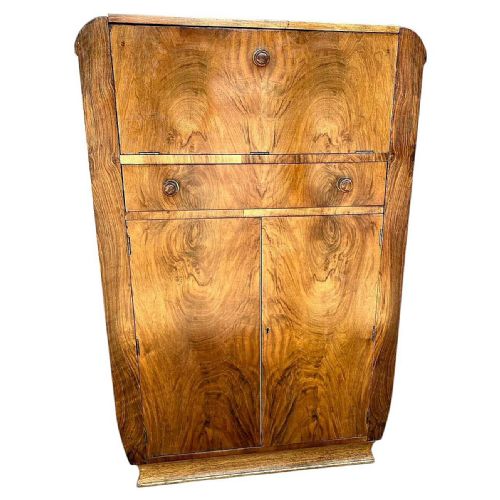
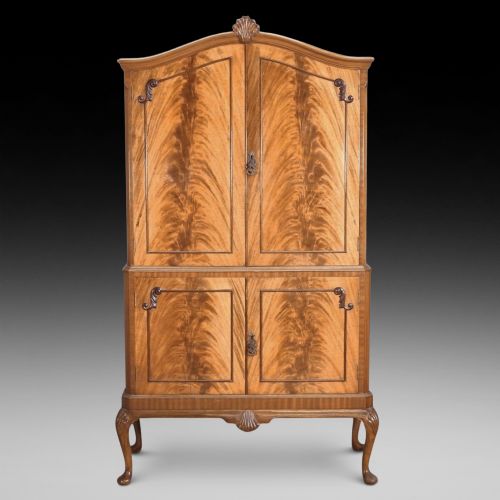
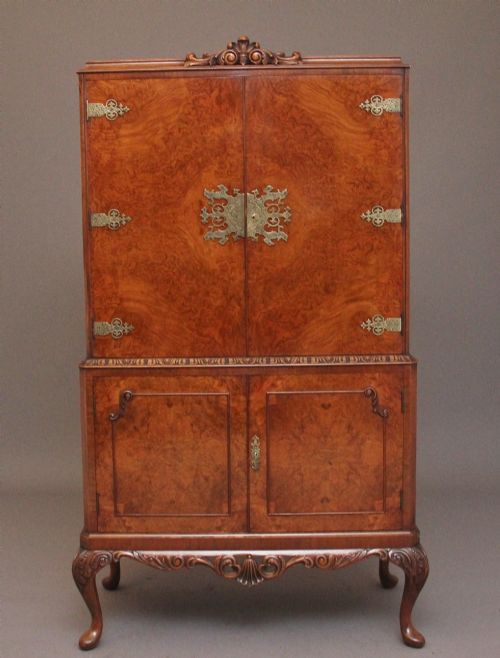
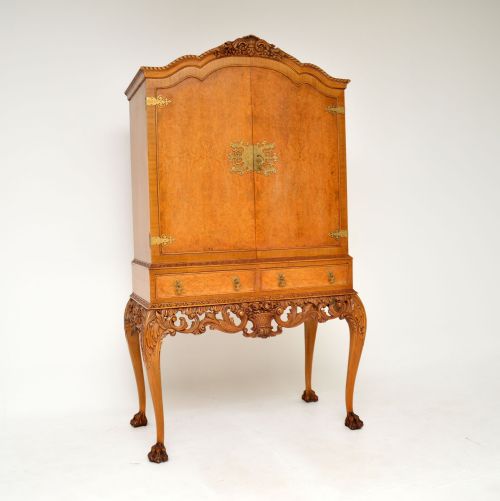
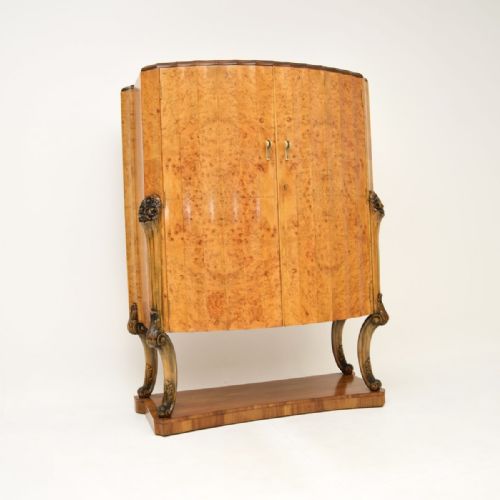
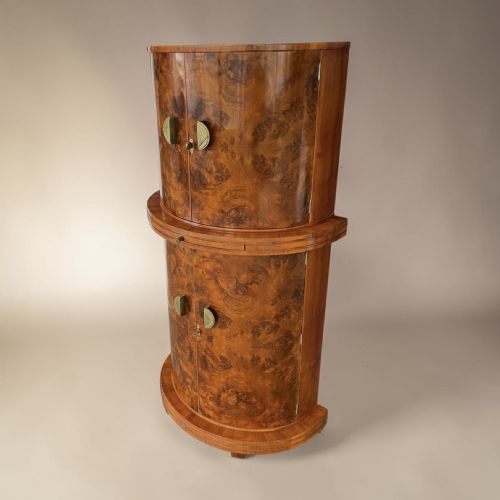
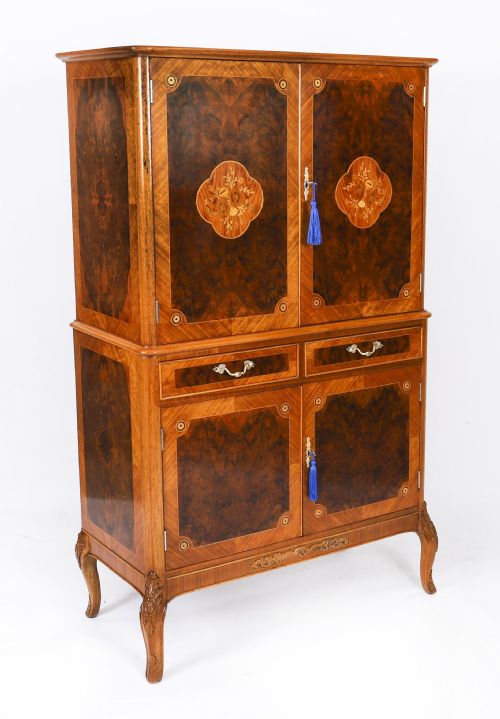
The most common examples on this page are Art Deco designs and revival pieces drawing on Queen Anne, Georgian, and William and Mary styles. They frequently employ double bow-front, serpentine, or corner configurations alongside standard upright cupboard forms.
Materials and construction
Cabinetmakers relied on walnut, burr walnut, and flame walnut veneer applied over solid woods, often highlighting the swirling grain patterns across double doors. Marquetry inlay appears on select revival and deco examples to add decorative contrast.
Interiors often incorporate mirrored glass panels, glass shelving, and brass hardware such as hinges and locks. Wood is combined with specialist fitted compartments for bottles and cocktail accessories.
Listings combine 1920s and 1930s periods with Victorian influences, uniting Art Deco styling with Queen Anne and Georgian revivals.
Distinctions in quality
The hierarchy among these cabinets rests on the choice of timber veneer and the ambition of the internal layout. Highly figured burr walnut and flame walnut displays complex grain movement that elevates the visual impact compared to plain walnut surfaces.
Maker attribution significantly influences standing, with pieces bearing the mark of firms like Epstein or Waring and Gillow demonstrating superior joinery and sophisticated internal fittings. The complexity of the exterior shape, such as serpentine or double bow-front profiles, also distinguishes finer examples.
Epstein·Harry and Lou Epstein·Hille·Waring and Gillow
The Vintage Walnut Bar Cupboard Glossary
- Burr walnut
- A wood veneer taken from the warted growth on a walnut tree, yielding intricate, swirling grain patterns. It forms the primary decorative surface for the finest deco drinks cabinets.
- Cocktail cabinet
- A dedicated piece of furniture designed for mixing and storing drinks, usually featuring a drop-down flap that serves as a serving shelf. Interiors typically include mirror glass and bottle racks.
- Marquetry
- The art of applying pieces of veneer to a structure to form decorative patterns and pictures. This technique is found on select revival and deco bar furniture.
- Veneer
- A thin layer of superior wood glued to a base timber surface to provide an ornamental exterior. Walnut and flame walnut veneers define the appearance of these cabinets.
- Serpentine
- A furniture shape featuring a curved front with a convex centre flanked by concave ends. This contour adds considerable visual movement to vintage drinks furniture.
Vintage Walnut Bar Cupboard: Frequently Asked Questions
What is the difference between a cocktail cabinet and a drinks cabinet?
In practical terms, these terms are largely interchangeable across the listings, both referring to specialised storage for alcoholic beverages and glassware.
However, a dedicated cocktail cabinet often includes a pull-out or fold-down slide specifically configured for mixing drinks, whereas a general drinks cabinet may rely purely on shelving and cupboard space.
How do I date a burr walnut bar cupboard?
Dating relies heavily on stylistic cues, with the majority of these pieces falling into the 1920s and 1930s Art Deco period or earlier revival movements.
Art Deco examples feature geometric lines and symmetrical burr walnut veneers, while revival pieces incorporate Queen Anne or William and Mary cabriole legs and traditional hardware.
Where should I place a walnut bar cabinet in my home?
These cabinets work best in principal living spaces, dining rooms, or home libraries where their figured timber facades can act as a focal point.
Keep them away from direct sunlight and heat sources to protect the delicate walnut veneer and internal mirror glass from warping or drying out.
What styles are common in vintage walnut bar furniture?
Art Deco is the dominant style, characterised by bold veneers and streamlined silhouettes designed for interwar entertaining.
Alongside deco designs, you will find revival pieces that borrow motifs from Georgian, Queen Anne, and William and Mary eras, offering more traditional silhouettes.