

Vintage Wall Tables
These vintage wall tables bridge architectural utility and decorative form, bringing character to hallways and compact living spaces.
Vintage Wall Tables
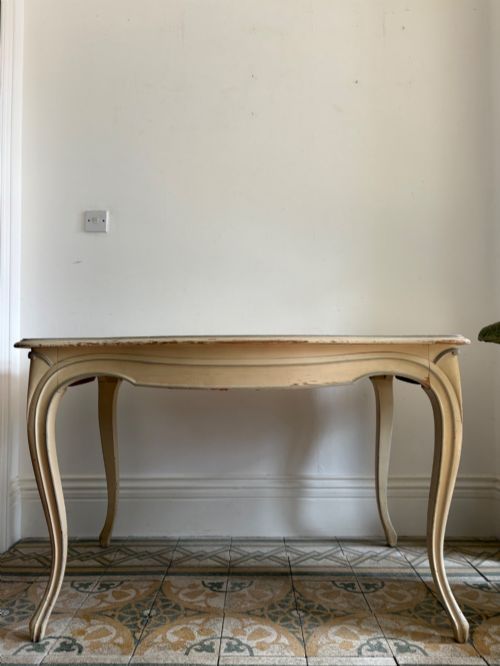
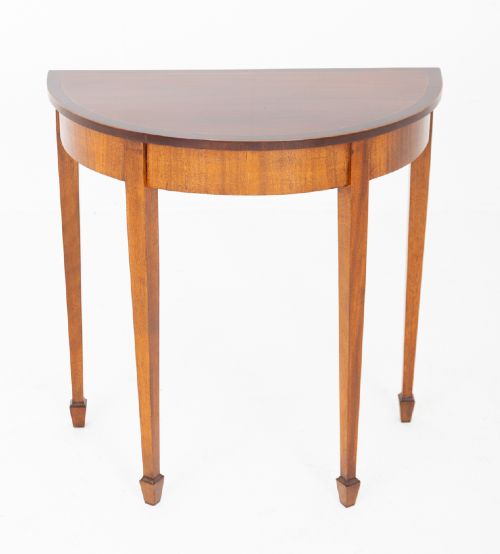
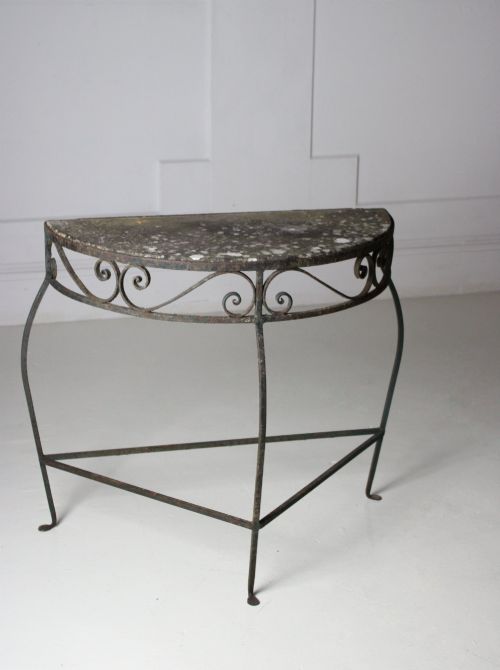
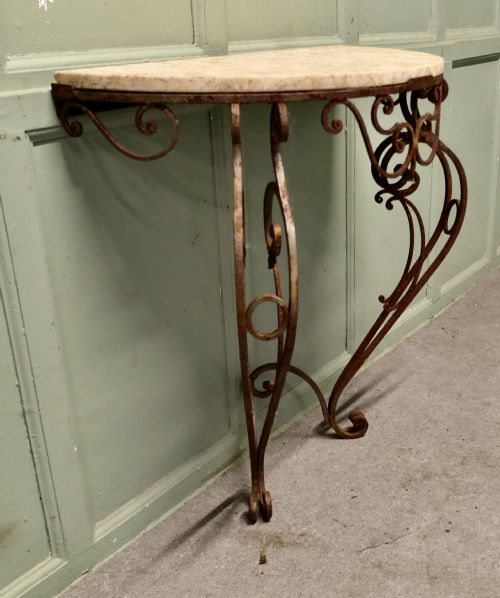
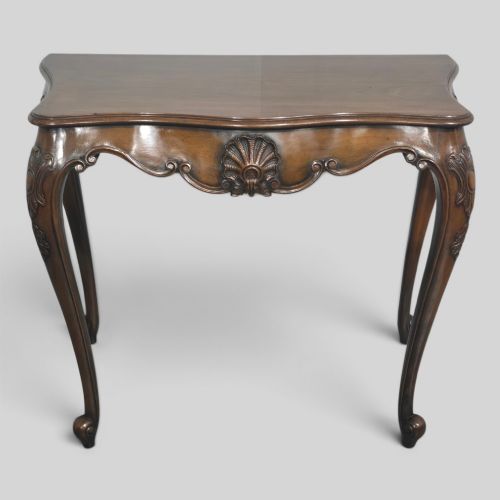
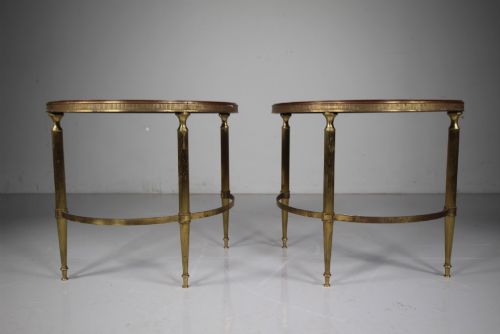
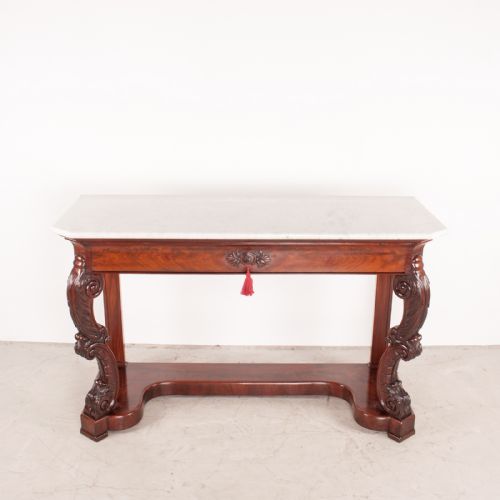
When searching for vintage wall tables, buyers encounter console tables designed to anchor against a vertical surface, often featuring a half-moon or rectangular top supported by cabriole or straight legs. The selection spans periods from the nineteenth century through the 1930s, encompassing French provincial, Georgian, and Victorian influences.
Console tables dominate this category, appearing alongside related hall tables and demi-lune formats that fit snugly into narrow corridors. The materials range from rich mahogany and blonde oak to painted finishes and wrought iron frames.
Origins vary from English country house pieces to French chateau designs, reflecting regional tastes in domestic furniture. Many examples incorporate fitted marble tops or inlaid wooden surfaces tailored for display rather than heavy dining use.
Assessing Craftsmanship
Quality rests in the crispness of carved details on wooden frames and the precise fitting of inset marble tops. Superior examples display balanced proportions, clean joinery, and materials selected for grain consistency.
The integration of the wall fixture points and the stability of the support legs distinguish finer pieces. Wear should appear consistent with age, preserving the integrity of hand-carved surfaces and original gilding.
Listings feature console tables spanning from the eighteenth century through the 1930s, incorporating mahogany, oak, wrought iron, and marble.
Epstein and Co·Padley Parkin and Staniforth·Thomas Langley·John Tubb·W.A.S. Benson·Irene Christobelle Pownoll Williams
The Vintage Wall Tables Glossary
- Demi-lune
- A half-moon shape common in tables designed to sit flush against a wall. This format optimises floor space in narrow hallways.
- Console table
- A table supported against a wall by legs or brackets. These pieces often feature decorative surfaces intended for display.
- Giltwood
- Timber treated with gold leaf or gold paint to create a lustrous surface finish. It appears frequently on formal nineteenth-century frames.
- Cabriole leg
- A furniture leg that curves outward and then tapers inward, inspired by animal limbs. This form is typical of eighteenth-century and revival styles.
- Serpentine top
- A table top shaped with a double curve, convex at the centre and concave at the ends. It requires careful carpentry to execute cleanly.
Vintage Wall Tables: Frequently Asked Questions
Where should I place a wall table?
These tables suit narrow circulation areas, entryways, and hallways where floor space is limited. Their shallow depth allows them to sit against vertical surfaces without obstructing movement.
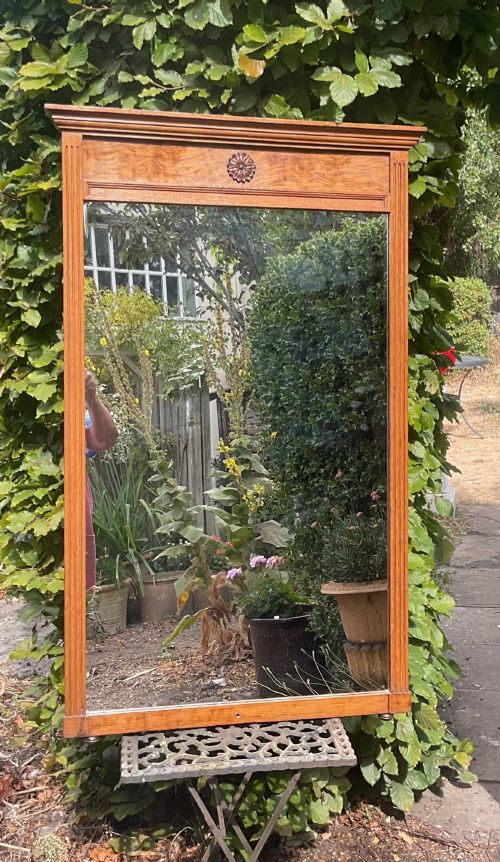
Pairing a console with a matching wall mirror creates a balanced focal point in a reception room or corridor.
How do I identify the period of a table?
Examination of the timber, joinery methods, and decorative styles reveals the likely era of manufacture. Nineteenth-century pieces often display heavy mahogany construction or elaborate carved motifs.
Later twentieth-century examples tend toward streamlined painted finishes or simplified oak structures reflecting changing domestic interiors.
Are marble tops original to these tables?
Many console tables were designed specifically to carry heavy stone surfaces for durability in high-traffic hallways. The fit between the stone slab and the wooden or iron frame should appear integrated and stable.
Inspect the edges of the marble for bevelling and matching wear patterns that correspond to the age of the base.
How do I care for wooden and marble surfaces?
Maintain wooden frames with appropriate waxes and avoid placing them near direct heat sources that cause timber to split. Clean marble tops with mild, non-acidic solutions to protect the polished stone from staining.
Regular dusting preserves the finish of giltwood and painted details without harming fragile decorative elements.