

Gold Side Table Pair
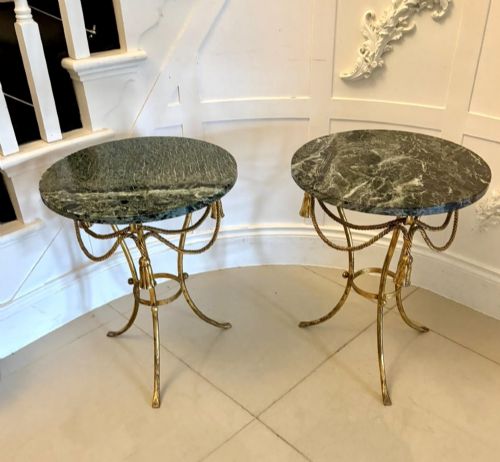
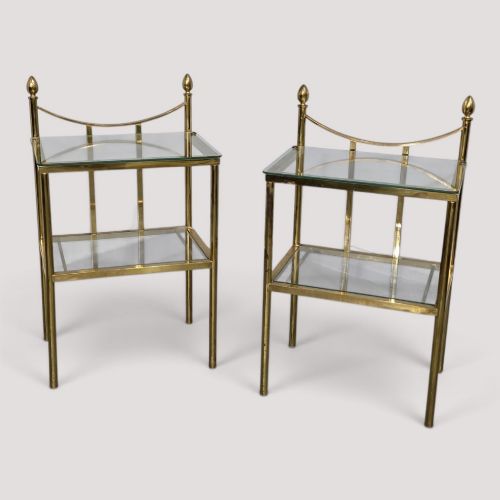
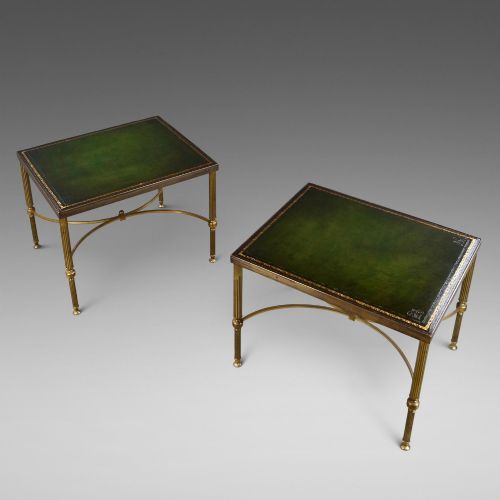
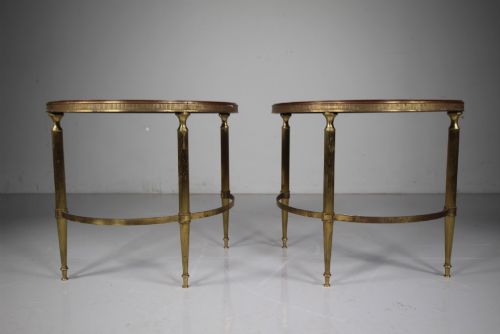
These gold side table pair selections bring matched symmetry and metallic brilliance to a room, spanning periods from the eighteenth century to the art deco era.
Gold Side Table Pair
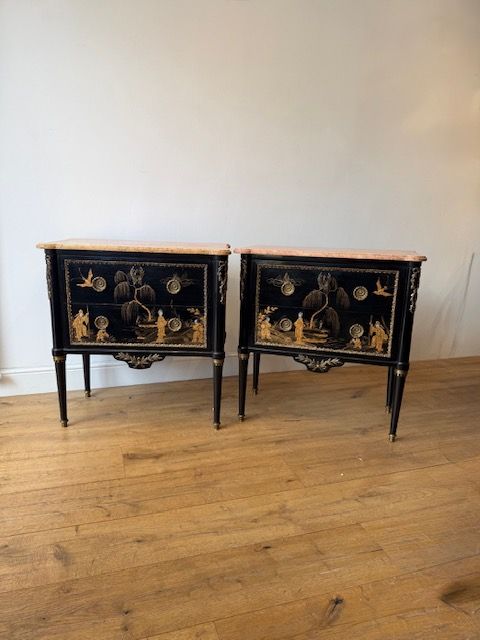
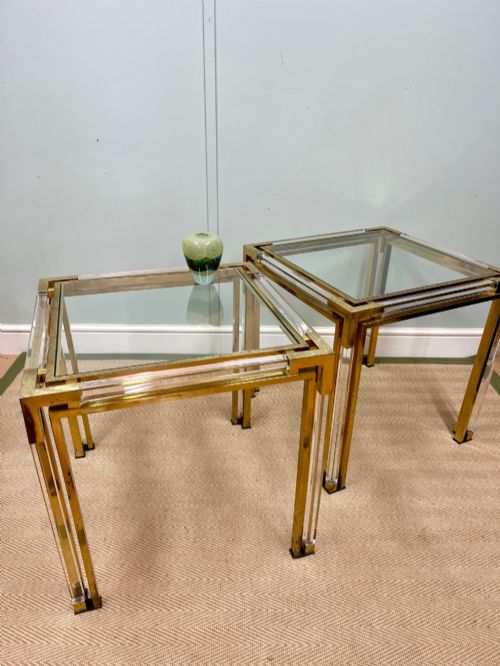
A gold side table pair selection comprises matching dual items designed for domestic placement, frequently encountered as small lamp tables, occasional tables, and bedside cabinets. The forms span seventeenth-century styles through to nineteen-twenties modernism, with particular emphasis on French Empire, neoclassical, and rococo revival designs.
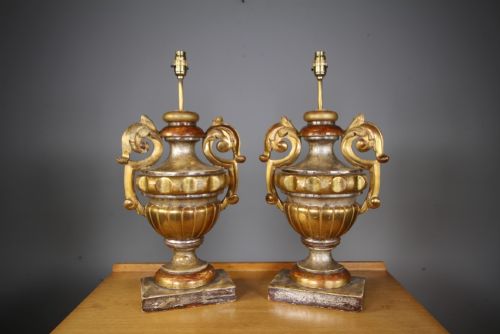
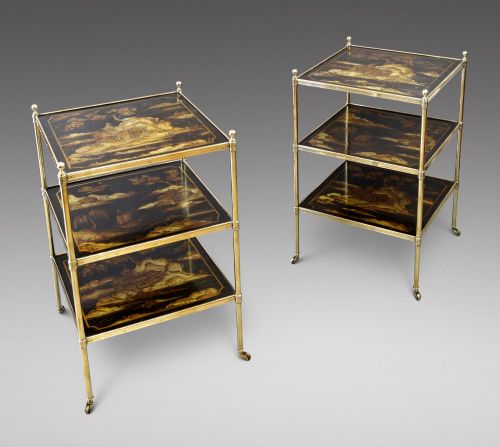
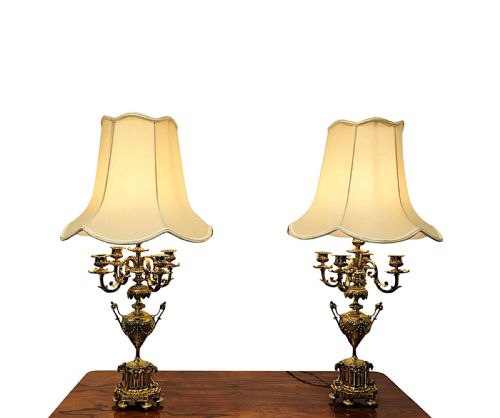
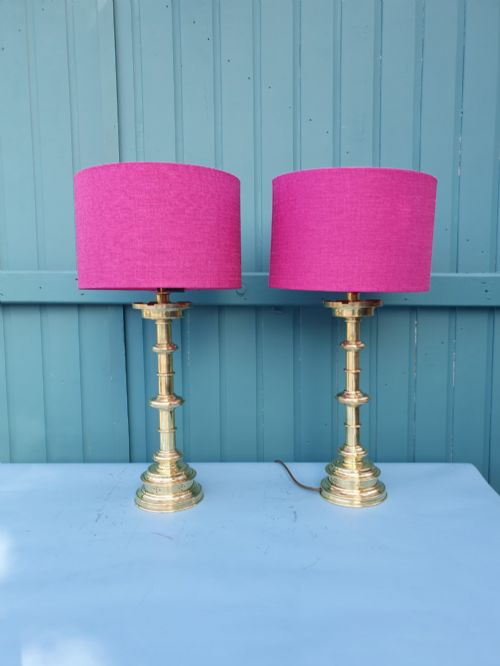
Buyers seeking a gold side table pair encounter items functioning as supportive surfaces for lighting or display, often utilising matched proportions to anchor a room scheme. The inventory includes console tables, etageres, and demi-lune shapes alongside dedicated lamp bases that serve identical decorative functions.
Origin points vary across Britain, France, Italy, and America, bringing distinct regional interpretations to gilded furniture. Parisian and Italian workshops favour ornate carved giltwood and ormolu mounts, whereas British and American examples often employ mahogany or oak with gilded highlights.
How they were made
Construction relies heavily on timbers such as mahogany, pine, and oak as foundational substrates, which then receive surface gilding in gold leaf or metallic paint. Metal frames utilise cast bronze, brass, or ormolu, often paired with inset panels of marble, glass, or leather.
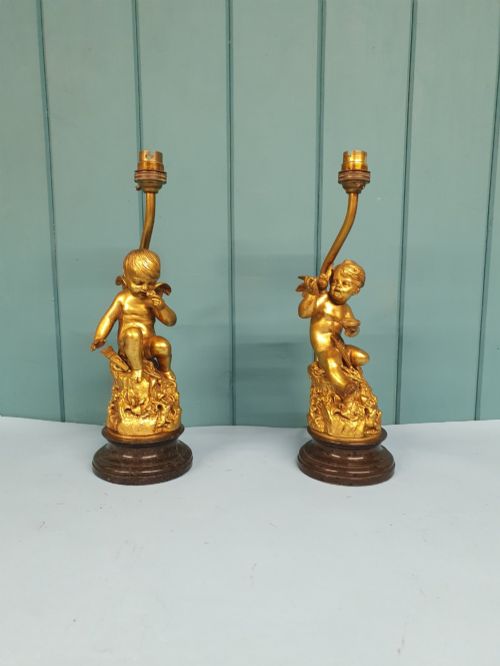
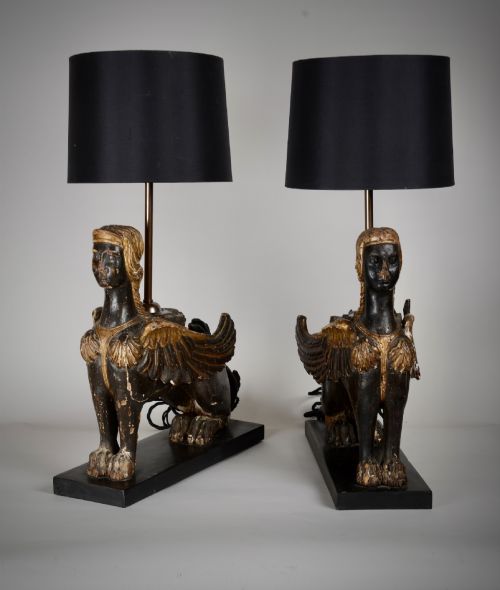
Carving techniques shape the wooden elements of console tables and lamp bases into neoclassical motifs, figural putti, or scrolling foliage. Surface finishing involves the application of gesso prior to gilding, or patination applied to cast brass components.
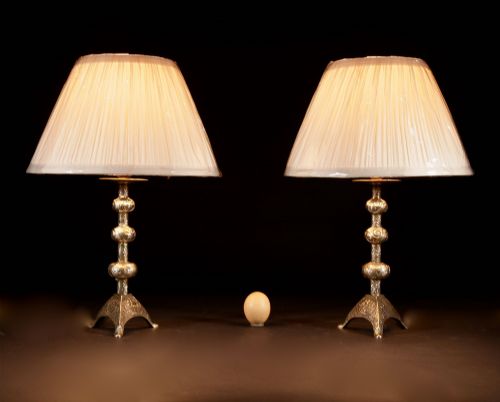
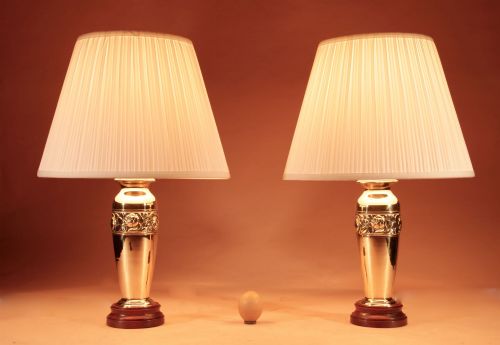
Listings feature brass, marble, and giltwood extensively, spanning periods from the eighteenth century through to the art deco era of nineteen-thirty.
What varies in quality
Quality differences emerge in the crispness of surface carving and the execution of cast metal mounts, where hand-tooled details surpass mass-produced uniformity. The integrity of the underlying timber or bronze determines structural longevity, particularly in load-bearing console tables.
The application of gold leaf or ormolu finish reveals artisanal skill through its depth and wear pattern over time. Superior examples maintain original stone tops such as breccia or verde marble, fitted flush to the frame without modern replacement.
E Rousseau
The Gold Side Table Pair Glossary
- Ormolu
- Gilded bronze, typically mercury-gilded, used extensively for decorative mounts on nineteenth-century furniture. It provides a rich, warm metallic lustre that distinguishes higher-end decorative arts.
- Giltwood
- Timber carved and coated with gold leaf or powder over a prepared gesso ground. This technique creates the brilliant reflective surfaces seen on neoclassical and baroque revival console tables.
- Demi-lune
- Half-moon shape in furniture design, allowing tables to sit flush against a wall while projecting a curved front. These pieces serve effectively as compact side or console surfaces.
- Etagere
- A set of open shelves for displaying small objects, often constructed in brass or wood. They provide tiered surface area within compact floor footprints.
- Spelter
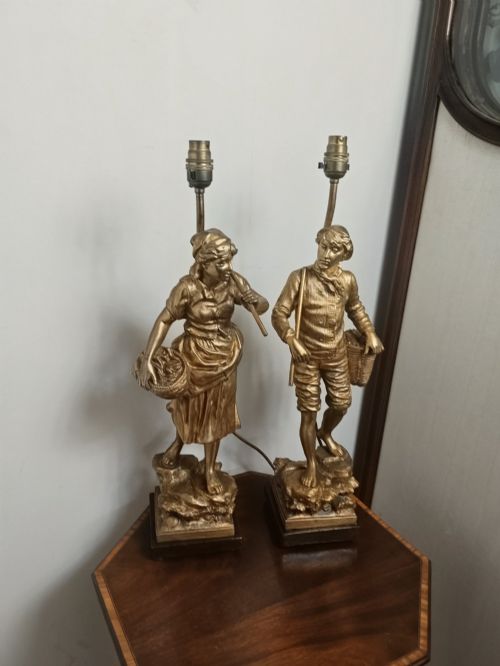
- A zinc alloy used as a cost-effective substitute for bronze in decorative figures and lamp bases during the nineteenth and early twentieth centuries. It often received a bronze or gilt finish to mimic more costly metals.
Gold Side Table Pair: Frequently Asked Questions
How are gold side table pair sets used?
These matched sets function as bedside tables, flanking surfaces for sofas, or display stands for lamps and decorative objects. Their dual nature brings symmetrical balance to interior arrangements.
Positioning them symmetrically creates a formal focal point while providing functional surface space at hand height.
What materials make up these tables?
Construction materials include carved woods like mahogany and pine, alongside metals such as brass, bronze, and ormolu. Many surfaces incorporate marble, glass, or leather inserts.
Gilding techniques, including gold leaf and paint, provide the characteristic metallic finish across different periods.
How do I identify the period of a table?
Period identification relies on stylistic cues such as neoclassical columns, art deco geometric lines, or rococo carved scrolls. Materials and construction methods also offer clear chronological markers.
Examining the fasteners, timber seasoning, and wear patterns helps determine whether an item originates from the eighteenth, nineteenth, or early twentieth century.
Are these tables suitable for modern rooms?
The diverse styles, ranging from restrained art deco brass frames to ornate nineteenth-century giltwood, integrate readily into contemporary interiors. Their metallic finishes introduce reflective texture to neutral spaces.
Using antique pairs adds historical contrast while maintaining practical utility as functional surface furniture.