



Vintage Wall Mounted Barometer
These vintage wall mounted barometers measure atmospheric pressure while bringing rich wood grains and traditional craftsmanship into interiors.
Vintage Wall Mounted Barometer
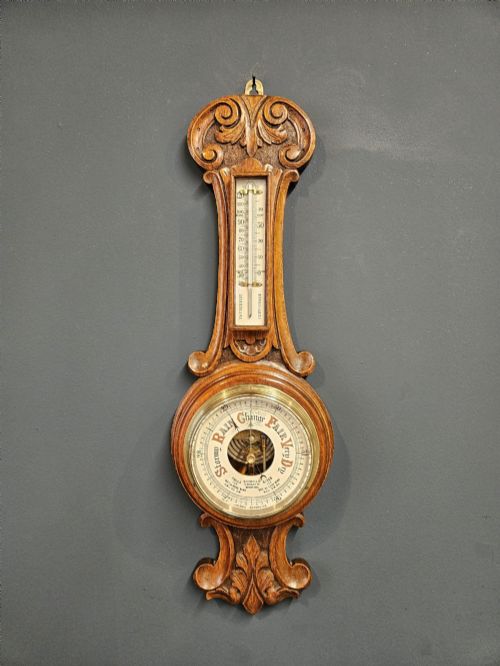
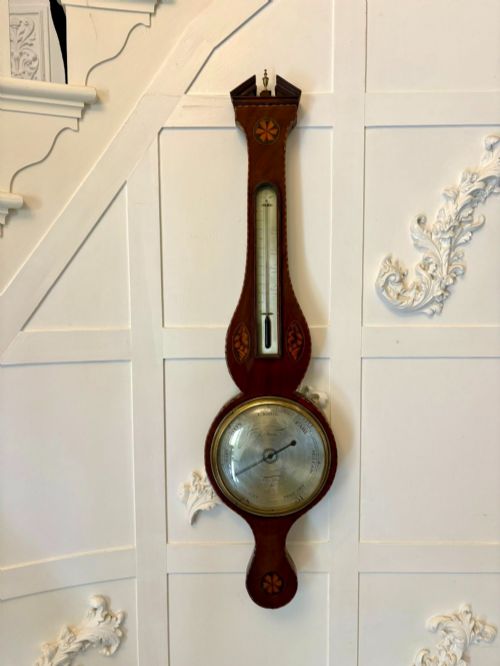
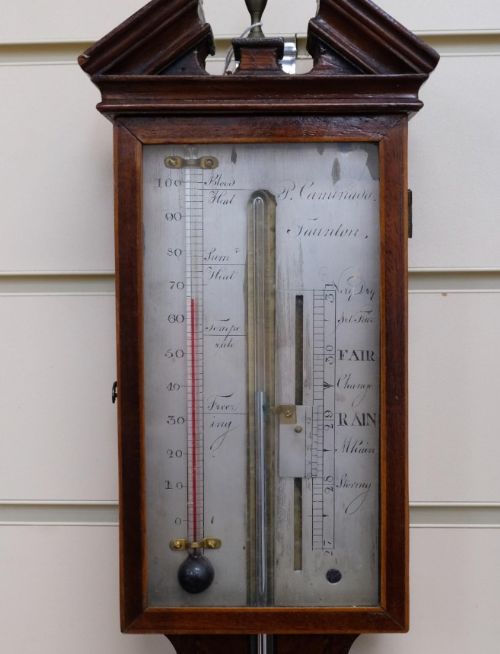
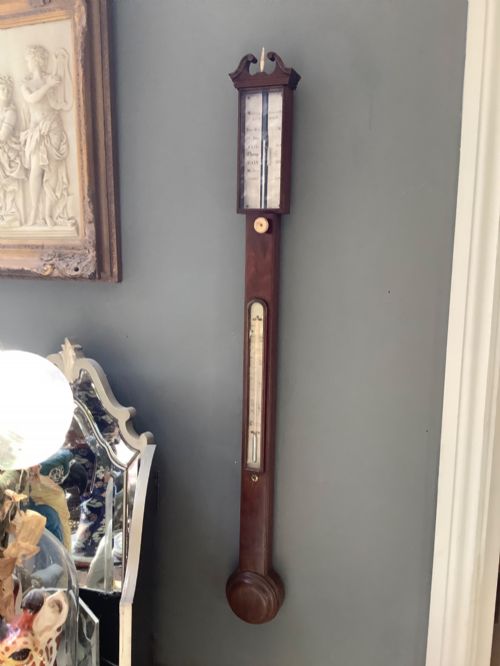
A vintage wall mounted barometer serves a practical purpose while acting as a traditional feature on interior walls. Buyers seeking these instruments encounter various forms across this page, from classic stick barometers to banjo and wheel designs.
The selection includes pieces spanning the Georgian, Victorian, Regency and Edwardian eras, alongside early twentieth-century examples. Materials range from solid mahogany and oak to walnut and rosewood, often complemented by silvered brass dials.
Many items combine weather forecasting with additional instruments, such as thermometers and clocks, or integrate into practical furniture like hatstands. Makers and retailers from London, Dublin, Taunton, Exeter and Milan signed various surviving examples.
Materials and construction methods
Cases utilise dense hardwoods like mahogany, oak, walnut and rosewood, selected for stability and polished to a rich finish. Carved elements appear frequently, particularly in Black Forest and Victorian oak or walnut models.
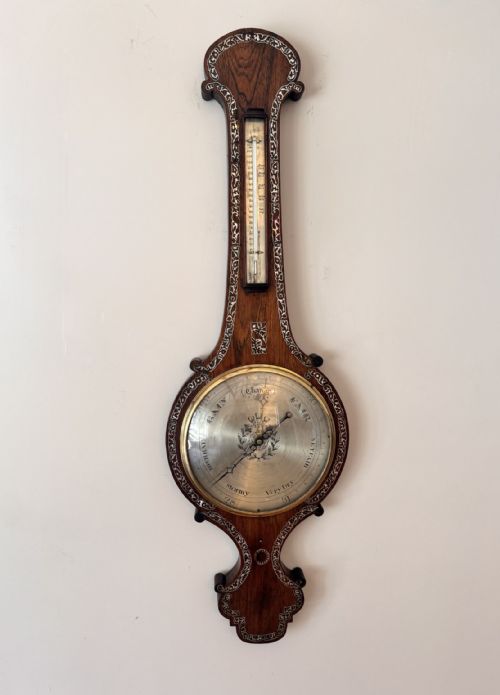
Dials employ silvered brass or metal, engraved with legible scales and weather descriptors. Inlays of shell, mother of pearl and bone adorn finer Banjo and wheel models, while glass protects the delicate gauge needles and mercury tubes.
Vintage Wall Mounted Barometer Retail Price Guide 2026
Typical asking prices for vintage wall mounted barometer among the pieces listed under this phrase on Sellingantiques today, from the lower quarter to the upper quarter. They describe what is for sale here now, not the wider market.
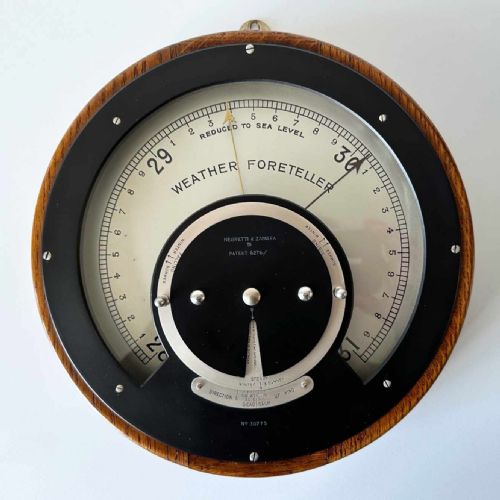
Weather foretellers arrived alongside combined hatstands, proving Victorians liked their coats and barometers in one heavy oak place.
Distinctions in quality and execution
Quality rests in the precision of the case joinery, the depth of the timber figuring, and the clarity of the engraved silvered brass dial. Finer examples display meticulous shell or mother of pearl inlay and crisp carving along the wooden bezels.
Signed instruments by recognised instrument makers demonstrate superior mechanical execution and historical pedigree compared to unsigned workshop variants. The crispness of the carved ornamentation, especially in Black Forest walnut and Victorian oak, marks the standard of the maker's skill.
Negretti & Zambra·P. Caminada·Bate of London·George Dollond·Antoine Redier·Sandrino of Liverpool·Hayward of Ashford·Gilbert London·Ciresa of Milan·Corti of Exeter·Malacrida of Dublin
The Vintage Wall Mounted Barometer Glossary
- Barometer
- An instrument used for measuring atmospheric pressure to forecast weather changes. Mercury and aneroid systems represent the primary mechanical types found in these antiques.
- Banjo barometer
- A household barometer featuring a teardrop or banjo-shaped wooden case. This form typically houses a circular dial at the base and a thermometer or hygrometer along the stem.
- Stick barometer
- A vertical wall-mounted instrument containing a long glass tube filled with mercury. This design provides a direct visual reading of barometric height.
- Aneroid barometer
- A barometer that measures pressure without liquid, using a flexible metal box that expands or contracts. This mechanism allowed for more compact and varied casing designs.
- Silvered brass
- A brass dial plate treated with a silver compound to produce a bright, matte finish for engraved lettering. This surface treatment ensures high contrast against the dark timber cases.
Vintage Wall Mounted Barometer: Frequently Asked Questions
How do I read a mercury stick barometer?
Read the height of the mercury column against the engraved scale on the silvered brass plate. Rising mercury generally indicates improving weather conditions, while falling levels suggest approaching storms.
Compare the primary column against any attached vernier scale for precise barometric readings. Tapping the instrument gently before reading ensures the mercury settles correctly against friction.
Where should I hang a wall barometer?
Mount the instrument on an interior wall away from direct sunlight, heating vents and dampness. Stable room temperatures protect the sensitive internal mechanisms and wooden cases from warping.
Ensure the fixing point supports the weight securely, especially with larger mahogany and rosewood stick barometers. Use appropriate wall anchors suited to plaster or masonry surfaces.
What is the difference between aneroid and mercurial barometers?
Mercurial barometers utilise a column of liquid mercury balanced against atmospheric pressure in a glass tube. These traditional stick models represent earlier engineering standards from the Georgian and Regency periods.
Aneroid barometers measure pressure using an internal sealed metal vacuum chamber without liquid. This later nineteenth-century technology enabled more compact designs like circular oak and carved walnut wall pieces.
How do I identify a Georgian barometer?
Examine the timber, dial signature and construction techniques typical of the eighteenth and early nineteenth centuries. Georgian stick barometers often feature simple mahogany cases with exposed cistern covers at the base.
Look for hand-engraved maker signatures on the silvered brass plates, such as London or provincial retailers. The joinery and wood finishing reflect hand-tool methods from before the industrial era.