







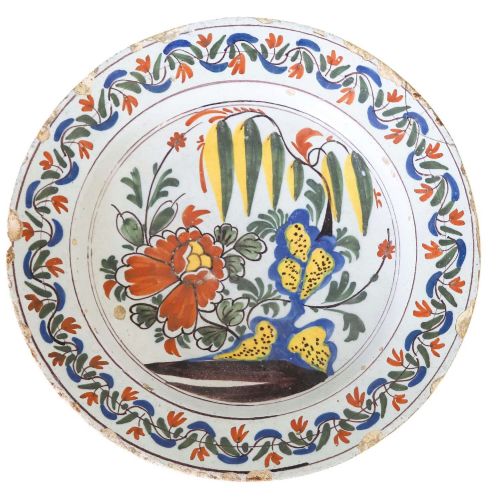

Vintage Wall Charger
A vintage wall charger brings heavy decorative presence to a room, offering broad painted surfaces and rich metallic patinas designed to hang flat against plaster.
Vintage Wall Charger
A vintage wall charger represents a large decorative plate or shallow basin originally formed for display rather than dining. When searching for a vintage wall charger, buyers encounter diverse forms ranging from large ceramic platters to heavy metal trays hung on vertical surfaces.
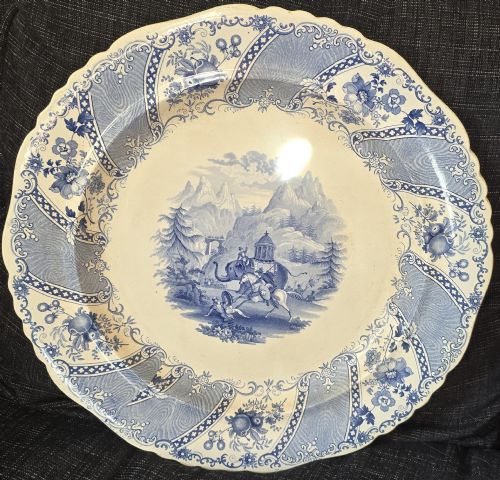
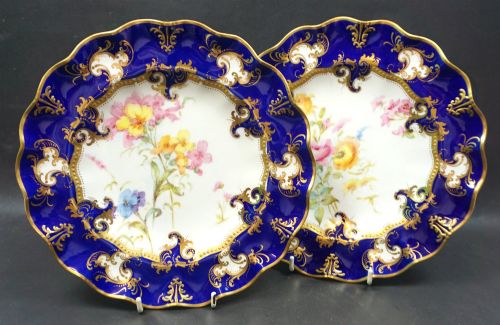
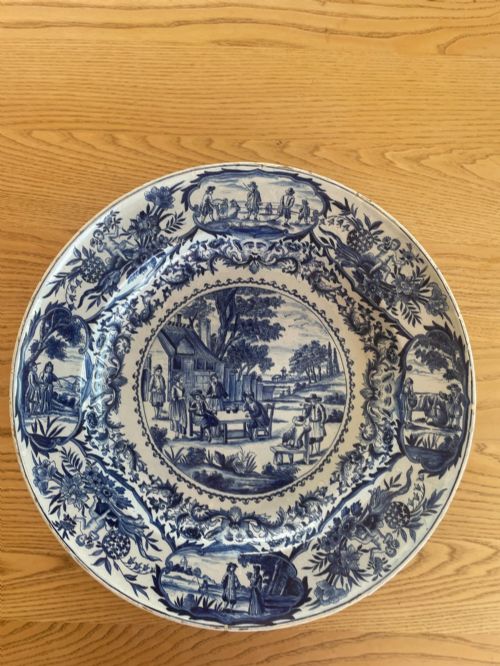
The pieces appearing here span multiple centuries, materials, and origins, including Japanese Imari porcelains, European Delftware faience, and Middle Eastern metalwork. Most examples on this page date from the nineteenth and early twentieth centuries, reflecting a sustained domestic taste for large-scale wall display.
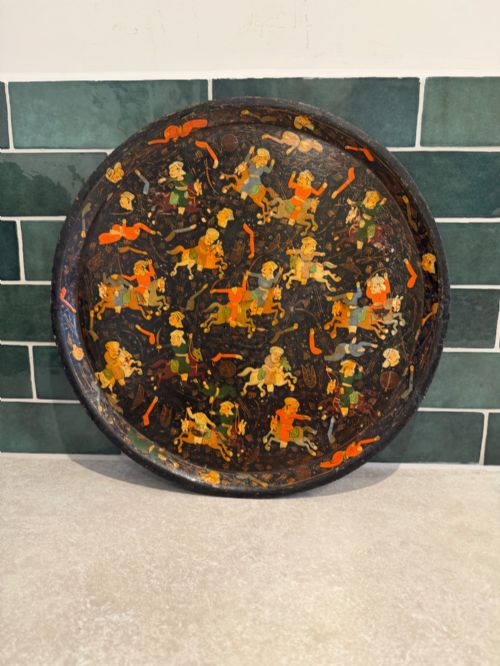
Makers adapted several cultural traditions for Western interiors, producing items that function primarily as focal points within domestic schemes. These objects include heavy brass shields, cloisonne enamel trays, and earthenware dishes painted with traditional motifs.
How they were made
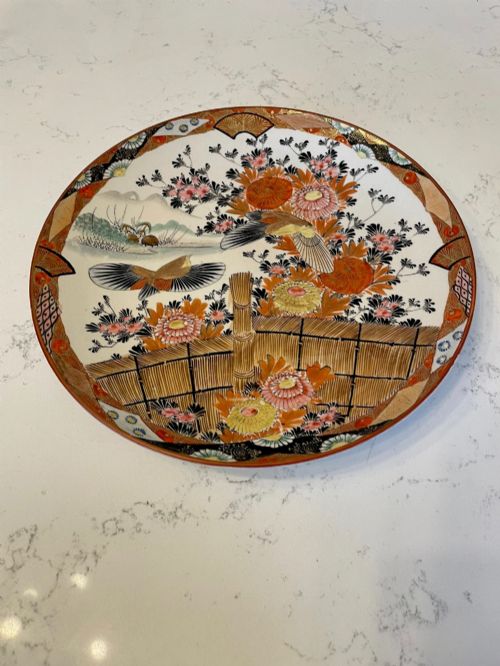
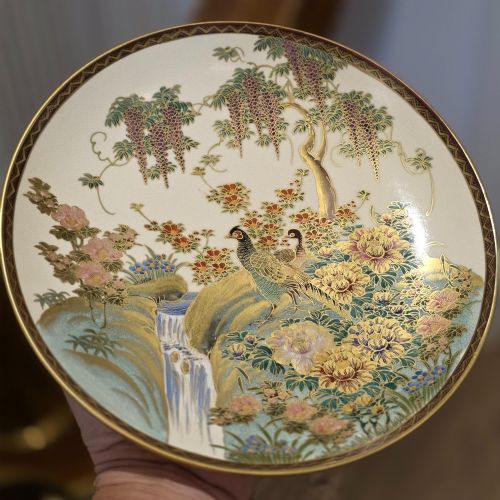
Ceramic chargers rely on clay bodies shaped into wide, shallow discs and finished with glazes such as tin-opacified white for Delftware or transparent lead glazes over cobalt and iron pigments for Imari wares. Artisans painted motifs by hand directly onto the raw or fired ground before subjecting the pieces to high-temperature kiln firings.
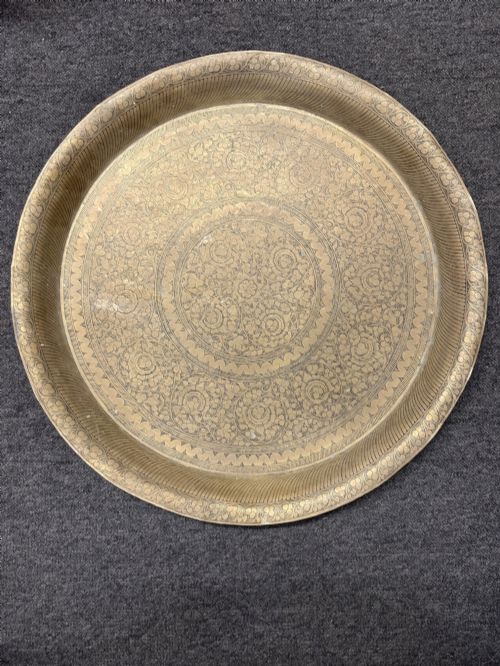
Metal chargers utilise heavy sheets of copper, brass, or iron beaten into form, often enriched with hand-engraved foliate patterns or inlaid with silver and gold wires. Cloisonne enamel pieces incorporate thin metal strips soldered to a metal base to create cells that hold coloured glass pastes prior to firing and polishing.
Vintage Wall Charger Retail Price Guide 2026
Typical asking prices for vintage wall charger among the pieces listed under this phrase on Sellingantiques today, from the lower quarter to the upper quarter. They describe what is for sale here now, not the wider market.
Listings feature ceramics, brass, copper, and cloisonne enamel across periods spanning the seventeenth to the twentieth century.
What varies in quality
Quality rests upon the precision and ambition of the surface decoration, distinguishing standard production from exceptional studio output. Hand-painted ceramic pieces show varied brushwork fluidity, where superior examples display crisp outlines, complex multi-coloured palettes, and carefully balanced compositions across large diameters.
In metalwork and cloisonne, excellence appears in the tightness of the wirework, the depth of the patination, and the absence of pitting or distortion in the enamel fields. The weight of the metal base and the crispness of engraved details further separate ordinary decorative items from superior collector pieces.
William Smith & Co·John Tubb·Koshida·Shozo·Royal Crown Derby·Royal Worcester
The Vintage Wall Charger Glossary
- Charger
- A large decorative plate or shallow dish exceeding standard dinner plate diameters, traditionally intended for sideboard display or wall hanging. These pieces provide expansive surfaces for detailed pictorial or geometric ornamentation.
- Imari
- A style of Japanese porcelain featuring a distinct palette of underglaze blue, iron red, and gilt highlights. Originating from the Arita area, these wares were widely exported to Europe.
- Delftware
- Tin-glazed earthenware produced in the Netherlands and England, typically decorated with blue and white designs inspired by Chinese porcelain imports. The soft earthenware body carries an opaque white glaze that absorbs cobalt pigments.
- Cloisonne
- An enamelling technique where thin metal wires form compartments on a metal base, which are then filled with coloured glass paste and fired. Subsequent grinding and polishing create a smooth, patterned surface.
- Maiolica
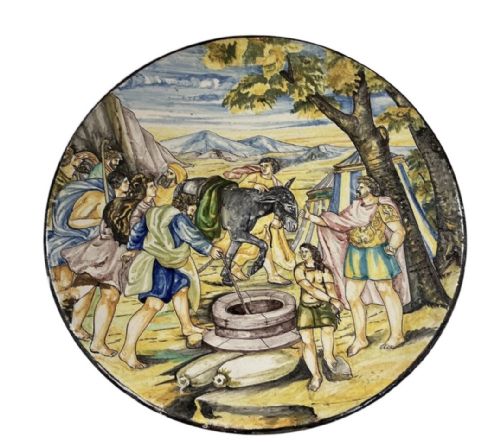
- Italian tin-glazed earthenware dating from the Renaissance and later periods, known for vibrant polychrome painting and historical or mythological scenes. The technique spread across Europe, influencing local faience traditions.
Vintage Wall Charger: Frequently Asked Questions
Were these plates used for dining?
Most chargers of this scale served decorative functions on sideboards or walls rather than practical dining service, owing to their size and precious decoration.
Metal shields and large enamel trays functioned primarily as ceremonial or interior display items from their initial creation.
How do I clean antique enamel and metal?
Dust metal and cloisonne surfaces gently with a soft, dry brush to prevent abrasive particles from scratching the delicate glass pastes or patinated copper.
Avoid liquid chemical polishes entirely, as they strip historic patinas and seep beneath wire compartments to damage the underlying base.
How can I tell Japanese Imari from European copies?
Japanese Imari typically displays a greyish-white porcelain body beneath gritty unglazed foot rings, paired with deep cobalt blue and characteristic iron red pigments.
European factories often utilised softer earthenware bodies or whiter, more uniform porcelain pastes with different glaze pooling characteristics around the rims.