


Vintage Venice Canal Painting
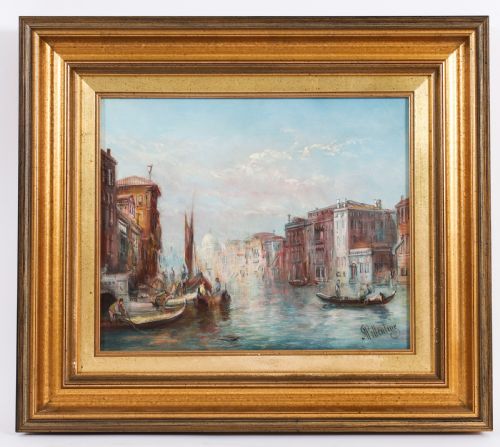
A vintage venice canal painting captures the light and architecture of the lagoon, offering a window into Italian waterways through period brushwork.
Vintage Venice Canal Painting
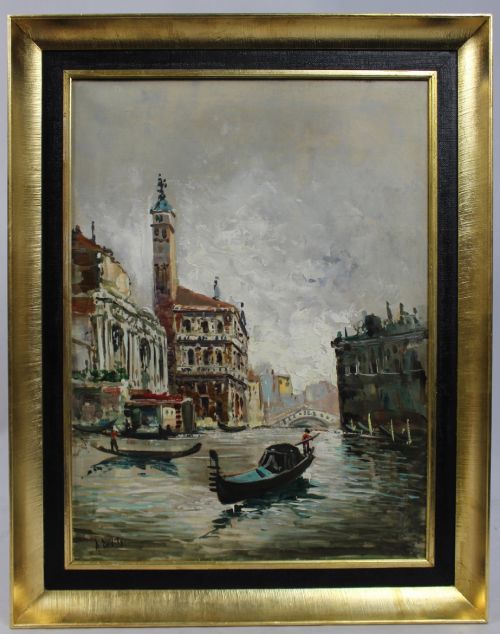
A vintage venice canal painting brings the atmosphere of the floating city into domestic spaces through varied artistic interpretations. Collectors encounter depictions of the Grand Canal, the Bridge of Sighs, and quiet waterways navigated by gondolas.
The works span multiple eras, connecting nineteenth-century academic traditions with mid-century impressionism. Canalside mansions, palazzos, and maritime vistas dominate the imagery across both oil and watercolour mediums.
Watercolour paintings and oil on canvas formats represent the primary ways artists recorded Venetian scenes. Buyers find both intimate paper studies and large framed exhibition canvases.
Materials and methods
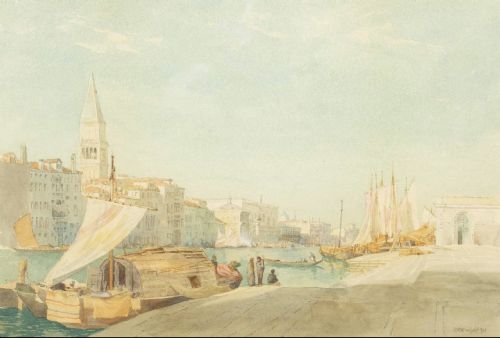
Artists deployed oil paint upon stretched canvas or paper to build rich textures that mimic the shimmering Venetian light. Watercolour pigment applied to paper creates translucent washes that capture the reflections on the lagoon.
Many works retain their period framing, utilising gilded wood and giltwood to complement the tonal qualities of the painted scenes. Selected pieces also incorporate pastel, gouache, and ink pen to delineate architectural details.
Gondoliers navigate immortalised waters across every decade represented, perpetually poling beneath unchanging stone bridges.
Evaluating the artwork
Quality rests in the artist's ability to render the distinctive atmospheric haze and water reflections of the Venetian lagoon. Stronger pieces display confident brushwork and accurate perspective in complex architectural settings such as palazzos and bridges.
The treatment of light separates routine topographical records from compelling impressionistic studies. Provenance and signatures by established painters elevate the standing of an individual canvas or watercolour.
Alfred Pollentine·Antonio DeVity·Richard Henry Wright·Claude Jousset·Marc Aldine·Antoine Bouvard Senior·E. Perez Senet·Vittore Zanetti Zilla·Frank Wasley·David Law·William Knox·Wilfred Knox·Charles Clement Calderon·Alberto Trevisan
The Vintage Venice Canal Painting Glossary
- Veduta
- A highly detailed, topographical painting of a cityscape, particularly associated with eighteenth and nineteenth-century views of Venice. These works prioritize architectural accuracy and perspective.
- Giltwood
- Wood that has been treated with gold leaf or a gold-coloured metallic finish, commonly found on nineteenth-century frames. This material enhances the visual weight of the accompanying artwork.
- Impressionism
- An art movement focusing on the visual impression of the moment, particularly regarding the shifting effect of light and colour. Works in this style utilise visible brush strokes rather than smooth blending.
- Gouache
- An opaque water-based paint that dries to a matte finish, frequently combined with watercolour or pastel in works depicting Venetian waterways. It allows for brighter highlights against darker washes.
Vintage Venice Canal Painting: Frequently Asked Questions
How do I identify a 19th-century Venetian painting?
Examine the materials and framing, as nineteenth-century works frequently employ heavy gilded wood frames alongside traditional canvas supports.
Subject matter often includes classic viewpoints of the Grand Canal or the Dogana executed in realistic or early impressionist styles.
What is the difference between oil and watercolour views?
Oil paintings on canvas offer heavier textures and deeper colour saturation, suitable for capturing dramatic light and shadow.
Watercolour paintings on paper provide lighter, more translucent depictions of water and sky.
Where should I hang a Venetian canal artwork?
Display these paintings away from direct sunlight to protect pigments, particularly delicate watercolours and pastels on paper.
Pairing them with period giltwood frames can enhance traditional interior settings.
Are these paintings signed by the artists?
Many examples feature artist signatures either within the composition or on the reverse of the canvas.
Documentation and signatures help attribute the work to specific continental and British painters of the period.