




Vintage Vanity Trinket Dish
These vintage vanity trinket dishes bring dressing tables of the past into modern rooms, offering small spaces to store rings, pins, and powders.
Vintage Vanity Trinket Dish
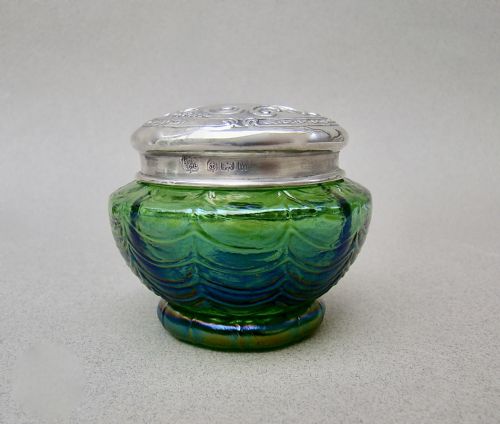
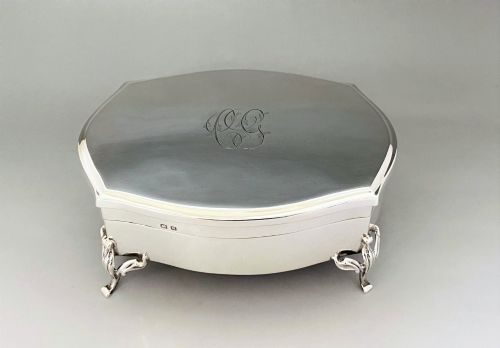
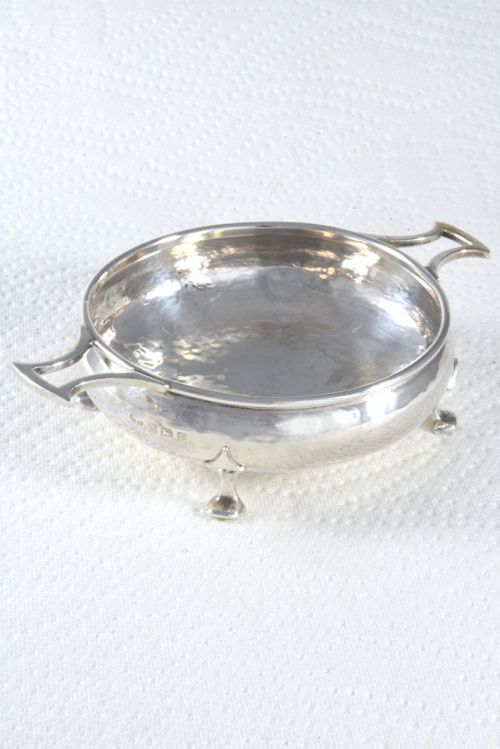
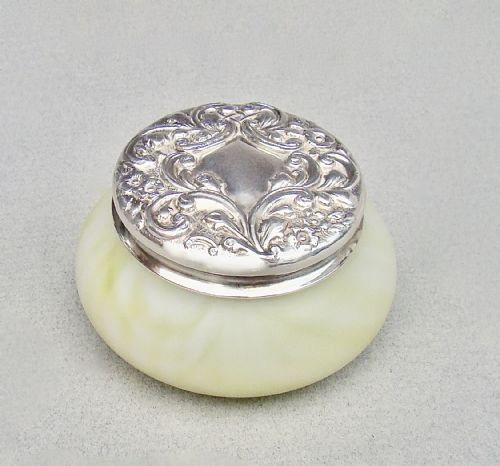
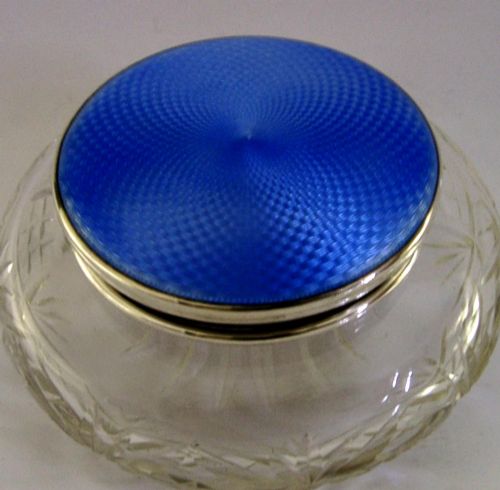
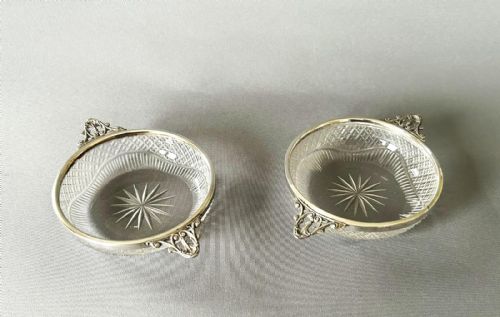
A vintage vanity trinket dish serves as a small container for dressing table accessories, encompassing items like powder bowls, pill boxes, and pin trays. These pieces often feature fitted lids made from sterling silver paired with glass, ceramic, or enamel bodies.
The selection here draws heavily from the Art Deco period and the Edwardian era, alongside Victorian and George V examples. Forms range from simple glass dishes to elaborate porcelain half doll powder boxes and silver-topped cut glass jars.
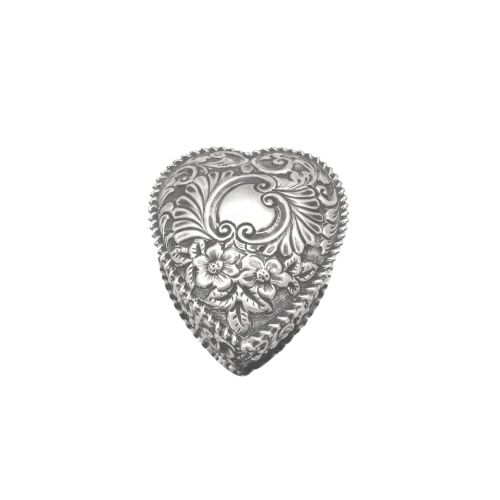
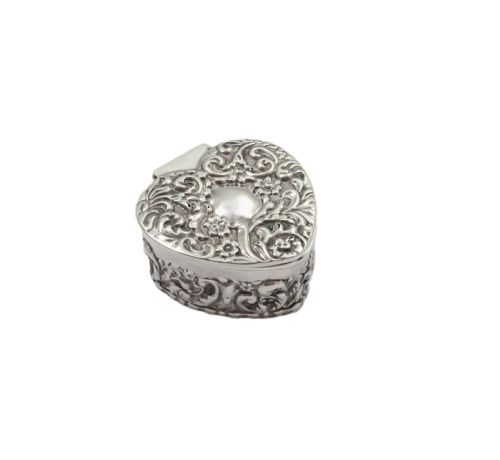
Origins span across England, France, and Germany, reflecting diverse craftsmanship from Birmingham silversmiths to continental porcelain factories. Buyers encounter heart-shaped boxes, lidded jars, and open trays designed for everyday dressing table use.
Materials and Construction
Silversmiths shaped sterling silver into lids, mounts, and rims, frequently sending pieces to assay offices in Birmingham and London for hallmarking. These metal components combine with cut glass, satin glass, Kralik glass, and crystal to form the main bodies.
Ceramic and porcelain versions utilise moulded clay decorated with painted motifs, glazes, and specialised figures such as flapper girls or half dolls. Enamel adds colour in shades of blue and pink onto silver bases, while select pieces incorporate tortoiseshell, white onyx, and lapis lazuli.
Ceramic flapper girls peek out from powder box lids, guarding face powder with porcelain hats.
Distinctions in Quality
The distinction between standard items and superior examples lies in the precision of the silver smithing, the clarity of the cut glass, and the artistic execution of the painted or enamelled details. Maker marks from established firms provide a reliable indicator of origin and workshop standards.
Condition plays a major role, particularly regarding the intactness of delicate enamel work, the absence of chips in moulded glass, and the secure fit of hinged metal lids. Original matching components, such as a glass base paired with its correct silver top, elevate the integrity of the piece.
A. J. Pepper & Co·A. Bromet & Co·Posen·René Lalique·Limoges
The Vintage Vanity Trinket Dish Glossary
- Half doll
- A ceramic doll figure moulded from the waist up, historically used as the lid handle for powder boxes and tea cosies.
- Hallmark
- An official stamp applied to precious metals indicating the standard of purity, the assay office, and the year of manufacture.
- Kralik glass
- Art glass produced by the Bohemian company Kralik, known for distinctive iridescent surfaces and colour combinations.
- Mary Gregory
- glassware decorated with painted white enamel silhouettes of children amidst foliage, popular during the Victorian period.
- Sterling silver
- An alloy consisting of 92.5 percent silver by mass, standard for durable British silver boxes and trinket dish lids.
Vintage Vanity Trinket Dish: Frequently Asked Questions
What were vanity trinket dishes used for?
These pieces sat on dressing tables to hold loose jewellery, hairpins, rings, and small cosmetics. Covered boxes specifically protected powders and pins from dust.
They served both a decorative and practical function in daily grooming routines during the Victorian, Edwardian, and Art Deco periods.
How do I date a silver and glass trinket box?
Silver components feature Birmingham or London hallmarks that include date letters corresponding to specific years of assay testing. Style indicators, such as geometric Art Deco patterns or Edwardian scrolls, help narrow the timeframe.
Matching the hallmark date letter against official tables yields the exact year the metal lid was certified.
Are these glass and porcelain dishes fragile?
Cut glass and ceramic bodies require careful handling because older glass and porcelain can chip or crack under impact. Enamelled silver lids also need gentle cleaning to preserve the coloured surfaces.
Displaying them on stable dressing table surfaces prevents accidental drops and preserves their condition.
What is the difference between a powder box and a trinket dish?
Powder boxes generally feature deep bowls and matching fitted lids designed to contain loose face powder or powder puffs. Trinket dishes often consist of shallow open trays or lidded boxes meant for rings and small ornaments.
Many examples overlap in form, functioning as general dressing table storage containers.