


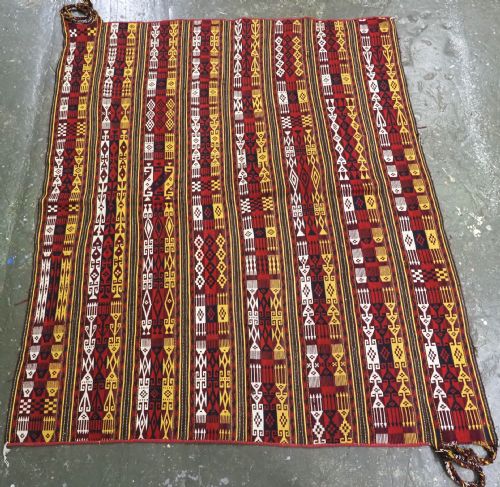


Vintage Uzbek Kilim
A vintage uzbek kilim brings bold Central Asian tribal character into a room through flatwoven geometric designs.
Vintage Uzbek Kilim
When you search for a vintage uzbek kilim, you encounter flatwoven textiles originating from Central Asian tribal traditions. These pieces span from the late nineteenth century into the early decades of the twentieth century, typically dating between 1890 and 1920. The selection includes full-sized rugs, runner rugs, and textile panels constructed for domestic use or nomadic life.
The most common formats you meet here are kilim rugs and multi-strip panels, such as gajeri types and examples from the Kungrad region. Some items originate as specific utilitarian objects, including saddlebag faces or tent bands adapted for interior display. Designs rely on banded layouts, repeat patterns, and bold graphic arrangements executed in regional tribal styles.
Materials and construction
These textiles rely primarily on wool and cotton foundations, with occasional examples incorporating camel hair grounds for natural colour and texture. Artisans construct many of these flatweaves in multiple narrow strips, which are subsequently joined together to form larger panels or carpets.
Weft work techniques dominate the construction, creating crisp geometric patterns without a pile. Embroidery is also present on specific suzani-influenced pieces, adding textural detail to the flatwoven surface.
Vintage Uzbek Kilim Retail Price Guide 2026
Typical asking prices for vintage uzbek kilim among the pieces listed under this phrase on Sellingantiques today, from the lower quarter to the upper quarter. They describe what is for sale here now, not the wider market.
Some small rugs live past lives as nomadic saddlebags before retiring to the living room floor.
Distinctions in quality
Quality rests upon the precision of the flatwoven structure and the integrity of the joined strips. Finer examples display tight, even weft work and deliberate control over complex banded or repeating geometric designs.
The visual impact of the palette and the condition of the wool or camel hair ground separate standard utility pieces from more striking decorative examples. Surviving integrity in the original stitching of multi-strip panels also defines the upper tier of these textiles.
The Vintage Uzbek Kilim Glossary
- Kilim
- A flatwoven textile produced without a pile by tightly interweaving warp and weft threads. These rugs offer a smooth, durable surface with distinct geometric patterns.
- Gajeri
- A specific type of Uzbek flatweave often characterised by bold banded designs and striking graphic layouts. These pieces originate from Central Asian tribal workshops.
- Suzani kilim
- A hybrid textile combining flatwoven kilim construction with decorative needlework embroidery. They frequently feature soft faded reds and intricate repeat motifs.
- Panel
- A narrower strip of woven fabric, several of which are traditionally joined edge to edge to create a larger rug or cover. Kungrad region examples often utilise this multi-strip construction method.
- Weft work
- The technique of passing horizontal threads back and forth across the vertical warp to build up the pattern. In these pieces, the weft entirely conceals the warp to display the design.
Vintage Uzbek Kilim: Frequently Asked Questions
How were these kilims used originally?
Nomadic and settled communities utilised these flatweaves as floor coverings, tent decorations, and utilitarian storage items such as saddlebags. They provided practical insulation and durable surfaces for daily nomadic life.
Over time, specific panels also served as decorative covers or architectural dividers within traditional dwellings, reflecting the domestic culture of the region.
How do I care for a vintage flatweave?
Protect the textile by placing a quality non-slip underlay beneath it to reduce friction against hard floors. Gentle vacuuming without a rotating brush roll helps remove embedded dust.
Keep the piece out of direct, prolonged sunlight to prevent natural dyes from fading unevenly. Professional cleaning tailored for antique flatweaves ensures safe maintenance of wool and cotton fibres.
What defines a multi-strip kilim?
Makers wove these textiles in several narrow, manageable strips on small looms rather than producing one wide piece. These individual lengths were then sewn together side by side to form a larger rug or panel.
This construction method was practical for nomadic weavers working with portable equipment. The visible seams form an inherent part of the structure and historical character.
How do I distinguish regional types?
Regional identification relies on observing the structural format, such as the number of joined strips, and the specific design vocabulary. Kungrad region pieces often employ numerous strips, while gajeri types typically emphasise bold banded compositions.
Comparing the arrangement of geometric motifs and the presence of supplementary embroidery helps narrow down the probable tribal origin within Central Asia.